

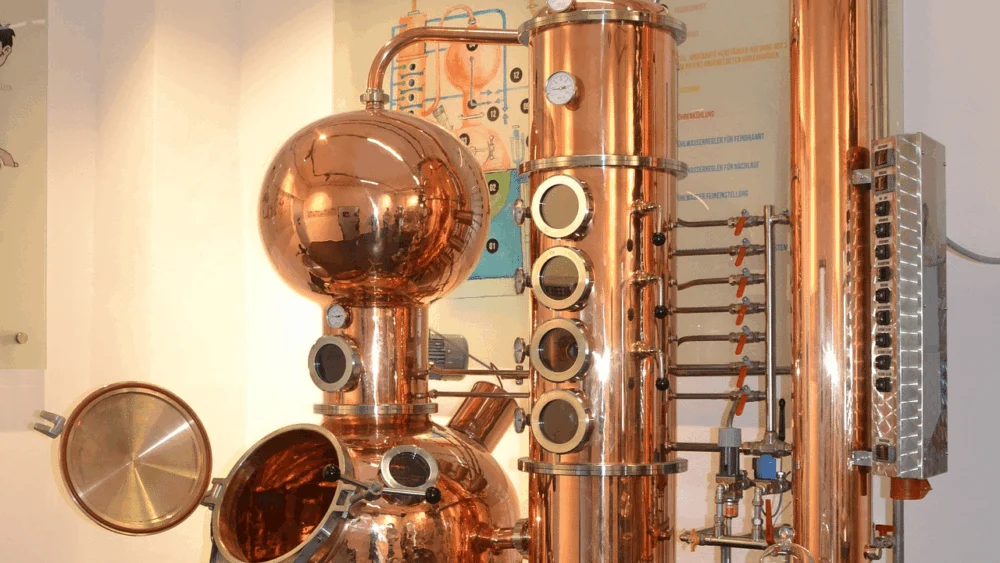
The production of gin is a sophisticated intersection of chemistry, thermodynamics, and sensory artistry, where the final flavor profile is determined by a series of technical decisions made long after the selection of botanicals. While the ingredients—juniper, coriander, citrus, and various roots—provide the raw aromatic potential, it is the distiller’s manipulation of the distillation process that dictates how these flavors are extracted, balanced, and preserved. Industry experts note that two distillers using the exact same botanical recipe can produce vastly different spirits based on their approach to base spirits, extraction methods, and the precision of their "cuts" during the distillation cycle.
The Foundation of Neutral Grain Spirit and the Evolution of Gin Production
For the vast majority of global gin production, the process begins with Neutral Grain Spirit (NGS). This is a highly rectified ethanol, typically distilled to at least 95% or 96% Alcohol by Volume (ABV), derived from grains such as wheat, rye, or corn. The use of NGS provides a "blank canvas," free from the heavy congeners and esters found in whiskies or brandies, allowing the delicate volatile oils of the botanicals to remain the focal point.
Historically, the evolution of gin has been tethered to the technological advancement of the still. In the 17th century, the precursor to gin, Genever, relied on "malt wine" which retained significant grain character. The invention of the Coffey still (column still) in the 1830s allowed for the production of high-purity NGS, which paved the way for the "London Dry" style that dominates the market today. Modern distillers now face a primary choice: whether to purchase NGS from large-scale industrial rectifiers or to engage in "grain-to-glass" production, where the base spirit is fermented and distilled on-site to retain a specific mouthfeel or subtle grain sweetness.
The Mathematical Precision of Botanical Ratios
The primary regulatory requirement for any spirit labeled as gin is that it must possess a predominant flavor of juniper. Beyond this legal mandate, the formulation of a gin recipe involves rigorous mathematical ratios. A standard industry benchmark for botanical quantity is between 20 and 35 grams of total botanicals per liter of spirit. Within this mixture, juniper typically accounts for approximately 60% of the total botanical weight.
The secondary and tertiary botanicals are measured in declining orders of magnitude relative to the juniper load. Distillers often use a "ratio-based" formulation system:
- Primary (Juniper): The backbone of the spirit (e.g., 20g).
- Secondary (Coriander): Often used at roughly half the weight of juniper (10g) to provide citrus and spicy top notes.
- Tertiary (Angelica, Cassia, Orris): Used at approximately one-tenth the weight of juniper (1g to 2g) to provide earthy "fixative" qualities that prevent the lighter aromas from evaporating too quickly.
- Accents: Bold ingredients like cloves, grains of paradise, or dried citrus peel may be used at one-hundredth of the juniper weight (0.2g), as their essential oils are exceptionally potent and can easily overwhelm the palate.
Maceration versus Vapor Infusion: The Physics of Flavor Extraction
Once the ratios are established, the distiller must decide how to introduce the botanicals to the ethanol. This decision fundamentally alters the texture and "weight" of the gin.
Maceration (The Steep Method)
Maceration involves soaking the botanicals directly in the spirit, often diluted to around 40–60% ABV, within the pot still. This process is akin to making tea; the ethanol acts as a solvent, breaking down the organic matter to extract oils. High-profile brands such as Beefeater utilize a 24-hour maceration period before heat is applied. This method typically results in a "sturdier," more traditional gin profile with a rich mouthfeel. The extended contact time allows for the extraction of heavier compounds that provide a long finish on the palate.
Vapor Infusion (The Basket Method)
In contrast, vapor infusion involves placing the botanicals in a basket within the neck of the still or in a separate "Carter-Head" chamber. As the ethanol boils, the rising vapors pass through the botanicals, picking up volatile aromatic compounds without the ingredients ever touching the liquid spirit. Bombay Sapphire is the most prominent proponent of this method. Because the extraction is gentler and avoids boiling the plant matter, the resulting gin is often described as lighter, more floral, and more "ethereal."
The Art of the Cut: Thermodynamics and Sensory Analysis
Perhaps the most critical phase of gin production is the management of "the cuts." Distillation is a linear process governed by boiling points and time. As the still is heated, different chemical compounds vaporize at different temperatures, creating a sequence of flavors:
- The Foreshots and Heads: These are the first liquids to emerge from the condenser. They contain high concentrations of methanol and low-boiling-point esters. In gin production, the heads often contain an aggressive "pine-sol" intensity from the juniper. Distillers typically discard or recycle these, as they are too harsh for consumption.
- The Heart: This is the "sweet spot" of the distillation. It contains the most desirable ethanol and the balanced essential oils of the botanicals. The distiller must decide exactly when the heads end and the heart begins, a transition that requires constant sensory evaluation (smelling and tasting the distillate).
- The Tails: As the distillation nears its end, the temperature rises, and heavier, often bitter or "fusty" compounds emerge. These can include alkaloids and heavier terpenes that smell of wet cardboard or cooked vegetables.
A distiller’s "cut points" define the brand’s identity. A "tight" heart cut—keeping only the middle portion—results in a very clean, crisp gin. A "wide" cut—allowing more of the late-stage tails—can add complexity and earthiness, but runs the risk of introducing bitterness.
Production Philosophies: Single-Shot vs. Multi-Shot Methodologies
The scale and efficiency of a distillery are often determined by whether they employ a "single-shot" or "multi-shot" distillation process.
In single-shot distillation, the distiller adds the exact amount of botanicals needed for a single batch of gin. Once the distillation is complete, the resulting high-proof spirit is diluted with water to reaching bottling strength (usually 40–47% ABV). This is often viewed by purists as the most artisanal method, as the balance of flavors is achieved entirely within the still.
Multi-shot distillation is a concentrate-based approach. The distiller uses a significantly higher concentration of botanicals—sometimes ten times the standard amount—to create a "gin concentrate." This intense distillate is then blended with additional Neutral Grain Spirit and water before bottling. While some critics argue this "stretches" the flavor, many industry experts, including those from the Gin Guild, note that multi-shot distillation is highly efficient and, when executed correctly, produces a product indistinguishable from single-shot gin. It allows smaller distilleries to produce larger volumes without investing in massive pot stills.
Regulatory Frameworks and the London Dry Designation
The technical decisions of a distiller are also constrained by international law. The "London Dry" designation is not a geographical indicator but a process-based one. Under European Union and UK regulations, London Dry Gin must:
- Be made from high-quality NGS.
- Have all botanicals introduced during the distillation process (no flavors can be added after).
- Contain less than 0.1 grams of sugar per liter.
- Be distilled to a minimum of 70% ABV before dilution.
If a distiller chooses to distill botanicals separately and blend them later—a technique used by brands like Hendrick’s to preserve the delicate nature of cucumber and rose—the product cannot be labeled as London Dry. This "distilled gin" category allows for greater flexibility and innovation, reflecting the modern "Contemporary" gin movement which prioritizes unique, often local, botanicals over the traditional juniper-heavy profile.
Market Implications and the Global Gin Renaissance
The global gin market has seen a dramatic resurgence over the last decade, often referred to as the "Gin-naissance." According to market analysis data, the global gin market was valued at approximately $14 billion in 2022 and is projected to reach over $20 billion by 2030. This growth is driven by the "premiumization" trend, where consumers are increasingly interested in the technical provenance of their spirits.
The rise of craft distilleries—numbering in the thousands across the UK, US, and Australia—has led to a diversification of flavor profiles. From the "Four Pillars" in Australia using whole oranges in the still to "St. George Spirits" in California using local Douglas Fir, the technical mastery of distillation has allowed gin to become a terroir-driven spirit.
Ultimately, the flavor of gin is a testament to the distiller’s ability to act as a gatekeeper of volatile compounds. By adjusting the heat of the still, the placement of the botanical basket, and the precise moment of the cut, the distiller transforms a neutral, industrial spirit into a complex, aromatic experience. While the botanicals provide the map, it is the distillation process that serves as the journey, determining which flavors reach the bottle and which are left behind in the still.
