

The global spirits industry has witnessed a significant transformation in the categorization and marketing of gin, a spirit defined by its versatility and its foundational reliance on juniper berries. Historically, gin was viewed through the lens of traditional London Dry or Plymouth styles, maintaining a consistent flavor profile regardless of the calendar. However, the last decade—often referred to by industry analysts as the "Ginnaissance"—has seen a pivot toward hyper-seasonality. While "winter gins" once represented the extent of this seasonal reach, the market has matured to include highly specific "Christmas gins," which utilize a complex array of festive botanicals to evoke the sensory experiences of the holiday season. These expressions are not merely marketing exercises but sophisticated examples of distillation artistry, incorporating everything from steamed puddings and gingerbread houses to frankincense and gold leaf.
The Chronology of the Seasonal Gin Movement
The emergence of Christmas-specific gins can be traced back to the broader craft distilling movement that began in the early 2010s. As small-scale distilleries proliferated across the United Kingdom, the United States, and Australia, producers sought ways to differentiate their offerings in an increasingly crowded marketplace. By 2015, the industry began to see the first wave of "winter editions," which typically relied on heavier spice profiles, such as cinnamon, nutmeg, and clove.
By 2018, this trend had evolved into the "Christmas Gin" category. Distillers moved beyond simple spice additions, experimenting with maceration techniques that involved actual holiday foods. This period marked a shift from evocative flavoring to literal representation, where the components of a traditional Christmas dinner or dessert were introduced directly into the distillation process. Today, the category is a staple of the fourth-quarter retail cycle, with premium brands releasing limited-edition bottles that often sell out before the December solstice.
Distillation Innovation and the Culinary Influence
One of the primary drivers of the Christmas gin trend is the crossover between culinary arts and spirit production. Distillers are increasingly looking to heritage recipes for inspiration, treating the gin still as a medium for liquid gastronomy.
Corgi Spirits and the Figgy Pudding Profile
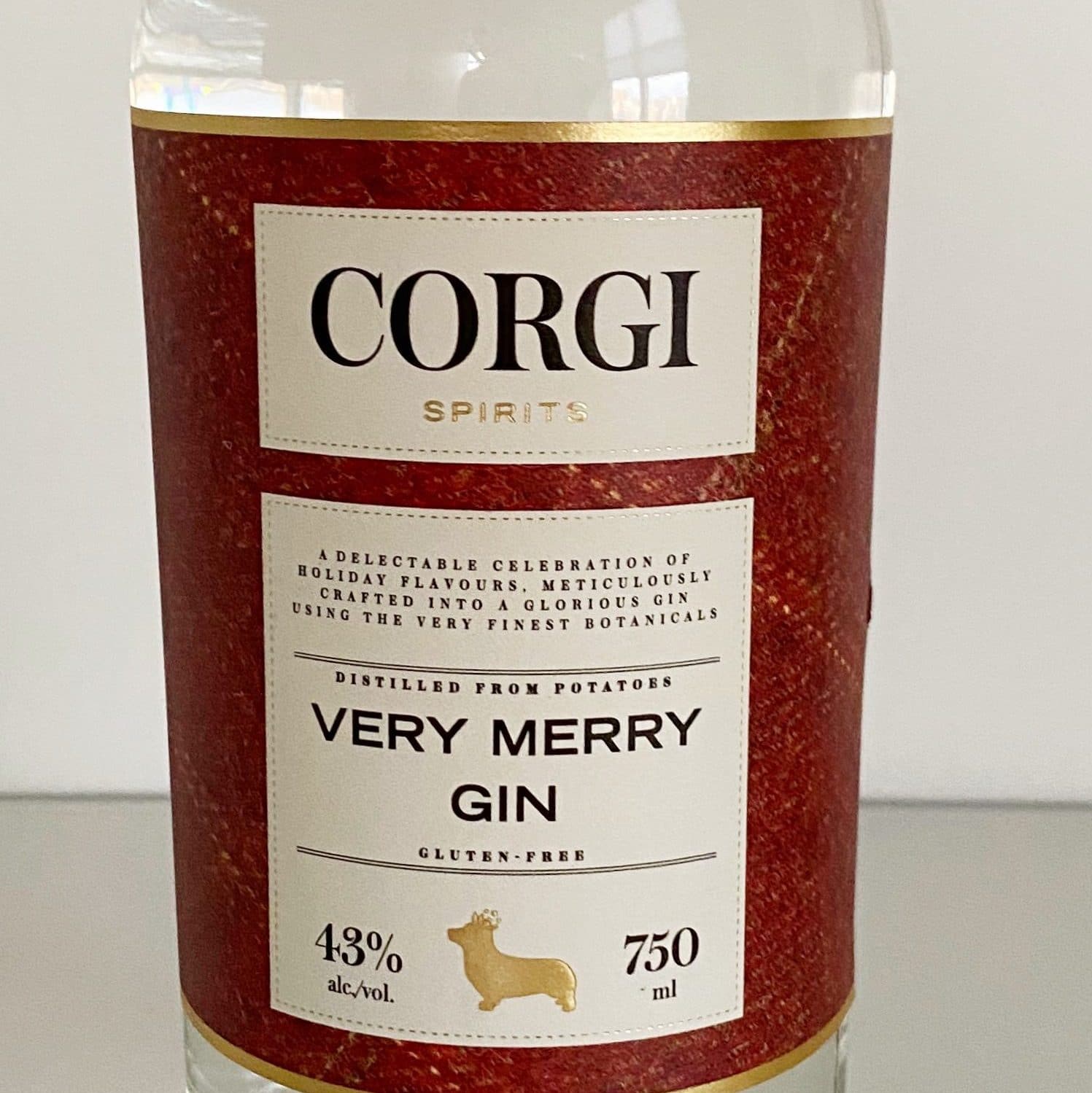
Corgi Spirits, based in Jersey City, New Jersey, provides a quintessential example of this culinary crossover with their Very Merry Gin. The botanical bill for this expression is explicitly modeled after figgy pudding, a staple of British holiday tradition. By incorporating figs, currants, and vanilla alongside the requisite juniper, Corgi Spirits creates a profile that is warming and spice-forward.
From a technical standpoint, the use of dried fruits like figs and currants requires careful management of the maceration period to ensure the sugars do not overwhelm the delicate oils of the juniper. Market analysis suggests that such gins are increasingly positioned as "specialty spirits" rather than everyday mixers. Industry experts recommend utilizing these gins in cocktails that can stand up to heavy spice, such as the Hot Toddy or the Pegu Club, or even unconventional pairings like a Gin and Cola, where the caramel notes of the soda complement the vanilla and dried fruit of the gin.
Sacred Spirits: The Science of Vacuum Distillation
In London, Sacred Spirits has taken the concept of holiday spirits a step further by utilizing high-pressure vacuum distillation. This method, pioneered by distiller Ian Hart, allows for distillation at much lower temperatures than traditional pot stills. This preserves the "freshness" of the botanicals, preventing the "cooked" or "burnt" flavors that can occur when delicate ingredients are exposed to high heat.
The Sacred Christmas Pudding Gin is produced using a recipe provided by Hart’s aunt. The process involves steaming whole Christmas puddings for eight hours before they are macerated in a grain spirit alongside juniper berries. Because the distillation occurs under a vacuum, the resulting spirit retains the bright, aromatic essence of the pudding’s citrus peel and spices without the heavy, cloying weight often associated with flavored liqueurs. This technical precision has made Sacred a favorite among connoisseurs who value botanical clarity.
The Literalism of That Boutique-y Gin Company
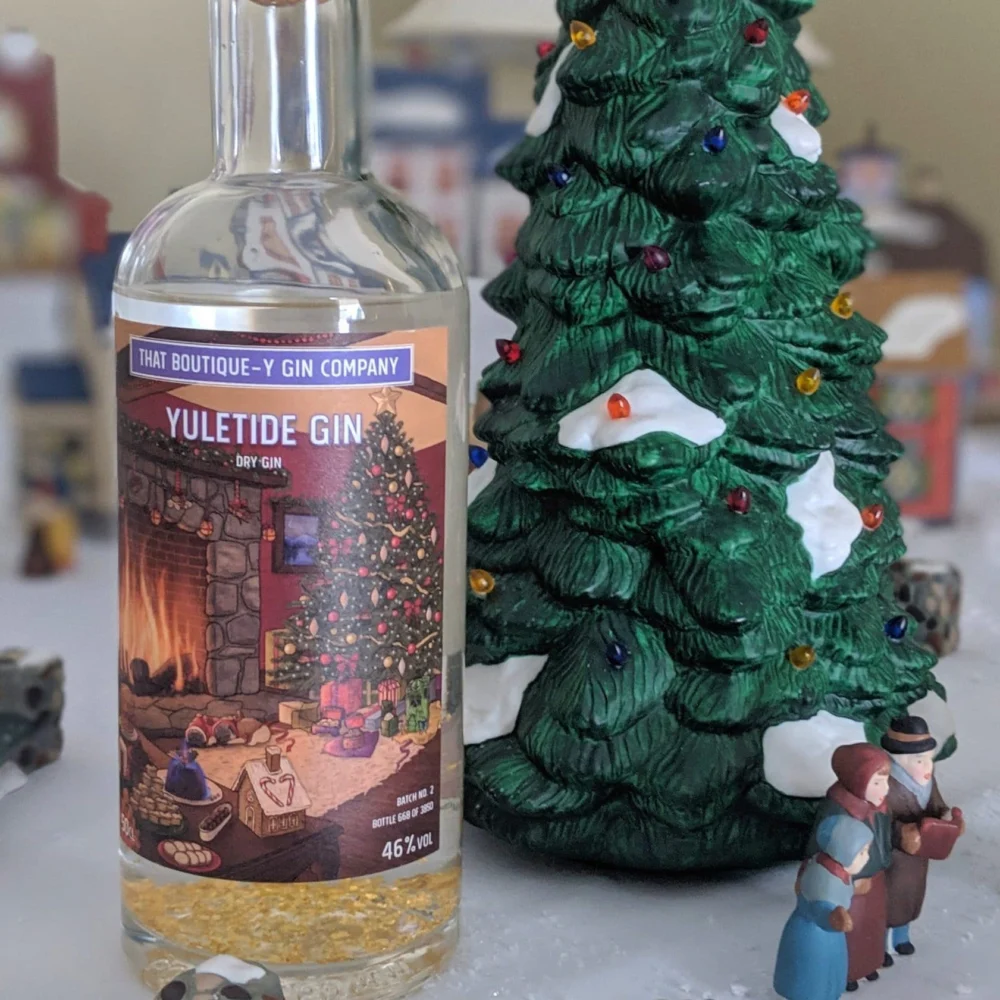
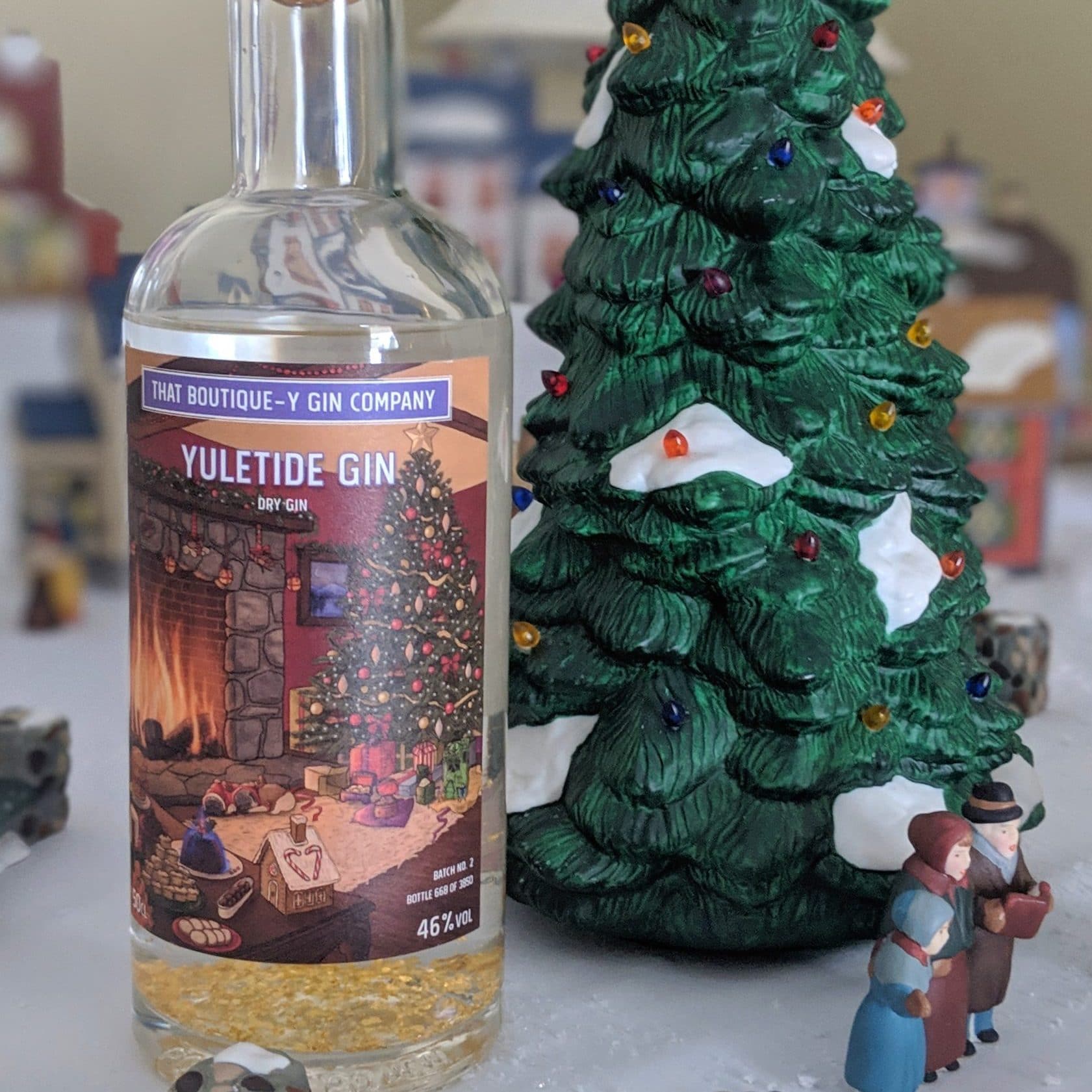
While some distillers aim for an evocative profile, That Boutique-y Gin Company has gained a reputation for a more literal, often whimsical approach to spirit production. Their Yuletide Gin is perhaps the most comprehensive "Christmas in a bottle" available on the modern market.
The botanical list for Yuletide Gin reads like a holiday shopping list. It includes an entire gingerbread house, along with traditional festive treats like Christmas cake and mince pies. Most notably, the spirit pays homage to the biblical Magi by including frankincense and myrrh as botanicals. To complete the visual aesthetic, the gin contains edible gold leaf, which creates a "snow globe" effect when the bottle is shaken. Despite what might seem like a gimmick, the spirit has been praised by critics for its balance, proving that even the most complex and crowded botanical bills can result in a harmonious product if the distillation is handled with expertise.
Aesthetic and Regional Variations
The Christmas gin market is not monolithic; it varies significantly based on regional preferences and climate.
Eden Mill and the Peppermint Trend
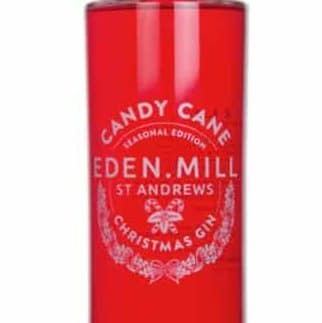
St. Andrews-based Eden Mill has tapped into a different holiday trope with their Candy Cane Gin. While many Christmas gins lean into the "brown" spices of baking, Eden Mill focuses on the cooling, crisp profile of peppermint. The most striking feature of this gin is its vibrant red color. In an era where consumers are increasingly wary of artificial dyes, Eden Mill achieves this hue naturally through the infusion of bilberries and hibiscus flowers. This dual-purpose gin has found a unique market niche, as its peppermint profile allows it to transition from a warming winter Hot Toddy to a refreshing summer Southside cocktail.
Four Pillars and the Southern Hemisphere Perspective
Australia’s Four Pillars Distillery offers a necessary counterpoint to the "snowy" imagery of Northern Hemisphere Christmas spirits. Their Australian Christmas Gin is a reflection of the holiday season in a climate where Christmas falls during the height of summer.
The production process for this gin is particularly labor-intensive. It begins with the distillation of actual Christmas puddings, which are placed in the botanical basket of the still. The resulting spirit is then aged for twelve months in 100-year-old Moscato wine barrels. This aging process adds a layer of complexity and a slight sweetness that mimics the dessert wine often served with holiday meals. The success of Four Pillars in the international market—having won International Gin Producer of the Year multiple times—highlights the global appetite for high-concept, aged seasonal spirits.
The Role of Alternative Spirits: Knaplund Yuletide Akvavit
While gin remains the dominant force in the seasonal market, other botanical spirits are beginning to gain traction. Aquavit (or Akvavit), a traditional Scandinavian spirit, is a natural companion to the Christmas season. Like gin, it is a neutral spirit flavored with botanicals, though it focuses on caraway or dill rather than juniper.
Knaplund’s Yuletide Akvavit serves as a "bonus" entry in the holiday spirit category, offering a profile that leans heavily into the "holiday cookie" aesthetic. With a nose dense in caraway, sweet anise, clove-pierced orange, and dill seed, it provides a savory-sweet alternative for those looking to move beyond the juniper-heavy profile of gin. The growth of seasonal Aquavit suggests that the "Christmas spirit" category is expanding to include a wider variety of traditional European distillates.
Market Data and Broader Implications
The rise of Christmas gins is supported by robust market data. According to reports from the Wine and Spirit Trade Association (WSTA), gin sales in the UK alone have consistently seen a "Christmas spike," with millions of bottles sold in the final quarter of the year. In 2022, flavored and seasonal gins accounted for nearly 40% of the total gin market by volume, a significant increase from a decade prior.
This trend reflects a broader shift in consumer behavior known as "premiumization." Consumers are increasingly willing to spend more on "limited edition" or "craft" products that offer a unique experience. For retailers, these seasonal offerings provide a high-margin product that drives foot traffic during the holiday shopping season.
However, the proliferation of Christmas gins also raises questions about market saturation. With dozens of new holiday expressions launching every year, distillers are under constant pressure to innovate. This has led to the use of increasingly exotic and expensive botanicals, which can impact the sustainability of the supply chain. Despite these challenges, the category shows no signs of slowing down.
Conclusion: The Future of the Festive Still
The evolution of Christmas gins from simple winter warmers to complex, scientifically advanced spirits reflects the ongoing creativity within the distilling industry. By utilizing diverse techniques—from vacuum distillation to barrel aging—and drawing on a global palette of flavors, distillers have successfully turned a seasonal tradition into a sophisticated market segment. Whether through the literal inclusion of gingerbread houses or the subtle influence of ancient wine barrels, these spirits offer a liquid narrative of the holiday season, ensuring that gin remains the ultimate canvas for seasonal expression. As we look toward future holiday seasons, the boundary between the kitchen and the distillery will likely continue to blur, promising even more adventurous and evocative spirits for the global consumer.
