

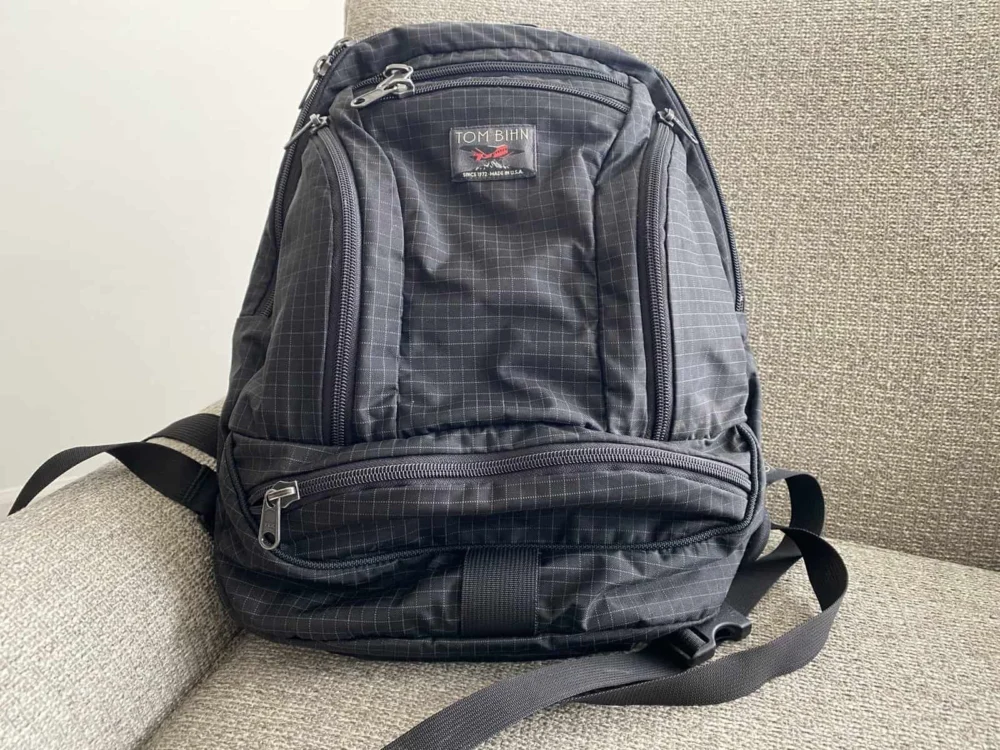
In a rare convergence of long-term property recovery and personal history, a backpack stolen during a 2017 residential burglary in Park Slope, Brooklyn, was returned to its rightful owner more than three years after the incident. The recovery, facilitated by a chance discovery during routine home maintenance and a subsequent social media outreach, highlights the enduring nature of property crime artifacts and the role of digital platforms in resolving cold cases of theft. The incident is particularly notable due to its timing, coinciding with a life-altering medical emergency for the victim, which has since framed the return of the items as a significant milestone in a protracted period of personal recovery.
The 2017 Burglary and the Confluence of Events
The origins of this case date back to August 2017, a period during which the victim, identified as Jodi Ettenberg, a former lawyer and travel writer, was residing in a temporary "house-sitting" arrangement in the Park Slope neighborhood of Brooklyn. The burglary occurred under circumstances that forensic analysts and victim advocates often cite as a "worst-case scenario" for property crime victims: the intrusion took place while the resident was absent due to a medical emergency.
At the exact time the perpetrator entered the residence—as confirmed by time-stamped surveillance footage from an internal security camera—Ettenberg was undergoing a lumbar puncture (spinal tap) at a nearby hospital. The medical procedure resulted in a traumatic injury that led to a spontaneous cerebrospinal fluid (CSF) leak, a condition that subsequently left her with a long-term disability.
During the commission of the crime, the unidentified assailant utilized a Tom Bihn Synapse daybag belonging to Ettenberg to consolidate stolen goods. The items removed from the premises included a laptop, high-value jewelry belonging to the primary tenants, and various personal effects. In a move that criminal psychologists might describe as an "anomaly of criminal behavior," the thief left behind Ettenberg’s Canadian passport and a five-dollar bill on a sofa before fleeing the scene. This detail suggests a targeted selection of high-liquidity assets while discarding identifying documents that could increase the risk of apprehension.
Chronology of Recovery: 2017 to 2021
The timeline of the backpack’s journey from a crime scene to its eventual recovery spans forty months, involving several key stages:

- August 2017: The burglary occurs in Park Slope. A police report is filed, but the suspect is not apprehended, and the property is logged as stolen/lost.
- August 2017 – Late 2020: The backpack remains undiscovered on the roof of a neighboring residence, approximately three houses away from the site of the original burglary.
- December 2020: A homeowner in Park Slope hires a professional chimney sweep to perform maintenance. During the cleaning of the chimney vent, the technician discovers the backpack tucked into the side of the ventilation structure.
- Mid-December 2020: The homeowner examines the contents, identifies Ettenberg through expired credit cards and business cards, and initiates contact via Facebook’s messaging system.
- January 2021: Ettenberg discovers the message in her "Message Requests" folder—a secondary inbox often overlooked by users due to platform filters.
- February 2021: A legal colleague of the victim, acting as a proxy, retrieves the bag from the Park Slope resident.
- March 2021: The bag is cleaned, refurbished, and returned to Ettenberg, marking the formal conclusion of the three-year saga.
Supporting Data: Property Crime and Recovery Statistics
The recovery of stolen property after a period exceeding three years is statistically improbable in major metropolitan areas. According to data from the Federal Bureau of Investigation’s (FBI) Uniform Crime Reporting (UCR) Program, the clearance rate for burglaries in the United States consistently hovers between 13% and 15%. "Clearance" typically refers to an arrest or the identification of a suspect, but it does not always guarantee the return of stolen property.
In New York City, the NYPD’s CompStat data for the 78th Precinct (covering Park Slope) showed that while burglary rates have fluctuated, the recovery of "soft goods" like backpacks is exceptionally rare. Most recovered property consists of vehicles or items with traceable serial numbers, such as high-end electronics. The fact that the bag was discarded on a roof is consistent with urban flight patterns of burglars, who often "dump" carrying cases and non-liquid assets in elevated or obscured locations immediately after exiting a target zone to minimize the profile of their haul.
Furthermore, the condition of the recovered items provides a case study in environmental impact on synthetic materials. The Tom Bihn Synapse bag, constructed from high-tenacity ballistic nylon, remained structurally sound despite three years of exposure to New York’s seasonal extremes, including snow, torrential rain, and high-UV summer heat. However, secondary items like prescription eyewear suffered "warping" of the frames due to thermal expansion and contraction, though the lenses remained intact.
The Role of Digital Purgatory and Social Media Outreach
The resolution of this case underscores a modern challenge in communication: the "Requests" folder filter on social media platforms like Facebook. Designed to prevent spam and harassment, these filters often divert legitimate messages from non-contacts into a secondary, unnotified inbox.
In this instance, the message from the "Good Samaritan" who found the bag sat unread for a month. Investigative experts suggest that many lost or stolen items are never returned because the finders and owners cannot establish a direct line of communication. The success of this recovery was dependent on the finder’s diligence in searching for the owner’s name—found on business cards from a travel meet-and-greet—and the owner’s eventual audit of her digital "purgatory" folders.
Impact and Victimological Analysis
The psychological impact of recovering property associated with a traumatic event is a recognized phenomenon in victimology. For Ettenberg, the backpack was not merely a utility item but a "time capsule" from the final moments of her life prior to becoming disabled.

The contents of the bag at the time of recovery included:
- Two pairs of prescription glasses (previously replaced at significant cost).
- Expired credit cards.
- Business cards.
- Tylenol and hand lotion.
- A blue die (not belonging to the owner, possibly left by the perpetrator or a previous user).
Victim advocates note that the return of such items can trigger "re-traumatization," where the victim is forced to relive the initial crime. Ettenberg described the experience as "kicking up sediment from the bottom of a lake," indicating that while the recovery was a "miracle" of probability, it required significant emotional labor to process.
Broader Implications and Conclusion
The conclusion of this case provides several takeaways for both law enforcement and the public. First, it highlights the importance of "indestructible" personal identifiers—such as business cards or durable tags—within bags, which can survive years of environmental exposure. Second, it serves as a reminder for individuals to periodically check secondary communication channels on social media platforms.
From a community perspective, the actions of the Park Slope homeowner and the chimney sweep represent a high standard of civic integrity. Rather than disposing of the weathered bag as refuse, the parties involved recognized the potential value of the identifying documents within.
Ultimately, the backpack was not retained by the original owner. Following its recovery, it was cleaned and gifted to another individual, a move that Ettenberg described as "transmuting the bad into something useful and kind." This act of "letting go" is often recommended by specialists as a way for crime victims to reclaim agency over their narrative.
While the laptop and jewelry remain unrecovered—a common outcome in urban burglaries—the return of the "miracle bag" stands as a rare outlier in the annals of New York City property crime, closing a three-year chapter that sat at the intersection of criminal opportunism and a profound personal health crisis. In the broader context of New York’s post-2017 crime landscape, the event remains a testament to the unpredictable ways in which the past can resurface in the present.
