

The publishing industry in 2022 marked a significant pivot toward themes of historical reckoning, the science of human perception, and the intersection of chronic health and societal structures. As global markets emerged from the acute phase of the COVID-19 pandemic, the literary output reflected a collective urge to process trauma while exploring the nuances of cultural identity. This analysis examines the year’s most influential titles across food science, fiction, narrative nonfiction, and psychological memoirs, highlighting how these works address the complexities of the modern era.
Culinary Arts and Cultural Preservation
The culinary literature of 2022 moved beyond mere recipe collection, focusing instead on the preservation of heritage and the scientific foundations of food preparation. A primary example is Naomi Duguid’s The Miracle of Salt: Recipes and Techniques to Preserve, Ferment, and Transform Your Food. Duguid, an award-winning writer known for her deep ethnographical approach to food, explores salt not just as a seasoning but as a fundamental pillar of civilization. The work documents global traditions of fermentation and preservation, including miso, sauerkraut, and brined eggs. This focus aligns with a broader 2022 trend in "slow food" and artisanal preservation, which saw a 15% increase in consumer interest according to market research data on home-cooking habits.
In the realm of regional exploration, Cynthia Shanmugalingam’s Rambutan: Recipes from Sri Lanka and Romy Gill’s On the Himalayan Trail: Recipes and Stories from Kashmir to Ladakh served as vital cultural documents. Shanmugalingam’s work arrived at a time of significant political and economic upheaval in Sri Lanka, providing a narrative of "edible joy" that countered the prevailing news cycles of crisis. Similarly, Romy Gill utilized her platform to spotlight the cuisine of Kashmir and Ladakh—regions often overshadowed by geopolitical conflict. By documenting over 80 recipes, Gill aimed to preserve the cultural memory of a territory where traditional lifestyles are increasingly threatened by instability.

The year also saw the release of The Explorer’s Library by the teams at Atlas Obscura and Gastro Obscura. This two-book set reflects the growing demand for "wonder-based" education, combining geography and gastronomy to illustrate the eccentricities of global cultures. This trend toward "curiosity-driven" literature has been noted by industry analysts as a reaction to the restricted travel of the previous two years.
Fiction as a Vehicle for Historical and Theological Inquiry
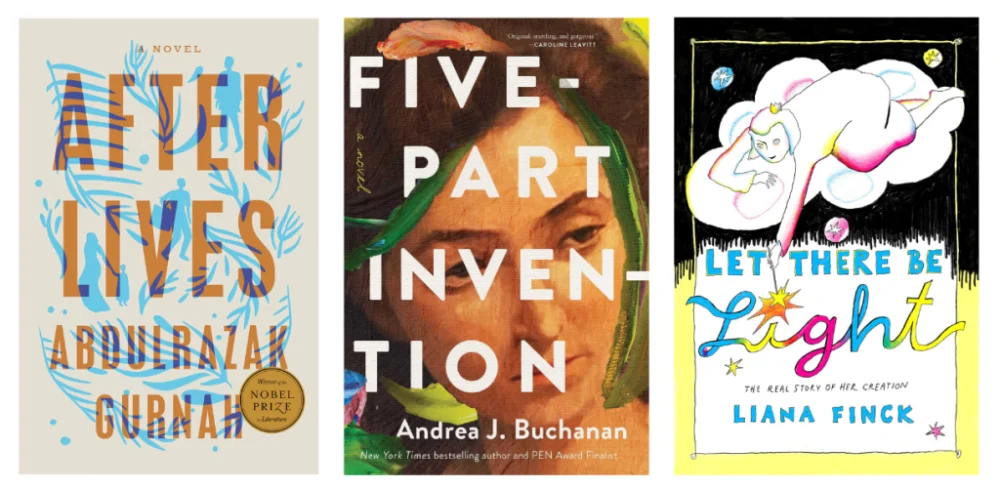
The fictional landscape of 2022 was characterized by a focus on intergenerational trauma and the subversion of traditional narratives. Andrea J. Buchanan’s Five-Part Invention explored the psychological weight of inherited trauma through the lives of five generations of women. This narrative structure reflects a growing interest in the literary world regarding how historical experiences are encoded into family legacies.
Theological retelling also saw a significant entry with Liana Finck’s Let There Be Light: The Real Story of Her Creation. By reimagining the Book of Genesis through a female perspective and setting ancient stories in modern New York City, Finck challenged traditional patriarchal interpretations of foundational myths. Critics noted that Finck’s work utilized humor and irreverence to prompt serious questions about social baggage and interpersonal ethics.
The North American release of the paperback edition of Afterlives by Nobel Laureate Abdulrazak Gurnah provided a critical perspective on the effects of German colonial rule in East Africa. Following four protagonists in what is now Tanzania, the novel examines the displacement and psychological scarring caused by colonization. Gurnah’s work, which was longlisted for the Orwell Prize of Political Fiction, exemplifies the 2022 literary trend of reclaiming narratives from the perspective of the colonized, offering a counter-history to Western-centric accounts of the early 20th century.

Narrative Nonfiction and the Science of Perception
In the nonfiction sector, 2022 was a year of profound scientific and historical investigation. Candice Millard’s River of the Gods provided a meticulous account of the search for the Nile’s headwaters. Millard’s research highlights the internal conflicts between British explorers Richard Burton and John Hanning Speke, but more importantly, it restores the narrative of Sidi Mubarak Bombay. Bombay, an formerly enslaved man from East Africa, was instrumental to the expedition’s success, yet his contributions were largely erased from colonial history. This restoration of marginalized figures is a cornerstone of modern historical scholarship.
The political and cultural status of Hong Kong was addressed in Louisa Lim’s Indelible City: Dispossession and Defiance in Hong Kong. Combining investigative journalism with memoir, Lim explored the city’s identity under both British colonialism and the current pressures from mainland China. The book debunked colonial myths and used the stories of local residents to illustrate the "knife-edge" of cultural survival in a rapidly changing political landscape.
Scientific inquiry into human and animal senses also flourished. Adriana Barton’s Wired for Music explored the neurological benefits of sound, arguing that music is a biological necessity for managing pain, sleep, and social anxiety. Simultaneously, Pulitzer Prize-winner Ed Yong released An Immense World, which examines the sensory realities of animal species. Yong’s work posits that every species lives in its own "Umwelt," or sensory bubble. By understanding how animals perceive vibrations, magnetic fields, and ultraviolet light, Yong encourages a more empathetic and comprehensive view of the natural world.
The psychology of belief was dissected in David McRaney’s How Minds Change. Amidst a global climate of political polarization and conspiracy theories, McRaney investigated the mechanics of persuasion. His findings suggest that empathy and rapport are more effective than logic-based confrontation in shifting entrenched opinions. This work has been cited by social psychologists as a crucial tool for navigating the "post-truth" era of digital communication.

Memoirs and the Reimagining of Chronic Health
A major theme in 2022 was the literary exploration of the "invisible" experience—specifically chronic illness and the psychological impact of trauma. Meghan O’Rourke’s The Invisible Kingdom: Reimagining Chronic Illness became a definitive text in this category. O’Rourke, an Ehlers-Danlos Syndrome (EDS) patient, combined personal narrative with medical history to critique Western medicine’s inability to handle complex, multisystemic diseases. The book’s release coincided with the rise of "Long COVID," providing a framework for understanding the millions of patients currently navigating post-viral states.
Gabor Maté, in collaboration with his son Daniel Maté, released The Myth of Normal: Trauma, Illness, and Healing in a Toxic Culture. Maté argued that the modern medical system often ignores the link between emotional trauma and physical disease. By differentiating between "Big T" trauma (violence, disaster) and "small t" trauma (attachment issues, social isolation), Maté presented a case for a more holistic approach to health. Data from the Centers for Disease Control (CDC) regarding Adverse Childhood Experiences (ACEs) supports Maté’s thesis that early trauma is a significant predictor of adult health outcomes.
The concept of resilience was further explored in Mike Mariani’s What Doesn’t Kill Us Makes Us. Mariani challenged the cliché that trauma inherently makes individuals stronger, suggesting instead that the goal should be "amor fati"—a love of one’s fate. Through the stories of individuals who suffered catastrophic life changes, Mariani argued that meaning is not found in the tragedy itself, but in the identity formed in its aftermath.
Susan Cain, following her success with Quiet, published Bittersweet: How Sorrow and Longing Make Us Whole. Cain’s work advocates for the acceptance of sadness as a necessary component of human connection and creativity. This sentiment was echoed in Ella Francis Sanders’ Everything, Beautiful, which utilized illustrations to encourage readers to find "miraculous" beauty in mundane experiences.

Broader Impact and Implications
The literary output of 2022 suggests a global society in the process of deep introspection. The prevalence of books regarding trauma, ancestry (such as Maud Newton’s Ancestor Trouble), and disability rights (Alice Wong’s Year of the Tiger) indicates a shift away from "productivity-focused" self-help toward "healing-focused" narratives.
Alice Wong’s Year of the Tiger served as a particularly potent call to action, using a mix of essays and art to highlight the systemic ableism in modern society. Wong’s work, alongside that of O’Rourke and Maté, underscores a growing demand for a "care-based" economy and a more accessible world.
From a market perspective, the success of these titles demonstrates that readers are increasingly seeking "dense" and "thought-provoking" content over superficial entertainment. The integration of science, history, and personal memoir has created a hybrid genre that addresses the multifaceted challenges of the 21st century. As these books continue to influence public discourse, they provide a roadmap for navigating the complexities of health, history, and human connection in an increasingly fragmented world.
