

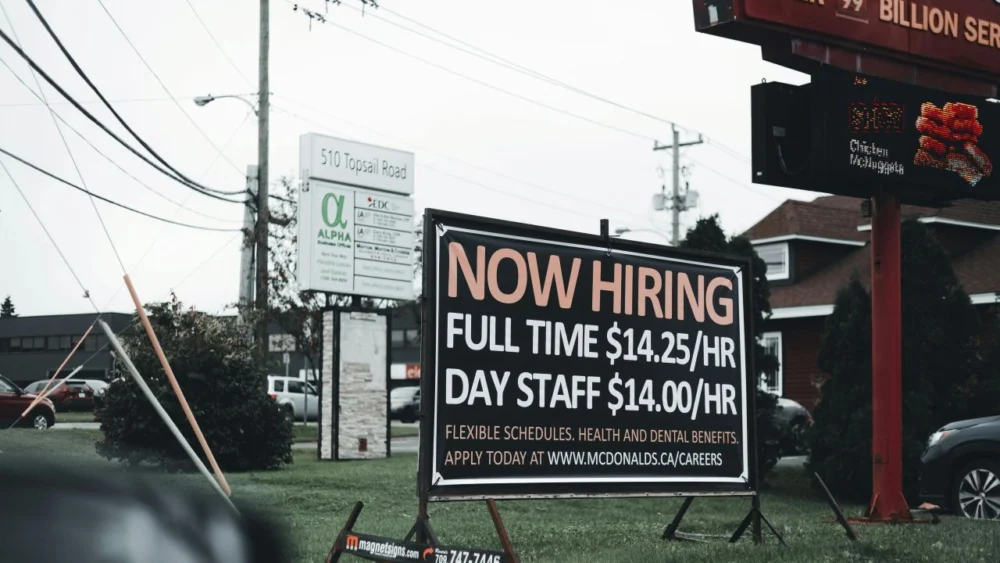
February 2026 saw a surprising contraction in the U.S. labor market, with employers shedding 92,000 jobs, a stark contrast to economists’ forecasts of a 50,000-job gain. This downturn pushed the national unemployment rate up to 4.4% from 4.3% in January, a month that had initially shown promise with an addition of 126,000 jobs. The Bureau of Labor Statistics (BLS) released these figures on Friday morning, painting a concerning picture for the early months of 2026.
The first two months of the year have collectively seen the U.S. economy add a mere 34,000 net positions. This follows a modest increase of 116,000 positions for the entirety of 2025, according to data compiled by the National Restaurant Association. The February report marks a significant deviation from the gradual, albeit slow, job growth observed in the preceding year and a half.
Winter Storm Fern’s Disruptive Force on Employment
A significant contributing factor to February’s job losses, particularly within the leisure and hospitality sector, was the widespread impact of Winter Storm Fern. The severe weather system, which swept across large swaths of the country in late January and early February, is believed to have disrupted business operations, leading to temporary closures and reduced staffing needs.
For the restaurant and bar industry specifically, February proved to be a difficult month. Nearly 30,000 jobs were lost in this sector alone, breaking a streak of eight consecutive months of employment increases. The broader leisure and hospitality segment mirrored this trend, experiencing a net loss of 27,000 jobs during the same period. This setback is particularly concerning for an industry that has been a crucial engine of job creation in the post-pandemic recovery.
Economic Uncertainty and Consumer Confidence
Beyond the immediate impact of the winter storm, broader economic uncertainties continue to cast a shadow over the labor market. Persistent concerns regarding tariff policies and the ongoing geopolitical tensions, including the protracted conflict with Iran, are likely contributing to a more cautious hiring environment for businesses across various sectors.
The rise in the unemployment rate is also expected to influence consumer behavior. A higher unemployment rate can lead to decreased consumer confidence, potentially impacting discretionary spending. This, in turn, can affect demand for services like dining out, creating a ripple effect that discourages businesses from expanding their workforces.
National Restaurant Association’s Perspective
The National Restaurant Association has been closely monitoring these labor trends, emphasizing the need for operators to adapt to a backdrop of softer demand. The recent slowdown in restaurant job growth has, in fact, coincided with a softening of sales. Data indicates that total consumer spending at eating and drinking places experienced declines in both December and January. This softening demand has prompted some operators to put hiring plans on hold or even reduce staffing levels.
While the February figures present a challenging outlook, the National Restaurant Association suggests that this dip may not necessarily signal an imminent prolonged downturn. They attribute a significant portion of the decline to the outsized impact of the widespread winter storms. Historically, severe weather events have caused temporary disruptions to employment figures, and the market may rebound as conditions normalize.
Long-Term Employment Trends in the Restaurant Sector
Despite the February setback, restaurant staffing levels, on average, remain above pre-pandemic benchmarks. As of February 2026, employment in eating and drinking places was 0.3% higher than in February 2020, representing approximately 42,000 more jobs. This indicates a degree of resilience and recovery since the onset of the COVID-19 pandemic.
However, a closer look at segment-specific data reveals a more nuanced picture. Full-service restaurants, which bore the brunt of job losses during the initial phase of the pandemic, having shed nearly 3.7 million jobs in the first two months of 2020, are still in a recovery phase. As of January 2026, employment in this segment was still 204,000 jobs, or 3.6%, below pre-pandemic levels. Despite this deficit, full-service restaurants have demonstrated healthy staffing growth in recent months, adding a net of 76,000 jobs between January 2025 and January 2026.
.jpg?width=1280&&quality=80&format=jpg&disable=upscale)
In contrast, the limited-service segments, encompassing snack and coffee shops, quick-service restaurants, and fast-casual establishments, have shown more robust recovery and growth. These segments collectively added 82,000 jobs during the same January 2025 to January 2026 period.
Segment-Specific Employment Gains
Delving deeper into the limited-service categories, employment at snack and nonalcoholic beverage bars, including establishments like coffee, doughnut, and ice cream shops, stood 201,000 jobs, or 25%, above pre-pandemic levels as of January 2026. This segment has experienced a significant surge in demand and expansion.
Quick-service and fast-casual restaurants have also shown strong recovery, with employee counts standing 96,000 jobs, or 2.1%, above their pre-pandemic figures. These segments have benefited from evolving consumer preferences for convenience and value, which have remained strong even amidst broader economic concerns.
Analyzing the Implications
The February jobs report serves as a critical indicator of the current economic climate. The unexpected decline in employment, coupled with the rising unemployment rate, suggests that the economic recovery may be facing headwinds. For the restaurant industry, the dependence on consumer discretionary spending makes it particularly vulnerable to shifts in economic sentiment and purchasing power.
The impact of Winter Storm Fern highlights the susceptibility of certain sectors to exogenous shocks. While the storm’s impact is likely temporary, it underscores the need for businesses to build resilience into their operational plans to mitigate the effects of such events.
The divergence in recovery rates between full-service and limited-service restaurants also points to changing consumer habits and industry dynamics. The continued strength of limited-service models, driven by convenience and affordability, may continue to shape the future landscape of the restaurant industry. Meanwhile, full-service establishments face the ongoing challenge of regaining pre-pandemic employment levels and adapting to evolving consumer expectations.
The confluence of factors – the lingering effects of global economic uncertainty, the immediate disruption from severe weather, and evolving consumer spending patterns – paints a complex picture for the U.S. labor market. The coming months will be crucial in determining whether February’s downturn represents a temporary blip or the beginning of a more sustained period of economic recalcitrance. Businesses, policymakers, and consumers alike will be closely watching upcoming economic indicators for signs of stabilization and renewed growth.
The National Restaurant Association’s analysis, while acknowledging the immediate challenges, offers a tempered perspective, suggesting that the underlying strength of the industry may prevail. However, the sector, like the broader economy, will need to navigate a landscape marked by both domestic and international economic pressures. The ability of businesses to adapt, innovate, and respond to changing consumer demands will be paramount in the months ahead.
The job losses in February, while concerning, also serve as a reminder of the dynamic nature of the labor market. The resilience demonstrated by certain segments of the restaurant industry, particularly limited-service operations, provides a glimmer of optimism and points to areas of potential growth and opportunity. The challenge for the industry and the economy as a whole will be to foster an environment that supports broad-based job creation and sustained economic stability.
This report was compiled by Alicia Kelso, Executive Editor at Nation’s Restaurant News, on March 6, 2026. The article provides a detailed analysis of the February 2026 jobs report, with a particular focus on the restaurant industry’s performance and the factors influencing its employment landscape.
