

The 2022 literary landscape was defined by a profound shift toward introspective narratives, complex scientific inquiries, and the preservation of global culinary traditions. As the publishing industry navigated the post-pandemic era, book sales in the United States remained resilient, with NPD BookScan reporting that while total units sold saw a slight decrease from the record-breaking highs of 2021, they remained significantly above 2019 levels. This period saw a heightened interest in titles that addressed chronic health, generational trauma, and the scientific nuances of human and animal perception. The following curation identifies the most influential works of the year, categorized by their contribution to contemporary discourse and their impact on their respective genres.
The 2022 Publishing Cycle and Market Trends
The year 2022 began with a focus on historical reckoning and ended with a surge in "trauma-informed" self-help and memoir literature. According to industry analysis, the "Adult Nonfiction" category saw sustained growth, particularly in areas related to personal growth and social science. The release of major works by Pulitzer Prize-winning journalists and Nobel laureates provided a rigorous backbone to the year’s offerings. Simultaneously, the culinary world saw a move away from generalized "fusion" cooking toward hyper-localized narratives, focusing on specific regions such as Sri Lanka, Kashmir, and the intricacies of ancient preservation techniques.
Culinary Heritage and the Preservation of Global Traditions
The year’s most significant food-focused literature moved beyond simple recipe collections, functioning instead as ethnographic studies of culture and survival. Naomi Duguid’s The Miracle of Salt: Recipes and Techniques to Preserve, Ferment, and Transform Your Food served as a cornerstone for this trend. Duguid, a veteran food traveler, explored the global reliance on salt not merely as a seasoning but as a fundamental pillar of human civilization. The work details techniques for sauerkraut, miso, and brined eggs, providing a technical bridge between ancient tradition and modern home kitchens.

In a similar vein of cultural preservation, Cynthia Shanmugalingam’s Rambutan: Recipes from Sri Lanka addressed a notable gap in the North American culinary market. While South Asian cuisine is often dominated by Indian narratives in Western media, Shanmugalingam provided a distinct voice for Sri Lankan heritage. The book’s success coincided with a growing interest in regional South Asian diets, emphasizing the "joy" of immigrant narratives through photography and storytelling.
Romy Gill’s On the Himalayan Trail: Recipes and Stories from Kashmir to Ladakh furthered this regional exploration. Gill, an MBE recipient for her services to the hospitality industry, documented over 80 recipes from a region often defined by political conflict rather than its rich cultural output. Analysts suggest that such works are vital for the "cultural archiving" of regions where political instability threatens traditional practices.
Narrative Nonfiction and Geopolitical Inquiry
The nonfiction sector in 2022 was marked by high-stakes investigative reporting and historical reassessments. Candice Millard, a master of narrative nonfiction, released River of the Gods: Genius, Courage, and Betrayal in the Search for the Source of the Nile. The book re-examines the 19th-century expeditions of Richard Burton and John Hanning Speke. Crucially, Millard brings to the forefront the story of Sidi Mubarak Bombay, a formerly enslaved man whose contributions were essential to the expedition’s survival but were largely erased from colonial historical accounts.
In the realm of modern geopolitics, Louisa Lim’s Indelible City: Dispossession and Defiance in Hong Kong provided a timely investigation into the city’s identity. Lim, an award-winning correspondent, utilized a blend of memoir and reportage to dismantle historical myths surrounding British colonialism and the current pressures exerted by the Chinese government. The book was praised by critics for its focus on the "lived experience" of Hong Kong’s residents, offering a nuanced perspective on the struggle for cultural autonomy.

The Scientific Frontier: Perception and Persuasion
Two of the year’s most discussed titles explored the boundaries of how living beings interact with reality. Ed Yong, who received the Pulitzer Prize for his reporting on the COVID-19 pandemic, released An Immense World: How Animal Senses Reveal the Hidden Realms Around Us. Yong’s work introduces the concept of the "Umwelt"—the specific perceived world of an organism. By explaining how animals utilize infrasound, magnetic fields, and complex vibrations, Yong challenges the human-centric view of the planet.
Complementing this exploration of perception was David McRaney’s How Minds Change: The Surprising Science of Belief, Opinion, and Persuasion. In an era of extreme political polarization, McRaney’s research into the mechanics of self-persuasion and rapport-building offered a data-backed approach to communication. The book posits that empathy and the creation of safe psychological environments are more effective at shifting entrenched beliefs than logic-based confrontation.
Contemporary Fiction: Generational Trauma and Reimagined Mythos
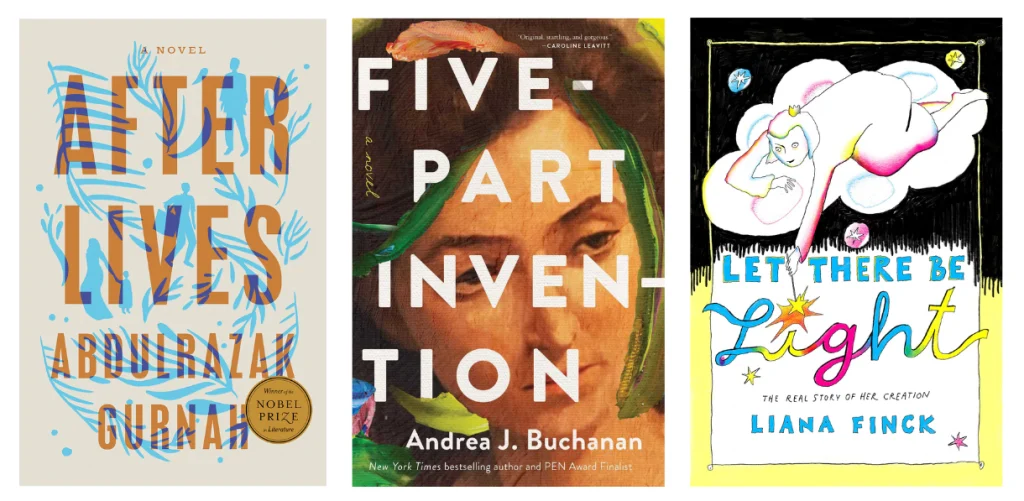
The fiction of 2022 often grappled with the weight of the past. Abdulrazak Gurnah, the 2021 Nobel Prize in Literature winner, saw the North American release of Afterlives. The novel, longlisted for the Orwell Prize for Political Fiction, tracks the impact of German colonial rule in East Africa across several generations. It has been cited by literary critics as a vital work for understanding the long-term psychological effects of colonization.
Andrea J. Buchanan’s Five-Part Invention also explored generational themes, specifically the "haunting" nature of inherited trauma. Meanwhile, Liana Finck’s Let There Be Light: The Real Story of Her Creation offered a subversive, illustrated retelling of the Book of Genesis. By portraying the deity as female and setting biblical figures in modern-day New York, Finck’s work prompted a critical dialogue on the role of gender and humor in religious narratives.

Memoir and the Rise of Trauma-Informed Literature
Perhaps the most significant trend in 2022 was the emergence of literature focusing on chronic illness and the systemic failures of modern medicine. Meghan O’Rourke’s The Invisible Kingdom: Reimagining Chronic Illness became a definitive text for the millions of individuals navigating autoimmune and post-viral conditions. O’Rourke, a finalist for the National Book Award, combined her personal experience with Ehlers-Danlos Syndrome (EDS) with extensive medical interviews to critique Western medicine’s inability to manage complex, "invisible" diseases.
This theme was echoed in Gabor Maté’s The Myth of Normal: Trauma, Illness, and Healing in a Toxic Culture. Co-written with his son Daniel, the book argues that modern society’s "normal" is inherently pathological. Maté posits that "small t" and "big T" traumas act as epigenetic triggers for physical disease, a theory that has gained significant traction in the fields of psychology and integrative medicine.
Alice Wong’s Year of the Tiger: An Activist’s Life added a necessary layer to the disability discourse. Wong, a prominent disability rights activist, used a non-linear format of essays and illustrations to highlight the systemic ableism inherent in global infrastructure. Unlike traditional "inspirational" memoirs, Wong’s work was noted for its sharp wit and refusal to cater to the "pity" narrative, instead demanding institutional change.
Critical Reception and Official Responses
The books curated in 2022 received widespread acclaim from major literary institutions. An Immense World was named one of the Top 10 Books of the Year by the New York Times, while The Invisible Kingdom was a finalist for the National Book Award for Nonfiction. The success of these titles indicates a shift in consumer demand toward high-density information presented through compelling personal narratives.

Publishers Weekly noted that the success of works like Bittersweet by Susan Cain—which explores the necessity of embracing sorrow—reflects a "collective mourning" period following the global pandemic. Cain’s work, which debuted at number one on the New York Times Best Seller list, suggests that readers are increasingly seeking literature that validates difficult emotional states rather than offering simplistic "toxic positivity."
Broader Societal Impact and Implications
The literature of 2022 serves as a mirror to a society in transition. The prominence of books on critical thinking, such as Julie Bogart’s Raising Critical Thinkers, suggests a growing concern among the public regarding digital misinformation and the education of the next generation. Similarly, the popularity of Yung Pueblo’s Lighter and Ella Francis Sanders’ Everything, Beautiful indicates a movement toward mindfulness and the intentional search for "miraculous" moments in mundane life.
As the year concluded, the impact of these works extended beyond the page, influencing public policy discussions on disability access, healthcare reform for chronic patients, and the diplomatic importance of cultural heritage. The 2022 literary output reaffirmed the role of the written word as a tool for both personal healing and global understanding, bridging the gap between scientific complexity and the human experience.
