

The publishing landscape of 2022 was defined by a profound exploration of human resilience, the decolonization of culinary narratives, and a rigorous scientific inquiry into the nature of perception and belief. As the global community moved further into a post-pandemic reality, literary trends shifted toward works that address intergenerational trauma, the complexities of chronic illness, and the preservation of marginalized cultural histories. This curated selection of titles represents a significant cross-section of the year’s most impactful contributions to food, fiction, and nonfiction, reflecting a societal demand for nuance in an increasingly polarized world.
Global Culinary Perspectives: Beyond Traditional Boundaries
The year 2022 saw a significant shift in food journalism and cookbook publishing, moving away from generalized regional descriptions toward hyper-localized and technique-driven narratives. This movement is exemplified by Naomi Duguid’s The Miracle of Salt: Recipes and Techniques to Preserve, Ferment, and Transform Your Food. Duguid, an award-winning writer known for her deep ethnographic approach to culinary traditions, explores salt not merely as a seasoning but as a fundamental pillar of human civilization. The work documents how salt-based preservation—such as the creation of miso in Japan, sauerkraut in Eastern Europe, and brined eggs in Southeast Asia—has historically allowed communities to survive and thrive. Industry analysts note that Duguid’s work arrives at a time of renewed interest in fermentation science, a market segment that has seen steady growth as consumers prioritize gut health and traditional foodways.
Parallel to this technical exploration is the rise of regional South Asian narratives. Cynthia Shanmugalingam’s Rambutan: Recipes from Sri Lanka and Romy Gill’s On the Himalayan Trail: Recipes and Stories from Kashmir to Ladakh represent a critical effort to distinguish specific regional identities from the broader "Indian cuisine" umbrella often found in Western markets. Shanmugalingam’s work provides a vibrant look at Sri Lankan joy through photography and family recipes, while Gill’s exploration of Kashmir and Ladakh serves a dual purpose: culinary education and cultural preservation. Given the ongoing political instability in the Kashmir region, Gill’s documentation of local recipes and stories acts as a vital archive of a culture that is increasingly difficult for outsiders to access.

Contemporary Fiction and the Reclamation of History
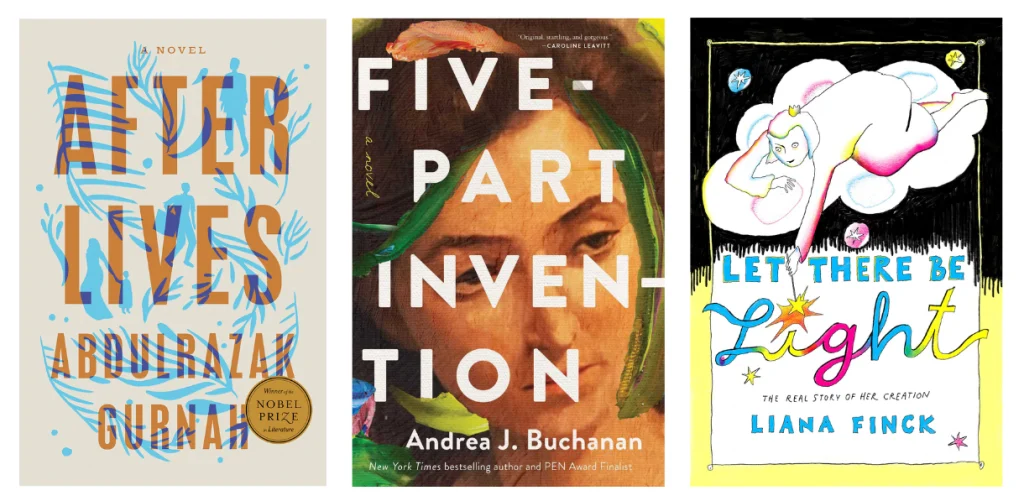
In the realm of fiction, 2022 was marked by stories that challenge established hierarchies—whether religious, colonial, or familial. Liana Finck’s Let There Be Light: The Real Story of Her Creation offers a subversive, illustrated retelling of the Book of Genesis. By depicting the Creator as female and placing biblical figures like Abraham in modern-day New York City, Finck uses humor and irreverence to prompt a re-evaluation of how religious narratives shape modern social interactions.
Historical fiction continued to serve as a medium for reckoning with colonial legacies. Abdulrazak Gurnah’s Afterlives, which saw its North American paperback release in 2022, follows four protagonists in East Africa during the era of German colonial rule. Gurnah, a Nobel Prize laureate, examines the lifelong psychological and social disruptions caused by colonization, specifically focusing on the forced conscription of young boys into colonial militias. Critics have lauded the book for its ability to humanize the statistics of colonial history, highlighting the long-term impact of displacement on individual identity.
Domestic fiction also explored the "architecture of trauma." Andrea J. Buchanan’s Five-Part Invention traces the lives of five generations of women, examining how unresolved trauma is transmitted through families. This thematic focus on "epigenetic storytelling" mirrors a broader literary trend toward understanding the psychological roots of behavior across decades.
The Frontiers of Science, Sound, and Persuasion
Nonfiction in 2022 was characterized by a synthesis of dense scientific data and compelling narrative storytelling. Ed Yong, a Pulitzer Prize-winning science journalist, released An Immense World: How Animal Senses Reveal the Hidden Realms Around Us. Yong’s work challenges the human-centric view of reality by detailing the "Umwelt"—the unique sensory world—of various animal species. By explaining how animals navigate through vibrations, magnetic fields, and ultrasonic sounds, Yong encourages readers to recognize the limitations of human perception. The book has been cited by educators as a masterclass in science communication, making complex biological concepts accessible to a general audience.

The psychology of belief was another focal point of the year. David McRaney’s How Minds Change: The Surprising Science of Belief, Opinion, and Persuasion investigates why people cling to conspiracy theories and how genuine persuasion occurs. McRaney’s research suggests that logic and facts are often ineffective in changing minds; instead, empathy and the creation of rapport are necessary to allow individuals to persuade themselves. This analysis is particularly relevant in the context of the global "outage economy," where digital algorithms often reinforce existing biases.
Furthermore, Adriana Barton’s Wired for Music examines the intersection of neuroscience and art. Barton explores how music functions as a biological necessity, aiding in the treatment of anxiety, insomnia, and chronic pain. This work contributes to a growing body of evidence suggesting that aesthetic experiences have measurable physiological benefits, positioning music as a legitimate tool in integrative medicine.
Navigating the "Invisible Kingdom" of Chronic Illness
A significant portion of the 2022 literary output focused on the lived experience of chronic illness and the limitations of modern healthcare. Meghan O’Rourke’s The Invisible Kingdom: Reimagining Chronic Illness became a cornerstone of this discourse. O’Rourke, drawing on her own experience with autoimmune conditions and Ehlers-Danlos Syndrome (EDS), critiques the Western medical model for its inability to address "invisible" or poorly understood diagnoses. The book resonated strongly with the "Long COVID" community, providing a framework for understanding the marginalization and exhaustion that often accompany chronic post-viral states.
Gabor Maté and Daniel Maté’s The Myth of Normal: Trauma, Illness, and Healing in a Toxic Culture expanded this conversation by linking physical disease to social and environmental factors. Maté argues that "Big T" trauma (obvious abuse or violence) and "little t" trauma (disruptions in attachment or chronic stress) act as epigenetic triggers for illness. The book serves as a call for a systemic overhaul of how society views health, moving away from a purely symptomatic approach toward one that considers the patient’s entire life history.

Historical Investigations and the Search for Identity
The year also featured rigorous investigations into the intersection of personal ancestry and geopolitical history. Louisa Lim’s Indelible City: Dispossession and Defiance in Hong Kong provides a definitive account of the city’s struggle for identity. Lim, an award-winning reporter, dispels colonial myths and examines the "knife-edge" that residents walk between British colonial history and the current suppression by the Chinese state.
On a more personal scale, Maud Newton’s Ancestor Trouble: A Reckoning and a Reconciliation explores the phenomenon of the "ancestry obsession." Newton investigates her own family history—which includes stories of institutionalization and multiple marriages—to understand how the transgressions of ancestors influence the present. As at-home DNA testing becomes a billion-dollar industry, Newton’s work offers a timely critique of the desire to find meaning in one’s genetic past.
Broader Impact and Industry Implications
The themes prevalent in the 2022 book market—resilience, the science of empathy, and the decolonization of history—reflect a broader cultural shift. According to industry data from organizations like the Association of American Publishers (AAP), there has been a sustained interest in "social science" and "self-help" categories that offer more than superficial advice. Readers are increasingly seeking "hard-won wisdom" from authors who have navigated significant personal or professional challenges.
The success of activists like Alice Wong, whose book Year of the Tiger: An Activist’s Life combines prose, recipes, and transcripts, indicates a growing market for experimental formats that center disabled voices. Wong’s work challenges the "inspirational" trope often assigned to disability memoirs, instead focusing on institutional ableism and the joy found in community activism.

In conclusion, the literary contributions of 2022 suggest a global audience that is hungry for depth. Whether through the lens of a Kashmiri kitchen, the sensory world of a honeybee, or the diagnostic rooms of a chronic illness clinic, these works emphasize that understanding is a prerequisite for empathy. As the world continues to grapple with rapid technological and social change, these books provide a necessary anchor, reminding readers that meaning is not found in the avoidance of tragedy, but in the intentional effort to find beauty and connection in its aftermath.
