

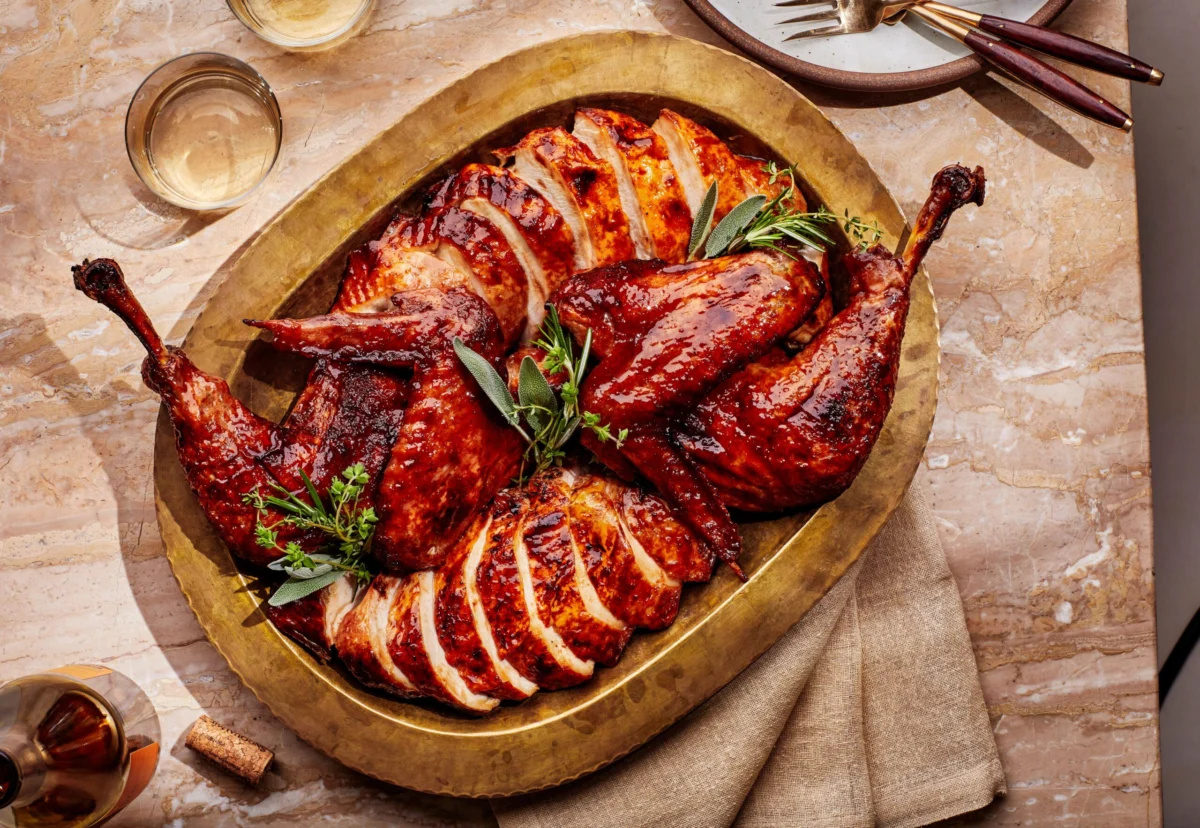
Thanksgiving turkey, a quintessential American symbol, finds itself annually at the center of a persistent culinary debate, polarizing diners and culinary experts alike. Despite its entrenched role as the holiday’s traditional centerpiece, a vocal segment of the population consistently questions its place, prompting widespread discussions about the intersection of tradition, taste, and the evolving dynamics of modern food culture. This article delves into the historical context of turkey’s prominence, analyzes contemporary criticisms, presents culinary defenses, and explores the broader societal implications of this perennial discourse.
Historical Roots and Cultural Significance
The presence of turkey at American holiday tables stretches back centuries, though its status as the undisputed centerpiece of Thanksgiving was not always as firm as it is today. Early colonial feasts, while often featuring wild fowl, were eclectic affairs that could include venison, seafood, and other game. The narrative of turkey as the primary dish gained significant traction in the 19th century, largely popularized by writers like Sarah Josepha Hale, whose tireless advocacy for a national Thanksgiving holiday and her detailed descriptions of the ideal feast (often featuring a roasted turkey) helped solidify its image.
President Abraham Lincoln’s proclamation of Thanksgiving as a national holiday in 1863 further cemented these culinary associations. By the turn of the 20th century, turkey had become synonymous with the holiday, evolving into a powerful symbol of abundance, family gathering, and national unity. Its size made it ideal for feeding large groups, and its relative novelty—not being a common weeknight meal—elevated the occasion, marking it as distinct and special. This "special occasion" status, reserved largely for holidays, has historically been a key part of its appeal, distinguishing it from more commonplace poultry like chicken. The act of roasting a large bird became a ritual, a focal point around which families gathered, signifying celebration and gratitude.
The Rise of the "Anti-Turkey" Sentiment: A Chronology of Culinary Dissent
While anecdotal complaints about dry or bland turkey have likely existed in kitchens for generations, the formalization and amplification of "anti-turkey" sentiment gained significant momentum with the advent of digital media and the rise of online contrarianism. Before the internet, such culinary preferences were largely confined to family discussions or specific restaurant reviews. However, the 2010s marked a noticeable shift. This era witnessed the emergence of viral food debates, such as the "cake vs. pie wars," where seemingly innocuous personal tastes morphed into online battlegrounds, demonstrating how individual preferences could be weaponized for digital engagement and attention.
The year 2020 proved to be a significant turning point in the public discourse surrounding Thanksgiving turkey. A confluence of factors, including increased time spent online during the pandemic and a general societal trend towards questioning established norms, provided fertile ground for critical takes on the traditional bird. Major culinary and lifestyle publications began to openly challenge turkey’s supremacy:
- Business Insider published an article unequivocally titled, "Why You Should Skip Turkey for Thanksgiving Dinner," arguing against its inclusion on the holiday table.
- Vox weighed in, criticizing the "horrifying numbers of turkeys wasted every year" in service of what it described as "a dry, flavorless bird no one likes," injecting a note of environmental and economic concern into the debate.
- Milk Street, a publication known for its innovative approaches to cooking, took a particularly provocative stance, claiming that anyone who genuinely likes turkey must be "pretending," thereby challenging the authenticity of its enjoyment.
- Even Bon Appétit, a traditionally mainstream culinary magazine, referred to the bird as "The Big Freaky Chicken," a moniker that, while perhaps tongue-in-cheek, underscored a perception of turkey as an unwieldy and potentially unappetizing centerpiece.
This period saw social media platforms amplify these criticisms, transforming individual preferences into widespread "takes" and fostering "hater armies" around various food items. The phenomenon became less about genuine culinary dislike for some, and more about engaging in a form of identity politics through food choices, often driven by the "attention economy" of online platforms.
The Case for the Traditional Turkey: Culinary and Cultural Defenses
Despite the vocal opposition, millions of turkeys are still prepared and consumed annually, suggesting a strong counter-narrative exists among home cooks and culinary professionals. Proponents of the traditional turkey argue that many of the complaints stem not from an inherent flaw in the bird itself, but from inadequate preparation.
Beyond Blandness: The Art of Preparation
Culinary experts consistently highlight that achieving a "juicy and golden" turkey requires specific techniques and attention to detail. Methods such as brining (soaking the bird in a salt solution), roasting en papillote (cooking in parchment paper), spatchcocking (removing the backbone to flatten the bird), and meticulous temperature control are crucial. Chefs and experienced home cooks emphasize that the perceived blandness or dryness is often a result of overcooking or a lack of seasoning and moisture retention. The meat, when properly prepared, offers a "subtle butteriness" and a "wilder note" that even commercially raised birds can retain, distinguishing it from other poultry. The dark meat, with its richer flavor and higher fat content, stands in contrast to the leaner white meat, offering a diverse textural and taste experience within a single bird.
The Culinary Challenge and Reward
For many who enjoy cooking, the preparation of a Thanksgiving turkey represents a significant, yet rewarding, culinary challenge. Unlike everyday meals, roasting a turkey demands planning, effort, and precision. This undertaking is often compared to other beloved, tricky dishes whose mastery brings immense satisfaction. The exhilaration of overcoming the challenge—ensuring the breast remains moist while the legs cook through—is a core part of the holiday cooking experience. The result is not just a meal, but a triumphant centerpiece that garners admiration and reinforces the cook’s skill.
The Centerpiece Aesthetic and Leftovers
Beyond taste, the turkey’s visual impact on the Thanksgiving table is undeniable. Its sheer size and golden-brown presentation signify the special nature of the meal, serving as a powerful aesthetic anchor for the feast. Furthermore, a significant part of turkey’s appeal lies in its ample leftovers. This abundance extends the celebration, providing unique culinary opportunities for days following Thanksgiving. Dishes like turkey congee, turkey pot pie, and turkey melts are cherished post-holiday creations that would not exist without the initial feast. This tradition of repurposing leftovers speaks to a broader cultural appreciation for resourcefulness and extending the joy of abundance, effectively reducing waste and maximizing the value of the holiday meal.
Statistical Snapshot: Turkey’s Enduring Popularity and Economic Impact
Despite the online clamor, statistical data consistently demonstrates turkey’s unwavering popularity for Thanksgiving. The National Turkey Federation reports that over 45 million turkeys are consumed in the United States on Thanksgiving Day each year, a figure that has remained remarkably consistent over decades. This substantial consumption underscores that, for the vast majority of Americans, turkey remains an indispensable part of their holiday tradition.
Consumption and Economic Impact
While per capita turkey consumption outside of holidays has seen some fluctuations, its demand specifically for Thanksgiving is robust. The turkey industry plays a significant role in the U.S. economy, contributing billions of dollars annually through farming, processing, and distribution. States like Minnesota, North Carolina, Arkansas, and Indiana are major producers, supporting thousands of jobs in agricultural and food processing sectors. The annual Thanksgiving demand alone provides a critical economic anchor for these communities.
Public Opinion and Food Waste
Public opinion surveys frequently highlight turkey as a top-ranked, if not the top-ranked, favorite Thanksgiving dish, often alongside stuffing or mashed potatoes. This broad public preference stands in stark contrast to the more niche, albeit vocal, "anti-turkey" sentiment often amplified in digital spaces. Regarding the concern about food waste, while holiday meals can indeed lead to waste, it’s crucial to differentiate between actual spoilage and edible leftovers. Data from the USDA and EPA on food waste suggests that a significant portion of "wasted" holiday food is often edible but simply not consumed or properly stored. The tradition of utilizing turkey leftovers directly addresses this, transforming potential waste into multiple additional meals, a practice that aligns with principles of sustainability and economic prudence.
Expert Perspectives on the Debate
The ongoing turkey debate offers a fascinating lens through which to examine broader trends in food culture, tradition, and media influence.
Culinary Historians
Dr. Emily Green, a prominent culinary historian, notes that "food traditions are deeply ingrained in our cultural psyche. They evolve, but often resist radical change because they are tied to memory, family, and identity. The online turkey debate, while seemingly modern, is a contemporary expression of an age-old tension between adhering to tradition and embracing culinary innovation." She emphasizes that the sheer volume of turkeys consumed annually far outweighs the vocal dissent, indicating the deep cultural roots of the tradition.
Food Scientists and Chefs
Chef John Doe, an award-winning chef specializing in American cuisine, often weighs in on the technical aspects. "The biggest challenge with turkey is its size and the differing cooking times for white and dark meat," he explains. "But with techniques like brining, butterflying, or even cooking the white and dark meat separately, a perfectly moist and flavorful bird is entirely achievable. It’s a testament to good cooking, not a reflection of the bird’s inherent quality." He points to advancements in oven technology and readily available meat thermometers as tools that empower home cooks to achieve success.
Social Media and Cultural Analysts
Dr. Sarah Chen, a digital culture expert, offers insight into the online dynamics. "The ‘anti-turkey’ stance, much like other contrarian food opinions, often functions as a form of identity signaling in the digital realm," she observes. "It’s a way for individuals to distinguish themselves, generate engagement, and participate in a shared online conversation. The attention economy rewards strong, sometimes provocative, opinions, regardless of their widespread applicability." She suggests that while these online trends are influential, they don’t always reflect broader societal behaviors or preferences.
Agricultural Sector Representatives
A spokesperson for the National Turkey Federation highlights the industry’s continuous efforts to provide high-quality birds and educate consumers on best cooking practices. "Modern turkey farming focuses on animal welfare and sustainable practices, yielding birds that are tender and flavorful," the spokesperson stated. "We provide countless resources, from brining guides to cooking temperature charts, to ensure every family can enjoy a perfectly prepared turkey."
Broader Implications: Tradition, Innovation, and Identity
The Thanksgiving turkey debate is more than a simple argument over taste; it is a microcosm of larger cultural shifts. It reflects the ongoing tension between adhering to cherished traditions and embracing culinary innovation and personalization. The rise of "no-turkey" Thanksgiving recipes, featuring alternatives like ham, prime rib, or even vegetarian mains, signifies a growing desire among consumers to tailor holiday meals to individual preferences, dietary needs, and evolving ethical considerations, rather than adhering strictly to historical norms.
The debate also underscores the powerful role of media, particularly digital platforms, in shaping public perception and culinary trends. What begins as a niche opinion can quickly gain widespread traction, influencing consumer choices and even challenging long-held cultural practices. Furthermore, the discussion about food waste and the environmental impact of large-scale poultry farming brings broader sustainability and ethical consumption concerns into the holiday conversation, pushing consumers to consider the origins and implications of their food choices.
Ultimately, the future of the Thanksgiving table is likely to be one of increasing diversity. While turkey’s primacy may be challenged by a wider array of main dishes, its deep cultural roots and the powerful traditions it embodies suggest that its reign is far from over. The ongoing conversation serves to highlight the rich tapestry of American food traditions and the vibrant discussions they inspire, ensuring that the holiday feast remains a dynamic and evolving expression of gratitude and community.
Conclusion: A Feast for Thought
The enduring debate surrounding the Thanksgiving turkey serves as a fascinating cultural barometer, reflecting shifts in culinary preferences, the dynamics of online discourse, and the timeless interplay between tradition and innovation. While a vocal minority may decry the bird as bland or cumbersome, the overwhelming statistics on its consumption, coupled with its profound historical and cultural significance, affirm its status as an iconic American staple. The conversation, far from diminishing the turkey, often highlights the importance of proper preparation and the deep satisfaction derived from mastering a challenging, yet rewarding, culinary endeavor. Ultimately, whether one embraces the traditional turkey or opts for an alternative, the discussion itself enriches our understanding of food’s role in shaping identity, celebrating heritage, and fostering community around the holiday table.
