

The regulatory landscape governing the production and labeling of gin has undergone significant refinement in recent years, as European Union authorities and international distilling bodies seek to provide clarity for both consumers and producers. Despite the introduction of the new EU Regulation 2019/787 and its subsequent amendments under 2021/1465, the fundamental definition of "London Dry Gin" remains anchored in a strict set of production processes rather than a specific geographic origin or a fixed flavor profile. This distinction is critical for the global spirits industry, as the term continues to serve as a hallmark of quality control and technical precision rather than a designation of regional terroir.
While the United Kingdom’s departure from the European Union led to the adoption of the 2019 legislation as it stood at the time of the transition, the core requirements for London Dry Gin have remained remarkably consistent across jurisdictions. To understand the current regulatory environment, one must look past the branding and into the chemical and procedural standards that define one of the world’s most popular spirits.
A Historical Chronology of Purity and Innovation
The rigorous standards associated with London Dry Gin are a direct response to the volatile and often dangerous history of gin production in the 18th and 19th centuries. During the infamous "Gin Craze" in London, spirits were frequently distilled from low-quality grains and contaminated with hazardous adulterants, such as turpentine or sulfuric acid, to mask the harshness of poorly made alcohol. To make these "rough" spirits palatable, producers often added heavy amounts of sugar or aromatics after distillation.
The turning point for the industry arrived with the invention of the continuous column still (or Coffey still) in the 1830s. Unlike the traditional pot still, which produces a spirit with more congeners and lower purity, the column still allowed distillers to reach an alcoholic strength of 96% ABV. This technological leap enabled the creation of a "neutral" base spirit, free from the impurities that characterized earlier iterations of the drink. This high-purity spirit provided a clean canvas for botanicals, leading to the birth of the "London Dry" style—a spirit that was crisp, unsweetened, and technically superior to its predecessors.
In the modern era, the 2019/787 legislation represents the latest attempt to codify these historical practices. By collecting feedback from the distilling industry and consumer advocacy groups, the European Commission sought to modernize the definitions of spirit drinks while maintaining the high standards that protect the "London Gin" name.
Technical Specifications: The Distilled Gin Foundation
Under the current legal framework, any spirit labeled as London Gin must first meet the criteria for "Distilled Gin." According to Section 21.a of Regulation 2019/787, Distilled Gin must be produced using a base spirit of agricultural origin—typically grain, but potentially sugar beet, grapes, or even whey. This base spirit must be distilled to an initial alcoholic strength of at least 96% ABV, ensuring a level of neutrality that eliminates any residual flavors from the raw materials.
The production process involves several key stages:
- Neutralization: The agricultural spirit is distilled to 96% ABV to ensure total purity.
- Redistillation: This neutral spirit is then redistilled in the presence of Juniperus communis L. (juniper berries) and other natural botanicals.
- Post-Distillation Adjustments: For a standard "Distilled Gin," producers are permitted to add further flavoring substances or additional neutral alcohol after the final distillation.
This flexibility allows for the creation of popular brands such as Hendrick’s or Martin Miller’s. These products are classified as "Distilled Gins" because they undergo a high-purity initial distillation, but they are disqualified from the "London Dry" designation because they incorporate flavorings—such as rose, cucumber, or Icelandic spring water—after the spirit has left the still.
The London Gin Designation: A Higher Tier of Regulation
The "London Gin" designation imposes even stricter quality-focused regulations on the distiller. The primary differentiator is the "exclusively through distillation" clause. For a gin to bear the London name, all of its botanical flavors must be imparted during the redistillation process. No flavorings or colorants can be added afterward.
Furthermore, the legislation mandates that the resulting distillate must come off the still at a minimum of 70% ABV. While the spirit can be diluted with water or neutral spirit to reach its bottling strength (typically between 37.5% and 47% ABV), the added neutral spirit must also meet stringent purity standards. Specifically, the methanol content must not exceed 5 grams per hectoliter of 100% alcohol.
Methanol, often referred to as "wood alcohol," is a toxic byproduct of fermentation. While modern distillation techniques naturally remove methanol by discarding the "heads" of the distillation run, the London Gin specification serves as a legal guarantee of chemical safety. While most modern distillers meet these standards regardless of their labeling, the London Dry designation remains a symbolic assurance of a "clean" cut.
The Subjectivity of the "Predominant" Juniper Flavor
One of the most contentious aspects of gin regulation is the requirement that the taste must be "predominantly that of juniper." Despite the 2019 updates, this clause remains largely subjective and difficult to enforce legally. There are currently no numerical measures or chemical thresholds—such as parts per million of alpha-pinene—required to prove juniper predominance.
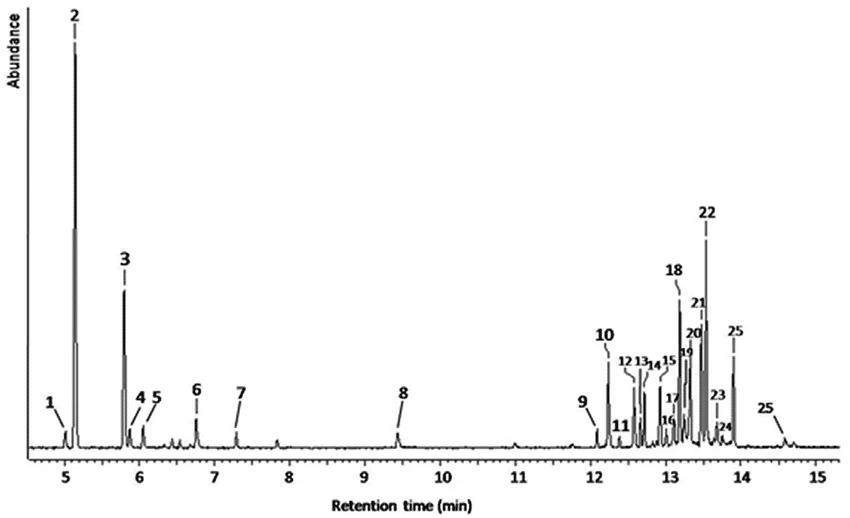
In high-end quality control, some distilleries, such as Laverstoke Mill (the home of Bombay Sapphire), utilize Gas Chromatography-Mass Spectrometry (GC-MS) to analyze the volatile compounds in their spirits. By comparing a new batch’s chromatogram against a standard-bearer, they can ensure consistency in the oil content and aromatic profile. However, regulatory agencies lack the resources to apply this level of scrutiny to every bottle on the market. As a result, the "predominant flavor" rule remains a symbolic guideline, allowing for a wide range of "Contemporary" gins that push the boundaries of traditional flavor profiles while still technically qualifying as London Dry.
Exclusions: From Fungi to Fauna
The strict wording of the EU and UK regulations has led to the exclusion of several innovative products from the London Dry category. The law specifies that flavor must be derived from "natural plant materials." This phrasing has significant implications for experimental distillers.
For instance, spirits flavored with mushrooms or truffles, such as Radoune Gin, cannot be labeled as London Gin because fungi are biologically distinct from plants. Similarly, "Pechuga-style" gins, which involve suspending raw meat (such as turkey or ham) in the still to be cooked by the alcohol vapors, are disqualified. A notable example is Portobello Road’s Director’s Cut Pechuga, which, despite being a high-quality distilled spirit, cannot use the London designation due to its animal-derived flavoring.
Interestingly, the "agricultural origin" of the base spirit is more expansive than the botanical requirements. Base spirits can be derived from animal byproducts like milk whey—as seen in Bertha’s Revenge Gin—without violating the London Dry standards, provided the flavor is removed during the 96% ABV distillation phase.
The Sugar Paradox: Why "Dry" Gins May Contain Sweeteners
To the average consumer, the term "Dry" implies a total absence of sugar. However, the legal definition of London Dry Gin allows for the addition of up to 0.1 grams of sweetening products per liter of the final product. Industry analysts note that this tiny amount of sugar is rarely used for flavor; rather, it is often a byproduct of "sugar dyes" used for tracing.
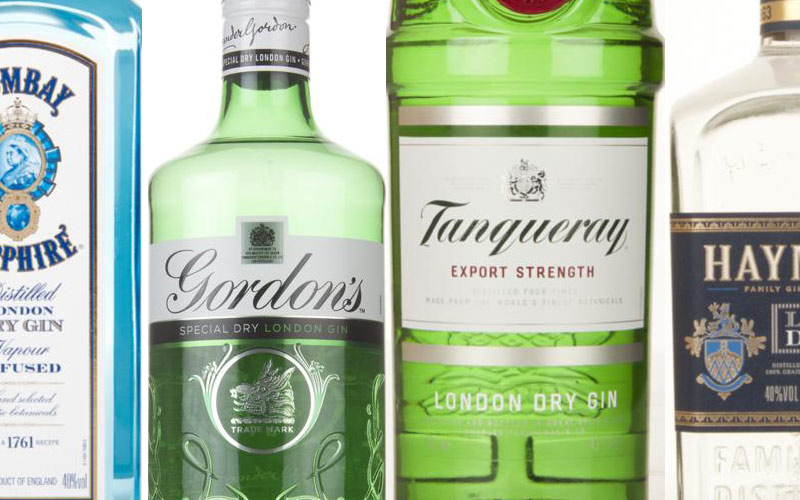
Large-scale producers, such as Gordon’s, utilize specific tracer molecules to protect against counterfeiting in global markets. These tracers allow the company to verify the authenticity of a bottle in the event of a legal dispute or health concern. Because these tracers are often carried in a sugar-based solution, the law provides a narrow margin to accommodate these security measures without stripping the product of its "Dry" status.
Broader Impact and Global Implications
The decision by the EU to maintain the current "London Gin" definition rather than pursuing Geographical Indication (GI) status was a strategic move designed to protect the broader industry. GI status, such as that enjoyed by Champagne or Scotch Whisky, requires a "technical file" that specifies the exact geographic location and production method in minute detail.
Given that London Dry Gin is produced everywhere from Japan to the United States, a GI status tied to the city of London would have forced thousands of brands to rebrand overnight. By codifying the term as a process designation, regulators have preserved a global standard that allows distillers worldwide to compete on the basis of production quality.
In the United States, the Alcohol and Tobacco Tax and Trade Bureau (TTB) maintains a slightly more inclusive definition. The TTB defines gin as a spirit with a main characteristic flavor derived from juniper berries, produced either by distillation or by mixing spirits with aromatics or extracts. Notably, the U.S. does not strictly regulate the term "London" in the same way, though most American distillers who use the label "London Dry" voluntarily adhere to the stricter European process standards to maintain international credibility.
Conclusion: A Future Defined by Process
As the spirits industry continues to expand, the definition of London Dry Gin stands as a testament to the importance of process over place. It remains a designation of technical achievement—a guarantee that the spirit was made from a pure base, redistilled with natural botanicals, and remains free from post-distillation additives or excessive sweetening.
While the lack of a concrete numerical standard for juniper flavor continues to invite debate, the current regulations provide a stable framework for an industry that balances tradition with innovation. For the consumer, the takeaway is clear: "London Dry" is not a map of where a gin was made, nor a strict recipe for how it should taste; it is a rigorous certification of how it was crafted. As long as distillers adhere to these high-purity standards, the category is likely to remain the gold standard of the global gin market.
