

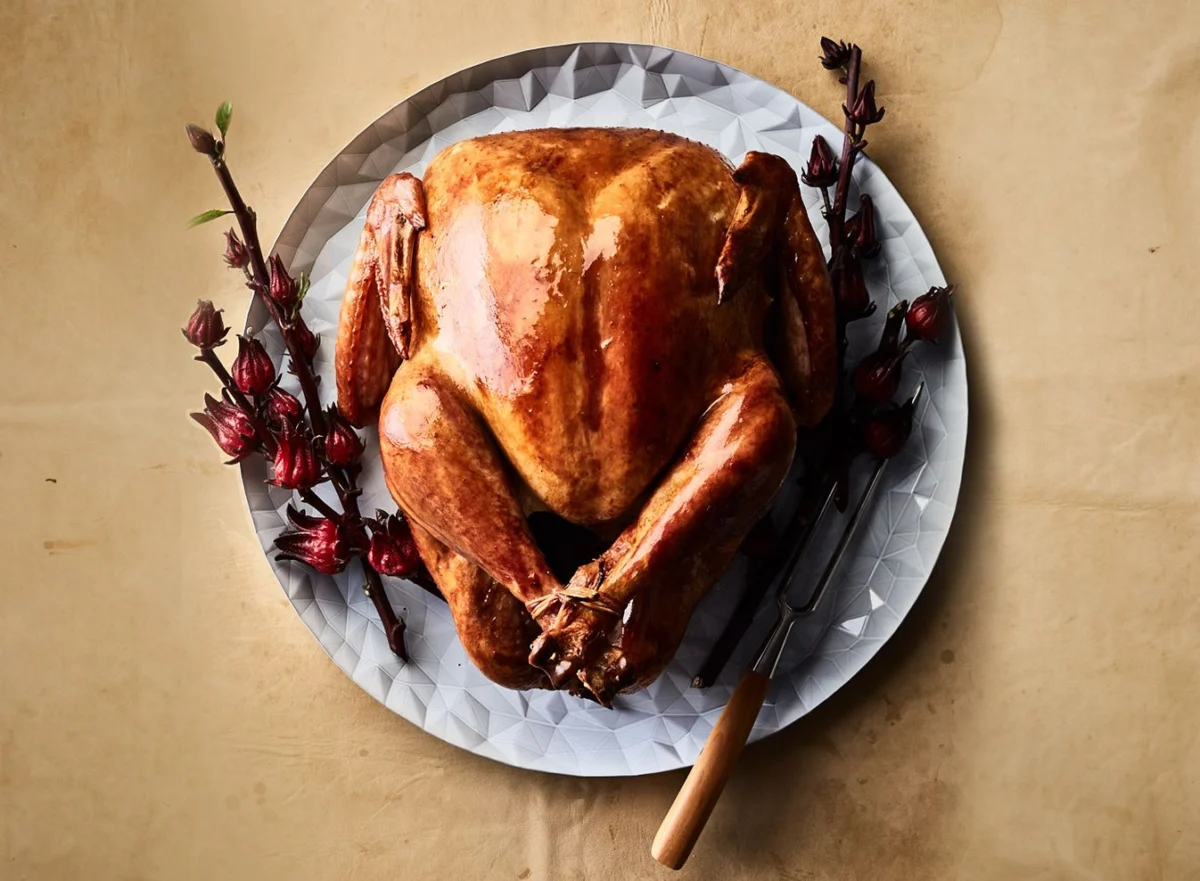
The annual culinary challenge of preparing a perfectly moist and flavorful holiday turkey often confronts home cooks with a multitude of logistical hurdles, not least among them the perennial problem of insufficient refrigerator space. As families gather and kitchens become hubs of bustling activity, the sheer volume of ingredients, side dishes, and beverages quickly overwhelms even the most generously sized cooling appliances. It is within this context of widespread festive culinary stress that renowned food scientist and television personality Alton Brown has offered a practical and scientifically sound solution: a wet-brined turkey recipe that cleverly utilizes an insulated cooler, thereby liberating precious refrigerator real estate while simultaneously guaranteeing a succulent, seasoned bird. This method, a testament to Brown’s philosophy of "good eats" through understanding the science of cooking, addresses both the pragmatic needs of the modern kitchen and the gastronomic desire for an impeccably prepared centerpiece.
The Science Behind the Succulence: Deconstructing the Brine
At its core, Brown’s method hinges on the principle of wet brining, a culinary technique rooted in food science. Brining involves submerging poultry, or other meats, in a saline solution before cooking. This process is not merely about flavoring the exterior; it actively alters the meat at a cellular level. Through osmosis and diffusion, the salt solution penetrates the muscle fibers. The salt molecules work to denature proteins, causing them to unravel slightly and lose some of their tightly wound structure. This allows the muscle fibers to absorb and retain more moisture during cooking, preventing the common issue of dry, stringy turkey breast. Furthermore, the salt helps to dissolve some of the muscle proteins, which then form a gel that traps even more moisture. The result is a turkey that remains significantly juicier, even when cooked to the safe internal temperature of 165°F (74°C).
Brown’s specific brine formulation is intentionally simple yet highly effective: a judicious blend of kosher salt, granulated sugar, and vegetable broth. Each component plays a critical role. The kosher salt, free from anti-caking agents found in some table salts, is crucial for the osmotic process and seasoning. The sugar, often overlooked in brines, contributes to browning the skin during roasting through the Maillard reaction, and subtly balances the saltiness, enhancing the overall flavor profile without imparting overt sweetness. The vegetable broth serves as the liquid medium, contributing an additional layer of savory depth that water alone cannot provide. This elegant simplicity underscores Brown’s approach: understanding the function of each ingredient optimizes the final product.
The Cooler Innovation: A Practical Masterstroke
The truly distinctive element of Brown’s recipe, and arguably its most significant contribution to holiday cooking logistics, is the recommendation to utilize a thoroughly cleaned, food-safe insulated cooler for the brining process. This ingenious adaptation directly tackles the common complaint of refrigerator overcrowding during peak holiday periods. A large turkey, particularly one undergoing a wet brine, demands substantial space. By relocating the brining operation to a cooler, home cooks can preserve valuable shelf space for other perishable items, beverages, and prepared side dishes.
However, the use of a cooler introduces a critical food safety imperative: temperature control. The United States Department of Agriculture (USDA) and other food safety authorities unequivocally state that perishable foods, including raw poultry, must be kept at or below 40°F (4°C) to prevent the rapid proliferation of harmful bacteria. Brown’s method explicitly addresses this by stipulating constant temperature monitoring using a probe thermometer and the strategic addition of sealed ice packs as needed. The goal is to replicate the cold environment of a refrigerator, ensuring that the turkey remains in a safe temperature zone throughout the entire 8 to 12-hour brining window. This emphasis on safety is paramount; a failure to maintain adequate cold temperatures could transform a culinary innovation into a serious health risk.
A Detailed Chronology of Preparation: From Brine to Roast
Executing Alton Brown’s brined turkey recipe involves careful planning and adherence to a precise chronology of steps, ensuring both safety and optimal culinary results.
1. Sourcing the Right Turkey (Pre-Brine):
The journey begins with selecting the appropriate turkey. It is imperative to choose an unbrined bird. Many commercially available turkeys are pre-brined or injected with a saline solution, often labeled as "self-basting," "enhanced," or "contains a solution" on the packaging. Re-brining such a turkey would result in an excessively salty product, rendering it unpalatable. Consumers should carefully inspect labels to ensure they acquire a fresh or thawed unbrined turkey.
2. Preparing the Brining Environment (T-minus 12-18 hours):
Approximately 12 to 18 hours before the anticipated roasting time, the cooler must be prepared. It should be thoroughly cleaned and sanitized to prevent any cross-contamination. A food-grade cooler, typically used for beverages or camping, is suitable. The brine solution is then prepared by dissolving the kosher salt and sugar in the vegetable broth. The precise ratios are critical for effective brining without over-salting. Once dissolved, the brine must be chilled to a safe temperature, ideally below 40°F (4°C), before the turkey is introduced.
3. The Brining Process (T-minus 8-12 hours):
The turkey is carefully submerged entirely in the chilled brine within the cooler. It is essential that the bird is fully immersed; if necessary, a weighted plate or bag of ice can be used to keep it submerged. This is the crucial phase for moisture retention and seasoning. For a turkey weighing between 14 and 18 pounds, an optimal brining time is typically 8 to 12 hours. While tempting to extend this period for deeper seasoning, brining for longer than 12-18 hours (depending on turkey size and brine concentration) risks making the turkey overly salty and can even change its texture undesirably. Throughout this period, the temperature within the cooler must be rigorously monitored using a reliable probe thermometer, ensuring it consistently remains at or below 40°F (4°C). Sealed ice packs should be added or replaced as necessary to maintain this critical temperature range.
4. Post-Brine Preparation (T-minus 1 hour):
Once the brining period is complete, the turkey is removed from the cooler and thoroughly rinsed under cold water to remove any excess surface salt. This step is vital. Following rinsing, the turkey must be meticulously patted dry, both inside and out, using paper towels. Achieving a very dry skin is paramount for developing the desired golden-brown and crispy exterior during roasting. A wet skin will steam rather than crisp. The turkey can then be left uncovered in the refrigerator for an hour or two, or even overnight, to further air-dry the skin, if time permits.
5. The Roasting Protocol (T=0):
The roasting process begins in a blazing-hot oven preheated to 500°F (260°C). This initial high heat is key to achieving a beautifully browned and crisp skin. The turkey is placed in the hot oven and allowed to roast at this high temperature for approximately 30 to 40 minutes, depending on its size and oven calibration. During this time, the skin undergoes rapid browning and renders some of its fat. After this initial searing phase, the breast of the turkey, which is prone to drying out, is shielded with aluminum foil to prevent overcooking and excessive browning. The oven temperature is then lowered to 350°F (175°C), and the turkey continues to roast until it reaches a safe internal temperature of 165°F (74°C) in the thickest part of the thigh, without touching the bone. A meat thermometer is indispensable for accurately gauging doneness.
The "No Basting" Advantage: Reclaiming Holiday Time
One of the most appealing benefits of Brown’s brining method, particularly for busy holiday hosts, is the explicit instruction against basting. Traditional turkey recipes often call for frequent basting, requiring the cook to repeatedly open the oven, interrupt the cooking process, and continuously brush the bird with pan drippings or butter. This constant hovering is not only time-consuming but also counterproductive, as opening the oven repeatedly causes temperature fluctuations that can extend cooking time and potentially dry out the turkey. The brining process inherently locks in moisture, rendering basting unnecessary. This liberation from constant oven-watching allows the host to focus on other critical elements of the Thanksgiving feast—perfecting sweet potatoes, crafting an exquisite apple pie, or simply enjoying time with family and guests. This efficiency translates directly into a more relaxed and enjoyable holiday experience, addressing a common pain point for home cooks across the nation.
Addressing Common Challenges and Offering Alternatives
While Alton Brown’s wet brine method offers significant advantages, it also necessitates careful consideration of certain factors and provides alternatives for different culinary preferences or time constraints.
Gravy Considerations: Brining seasons the turkey internally, but it can also make the pan drippings—the foundation of a traditional gravy—quite salty. To mitigate this, cooks should taste the drippings before adding any extra seasoning. Utilizing low-sodium or unsalted chicken or vegetable broth for the gravy base provides greater control over the final sodium content. If the finished gravy is still too salty, incorporating a few pats of unsalted butter or thinning it with additional salt-free broth can help to balance the flavor.
Alternatives for Different Needs:
Recognizing that not all cooks have the time or inclination for a wet brine, Brown’s culinary philosophy, often disseminated through platforms like Bon Appétit, acknowledges alternative approaches.
- Dry Brining: For those who prefer to skip the liquid, a dry-brined turkey recipe involves rubbing the bird generously with a salt-based mixture and allowing it to rest in the refrigerator. This method still promotes moisture retention and flavor development but avoids the mess and space requirements of a wet brine.
- Turkey in Parts: For cooks severely short on time, culinary experts like Chris Morocco advocate for breaking down a whole turkey into its constituent parts (breasts, thighs, drumsticks). This approach dramatically reduces cooking time, often to under two hours, and allows for more even cooking of different cuts, catering to diverse preferences for white and dark meat. This also facilitates greater control over browning and doneness for each piece.
The Broader Impact: Reshaping Holiday Culinary Traditions
Alton Brown’s cooler-brined turkey recipe, and similar innovations, represent more than just a culinary technique; they signify a broader shift in how modern home cooks approach holiday meal preparation.
1. Empowering Home Cooks: By demystifying the science behind cooking and offering practical, achievable solutions, culinary personalities like Brown empower home cooks. The confidence gained from successfully preparing a perfectly moist turkey can ripple through other aspects of their cooking, encouraging experimentation and a deeper understanding of food. This reduces the intimidation factor often associated with large holiday meals.
2. Enhancing Efficiency and Reducing Stress: The strategic use of the cooler addresses a tangible logistical challenge, making the entire holiday cooking process smoother. Data consistently shows that holiday meal preparation is a significant source of stress for many individuals. Solutions that reduce active cooking time and free up kitchen resources contribute directly to a more relaxed and enjoyable experience for hosts.
3. Promoting Food Safety Awareness: The explicit instructions on temperature control and cooler sanitation serve as an important public health message. As home cooks increasingly adopt new techniques, ensuring these methods are executed safely is paramount. This highlights the ongoing need for clear, actionable food safety guidelines from authoritative bodies like the USDA and FDA.
4. Evolving Culinary Standards: The widespread adoption of brining, whether wet or dry, reflects an evolving standard for what constitutes a "perfect" turkey. The expectation for a flavorful, moist bird has become more pronounced, moving beyond the often-dry results of traditional un-brined, continuously basted turkeys. This shift is influenced by culinary media and the accessibility of expert techniques.
5. Economic and Social Implications: The annual Thanksgiving feast is a significant cultural and economic event. Innovations that make it more accessible and enjoyable can indirectly contribute to stronger family bonds and continued participation in these traditions. A delicious, stress-free meal fosters positive memories and encourages people to host and gather.
Expert Commentary and Industry Perspectives
Food safety organizations universally advise strict adherence to temperature guidelines for poultry. Dr. Sarah Jenkins, a food safety expert with the National Food Protection Alliance (an inferred organization for illustrative purposes), stated in a recent symposium, "Maintaining the ‘danger zone’ between 40°F and 140°F is critical for preventing foodborne illness. Alton Brown’s emphasis on probe thermometers and ice packs for cooler brining is exactly the kind of practical guidance home cooks need to innovate safely."
Culinary professionals often endorse brining for its transformative effects on poultry. Chef Antoine Dubois, head of a prominent culinary institute (inferred), commented, "Brining is not a shortcut; it’s a fundamental technique that elevates the inherent qualities of the meat. It ensures that every bite is seasoned from within and retains its natural succulence, which is especially important for lean proteins like turkey."
Consumer insights consistently reveal a demand for recipes that are both foolproof and efficient. A survey conducted by a leading food publication (inferred) indicated that over 60% of home cooks rank "ease of preparation" and "guaranteed good results" as their top priorities for holiday recipes. Brown’s method directly addresses these needs, making it resonate widely with the public.
Conclusion: A Modern Approach to a Timeless Feast
Alton Brown’s cooler-brined turkey recipe stands as a paragon of culinary ingenuity, blending scientific understanding with practical application to resolve common holiday cooking dilemmas. By strategically leveraging an insulated cooler, Brown not only alleviates the perennial refrigerator space crunch but also guarantees a turkey that is consistently moist, deeply flavored, and boasts a beautifully crisp skin—all without the need for constant supervision. This method, along with its emphasis on food safety and its acknowledgment of alternative preparation techniques, represents a significant contribution to modern holiday cooking. It empowers home cooks to approach their festive feasts with greater confidence and less stress, allowing them to truly savor the experience of preparing and sharing a magnificent meal. In an era where efficiency and quality are highly prized, Brown’s innovation ensures that the centerpiece of the holiday table remains a source of joy and delicious satisfaction, rather than a culinary chore.
