

The designation "London Dry Gin" represents one of the most rigorous quality standards in the spirits industry, yet it remains one of the most widely misunderstood terms among consumers. Contrary to popular belief, the label does not denote a geographical origin, nor does it strictly define a specific flavor profile. Instead, London Dry Gin is a process-oriented designation, a regulatory framework that dictates exactly how a spirit must be manufactured to earn the title. In recent years, the European Union has sought to clarify these standards through updated legislation, most notably Regulation (EU) 2019/787, which was further refined in 2021. While the United Kingdom continues to follow the versions of these laws in effect at the time of its departure from the EU, the core principles of the designation remain a cornerstone of international spirits commerce.
The Historical Evolution of Purity Standards
The origins of the London Dry Gin designation are rooted in a necessity for public safety and quality control. During the 18th and early 19th centuries, gin production was largely unregulated. Distillers utilized a wide array of fermentable materials, including low-quality grains and agricultural waste, resulting in spirits that were often harsh, impure, and occasionally toxic. To mask these unpleasant flavors, producers frequently added heavy doses of sugar, turpentine, or other adulterants.
The technological catalyst for the "London Dry" style was the invention of the continuous column still, perfected by Aeneas Coffey in 1830. Unlike the traditional pot still, which produces a spirit with significant character from its base material but lower purity, the column still allows for the production of neutral spirits at very high alcohol by volume (ABV). This innovation enabled distillers to create a clean, consistent base spirit of at least 96% ABV. By redistilling this pure spirit with high-quality botanicals and omitting the heavy sweetening required in earlier eras, the "dry" style of gin was born. Over time, "London Dry" transitioned from a description of a new style of gin made in the capital to a technical standard used by distillers worldwide.
Decoding Regulation 2019/787: The Technical Requirements
Under current European and British law, the production of London Dry Gin is governed by a hierarchy of definitions. To be labeled as London Gin (and by extension, London Dry Gin), a spirit must first meet the criteria for "Distilled Gin," which itself must meet the criteria for "Gin."
The foundational requirement is the base spirit. According to Section 21.a of Regulation 2019/787, the ethyl alcohol used must be of agricultural origin and distilled to an initial strength of at least 96% ABV. This ensures that the base is a truly neutral spirit, free from the flavors of the original fermentable material. This neutral spirit is then redistilled in traditional stills in the presence of Juniperus communis L. (juniper berries) and other natural botanicals.
The London Gin designation adds several layers of stringency to this process:
- Methanol Limits: The spirit must have a methanol content not exceeding 5 grams per hectoliter of 100% vol. alcohol. This is a legacy quality control measure to ensure the removal of "heads"—the toxic first part of the distillation run.
- Distillation Strength: The resulting distillate after the botanicals are added must come off the still at a minimum of 70% ABV.
- Additive Restrictions: No flavorings may be added after the distillation process. All botanical flavors must be imparted exclusively through the redistillation of the ethyl alcohol in the presence of the plant materials.
- Coloring and Sweetening: London Gin cannot be colored. While it may be sweetened, the "Dry" designation is only permitted if the final product contains no more than 0.1 grams of sweetening products per liter, expressed as invert sugar.
The Botanical Debate: Plants, Fungi, and Animal Products
A significant point of contention in the modern gin renaissance is the legal definition of "botanicals." The current EU and UK regulations specify that the flavor must be imparted through the distillation of "natural plant materials." This phrasing creates a technical exclusion for several innovative modern gins.
For instance, spirits that utilize mushrooms or other fungi, such as Radoune Gin, technically fall outside the "London Gin" definition because fungi are biologically distinct from plants. Similarly, "Pechuga" style gins—a method borrowed from mezcal production where meat (such as poultry or ham) is suspended in the still—cannot be classified as London Dry. Portobello Road’s Director’s Cut Pechuga-style Gin is a notable example of a product that, despite its high-quality distillation process, must eschew the London designation due to the use of animal products in the still.
However, the regulations do allow for some flexibility regarding the base spirit. The "agricultural origin" requirement is broad enough to include fermentable animal byproducts, such as whey. This allows brands like Bertha’s Revenge, which uses a milk-based spirit, to remain within the legal definitions of gin, provided the flavor is derived from plants during redistillation.
Distinguishing London Dry from Distilled Gin
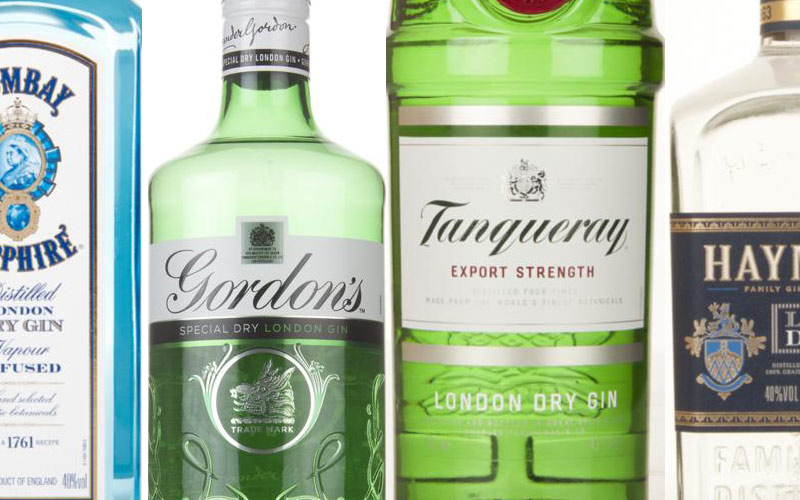
The distinction between "Distilled Gin" and "London Dry Gin" is the source of frequent consumer confusion. While both must be redistilled with juniper, the rules for what happens after distillation differ significantly.
A "Distilled Gin" may have additional flavoring substances or preparations added after the final distillation. This allows for the creation of popular contemporary gins like Hendrick’s or Martin Miller’s. Hendrick’s, for example, is famous for its infusion of rose and cucumber, but because these essences are added after the spirit leaves the still, it cannot be labeled as London Dry. Similarly, Martin Miller’s Gin is transported to Iceland to be blended with glacial water, and certain flavor elements are introduced post-distillation, placing it firmly in the "Distilled Gin" category.
In contrast, every drop of flavor in a bottle of London Dry Gin must have passed through the still as a vapor or liquid in contact with the botanicals. This makes London Dry a more "honest" expression of the distiller’s craft at the moment of distillation, as there is no opportunity to "correct" or enhance the flavor profile later.
The Sugar Paradox: Why "Dry" Isn’t Zero
One of the most surprising aspects of the London Dry regulation is the allowance for a minute amount of sugar (0.1g per liter). In a modern context, this sugar is rarely used for flavor. Instead, it serves a technical purpose related to brand protection.
Many major gin producers, such as Gordon’s, utilize "sugar dyes" or tracer molecules to combat counterfeiting. These tracers allow companies and regulators to verify the authenticity of a liquid in the field. Because these tracers are often sugar-based, the law provides a tiny threshold to allow for their use without stripping the gin of its "Dry" status. For the average palate, 0.1 grams of sugar per liter is virtually undetectable, ensuring the spirit maintains its characteristic crisp, non-saccharine finish.
Global Perspectives: The U.S. and Beyond
While the EU and UK have highly codified definitions, other markets operate under different frameworks. In the United States, the Alcohol and Tobacco Tax and Trade Bureau (TTB) provides a more inclusive definition. U.S. law defines gin simply as a spirit with a main characteristic flavor derived from juniper berries, produced either by distillation or by the mixing of spirits with juniper and other aromatics.
Notably, U.S. regulations do not formally recognize "London Dry" as a distinct legal category in the same way the EU does; rather, it is often treated as a "style" of distilled gin. This lack of global harmony in spirits labeling means that a gin sold as "London Dry" in the U.S. might not actually meet the technical requirements to carry that label in London or Paris.
Technological Analysis and the Future of Regulation
As the gin market continues to fragment into "Classic" and "Contemporary" (or "New Western") styles, there is increasing pressure to refine the "predominant flavor" clause. Currently, both EU and UK laws state that gin must have a "predominantly" juniper taste. However, "predominant" is a subjective sensory term that is difficult to enforce legally.
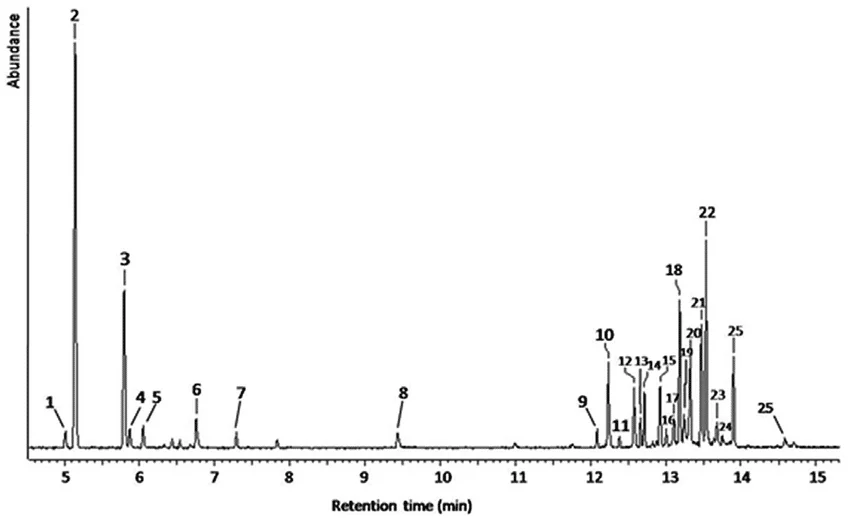
Some industry leaders have advocated for the use of Gas Chromatography-Mass Spectrometry (GC-MS) to create numerical standards for gin. By measuring the levels of alpha-pinene (the primary flavor compound in juniper) against other volatiles like limonene (citrus) or linalool (coriander), regulators could theoretically set a "chemical floor" for what constitutes gin.
However, such measures are currently deemed too onerous for smaller craft distilleries that lack on-site laboratories. For now, the London Dry Gin designation remains a "process guarantee." It assures the consumer that the spirit was made to a high standard of purity, without post-distillation additives or artificial colors. As the industry evolves, the "London Dry" label stands as a testament to a 19th-century pursuit of excellence that continues to define the gold standard of the gin world in the 21st century.
