

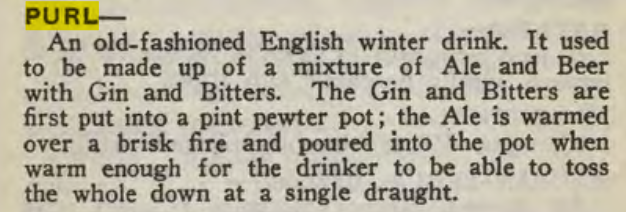
In the landscape of contemporary mixology, few drinks possess a lineage as convoluted or as misunderstood as the Purl. To the modern bartender, a Purl is a straightforward, albeit potent, preparation consisting of a measure of gin added to a pint of ale. This contemporary iteration, often cited by authorities such as Difford’s Guide, is frequently framed as a relic of 18th and 19th-century British pub culture—a time when "Old Tom" gin met cellar-temperature British bitters. However, a deep dive into the primary source material of the last four centuries reveals that the Purl’s transformation from a bitter medicinal draught to a simplified spirit-and-beer combination is a narrative of social change, industrial evolution, and the shifting definition of "health" in the British Isles.
The Medicinal Roots of the Seventeenth Century
The earliest documented mentions of the Purl do not describe a cocktail in the recreational sense, but rather a therapeutic tonic. During the 17th century, the beverage was defined primarily by the inclusion of wormwood (Artemisia absinthium), a bitter herb known for its antiparasitic and digestive properties. In 1665, a pivotal year for London due to the Great Plague, the text Directions for the Prevention and Cure of the Plague Fitted for the Poorer Sort offered dietetic advice to those living in fear of the contagion. On its opening pages, the manual recommended that citizens consume "a draught or two of Purle… especially in the morning."
At this stage in history, the Purl was a mixture of ale or wine infused with wormwood. The recommendation for the "poorer sort" suggests that the drink was both accessible and inexpensive, utilizing common ale as a delivery system for the protective qualities of the herb. The association with the morning hours is a recurring theme that would persist for centuries, establishing the Purl as a "morning constitutional" intended to fortify the body against the miasmas of the city.
By the late 17th century, the Purl’s identity as a botanical infusion was well-established. In 1684, the cider industry attempted to capitalize on the drink’s popularity. The publication Aphorisms upon the New Way of Improving Cyder argued that cider-based Purls were equal in merit to those made with ale, indicating a competitive market for bittered morning beverages. Furthermore, the 1690 volume An English Herbal reaffirmed the medicinal benefits of wormwood when consumed in the form of a Purl, emphasizing its role in treating various ailments of the stomach and blood.
The Eighteenth Century: A Shift Toward Recreation and Vice
As London moved into the 18th century, the Purl began to transition from a purely medicinal necessity to a recreational staple of the working class. This era, famously marked by the "Gin Craze," saw spirits becoming more integrated into daily consumption. It was during this period that the Purl began to take on the characteristics of a "fortified" beverage.

However, this transition was not without social friction. The Purl’s association with morning drinking began to draw the ire of moralists and social commentators. In a September 1733 edition of The Grub Street Journal, the consumption of Purl was linked to a broader culture of vice. Character attacks in the press often grouped Purl drinkers with those who indulged in excessive smoking and gin consumption, suggesting that the "morning constitutional" had evolved into a tool for early-day intoxication.
During this time, the "Purl-shop" became a recognized fixture of London’s urban geography. These establishments specialized in the preparation of the drink, which now frequently included a "dash" of spirits. While gin was increasingly common, it was not yet the exclusive partner for the ale; various spirits were employed depending on availability and the consumer’s budget. The defining characteristic remained the bittering agent, though the complexity of the preparation was beginning to increase.

The Nineteenth Century and the Rise of the "Flip" Style
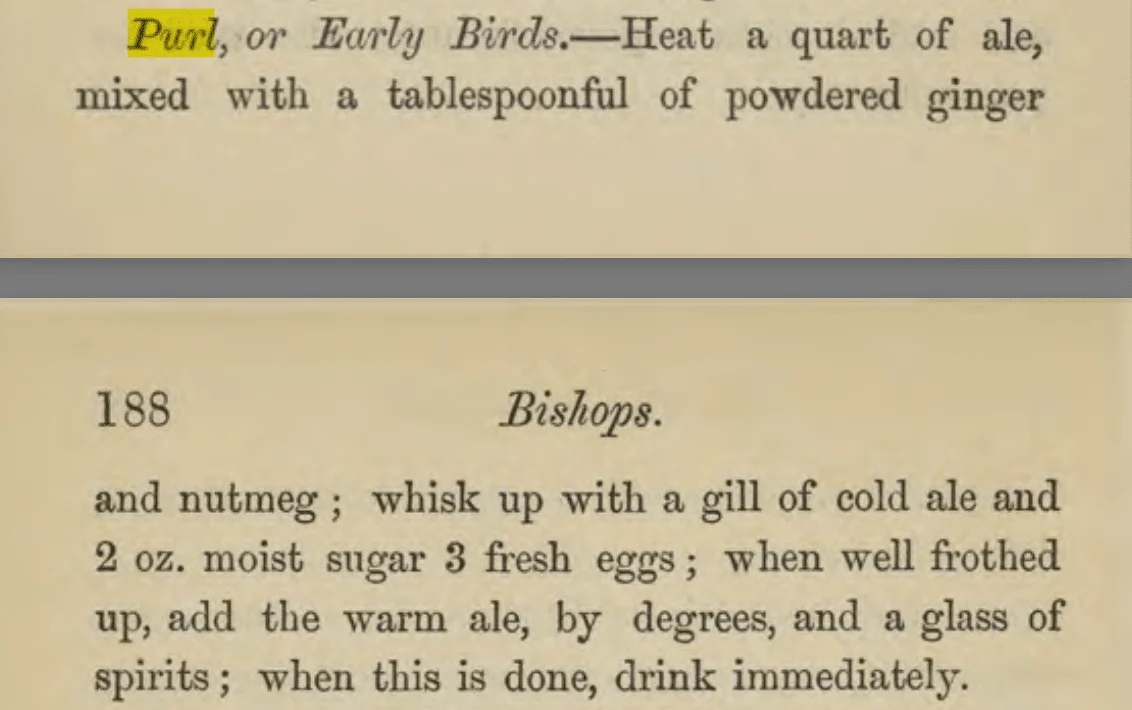
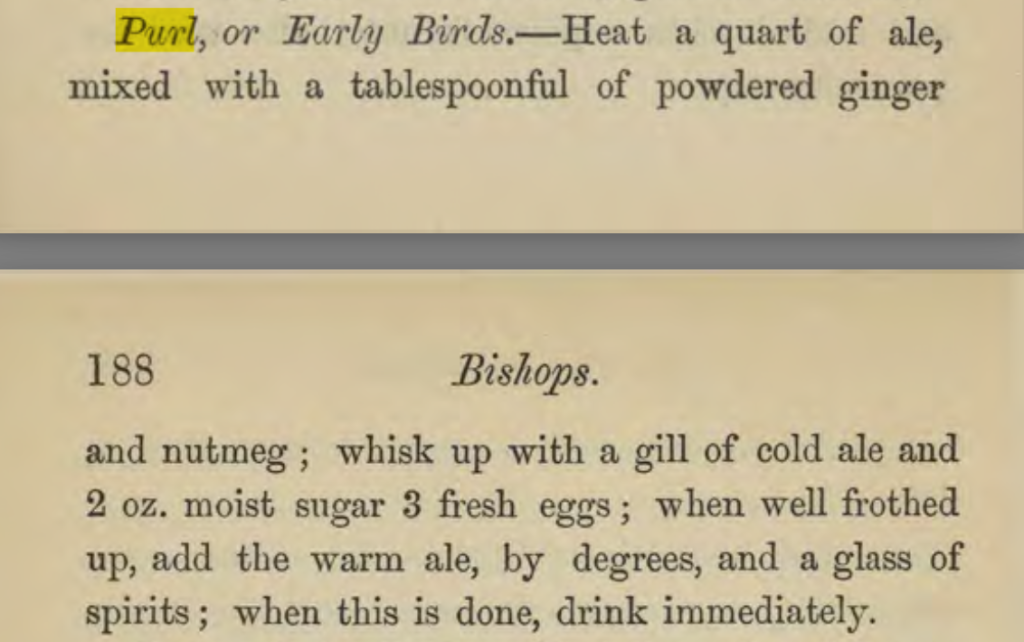
The mid-19th century represents the most complex era for the Purl, as documented in what many historians consider the first British cocktail book: William Terrington’s Cooling Cups and Dainty Drinks (1869). By this period, the Purl had diverged significantly from its simple wormwood origins, evolving into a rich, heated, and highly caloric preparation.
Terrington’s recipes describe a beverage that resembles a "Flip"—a category of drinks involving ale, spirits, sugar, and often eggs. In these 19th-century iterations, the ale was warmed and combined with multiple eggs and spices such as ginger or nutmeg. Notably, Terrington did not mandate gin as the sole spirituous component. While a "glass of spirits" was a required ingredient, the text implies that brandy, whisky, or any available grain spirit could suffice.

However, Terrington’s manual also includes a recipe for an "Ale Cup," which specifically calls for gin and ale. This suggests that while the Purl remained a broad category of fortified ale, a specialized subset of gin-based ale drinks was beginning to crystallize in the British palate. These drinks were served warm, reflecting the lack of refrigeration and the preference for "mulling" beverages during the colder months in the British Isles.
The Twentieth Century: Simplification and the Standardization of Gin
The 20th century brought about the most radical simplification of the Purl. As the medicinal use of wormwood became obsolete and the labor-intensive preparation of "Flips" (involving the whisking of eggs and heating of beer) fell out of fashion in fast-paced urban bars, the recipe was stripped to its core components.

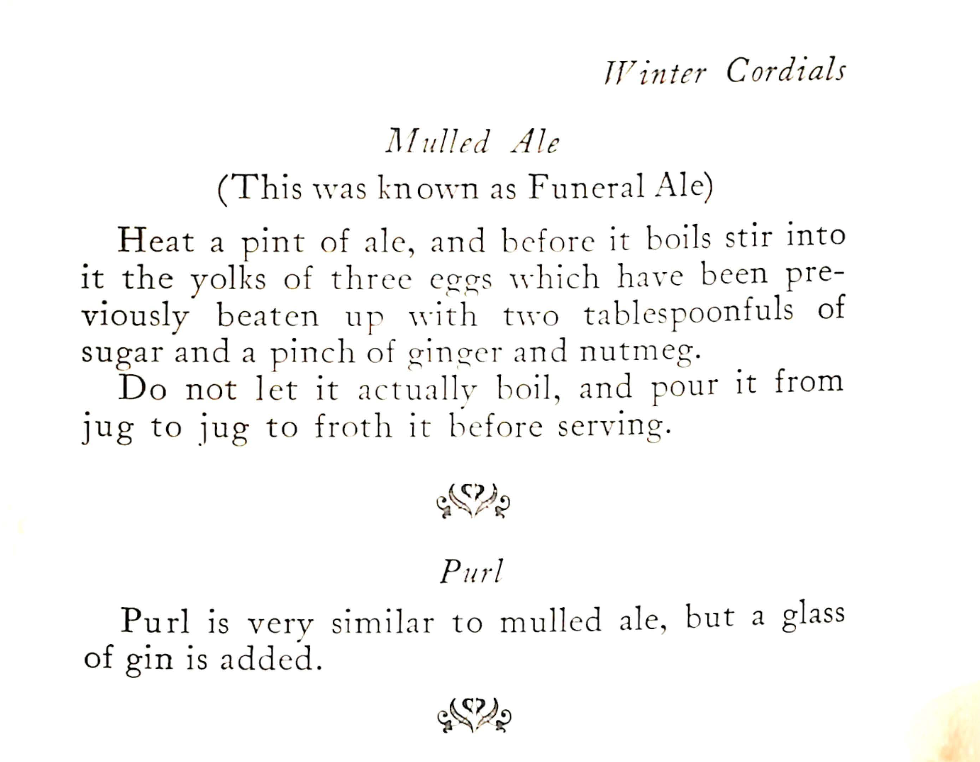
By the 1920s, as seen in Mrs. Leyel’s Summer Drinks and Winter Cordials (1925), the eggs had largely disappeared, though the tradition of warming the ale persisted in some recipes. By the time The Art of Mixing Drinks was published in 1935, the Purl had reached its modern "canonical" form: a combination of gin and ale. Interestingly, the addition of bitters—a culinary echo of the original wormwood infusion—remained a key recommendation in many manuals, serving as the final vestige of the drink’s 17th-century herbal roots.
The post-war era solidified this transition. In the 1966 edition of The Barman’s Bible (from the Cocktail and Wine Digest), the Purl is presented as a simple, utilitarian mixture. The complex history of the "Poorer Sort’s" plague remedy and the 19th-century spiced egg-ale had been distilled into a two-ingredient fortification.

Chronological Summary of the Purl’s Ingredients
To understand the Purl’s evolution, one must look at the shifting ingredient list across the centuries:
- 1660s–1690s: Ale or Wine + Wormwood. (Function: Medicinal/Plague Preventative).
- 1730s–1780s: Ale + Wormwood + Spirits (Gin/Brandy) + Sugar. (Function: Morning Tonic/Social Drink).
- 1820s–1880s: Warmed Ale + Spirits + Eggs + Spices (Ginger/Nutmeg) + Sugar. (Function: Nutritious Recreational Beverage/Flip).
- 1920s–Present: Ale + Gin + Bitters. (Function: Modern Cocktail/Beer Fortification).
Social and Economic Implications
The history of the Purl provides a window into the economic realities of the British working class. Its early endorsement for the "poorer sort" during the plague years highlights how alcohol served as a primary vehicle for medicine when clean water was scarce and professional healthcare was inaccessible.

The eventual dominance of gin in the recipe can be attributed to the industrialization of spirit production in London. As gin became the most affordable and widely available spirit in the capital, it naturally displaced brandy and whisky in the communal ale pot. Similarly, the disappearance of wormwood reflects the professionalization of medicine; as the germ theory of disease replaced the miasma theory, the "morning Purl" lost its status as a health necessity and was rebranded as a lingering vice of the "early bird" drinker.
Legacy in Modern Mixology
Today, the Purl is experiencing a minor resurgence among craft cocktail enthusiasts and historical re-enactors. Modern bartenders often experiment with "Old Tom" style gins—which are sweeter and more botanically intense than London Dry—to replicate the flavor profile of the 19th-century pub. Some high-end establishments have even begun to reintroduce bittering agents like wormwood bitters or gentian to pay homage to the drink’s 17th-century origins.
However, the modern Purl remains a shadow of its former complexity. While the current definition of "Ale + Gin" is convenient for the fast-paced environment of a 21st-century bar, it overlooks the centuries of culinary and medicinal history that once made the Purl one of the most sophisticated and vital preparations in the British beverage lexicon. The transition from a heated, spiced, egg-thickened tonic to a simple cold "shot and a beer" hybrid is a testament to the streamlining of global drinking culture, where speed and simplicity often supersede tradition and complexity.
In conclusion, the Purl is not merely a drink but a historical document. It tracks the movement of the British public from the terrors of the Great Plague through the excesses of the Gin Craze and into the refined techniques of the Victorian era, finally landing in the minimalist landscape of the modern age. To drink a Purl today is to consume a simplified version of a 400-year-old legacy—a legacy that once promised to keep the plague at bay with a single, bitter morning draught.
