

The landscape of modern living is continuously evolving, with a significant demographic shift seeing a growing number of individuals embracing independent lifestyles. Currently, nearly 30% of Americans live in single-person households, a figure that has steadily climbed over the past few decades due to various socioeconomic and cultural factors, including delayed marriage, increased urbanization, and an aging population. This demographic trend has, in turn, spurred a corresponding evolution in culinary practices, particularly the demand for recipes and dining experiences tailored for one. The "Me, Myself, and Dinner" culinary philosophy, which champions dishes meticulously portioned for a single individual, directly addresses this burgeoning market, transforming solo meal preparation from a potentially daunting task into an anticipated pleasure. Central to this shift in approach is the farmers market, which has emerged as an invaluable resource, providing an intuitive and efficient solution for the solo cook.
The Shifting Demographics of Solo Living and its Culinary Implications
The increase in single-person households is not merely a statistical anomaly but a reflection of profound societal changes. Data from the U.S. Census Bureau indicates that the proportion of adults living alone has nearly doubled since the mid-20th century. This rise is attributed to several interconnected factors: women’s increased participation in the workforce and higher educational attainment, leading to later marriages or choosing not to marry; longer life expectancies, resulting in more elderly individuals living independently after spousal loss; and a general societal acceptance and even celebration of independence and personal autonomy.
Culturally, there has been a significant re-evaluation of solo activities, moving away from past stigmas associated with loneliness towards an appreciation for solitude, self-care, and personal fulfillment. Dining, traditionally a communal activity, has been recalibrated to fit this modern paradigm. For many, a meal enjoyed alone is no longer a concession but an opportunity for mindful eating, culinary experimentation, and a moment of personal indulgence without compromise. This shift has created a unique demand within the food industry for practical, inspiring, and achievable solutions for individuals cooking for themselves. Conventional recipes, often scaled for four or more servings, frequently lead to excess ingredients, repetitive meals, or, more critically, food waste for the solo diner. The "Me, Myself, and Dinner" movement directly counteracts this, advocating for precision and personalization in recipe development.
Farmers Markets: A Tailored Solution for the Solo Cook
Against this backdrop, the farmers market has solidified its position as an indispensable asset for the independent chef. Its inherent structure, which prioritizes direct sales from producer to consumer, inadvertently caters perfectly to the needs of single-person households. Unlike conventional supermarkets where produce is often sold in bulk, requiring a commitment to a multi-pound bag of carrots or a large head of cabbage, farmers markets offer unparalleled flexibility. A solo cook can purchase a single carrot, a solitary apple, or a handful of greens, selecting items based on their visual appeal, immediate culinary inspiration, or mere curiosity, without the pressure of managing excess.
The growth of farmers markets across the United States over the past two decades underscores their increasing relevance. According to the U.S. Department of Agriculture (USDA), the number of farmers markets has grown substantially, reflecting a broader consumer interest in fresh, locally sourced produce and a desire for a more direct connection to their food sources. This expansion has made fresh, seasonal ingredients more accessible to a wider demographic, including the solo diner.
Economically, farmers markets present a win-win scenario. For consumers, particularly solo cooks, they offer the opportunity to manage portions precisely, thereby reducing potential food waste and often allowing for a more diverse array of ingredients within a single shopping trip. For local farmers, these markets provide a vital direct-to-consumer channel, bypassing intermediaries and allowing them to retain a larger share of the retail price, thus supporting sustainable agricultural practices and local economies. The ability to purchase smaller quantities also encourages culinary exploration; a shopper might experiment with an unusual heirloom tomato or a unique variety of radish without feeling obligated to use up a large quantity. This exploratory aspect aligns seamlessly with the ethos of individual dining, where personal preference and discovery often take precedence.
Crafting the Individual Meal: A Culinary Case Study
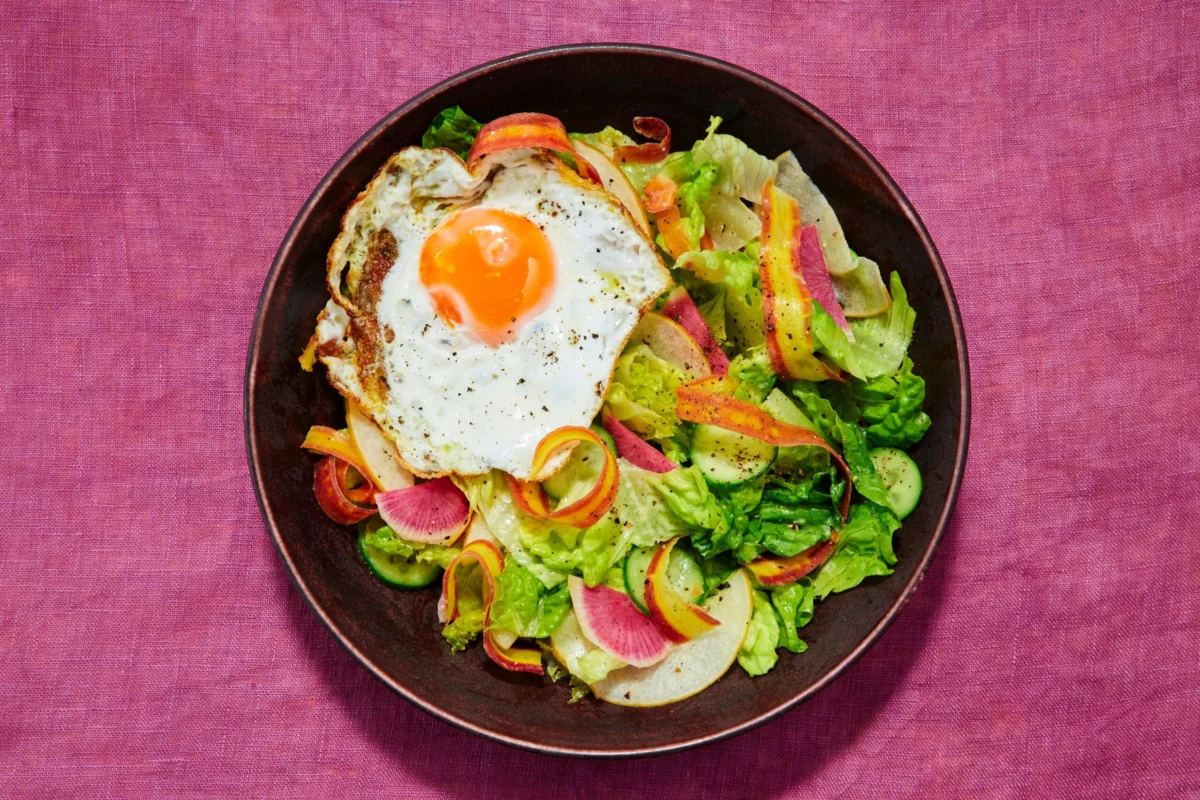
A prime example of how the farmers market facilitates exquisite solo dining is demonstrated through the creation of a vibrant fall salad, designed specifically for one. This dish epitomizes the "buy-what-you-need" philosophy enabled by direct farm-to-consumer purchasing. The foundation of the salad is a single head of Little Gem lettuce, a petite variety known for its crisp texture, sweet flavor, and compact size, making it an ideal choice for an individual serving.
Accompanying the Little Gem are an array of crunchy, seasonal produce, each selected for its singular contribution and readily available as individual units at a farmers market. This includes a single carrot, offering earthy sweetness and vibrant color; a small cucumber, providing refreshing crispness; a watermelon radish, celebrated for its striking fuchsia interior and peppery bite; and an Asian pear, contributing a subtle sweetness and a distinct, crisp texture that contrasts beautifully with the other ingredients. These ingredients, when chosen fresh from the market, boast peak flavor and nutritional density. Carrots are rich in beta-carotene, essential for vision and skin health; cucumbers provide hydration and vitamins K and C; watermelon radishes offer antioxidants and a spicy kick; and Asian pears deliver fiber and natural sugars.
The preparation technique for these elements is crucial for achieving optimal texture. Slicing these vegetables and fruit thinly, ideally with a mandoline slicer, ensures a delicate and uniform presentation that enhances the overall eating experience. Mandoline slicing, while requiring careful handling, allows for precision that is difficult to achieve with a knife, creating elegant, translucent slices. Following this, a brief immersion in an ice bath serves a dual purpose: it not only chills the ingredients to a refreshing temperature but also helps to firm up their cellular structure, rendering them exceptionally crisp and vibrant. This simple culinary trick elevates the salad from a mere assembly of ingredients to a thoughtfully prepared dish.
The Art and Science of Flavor: The Signature Dressing
The dressing for this solo-portioned salad is as critical as the fresh produce itself, acting as the unifying element that elevates the dish. Its composition reflects a sophisticated understanding of flavor profiles, particularly the concept of umami, often referred to as the fifth basic taste alongside sweet, sour, salty, and bitter.
The foundation of the dressing is Kewpie mayonnaise, a Japanese staple renowned for its distinct richness and savory depth. Unlike standard Western mayonnaise, which typically uses whole eggs, Kewpie is exclusively made with egg yolks. This higher yolk content contributes to its intensely creamy texture and a more profound, almost custardy flavor. Crucially, Kewpie mayonnaise also contains monosodium glutamate (MSG). Often misunderstood, MSG is a naturally occurring amino acid (glutamate) that amplifies the savory "umami" taste. In Kewpie, MSG enhances the natural umami present in the egg yolks, resulting in a fuller, more complex flavor profile that standard mayonnaise cannot match. This makes it an ideal base for a dressing that needs to carry substantial flavor in a single-serving application.
To further deepen the umami profile, white miso is incorporated. Miso, a traditional Japanese seasoning produced by fermenting soybeans with salt and koji (a type of fungus), is a powerhouse of savory flavor. White miso, being a younger, milder variety, offers a delicate sweetness alongside its pronounced umami, without overpowering the other ingredients. The fermentation process also introduces beneficial probiotics, contributing a subtle tang and a host of potential health benefits. The addition of rice vinegar then acts as a bright counterpoint, providing the necessary acidity to balance the richness of the Kewpie and miso. Rice vinegar, with its mild, slightly sweet character, offers a gentle tartness that lifts the entire dressing, preventing it from becoming too heavy and ensuring a harmonious blend of flavors.
The result is a dressing that is luxuriously creamy, profoundly savory, and wonderfully bright, adhering perfectly to every delicate slice of vegetable and fruit. This "finger-licking" quality speaks to its irresistible nature. For a solo diner, this dressing offers versatility beyond the salad; a double batch can easily be prepared and stored for dipping crudités, marinating a single salmon fillet or chicken breast, or coating roasted vegetables for future meals. This multi-purpose utility is another advantage for the independent cook, minimizing effort while maximizing flavor across several culinary applications.
Beyond the Plate: The Broader Impact of Solo Culinary Trends
The rise of solo dining, facilitated by resources like farmers markets and specialized recipes, carries significant broader implications across several sectors:
1. Food Waste Reduction: One of the most critical environmental and economic benefits of solo cooking is its potential to significantly reduce food waste. According to the USDA, an estimated 30-40% of the food supply in the United States is wasted. For single-person households, bulk packaging and oversized recipes often contribute disproportionately to this problem. By enabling the purchase of precise quantities and promoting single-serving recipes, the solo dining movement, particularly when coupled with farmers market shopping, directly addresses this issue, allowing consumers to buy only what they need, when they need it.
2. Health and Wellness: Cooking at home, regardless of household size, generally leads to healthier eating habits compared to relying on processed foods or frequent restaurant meals. For solo diners, the ability to prepare fresh, portion-controlled meals encourages a balanced diet rich in fruits, vegetables, and lean proteins. The emphasis on fresh, seasonal ingredients from farmers markets means higher nutritional content and fewer artificial additives, contributing positively to individual health outcomes.
3. Economic Impact and Local Agriculture Support: The sustained growth of farmers markets, driven in part by the needs of solo diners, directly supports local agricultural economies. By fostering a direct relationship between consumers and farmers, it helps ensure fair prices for producers, promotes sustainable farming practices, and keeps food dollars circulating within local communities. This economic model is particularly vital for small and mid-sized farms.
4. Culinary Skill Development and Empowerment: The "Me, Myself, and Dinner" philosophy empowers individuals to take ownership of their culinary journey. By demystifying cooking for one and making it accessible and enjoyable, it encourages the development of cooking skills, fosters creativity in the kitchen, and builds confidence in preparing nutritious and delicious meals independently. This empowerment extends beyond the kitchen, impacting overall well-being and self-sufficiency.
The Future of Food: Adapting to the Solo Diner
The food industry is increasingly recognizing the economic power and specific needs of the solo diner. This recognition is manifesting in several ways:
- Product Innovation: Manufacturers are beginning to offer smaller package sizes for staples, single-serve portions of convenience foods, and meal kits specifically designed for one.
- Restaurant Adaptations: Restaurants are exploring more flexible seating arrangements, offering smaller plate options, and creating bar dining experiences that cater to individuals.
- Digital Platforms: Online grocery services and meal delivery platforms are increasingly allowing for customizable portion sizes and single-serving meal options.
- Culinary Media: Publications and websites are expanding their repertoire of single-serving recipes, tutorials, and tips, reflecting the growing demand.
Demographers and market analysts predict that the trend of single-person households will continue to grow globally, further solidifying the importance of tailored culinary solutions. The synergy between this demographic shift and the unique offerings of farmers markets positions both as integral components of a modern, sustainable, and personally fulfilling food system.
In conclusion, the rise of solo dining is more than a fleeting trend; it is a fundamental shift in how a significant portion of the population approaches food and meal preparation. The farmers market, with its inherent flexibility, focus on fresh, seasonal ingredients, and direct-to-consumer model, stands as a cornerstone in enabling this culinary independence. By providing the tools and inspiration for delicious, portion-controlled meals, it transforms the act of cooking for one into an enriching, enjoyable, and sustainable practice, ultimately contributing to individual well-being and the vitality of local food economies.
