

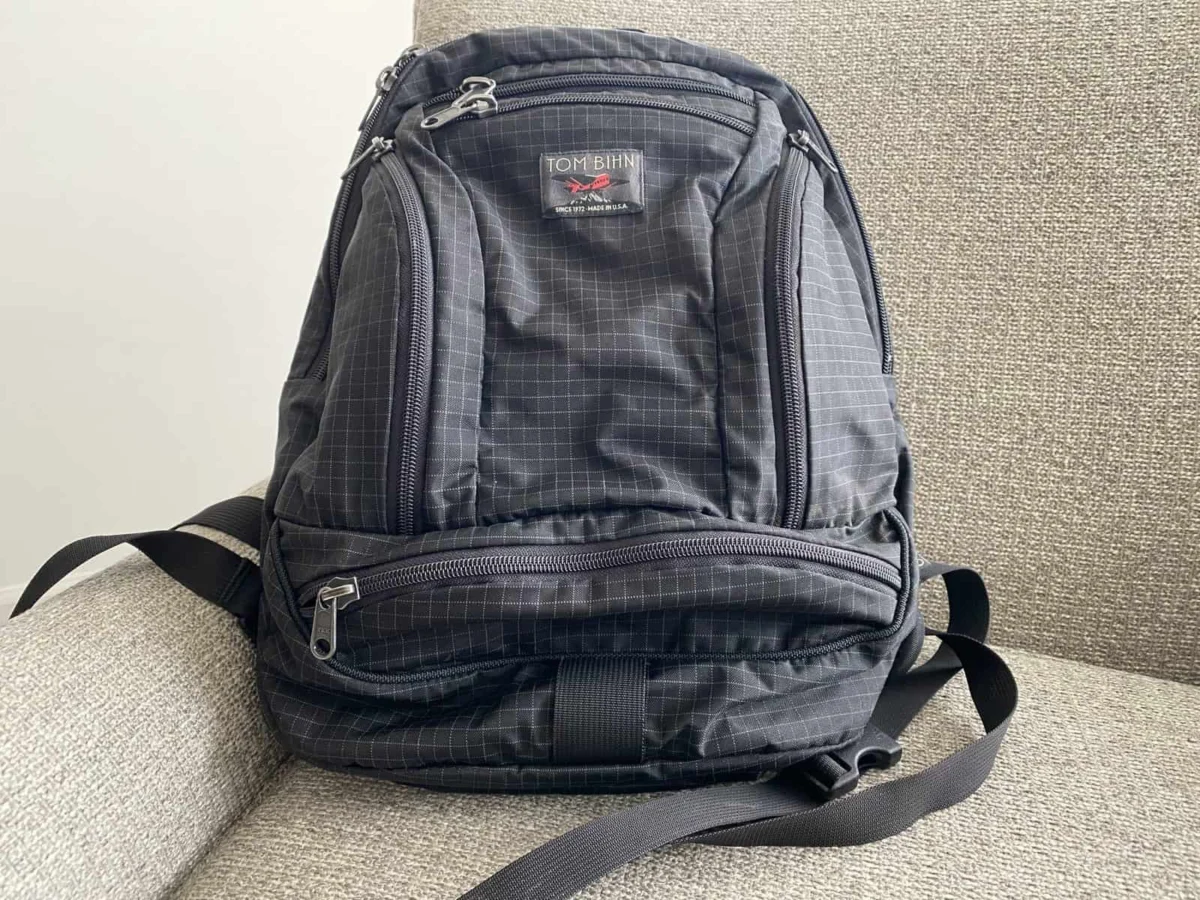
On a residential rooftop in the Park Slope neighborhood of Brooklyn, a routine maintenance procedure led to the unexpected discovery of a backpack stolen more than three years prior. The recovery of the item, a Tom Bihn Synapse daybag belonging to former attorney and travel writer Jodi Ettenberg, serves as a rare case study in the long-term lifecycle of stolen property and the intersection of criminal activity with personal medical crises. The bag was discovered by a chimney sweep in late 2020, tucked into a vent, marking the end of a multi-year odyssey that began during one of the most tumultuous periods of the owner’s life.
The Intersection of Medical Crisis and Criminal Activity
The origins of this case date back to August 2017, a period during which Ettenberg was undergoing a significant medical procedure at a New York City hospital. While she was receiving a lumbar puncture—a procedure intended to diagnose or treat specific neurological conditions—the apartment where she was residing as a temporary caretaker was breached. According to time-stamped surveillance footage from a "baby cam" inside the residence, the perpetrator entered the premises at the exact moment the medical professional began the spinal tap.
This confluence of events underscores the vulnerability of individuals during medical emergencies. While Ettenberg was incapacitated in a clinical setting, a burglar utilized her own backpack to consolidate and transport stolen goods from the apartment. The items taken included a laptop, various pieces of jewelry, and cash. In a peculiar display of selective theft, the perpetrator left behind Ettenberg’s Canadian passport and a five-dollar bill, suggesting a specific hierarchy of value or a desire to avoid the complications associated with international identification documents.
The medical procedure itself resulted in a debilitating cerebrospinal fluid (CSF) leak, a condition that occurs when the "dura mater" (the membrane surrounding the brain and spinal cord) is punctured and fails to heal, leading to chronic pain and neurological symptoms. The simultaneous loss of her primary work tools and personal belongings added a layer of logistical and emotional complexity to an already severe health crisis.
A Chronology of Events: 2017 to 2021
To understand the significance of the recovery, a timeline of the events provides necessary context:
- August 2017: Ettenberg undergoes a lumbar puncture in a New York City emergency room. Simultaneously, the Park Slope apartment she is "cat-sitting" is burglarized. Her Tom Bihn backpack and various electronics are stolen.
- August 2017 – Late 2020: The backpack remains missing. During this time, Ettenberg relocates and manages the long-term effects of her medical disability.
- December 2020: A homeowner in Park Slope, located only a few houses away from the site of the original burglary, hires a professional to clean her chimney. The cleaner discovers the backpack hidden on the roof near a chimney vent.
- December 2020: The homeowner attempts to contact Ettenberg via Facebook. The message is filtered into a "requests" folder, remaining unseen for several weeks.
- January 2021: Ettenberg discovers the message in her filtered inbox and initiates the recovery process.
- Early 2021: A colleague and long-time friend of Ettenberg, identified as a former law school classmate named Cheryl, retrieves the bag on Ettenberg’s behalf.
- April 2021: The bag is cleaned, refurbished, and returned to Ettenberg, who subsequently finds a new home for the "miracle bag" with another friend.
Statistical Overview of Burglary and Property Crime in New York City
The recovery of stolen property after three years is statistically improbable. According to data from the New York Police Department’s (NYPD) CompStat 2.0, burglary rates in the 78th Precinct, which covers Park Slope, have fluctuated over the last decade. In 2017, the year of the initial theft, New York City reported approximately 12,000 burglaries. While the clearance rate for such crimes—the rate at which police "solve" the crime through arrest—has historically hovered between 12% and 15% for property crimes, the actual recovery of physical goods is significantly lower.

Most stolen electronics, such as the laptop taken from Ettenberg, are quickly moved through secondary markets or "fences." However, lower-value personal items or specialized gear, like the Tom Bihn backpack, are often discarded once their utility to the thief has been exhausted. The fact that the bag was hidden on a rooftop suggests a tactical move by the perpetrator to lighten their load or hide evidence in a location unlikely to be searched by ground-level patrols.
The Medical Context: Lumbar Puncture Complications
The "spinal tap" mentioned in the report is a common yet sensitive procedure. Data from the Mayo Clinic and the American Society of Anesthesiologists indicates that Post-Dural Puncture Headache (PDPH) occurs in approximately 10% to 40% of patients undergoing lumbar punctures, depending on the needle size and technique used. In a small percentage of cases, like Ettenberg’s, the puncture leads to a chronic CSF leak, which can result in long-term disability, including the inability to remain upright for extended periods.
The recovery of the backpack served as a psychological "anchor" to this traumatic period. For victims of crime who also suffer from concurrent physical trauma, the return of lost items can trigger a phenomenon known as "resurfaced memory" or "sedimented trauma," where the physical object acts as a catalyst for processing past events.
The Mechanics of Property Recovery in the Digital Age
The role of social media in this recovery highlights both the benefits and pitfalls of modern communication. The "Facebook Purgatory" mentioned—referring to the "Message Requests" folder—is a common barrier in digital reunions. Facebook’s filtering algorithms, designed to prevent spam, often hide legitimate messages from individuals not in a user’s immediate network.
In this instance, the homeowner’s due diligence in searching for the name found on the expired credit cards within the bag was the primary driver of the recovery. This reflects a broader trend in "crowdsourced" justice and lost-and-found efforts, where private citizens utilize digital footprints to bypass traditional, often overburdened, law enforcement channels.
Analysis of Recovered Items and Their Condition
Upon inspection, the contents of the bag provided a snapshot of Ettenberg’s life in 2017. The items recovered included:
- Two pairs of prescription eyeglasses (warped due to three years of exposure to New York’s seasonal temperature fluctuations).
- Expired credit cards.
- Personal sundries (hand lotion, Tylenol).
- Professional business cards.
The survival of these items is a testament to the durability of the bag’s construction. Tom Bihn, a high-end manufacturer of travel gear, utilizes ballistic nylon and weather-resistant zippers, which likely protected the interior contents from total degradation despite exposure to rain, snow, and heat on a Brooklyn rooftop for over 40 months.

Notably, the high-value items—the laptop and jewelry—were absent. This aligns with standard criminal profiles where "liquid" assets are prioritized, and "identifiable" or "personal" assets are abandoned.
Psychological Implications and Community Support
The return of the bag elicited a complex emotional response, described by Ettenberg as "kicking up a lot of sediment from the bottom of a lake." Psychological studies on burglary victims suggest that the violation of a "safe space" (such as a home or a house-sit) can lead to long-term anxiety. The unexpected re-emergence of the stolen item required the owner to re-confront the "liminal space" between her former life as a mobile traveler and her current life as a person managing a disability.
The role of Ettenberg’s friend, Cheryl, in the recovery process highlights the importance of social support networks in the aftermath of trauma. By "llamafying" the bag—filling it with gifts themed around llamas—the friend attempted to "transmute" the negative associations of the bag into a positive experience. This act of "reclaiming" an object through communal support is a recognized method of moving through the stages of grief associated with loss and victimization.
Broader Impact and Conclusion
The story of the Park Slope backpack is more than a tale of a lost item returned; it is an illustration of the persistent nature of personal history. In a city of millions, the odds of a stolen bag being found a few doors down from the crime scene, years later, by a chimney sweep, are astronomical.
For the manufacturing industry, it serves as a real-world stress test for durable goods. For the legal and medical communities, it serves as a reminder of the holistic impact of procedural complications on a patient’s life. Ultimately, the bag’s journey from a burglar’s hands to a rooftop vent, and finally to a new owner, represents a closing of a chapter for Jodi Ettenberg—a "spiral of life" moment that allows for the transmutation of a traumatic memory into a story of community, resilience, and closure.
As urban centers continue to grapple with property crime, the "Park Slope Miracle" provides a rare, albeit complicated, example of how the threads of a life interrupted can occasionally be pulled back together, even years after they were severed.
