

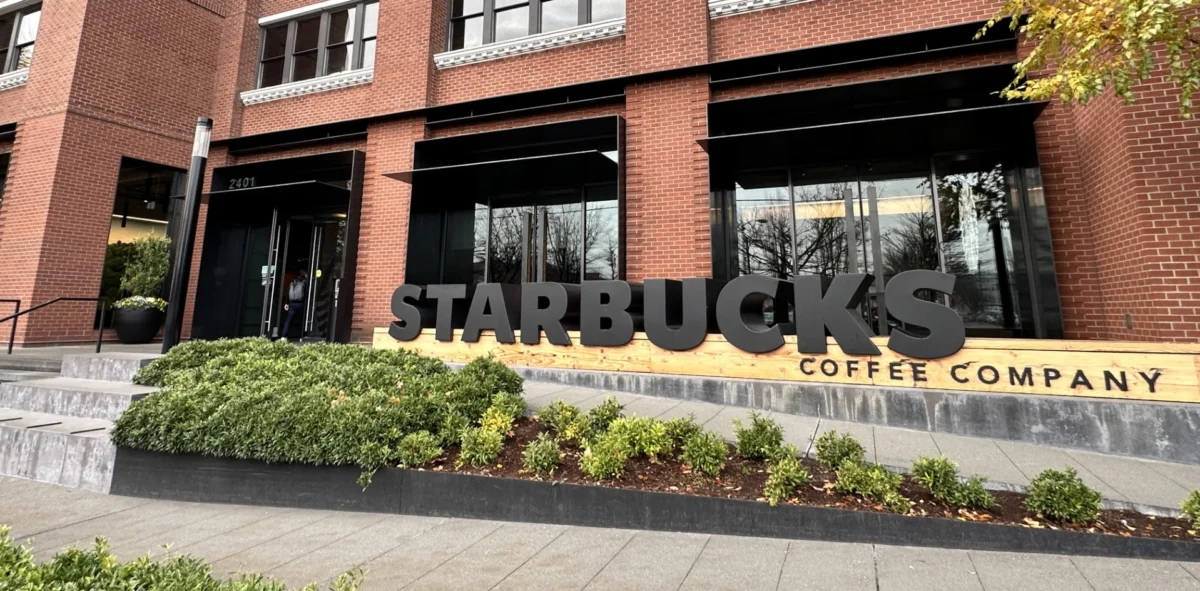
Starbucks is enacting significant workforce reductions, with over 200 employees being laid off as part of previously announced strategic shifts within the global coffee giant. The news, confirmed by a Worker Adjustment and Retraining Notification Act (WARN) notice filed on Thursday, signals a period of substantial corporate realignment aimed at streamlining operations and bolstering future growth initiatives. These layoffs are not isolated incidents but rather a consequence of broader organizational changes designed to optimize decision-making processes, reduce operational costs, and strategically reinvest resources back into the company’s core retail experience.
Corporate Reorganization and Strategic Office Consolidation
The current round of layoffs is primarily segmented into two key areas, reflecting distinct strategic objectives. A significant portion, numbering 104 employees, are impacted by a comprehensive restructuring plan first unveiled in May. This earlier initiative encompassed a total of approximately 300 layoffs and the closure of four regional offices across the United States. The rationale behind this broader restructuring was to create a more agile and efficient organizational framework, enabling faster responses to market dynamics and consumer preferences. By consolidating decision-making authority and reducing bureaucratic layers, Starbucks aims to accelerate innovation and improve the overall efficiency of its corporate support functions.
An additional 120 separations are directly linked to the company’s strategic decision to relocate certain support functions to a newly established office in Nashville, Tennessee. These affected employees reportedly declined the opportunity to relocate to the new Tennessee hub. This move signifies Starbucks’ commitment to establishing a stronger operational presence in the southern and eastern regions of the United States, areas identified for significant future expansion. The establishment of the Nashville office is a long-term investment, with a substantial $100 million earmarked for its development, and a projected opening in 2027. A temporary office in Nashville is also slated to commence operations before the permanent facility is completed, indicating a phased approach to this significant geographical shift.
Timeline of Workforce Adjustments
The impact of these workforce changes will be felt progressively. The first wave of separations is scheduled to commence on October 18th, with the entirety of the planned layoffs expected to be concluded by November 1st. This defined timeline allows for a structured transition for both the departing employees and the remaining workforce. The affected positions span various levels within the organization, including two vice president-level roles, underscoring the broad scope of this corporate overhaul.
Financial and Operational Context
These workforce adjustments occur against a backdrop of robust performance for Starbucks. The company has witnessed an acceleration in its same-store sales this year, with a notable increase of 7.9% in the most recent quarter. This positive trajectory is attributed, in part, to the company’s ongoing store improvement efforts, which appear to be resonating with consumers. Furthermore, Starbucks recently reported a record-breaking sales weekend, moving 2 million beverages, a feat bolstered by the popular return of its Unicorn Frappuccino. This surge in customer engagement and sales underscores the continued strength of the Starbucks brand and its ability to drive demand, even as it undergoes internal structural changes.
The strategic investment in the Nashville support center is a forward-looking move designed to facilitate and capitalize on anticipated growth in key markets. By positioning a significant operational base closer to burgeoning southern and eastern markets, Starbucks aims to enhance its ability to serve these regions effectively and efficiently. The company’s commitment to reinvesting cost savings from operational efficiencies back into its physical stores reflects a dedication to improving the customer experience, a cornerstone of its brand identity.
Analysis of Implications
The layoffs and corporate restructuring at Starbucks can be viewed through several lenses:
- Efficiency and Cost Optimization: The primary driver behind these changes appears to be a strategic push for greater operational efficiency and cost savings. By consolidating functions and streamlining decision-making, Starbucks aims to reduce overhead and reallocate those resources towards initiatives that directly impact sales and customer loyalty, such as in-store improvements and new product development. This is a common strategy for large corporations seeking to maintain competitive advantage in dynamic markets.
- Geographic Expansion Strategy: The establishment of a new support hub in Nashville signals a deliberate effort to build infrastructure that supports aggressive expansion in the southern and eastern United States. This region represents a significant growth opportunity, and having a dedicated support center closer to these markets can facilitate faster site selection, development, and operational management.
- Talent Management and Relocation: The workforce reduction related to the Nashville move highlights the complexities of corporate relocations. While offering employees the opportunity to move is standard practice, the decision by a significant number of workers to decline relocation underscores the personal and professional considerations involved in such transitions. This also presents an opportunity for Starbucks to recruit new talent in the Nashville area, potentially tapping into a different labor pool.
- Market Responsiveness: The layoffs are not indicative of a company in distress, given the strong sales figures. Instead, they represent a proactive recalibration of its corporate structure to better align with its long-term strategic vision. This agility allows Starbucks to adapt to evolving business landscapes, including shifts in consumer behavior and the competitive environment.
- Potential Impact on Morale: While the company emphasizes reinvestment in stores, significant layoffs, particularly those involving vice president-level positions, can inevitably have an impact on employee morale and perceptions of job security throughout the organization. The success of future initiatives will depend, in part, on how effectively Starbucks manages internal communications and supports its remaining workforce.
Broader Industry Trends
Starbucks’ actions are reflective of broader trends within the retail and food service industries. Companies are increasingly focused on optimizing their corporate structures to become more agile and cost-effective. The ongoing evolution of work, with a greater emphasis on hybrid and remote models, is also influencing real estate and office strategies. Furthermore, the intense competition within the coffee sector necessitates continuous innovation and strategic investment in both product offerings and operational capabilities.
The company’s emphasis on reinvesting in its physical stores is particularly noteworthy. In an era where digital channels and delivery services are paramount, Starbucks’ continued focus on the in-store experience suggests a belief in the enduring appeal of its cafés as community hubs and destinations. This dual approach, combining operational efficiency with a strong emphasis on the physical customer experience, is likely to be a key differentiator for the company moving forward.
The long-term success of Starbucks’ current strategic maneuvers will hinge on its ability to effectively integrate its new operational structures, realize the projected cost savings, and leverage its expanded presence in key growth markets. The company’s consistent performance in same-store sales and its ability to drive significant beverage consumption suggest a strong underlying demand for its products, providing a solid foundation for these ambitious organizational changes. The coming months will offer further insights into the tangible outcomes of these significant workforce and structural adjustments.
