

The sixth episode of Food Network’s high-stakes culinary competition, Pitmasters, delivered a pivotal shift in momentum as the remaining teams transitioned from the grueling technical demands of the Core Four challenge to a themed Big Burn centered on the spirit of backyard grilling. Following the conclusion of a 12-hour brisket cook that determined the standings for the first half of the competition, the field of competitors was narrowed, leading to an emotional elimination and a subsequent $5,000 challenge. This episode underscored the volatile nature of outdoor cooking, where traditional methods often clash with the constraints of televised competition and live-fire environments.
Finalization of the Core Four Challenge and Brisket Results
The episode opened by resolving the cliffhanger from the previous installment, which focused on the final protein of the Core Four: the beef brisket. In professional barbecue circuits, the brisket is widely considered the most difficult cut to master due to its dense connective tissue and the delicate balance required to render fat without drying out the lean muscle. While traditional Texas-style brisket often requires 12 to 16 hours at low temperatures (approximately 225°F), the competitors were forced to adapt their strategies to meet the production’s 12-hour turn-in window.

Susie Bulloch and Christie Vanover, representing the brands Hey Grill Hey and Girls Can Grill respectively, opted for a "hot and fast" method. This technique, which involves cooking at temperatures exceeding 300°F, is a strategic choice in competitive environments to ensure the meat reaches the necessary internal temperature of 203°F within a shorter timeframe. To achieve a traditional bark—the dark, flavorful crust formed by the Maillard reaction and smoke particles—the duo finished their brisket directly over a live fire. This maneuver provided a charred exterior that mimicked the results of a much longer offset smoker session.
The judging panel, which included seasoned culinary experts, evaluated the entries based on tenderness, flavor profile, and appearance. Esaul and Grecia emerged victorious in the brisket sub-category, securing a $1,000 prize. When the cumulative scores for all four proteins—chicken, ribs, pork, and brisket—were tallied, the competition resulted in a tie for the overall lead between the teams of Matt & Max and Esaul & Grecia. Both teams shared the $3,000 grand prize for the Core Four segment.
Scoring Analysis and Competitive Standing
A significant data point noted by the competitors, though not emphasized in the broadcast, was the overall consistency of the Bulloch-Vanover team. Despite not winning an individual protein round, their aggregate score across all four categories was the second-highest of the entire field. In the lexicon of the Kansas City Barbeque Society (KCBS) and other major sanctioning bodies, this position is referred to as the Reserve Grand Champion. This status indicates a high level of technical proficiency and the ability to avoid "bottoming out" in any single category, a trait often more valued by professional pitmasters than a single high-profile win.

The conclusion of the Core Four also marked the end of the journey for Denzel and Reggie. Their elimination highlighted the rigorous standards maintained by the judges as the season progressed. Host Andrew Zimmern remarked on the burgeoning "family" dynamic among the contestants, noting that the shared experience of sleep deprivation, extreme weather, and high-pressure cooking creates a unique bond that transcends the competition itself.
The Big Burn: A Transition to Backyard BBQ Standards
Following the elimination, the remaining teams were introduced to the next "Big Burn" challenge. The prompt required teams to prepare one protein and two side dishes that reflected their personal "Backyard BBQ" style. Unlike previous rounds that focused on specific technical benchmarks, this challenge invited a more narrative-driven approach to cooking. The prize for the winning team was set at $5,000, a substantial incentive that heightened the stakes for the remaining pitmasters.
In a rare concession to the physical toll of the competition, the producers allowed the teams a period of rest before the challenge commenced. This rest period is a critical factor in competitive cooking performance, as fatigue often leads to errors in temperature management and seasoning.

Strategic Menu Selection and Execution
Bulloch and Vanover approached the Backyard BBQ challenge by selecting recipes that prioritized bold, accessible flavors over traditional barbecue complexity. Their menu was designed to showcase versatility in live-fire cooking:
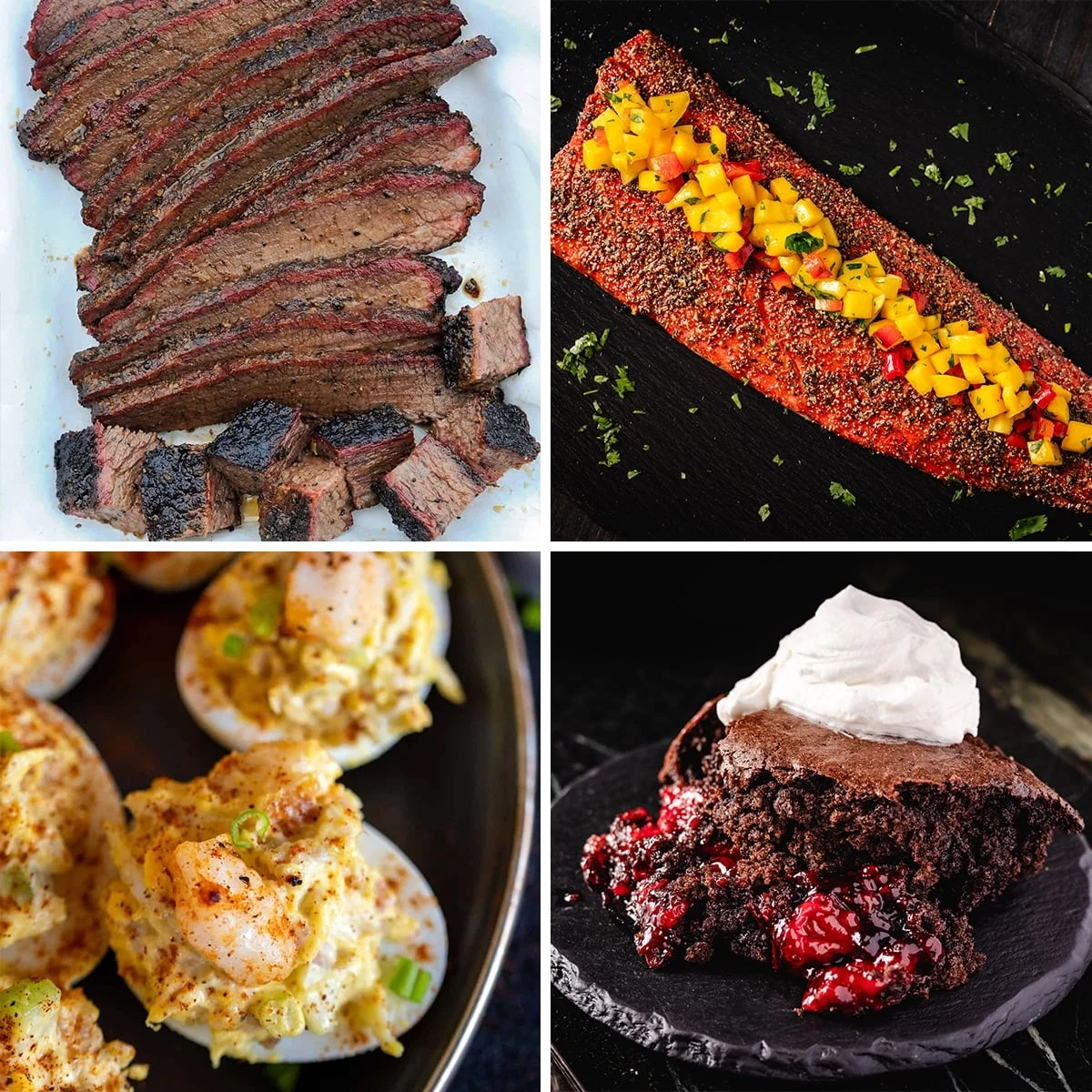
Protein: Dry Rub Salmon with Mango Salsa
The team moved away from traditional beef or pork, choosing salmon as their primary protein. The fish was seasoned with a complex dry rub consisting of brown sugar, black pepper, coarse sea salt, dried basil, garlic powder, smoked paprika, and lime zest. This combination was engineered to provide a balance of sweetness and acidity. The salmon was cooked over a live fire to impart a smoky essence and topped with a fresh salsa of ripe mango, roasted red bell pepper, cilantro, and lime juice.
Side One: Seafood Salad Deviled Eggs
Christie Vanover led the preparation of a modified classic: deviled eggs. The recipe involved grilling shrimp to introduce a smoky element before chopping and folding it into a mixture of crab meat, minced celery, shallots, mayo, and mustard. The use of eggs in an outdoor, live-fire environment is notoriously difficult due to the fragility of the shells during the boiling process and the necessity of maintaining cold temperatures for food safety and texture.

Side Two: Mountain Berry Chocolate Cake
For the final component, the team prepared a Dutch oven chocolate cobbler, a staple of outdoor camp cooking. The dish featured a berry base topped with a chocolate batter that, when baked in a cast-iron Dutch oven over coals, develops a "crackly" crust and a gooey interior. This dish was intended to evoke a sense of nostalgia and comfort, aligning with the "Backyard" theme.
Judging Critique and Peer Interaction
A unique element of Episode 6 was the peer-tasting segment. Competitors were invited to sample each other’s dishes, fostering an environment of mutual respect and professional exchange. This segment provided a stark contrast to the formal judging process.
The formal evaluation, however, proved more critical. While the competitors enjoyed the chocolate cake, the judges offered a more technical and sometimes harsh critique of the dessert’s execution and presentation. In the context of a televised culinary competition, judges often look for "elevated" versions of home classics. The tension between "authentic backyard food" and "competition-level execution" was a primary theme of the episode’s final act. The Bulloch-Vanover team defended their choices, stating that their goal was to remain true to the food they serve their own families, even if it did not align perfectly with the judges’ expectations for a $5,000 prize-winning dish.

Broader Implications for the Barbecue Industry
The events of Episode 6 reflect broader trends within the contemporary barbecue landscape. The shift toward "live-fire" cooking—moving away from automated pellet grills or highly insulated offset smokers—emphasizes a return to primitive, skill-based cooking. This trend has been popularized by various culinary media and reflects a growing consumer interest in the artisanal aspects of barbecue.
Furthermore, the prominence of female pitmasters like Bulloch and Vanover in a historically male-dominated field signifies a shift in the industry’s demographics. Their success in achieving the second-highest cumulative score in the Core Four challenge serves as a testament to the increasing diversity and high level of talent present in the modern competition circuit.
The episode also illustrated the economic realities of the "Pitmaster" lifestyle. With individual prizes of $1,000 and "Big Burn" prizes of $5,000, the financial stakes are high, but the costs of equipment, high-quality meats, and travel often mean that only the most consistent teams can remain viable in the professional circuit.

Conclusion and Future Outlook
As the season moves toward its conclusion, the field has been thinned to only the most resilient competitors. While Bulloch and Vanover did not secure the $5,000 prize in the Backyard BBQ challenge, their performance in the Core Four established them as top-tier contenders. The results of Episode 6 have set the stage for a final series of challenges where technical precision and creative storytelling will likely be the deciding factors.
The program continues to air on Food Network, with streaming availability on HBO Max and Discovery+. The next episode is expected to further test the remaining teams’ ability to adapt to unconventional ingredients and environments, maintaining the show’s reputation as a rigorous test of outdoor culinary skill.
