

The fifth episode of Food Network’s Pitmasters introduced a significant shift in competitive format, moving away from thematic challenges toward a rigorous evaluation of the four foundational pillars of American barbecue: chicken, pork ribs, pork shoulder, and beef brisket. Known in professional circles as the "Core Four," these proteins represent the standard by which competitive pitmasters are judged under the sanctioning bodies like the Kansas City Barbeque Society (KCBS). For contestants Susie Bulloch and Christie Vanover, Episode 5 presented a multifaceted trial involving rolling deadlines, high-stakes financial incentives, and adverse meteorological conditions that tested the logistical and technical limits of their outdoor culinary operations.
The Structural Shift to Core Four Competitions
Barbecue competitions traditionally utilize a "low and slow" method, often spanning 12 to 24 hours. However, the Pitmasters television format requires a condensed timeline to maintain narrative tension. In Episode 5, the production replaced the standard "Big Burn" and "Flash Burn" segments with a continuous, rolling schedule. This format required teams to turn in each of the four proteins at specific intervals, forcing them to manage overlapping cooking windows on limited firebox space.
The financial stakes were heightened for this episode, with a $1,000 prize allocated to the winner of each individual protein round. Furthermore, an aggregate scoring system was implemented, where the team with the highest cumulative points across all four rounds would receive an additional $3,000 bonus. This structure incentivized consistency over singular "hero" dishes, as a failure in one round could mathematically eliminate a team from the overall prize regardless of individual round wins.

Technical Criteria: Time, Temperature, and Texture
The judging panel, comprised of industry veterans Big Moe Cason, Jess Pryles, and Andrew Zimmern, emphasized a return to technical basics. The "3 T’s"—Time, Temperature, and Texture—served as the primary rubric. In professional barbecue, these metrics are interdependent.
- Time: Refers to the management of the "stall" (the period where evaporative cooling halts internal temperature rise) and the resting period required for muscle fibers to reabsorb rendered fats and juices.
- Temperature: Requires precision in both the ambient pit temperature and the internal thermal transition of the meat. For example, collagen breakdown in a pork shoulder typically occurs between 190°F and 205°F.
- Texture: Evaluates the "bite." For ribs, this means the meat should pull cleanly from the bone without being "fall-off-the-bone" overcooked. For brisket, it involves the "bend test," where a slice should drape over a finger without breaking but pull apart with minimal tension.
Round 1: Avian Technicalities and the Impact of Atmospheric Precipitation
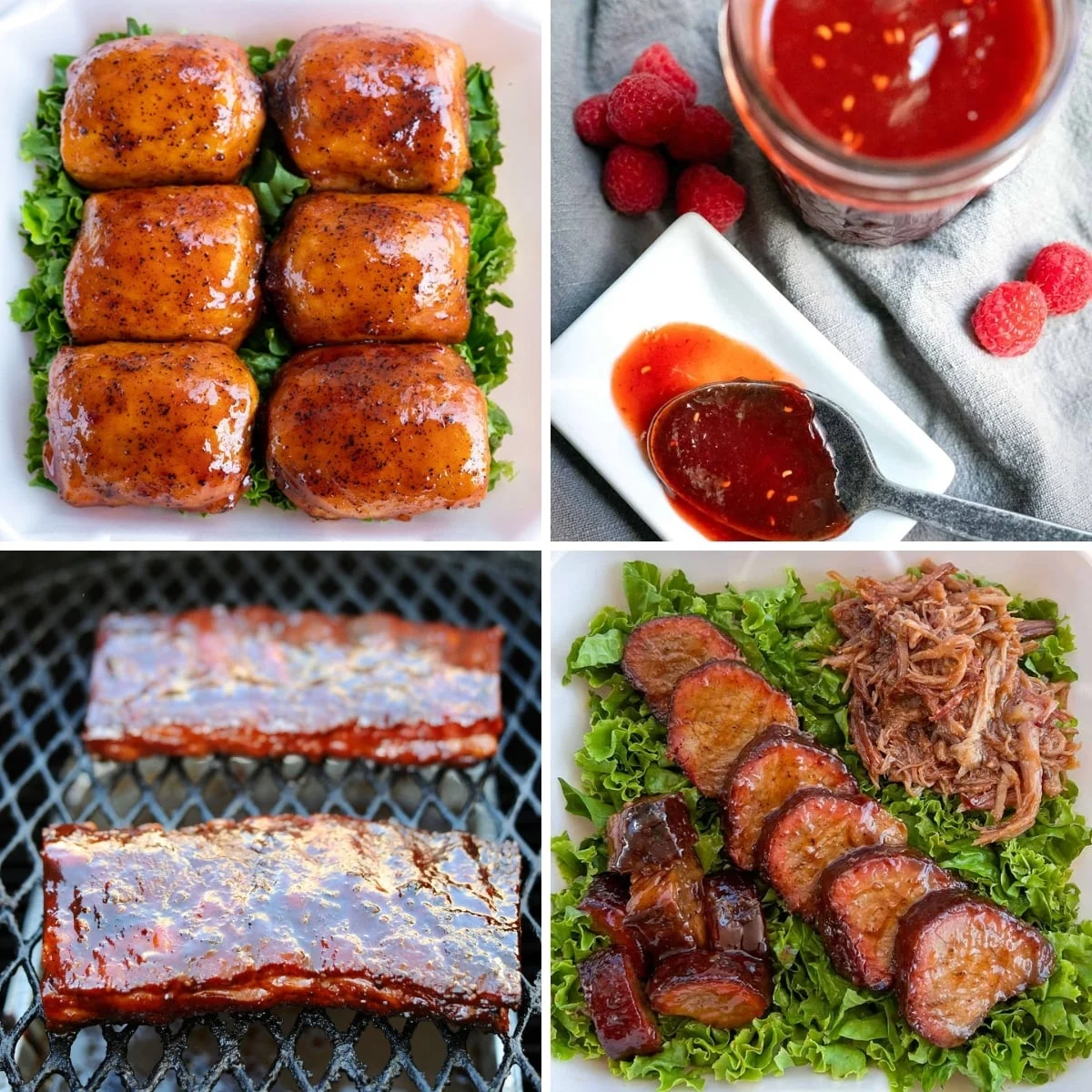
The first deadline focused on chicken. Bulloch and Vanover opted for a "hot and fast" strategy, a technique gaining popularity in the competition circuit to bypass the lengthy timelines of traditional smoking. Their entry featured a smoked raspberry chipotle chicken, a flavor profile designed to balance the natural alkalinity of the meat with acidity and heat.
From a technical standpoint, the team chose to deconstruct the whole bird into its constituent parts—thighs, wings, and legs—rather than smoking a whole carcass. This allowed for granular control over the varied thermal requirements of white versus dark meat. The breasts were excluded from the final presentation to avoid the risk of dryness, a common pitfall in high-heat chicken smoking. Instead, the team utilized rendered chicken skin, fried to a crisp texture, as a garnish to provide a structural contrast to the smoked meat.
Midway through the chicken rest period, the competition was interrupted by a hailstorm. Environmental factors such as barometric pressure drops and sudden humidity spikes can significantly alter the combustion rate of wood-fired pits. Furthermore, precipitation on the exterior of a steel offset smoker causes rapid heat loss through conduction. Vanover’s background as a park ranger provided a tactical advantage in this scenario, as the team maintained operational continuity despite the freezing precipitation.

The judges’ feedback for the chicken round was positive regarding the rendering of the fat under the skin—a difficult feat in a smoker. Big Moe Cason specifically highlighted the texture of the skin, though the team did not secure the $1,000 round win.
Round 2: Pork Ribs and the Integration of Global Citrus Profiles
The second round centered on pork ribs. The team continued their "hot and fast" methodology, aiming for a total cook time of under four hours. This requires maintaining pit temperatures between 300°F and 325°F, significantly higher than the traditional 225°F.
The culinary strategy for this round involved the use of yuzu, a Japanese citrus fruit. In competitive barbecue, judges often suffer from "palate fatigue" after tasting multiple heavy, sugary, and smoky entries. The introduction of yuzu—which possesses a complex acidity profile situated between lemon and grapefruit—was intended to "cut through" the heavy intramuscular fat of the pork.
Judge Jess Pryles noted that the texture met "competition-style" standards, indicating a successful thermal transition. However, the round highlighted the subjective nature of flavor balancing; while some judges found the citrus refreshing, Andrew Zimmern noted a desire for a more pronounced citrus presence. This feedback underscores the difficulty of seasoning for a panel with diverse culinary backgrounds.

Round 3: Pork Shoulder and the "Money Muscle" Precision
The pork shoulder round is often viewed as a test of endurance and fat management. Bulloch and Vanover focused their presentation on the "money muscle," or the proctodeum. This is a small, heavily marbled muscle located at the end of the pork butt (shoulder) opposite the blade bone. When sliced into medallions, it provides the most tender and visually appealing portion of the shoulder.
To complement the pork, the team utilized a Whiskey Peach BBQ sauce. The sugars in the peach nectar provide the necessary "tack" or glaze, while the alcohol content in the whiskey helps carry fat-soluble flavor compounds across the palate.
Despite the medallions being cooked to the correct internal temperature for optimal tenderness, the entry failed to win the round due to a seasoning deficit. The judges determined the meat lacked sufficient salinity to elevate the complex flavors of the peach and whiskey. In high-level competition, the margin of error regarding salt content is razor-thin, as salt acts as a bridge between the smoke profile and the natural sugars of the sauce.
Safety and Equipment: The Role of Specialized Gear
A notable detail in Episode 5 was the visible use of specialized pitmaster gloves by multiple competitors. In a "hot and fast" environment where pits are running at 300°F+ and meat must be handled frequently for wrapping in foil or butcher paper (the "Texas Crutch"), thermal protection is a safety necessity. The adoption of these tools by teams like Bulloch/Vanover and their competitors illustrates the professionalization of the hobbyist barbecue market, where heat-resistant, high-dexterity silicone and aramid fiber gloves have replaced traditional bulky oven mitts.

Broader Implications for the Barbecue Industry
The performance of Bulloch and Vanover in Episode 5 reflects broader trends in the American culinary landscape. First, it highlights the rising prominence of female pitmasters in a historically male-dominated field. Their technical approach—combining traditional smoking with modern "hot and fast" science—demonstrates a sophisticated understanding of thermodynamics and food chemistry.
Second, the episode illustrates the impact of media on barbecue standards. By broadcasting the "Core Four" requirements to a national audience, Food Network reinforces the KCBS-style competition as the definitive version of American BBQ. This has a trickle-down effect on the restaurant industry, as consumers increasingly look for the specific textures and "smoke rings" popularized by television competitions.
Conclusion and Pending Results
As of the conclusion of Episode 5, the competition remains unresolved. The broadcast ended on a cliffhanger prior to the brisket turn-in, which is widely considered the most difficult round of the Core Four. Brisket, a cut of beef from the lower chest, contains high amounts of connective tissue that require precise thermal management to gelatinize without drying out the lean "flat" portion of the muscle.
The cumulative $3,000 prize and the advancement to the next stage of the tournament hinge entirely on the brisket scores and the final aggregate tally. The episode demonstrated that even with expert fire management and innovative flavor profiles, the fundamental elements of barbecue—salt, heat, and timing—remain the ultimate arbiters of success in the professional pit.

The next installment will determine if the team of Bulloch and Vanover can recover from the seasoning critique in the pork round to secure a victory through their brisket performance. For the viewers and the industry alike, the episode serves as a case study in the volatility of outdoor cooking and the uncompromising standards of professional barbecue judging.
