

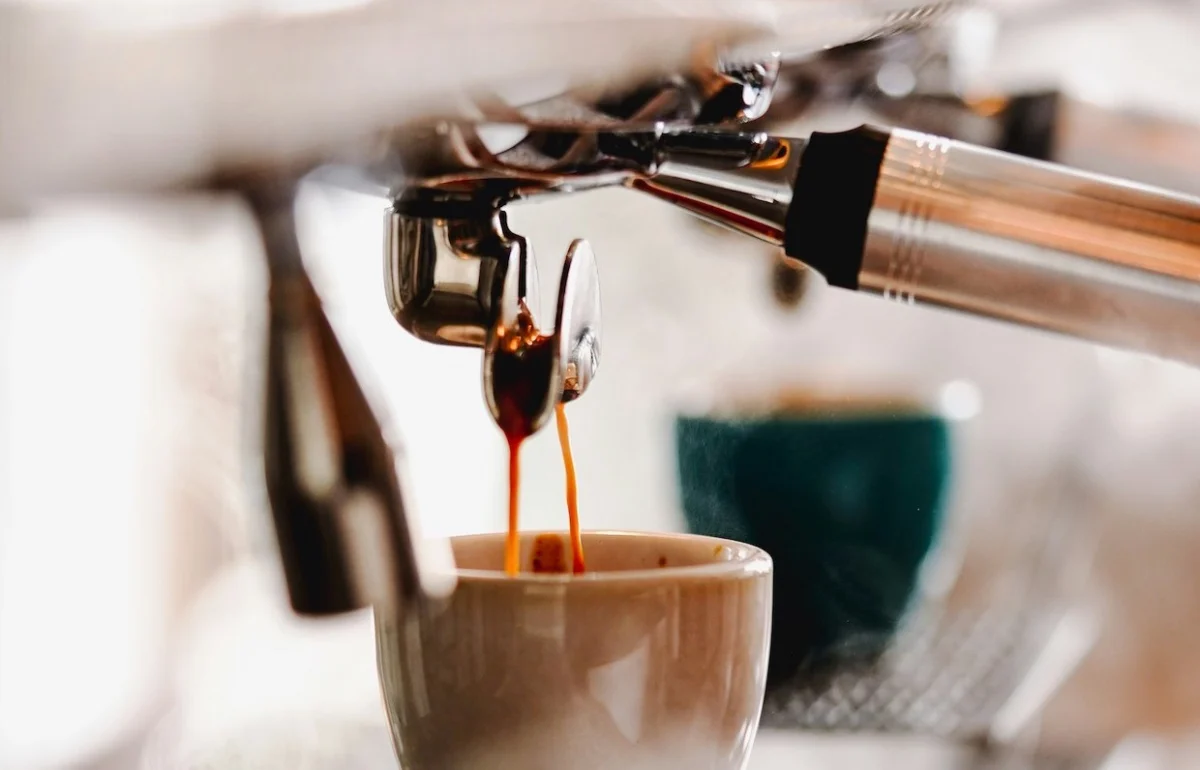
A groundbreaking study published in the journal Physics of Fluids has definitively debunked a long-held assumption within the coffee industry: that increasing water pressure during espresso extraction directly translates to a faster or more efficient brewing process. The research, conducted by a collaborative team of physicists from institutions in Poland and Germany, provides a detailed, science-based explanation for why the coffee puck behaves in complex ways under pressure, ultimately limiting flow rate beyond a certain threshold. This phenomenon helps explain the inherent variability baristas encounter, even when meticulously controlling other brewing parameters.
The study, which appeared on June 23rd, delves into the intricate physics of channeling and flow regulation within the compacted coffee grounds, commonly referred to as the "puck." While at lower water pressures, espresso grounds behave predictably as a standard porous material, where increased pressure leads to increased flow, the research indicates that this linearity breaks down significantly once brewing pressures enter the typical range used in commercial espresso machines (often cited between 6 to 9 bars). Beyond this point, the coffee puck exhibits a complex poroelastic behavior, where the material itself deforms and compacts, effectively regulating and limiting the flow of water, regardless of further pressure increases.
This discovery offers a scientific underpinning to anecdotal observations by experienced baristas who have long suspected that simply cranking up the pressure might not be the key to achieving an optimal espresso shot. The research team, with affiliations including the University of Warsaw, the Polish Academy of Sciences, and the Max Planck Institute for Dynamics and Self-Organization in Germany, sought to systematically measure and explain these observed phenomena, which had previously lacked rigorous empirical validation.
Unraveling Espresso’s Brewing Mysteries
The impetus for this comprehensive study reportedly stemmed from practical questions posed by baristas at a coffee trade event. They were seeking concrete, scientific guidance on how to mitigate "channeling" – a common brewing defect where water finds preferential, low-resistance pathways through the coffee puck. This uneven extraction results in some areas of the coffee being over-extracted while others are under-extracted, leading to an unbalanced and inconsistent espresso flavor profile.
To address these real-world brewing challenges, the researchers established a sophisticated experimental setup. They utilized a two-group Sanremo Zoe Competition espresso machine, a workhorse in many professional cafes. This machine was extensively modified with integrated pressure sensors, a high-precision digital scale for real-time mass flow measurement, and an Arduino-based data acquisition system. This advanced instrumentation allowed for the precise recording of both pressure dynamics and the rate at which liquid espresso was extracted throughout the brewing process.
The coffee used in the experiments was a carefully selected single-origin specialty coffee from the Igarape region of Brazil, expertly roasted by CoffeeLab Warsaw, a renowned local roaster. Each brewing cycle employed a standardized dose of 18.50 grams of coffee. The grinding was performed using a Fiorenzato F64 EVO grinder, ensuring consistent particle size distribution. Puck preparation was meticulously standardized, involving shaking for initial distribution, WDT (Weiss Distribution Technique)-style needle distribution to break up clumps, and automatic tamping to a consistent force of 20 kilograms. This rigorous control over all variables, except for the specific pressure being tested, was crucial for isolating the impact of pressure on flow rate.
Simulating and Analyzing Extraction Dynamics
The experimental protocol involved brewing a significant number of shots – 60 long extractions across 11 different pressure settings, ranging from approximately 1 bar to 12 bars. These long brews, typically lasting around 120 seconds, were deliberately designed not for palatability but to observe the behavior of the coffee puck after most soluble compounds had been extracted, allowing the flow rate to approach a more stable, saturated state.
At the lower end of the pressure spectrum, the coffee grounds behaved as predicted by traditional fluid dynamics principles for porous media. Increases in applied pressure directly correlated with proportional increases in the flow rate of water through the puck. However, the study observed a dramatic shift in this relationship as the pressure approached and entered the 6- to 9-bar range, a pressure zone commonly employed in professional espresso preparation. In this critical range, the flow rate began to plateau and saturate, meaning that further increases in applied pressure did not result in a corresponding rise in the extraction speed.
The researchers explained this phenomenon by modeling the coffee puck as a "poroelastic material." This concept, often associated with saturated soils or biological tissues, describes a material that can deform and change its pore structure under the influence of fluid pressure. In essence, as the water pressure increases, the porous coffee bed compacts, constricting the available pathways for water to flow. This physical deformation acts as an intrinsic flow regulator, counteracting the intended effect of higher external pressure.
Dr. Maciej Lisicki, a key researcher involved in the study, commented on the significance of these findings in an announcement from the University of Warsaw. "This poroelastic compaction has been alluded to in the coffee community, but with no systematic evidence," Dr. Lisicki stated. "I think we characterized this effect for the first time, and that enticed us to formulate a theoretical description." This systematic characterization provides the empirical foundation for a phenomenon that was previously based on conjecture and barista intuition.
Investigating Soluble Extraction and Structural Changes
Beyond flow rate, the study also delved into the dynamics of soluble compound extraction – the process by which flavor compounds dissolve from the coffee grounds into the water. In a series of experiments, the extracted espresso was collected in 5-second fractions. Each fraction was then analyzed for its total dissolved solids (TDS) concentration using a refractometer.
The results revealed that the earliest fractions of the espresso contained the highest concentration of dissolved coffee solubles, with TDS levels reaching approximately 25%. As the extraction progressed, this concentration dropped sharply, nearing zero by about 60 seconds. This observation underscores the critical role of dissolution dynamics – the rate at which soluble coffee material leaves the puck – in shaping the evolution of flow and flavor during extraction. The study suggests that once the easily dissolvable compounds are depleted, the physical limitations imposed by the puck’s structure become even more pronounced in regulating flow.
Further insights into the physical transformation of the coffee puck were obtained through X-ray microtomography. This advanced imaging technique allowed researchers to create detailed 3D scans of the coffee puck both before and after brewing. The post-brew scans revealed significant structural changes, including evidence of swelling, the formation of micro-cracks, and delaminations within the puck. These visual cues provided tangible evidence of how the coffee bed physically reconfigures itself during the extraction process, contributing to the observed poroelastic effects.

The study also explored the impact of interrupted brewing cycles. They found that stopping and restarting the espresso machine, a practice sometimes employed to extend extraction times for certain drink recipes, could increase the flow rate through the puck without leading to significant additional dissolution of soluble compounds. This suggests that repeatedly applying pressure to the same puck, even without further grinding or fresh coffee, might lead to extraction inconsistencies, potentially favoring the extraction of less desirable compounds in subsequent runs.
A Growing Field of Espresso Science
This latest research adds a significant layer of scientific understanding to the burgeoning field of espresso physics and mathematical modeling. It builds upon previous work that has sought to demystify the complex variables involved in achieving a perfect espresso shot.
For instance, a study published in Royal Society Open Science and previously covered by Daily Coffee News, employed X-ray computed microtomography and fluid-flow simulations to model the permeability of coffee beds. Another Physics of Fluids study from 2023 explored how finer coffee grinds, while seemingly intuitive for maximizing extraction, could paradoxically lead to weaker espresso due to uneven extraction patterns. Even earlier, a 2020 study challenged conventional espresso wisdom by proposing that lower doses, coarser grinds, and faster extraction times might yield superior results, pushing the boundaries of established brewing dogma.
The current study, by focusing on the pressure-flow relationship and the poroelastic behavior of the coffee puck, adds a crucial dimension to this ongoing scientific inquiry. It does not offer a prescriptive, one-size-fits-all brewing recipe. Instead, its primary contribution lies in explaining the underlying physical principles that govern espresso extraction. The research emphasizes that while pressure is a critical variable, it is not the sole determinant of extraction speed or quality. Variables such as the meticulousness of puck preparation, the uniformity of grind distribution, the chosen coffee dose, and the inherent particle size of the coffee all play integral roles in the overall consistency and success of an espresso shot.
The study was partially funded by the University of Warsaw’s IDUB program, underscoring institutional support for fundamental research in applied scientific fields. The implications of this research are far-reaching for coffee professionals, equipment manufacturers, and even dedicated home baristas, providing a deeper, evidence-based understanding of the forces at play within the espresso machine. As the science of coffee continues to evolve, studies like this promise to refine our understanding and elevate the craft of espresso preparation to new heights.
