

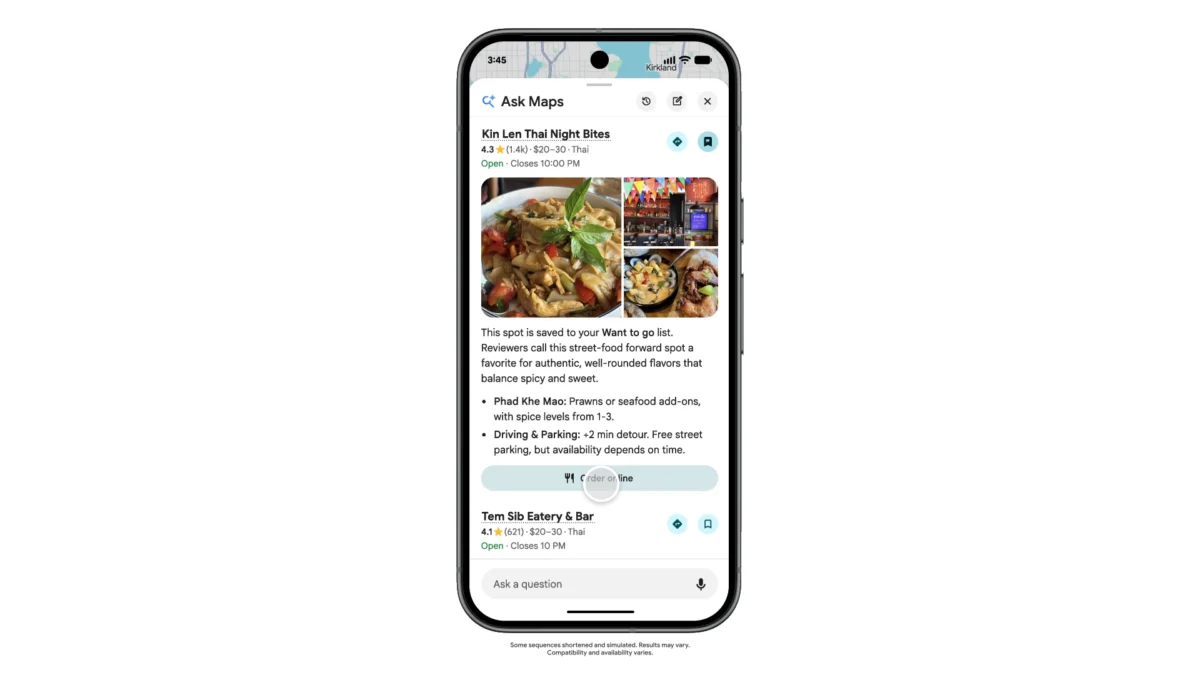
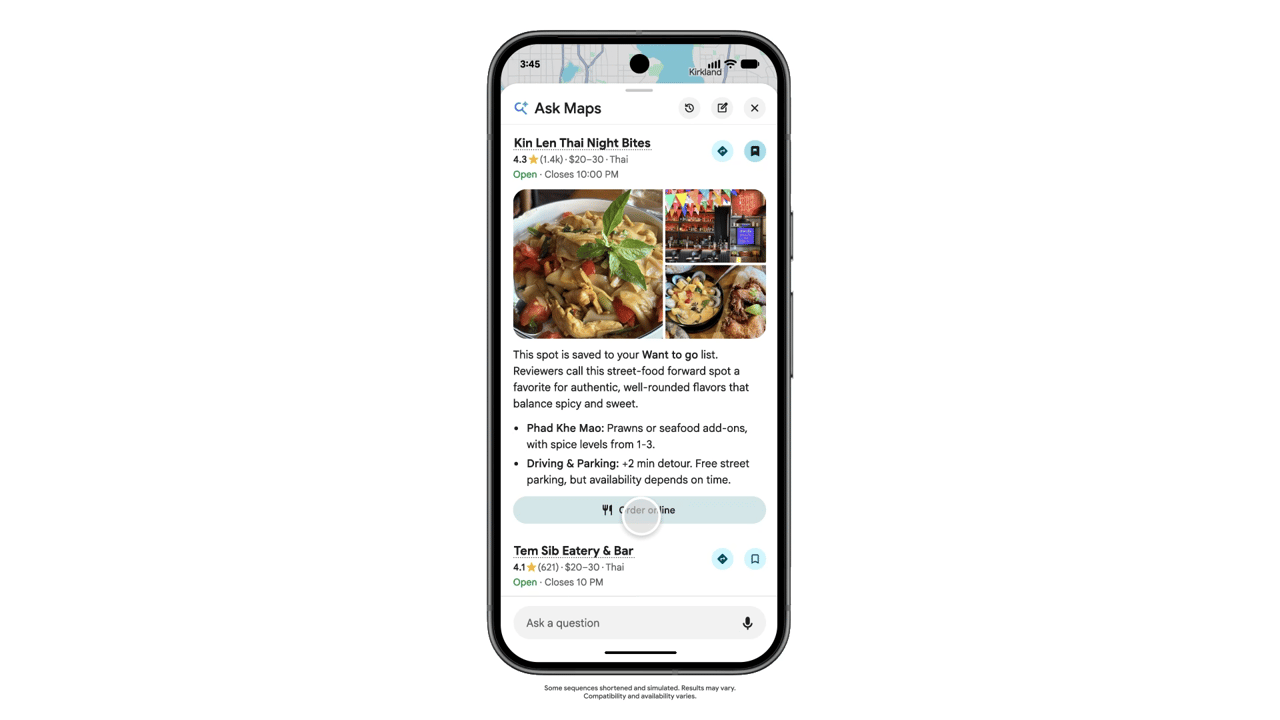
The integration of artificial intelligence into everyday applications continues to accelerate, with Google Maps now offering customers the ability to order food directly through its platform via an AI-powered chatbot named "Ask Maps." This new feature, designed to streamline the dining experience, allows users to initiate food orders through natural language prompts, effectively transforming the popular navigation app into a personalized restaurant concierge.
Seamless Ordering: From Search to Cart within Maps
The core functionality of "Ask Maps" revolves around its conversational AI capabilities. Users can simply type requests such as "order a pepperoni pizza for me to pick up on my way home." The AI then analyzes the request, identifies open restaurants in the vicinity that offer the specified item, and can even factor in previously saved restaurant preferences or noted dietary restrictions. This intelligent search and selection process aims to remove the friction often associated with finding and ordering food on the go.
Once a user selects a restaurant, "Ask Maps" proceeds to automatically populate a virtual shopping cart with the desired items. This cart can then be reviewed, edited, or finalized for purchase, all without the user ever needing to leave the Google Maps interface. This all-in-one approach seeks to simplify the ordering process, making it more convenient and efficient for consumers.
Phased Rollout and Key Partnerships
The new ordering capability is not yet universally available across all restaurants. Currently, "Ask Maps" is integrated with establishments that utilize online ordering systems from Square and Toast. This strategic partnership with established point-of-sale and online ordering providers allows Google to tap into existing restaurant infrastructure, facilitating a smoother integration process. Furthermore, Google has indicated that an integration with Uber Eats is currently in development, signaling an expansion of the platform’s reach within the food delivery and pickup ecosystem.
This phased approach to deployment is typical for large-scale technological rollouts, allowing Google to refine the user experience, address any technical challenges, and gather feedback before a wider release. The reliance on specific partners like Square and Toast suggests that restaurants already using these services will be among the first to benefit from this new feature.
A Return to Integrated Ordering: Learning from Past Endeavors
The introduction of "Ask Maps" marks a significant, albeit evolved, return to Google’s efforts in the integrated restaurant ordering space. Previously, Google offered a feature called "Order with Google," which was embedded within Google Search. This service allowed users to place orders directly from restaurants listed on the search platform. However, Google discontinued "Order with Google" in early 2024. At the time of its discontinuation, Google cited insights suggesting that customers generally preferred to order directly from restaurant websites.
The pivot to "Ask Maps" within Google Maps represents a refinement of this strategy. By leveraging the immense user base and the inherent utility of Maps for navigation and discovery, Google aims to re-engage users in a context where they are already actively seeking dining options. The conversational AI aspect of "Ask Maps" further differentiates it from its predecessor, offering a more dynamic and personalized interaction.
Potential Benefits for Restaurants: Commission-Free Orders and Data Ownership
The "Order with Google" initiative, despite its eventual discontinuation, was often viewed favorably by restaurants. It provided a substantial channel for first-party orders, meaning orders placed directly with the restaurant rather than through third-party aggregators that often charge significant commission fees. The widespread use of Google and Google Maps for restaurant searches meant that "Order with Google" could drive significant traffic and potential sales.
"Ask Maps" appears poised to replicate and potentially enhance these benefits for restaurants. By facilitating orders directly through the Maps app, Google can direct customers to restaurants’ own ordering systems. This has several key advantages:
- Commission-Free Orders: Restaurants can potentially avoid the high commission rates charged by many third-party delivery and ordering platforms, leading to increased profitability per order.
- Data Ownership: When customers order directly through a restaurant’s own channel, the restaurant retains valuable customer data, which can be used for marketing, loyalty programs, and understanding customer behavior. Third-party platforms often control this data.
- Enhanced Visibility: Integrating with "Ask Maps" can provide restaurants with greater visibility to a vast pool of potential customers actively using Google Maps to find places to eat.
This approach aligns with a broader industry trend where restaurants are seeking to regain control over their customer relationships and reduce reliance on third-party intermediaries. Google’s offering could provide a valuable tool in this effort, acting as a discovery engine that funnels customers towards direct ordering channels.
The Rise of Agentic AI in Food Ordering
Google’s foray into AI-powered food ordering places it squarely within a burgeoning market segment. The concept of "agentic AI" refers to AI systems that can autonomously perform tasks on behalf of a user, often involving multiple steps and interactions. In the context of food ordering, this means an AI that can not only understand a request but also navigate menus, make selections, and complete transactions.
This trend is evident with other major players in the food industry. For instance, DoorDash launched its own AI-powered search and ordering tool, "Ask DoorDash," in June. This feature allows customers to interact with a chatbot to find and order from the platform’s extensive restaurant catalog. The emergence of such tools signals a significant shift in how consumers might interact with food ordering services in the future, moving towards more intuitive, conversational, and automated experiences.
The competition in this space is likely to intensify as more technology companies and food service providers explore the potential of generative AI to enhance customer convenience and operational efficiency. The ability to seamlessly integrate AI-driven ordering into existing platforms like Google Maps or DoorDash’s app offers a significant competitive advantage.
Context and Background: The Evolving Digital Landscape of Dining
The integration of AI into restaurant ordering comes at a time of significant digital transformation within the food industry. The COVID-19 pandemic, in particular, accelerated the adoption of online ordering, delivery, and digital payment systems. Consumers became accustomed to the convenience of ordering food from their phones, and restaurants were compelled to adapt their operations to meet this demand.
This shift created a complex ecosystem of third-party delivery platforms, online ordering solutions, and restaurant technology providers. While these technologies offered convenience and expanded reach, they also introduced challenges related to commission fees, data control, and brand consistency.
Google’s previous attempts at integrated ordering, such as "Order with Google," were likely influenced by the desire to capture a share of this growing digital food market. The discontinuation of that service, however, highlighted the nuances of consumer preferences and the challenges of competing with established players and direct restaurant channels.
The current approach with "Ask Maps" seems to be a more strategic and data-informed evolution. By focusing on the discovery and initial ordering phase within Maps, and by partnering with existing ordering infrastructure, Google is attempting to create a valuable touchpoint without necessarily aiming to replace the entire ordering and delivery infrastructure.
Timeline of Google’s Integrated Ordering Efforts:
- Pre-2024: Google experimented with various integrated ordering features, including "Order with Google" within Google Search.
- Early 2024: Google discontinued "Order with Google," citing a preference among customers for direct ordering from restaurant websites.
- Mid-2024 (approximate): Google began rolling out "Ask Maps," an AI-powered conversational ordering feature within Google Maps, initially integrating with Square and Toast.
- Ongoing: Google is working on further integrations, including Uber Eats, and is likely to expand the availability of "Ask Maps" to more restaurants and potentially introduce additional AI-driven features.
Supporting Data and Market Trends:
The growth of online food ordering and delivery is substantial. According to various industry reports:
- The global online food delivery market size was valued at USD 154.69 billion in 2023 and is projected to grow at a compound annual growth rate (CAGR) of 11.5% from 2024 to 2030. (Source: Grand View Research, for example)
- Mobile ordering and payment are dominant trends, with a significant percentage of orders placed via smartphones.
- Consumer expectations are increasingly shaped by the convenience and personalization offered by digital platforms.
- There is a growing demand for restaurants to have more control over their customer relationships and data.
These trends underscore the strategic importance of platforms that can effectively connect consumers with restaurants in the digital realm. Google Maps, with its massive user base and integrated functionality, is well-positioned to play a significant role in this evolving landscape.
Analysis of Implications:
The introduction of "Ask Maps" carries several significant implications for various stakeholders:
- For Consumers: The primary implication is enhanced convenience. Users can discover, select, and initiate orders for food without navigating multiple apps or websites. The AI’s ability to understand natural language requests and factor in personal preferences could lead to a more personalized and efficient ordering experience.
- For Restaurants: As discussed, the potential for commission-free orders and direct customer data ownership is a major positive. It offers an alternative or supplementary channel to third-party aggregators. However, restaurants will need to ensure their online ordering systems are compatible with the integrated platforms (Square, Toast, and eventually Uber Eats) and that their menus are accurately represented. The challenge will be to effectively leverage this new channel to drive traffic to their own direct ordering systems.
- For Third-Party Aggregators (e.g., DoorDash, Uber Eats, Grubhub): While Google is integrating with Uber Eats, the broader trend of platforms driving orders to direct channels could put pressure on the traditional commission-based model of third-party aggregators. However, aggregators also provide crucial delivery logistics, which "Ask Maps" does not directly address. The success of "Ask Maps" may depend on its ability to seamlessly hand off orders for delivery fulfillment.
- For Google: This move solidifies Google’s position as a central hub for local discovery and commerce. By integrating AI-powered transactional capabilities into Maps, Google can capture more user engagement and potentially new revenue streams, either through advertising related to ordering or through data insights. It also demonstrates Google’s commitment to leveraging its AI investments across its product suite.
- For the AI Industry: "Ask Maps" is another high-profile example of agentic AI being deployed in a practical, consumer-facing application. It highlights the growing capability of AI to understand complex requests, interact with external systems, and perform multi-step tasks, paving the way for further innovations in other sectors.
Future Outlook:
The success of "Ask Maps" will likely depend on its ability to deliver a consistently positive user experience, expand its restaurant partnerships, and effectively address the logistical aspects of food fulfillment, particularly for pickup and delivery. The ongoing integration with Uber Eats suggests a recognition of the importance of delivery services.
As AI continues to evolve, we can anticipate further enhancements to "Ask Maps," potentially including more sophisticated personalization, real-time order tracking, and even AI-driven recommendations based on past ordering behavior and current context. The integration of such advanced AI capabilities into widely used applications like Google Maps signifies a significant step towards a more intelligent and automated future for commerce and daily life. The competitive landscape of AI-powered ordering is still in its nascent stages, and the strategies employed by giants like Google will undoubtedly shape its trajectory.
