

The designation of London Dry Gin remains one of the most misunderstood labels in the global spirits industry, often confused by consumers as a reference to geographic origin or a specific flavor profile. In reality, the term serves as a rigorous process designation and a benchmark for quality control, codified through complex international regulations. While the European Union updated its framework with Regulation 2019/787, later amended by 2021/1465, the fundamental requirements for what constitutes a London Dry Gin have remained largely consistent, emphasizing purity, distillation methods, and the timing of botanical integration.
The Historical Necessity of Quality Control
To understand the modern legalities surrounding London Dry Gin, one must look back to the 18th and 19th centuries, an era when gin production was largely unregulated and often dangerous. During the "Gin Craze" in London, spirits were frequently distilled from low-quality base grains or waste products. To mask the harsh, often putrid taste of poorly rectified spirits, unscrupulous distillers added various adulterants, including turpentine, sulfuric acid, and heavy doses of sugar.
The technological turning point arrived with the invention of the continuous column still, most notably the design perfected by Aeneas Coffey in the 1830s. Unlike the traditional pot still, which produced spirits with significant congeners and lower purity, the column still allowed for the creation of "neutral" spirits at strengths reaching 96% alcohol by volume (ABV). This level of purity represented the physical limit of distillation and provided a clean canvas for high-quality gin. The "London Dry" style emerged as a signal to consumers that the gin was made from this high-quality, clean neutral spirit and was not sweetened to hide imperfections.
The Regulatory Framework: EU 2019/787 and Beyond
The current legal landscape for gin within the European Union and the United Kingdom is defined by specific technical requirements that distinguish "Gin," "Distilled Gin," and "London Gin." Under the 2019/787 legislation, all London Gins are inherently Distilled Gins, but not all Distilled Gins can claim the London designation.
The Base Spirit and Initial Distillation
According to Section 21.a of Regulation 2019/787, the production of a distilled gin must begin with a base spirit of agricultural origin. This ethyl alcohol must be distilled to an initial strength of at least 96% ABV. This requirement ensures that the starting material is a "neutral" spirit, devoid of the heavy characteristics of the original fermented mash.
The Redistillation Process
The neutral spirit is then redistilled in the presence of Juniperus communis L. (juniper berries) and other natural botanicals. For a gin to be labeled "London Gin," all flavoring must be imparted exclusively through this redistillation process. The resulting distillate must come off the still at a strength of at least 70% ABV.
The Post-Distillation Restriction
The defining characteristic of London Dry Gin is the strict prohibition of additives after the final distillation. While "Distilled Gins" like Hendrick’s or Martin Miller’s may add flavoring essences (such as cucumber or rose) or additional neutral spirits after the distillation is complete, a London Dry Gin cannot. The only substances permitted to be added after the still run are water (to reach bottling strength) and a minute amount of sweetening.
The Chemistry of Purity: Methanol and Safety Standards
A critical component of the London Gin designation involves the strict limitation of methanol. Methanol, or "wood alcohol," is a toxic byproduct of fermentation that boils at a lower temperature (64.7°C) than ethanol (78.2°C). In the early days of distilling, failure to properly separate the "heads" (the first part of the distillate) led to high methanol content, which could cause blindness or death.
Modern London Gin specifications act as a guarantee of chemical purity. The regulation mandates that the spirit must contain fewer than five grams of methanol per hectoliter of 100% alcohol. While most modern commercial distillers meet these safety standards regardless of their gin’s designation, the London Dry label remains a formal certification of this rigorous rectification.
Defining "Dry" in a Modern Context
The term "dry" in the spirits world signifies the absence of sugar. However, the law provides a very narrow allowance for sweetening even in dry gins. A London Gin is codified as "dry" if it contains no more than 0.1 grams of sweetening products per liter of the final product, expressed as invert sugar.
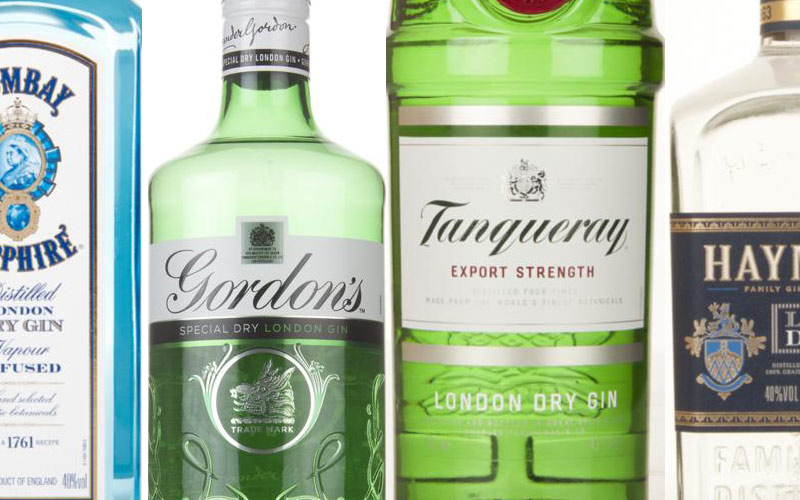
Industry analysts note that this tiny allowance is rarely used for flavor. Instead, it often facilitates the use of "tracer molecules" or sugar dyes. Large-scale producers, such as Gordon’s, utilize these tracers to protect against counterfeiting in global markets. The sugar acts as a carrier for these invisible markers, allowing investigators to verify the authenticity of the liquid without altering the organoleptic properties of the gin.
The Botanical Dilemma: Flavor vs. Process
Despite the rigid technical requirements for production, the law remains surprisingly vague regarding flavor. The "predominant flavor" clause has long been a point of contention among distillers and regulators.
The Juniper Requirement
Regulation 20.c states that for any product to be called gin, the taste must be "predominantly that of juniper." For Distilled and London Gins, this requirement is reiterated. However, "predominant" is a subjective term. There is no legal numerical value for alpha-pinene or other juniper-derived compounds that a gin must meet.
The Plant Material Constraint
The London Gin designation requires that flavor be imparted through the distillation of "natural plant materials." This phrasing creates a technical exclusion for certain innovative spirits. For instance, gins flavored with mushrooms (which are fungi, not plants) or "Pechuga" style gins (which involve suspending raw meat in the still) technically fall outside the strict definition of London Gin, even if they follow every other part of the process.
Technological Quality Control
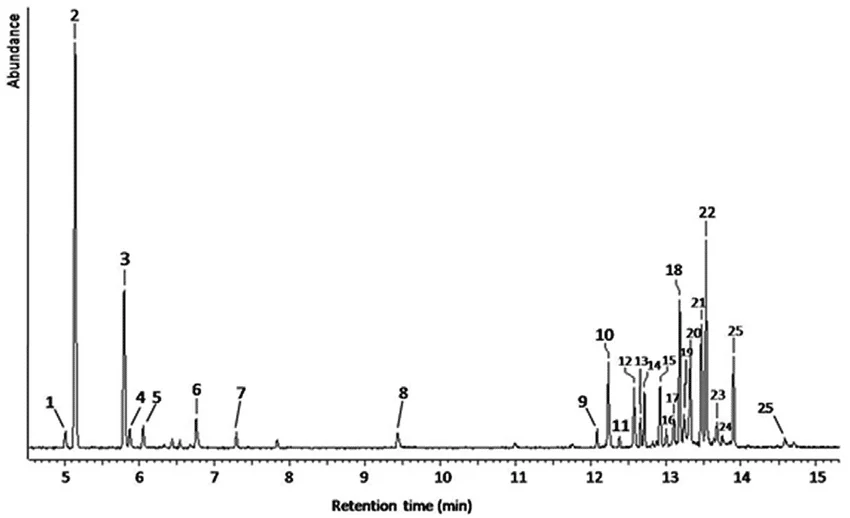
To manage the subjectivity of flavor, many large distilleries have turned to Gas Chromatography-Mass Spectrometry (GC-MS). Facilities like Bombay Sapphire’s Laverstoke Mill use these tools to analyze the volatile compounds in each batch. By comparing the chromatogram of a new run against an established "gold standard," master distillers can ensure consistency that meets the brand’s flavor profile, even if the law itself lacks such precision.
International Variations and Geographical Status
A common misconception is that London Dry Gin must be produced in London. Unlike Champagne or Scotch Whisky, "London Dry" is not a Geographical Indication (GI) in the traditional sense. It is a style and process that can be executed anywhere in the world, from Kyoto to New York.
The US TTB Standard
In the United States, the Alcohol and Tobacco Tax and Trade Bureau (TTB) maintains a broader definition. US law characterizes gin as a spirit with a main characteristic flavor derived from juniper berries, produced either by distillation or by the mixing of spirits with juniper aromatics or extracts. The US does not strictly enforce the "London" terminology in the same way the EU does, though it recognizes the term as a trade name for a specific style of dry gin.
Why not GI Status?
There have been historical efforts to grant London Dry Gin GI status, which would restrict its production to the London metropolitan area. However, these efforts have generally failed because the term has been used globally for over a century. Furthermore, achieving GI status requires a "technical file" so specific that it would likely exclude many of the brands currently using the name. The current EU legislation acts as a "de facto" protection of the term’s quality without the geographic limitations that would disrupt the global market.
Chronology of Gin Legislation
- 1736-1751: The Gin Acts are passed in England to curb extreme consumption and improve base spirit quality.
- 1830: Aeneas Coffey patents the superior column still, enabling the "dry" style.
- 2008/2009: EU Regulation 110/2008 sets the first modern comprehensive standards for spirit drinks.
- 2014-2015: Intense industry debate occurs regarding the potential for Geographical Indication status for London Gin.
- 2019: Regulation 2019/787 is adopted, refining the definitions and including "London Gin" as a sub-category of Distilled Gin.
- 2021: Amendment 2021/1465 provides further clarity on labeling and sweetening limits.
Implications for the Modern Craft Movement
The rise of the "Contemporary" or "New Western" gin styles has pushed the boundaries of the London Dry designation. Many craft distillers find the London Dry requirements too restrictive, as they prefer to macerate botanicals post-distillation or use vacuum distillation methods that operate at lower temperatures.
Because a London Dry Gin cannot have anything added after the still, it is often considered the "purest" form of the distiller’s art. It requires the master distiller to perfectly balance the botanical recipe before the heat is applied, as there is no opportunity to "fix" the flavor profile afterward. This has led to a bifurcated market: classic brands that lean on the prestige of the London Dry label, and innovative craft brands that opt for the "Distilled Gin" label to allow for greater creative freedom with post-distillation infusions.
Final Summary of the London Dry Standard
The London Dry Gin designation is a testament to the evolution of spirit safety and distillation technology. It guarantees a neutral agricultural base, a minimum 96% ABV starting point, a juniper-led redistillation, a minimum 70% ABV exit from the still, and a near-total absence of post-distillation additives and sugar.
While it does not dictate a specific flavor profile—allowing for both traditional pine-forward gins and modern citrus-heavy expressions—it remains the industry’s most significant process-based hallmark. As the global gin market continues to expand, the London Dry label serves as a vital, if complex, bridge between 19th-century quality improvements and 21st-century regulatory transparency. For the consumer, it is not a map of where the gin came from, but a blueprint of how it was made.
