

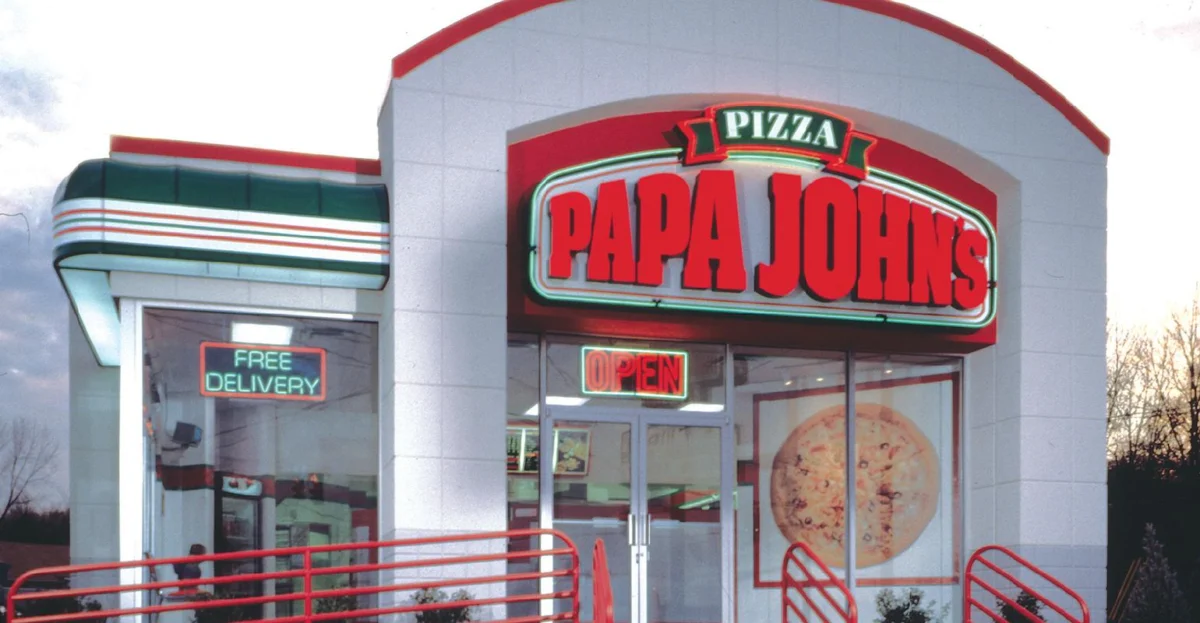
Papa Johns CEO Todd Penegor recently addressed media speculation surrounding a potential sale, firmly stating the company’s commitment to its ongoing turnaround strategy. This strategy, initiated shortly after his appointment in late 2024, aims to revitalize the brand’s market position. However, new data from YouGov reveals that significant challenges remain in bridging the gap between Papa Johns’ brand perception and that of its top domestic pizza competitors.
Brand Perception Lagging Behind Key Competitors
YouGov’s analysis, which evaluated five distinct metrics including quality, customer satisfaction, and perceived value, places Papa Johns at the bottom among the top five domestic pizza chains. The company’s closest performance to the industry benchmark is in the quality metric, where it trails by a narrow margin of just 0.7 points. The most significant disparity is observed in the value perception, with Papa Johns scoring 8.4, considerably lower than the industry average of 14. Despite these comparative challenges, YouGov also highlighted a notable positive trend: Papa Johns’ overall brand index has seen a substantial improvement, rising nearly 5 full points over the past year. This suggests that while the brand is still playing catch-up, the implemented strategies are beginning to yield incremental gains in consumer perception.
The competitive landscape for pizza chains is intensely crowded, with established players and emerging concepts constantly vying for market share. Factors such as menu innovation, digital ordering capabilities, delivery speed, and consistent quality all play a crucial role in shaping consumer preference. Papa Johns, like many in the QSR (Quick Service Restaurant) sector, has been investing in technology and operational efficiencies to enhance the customer experience. However, historical perceptions can be difficult to shift, and a comprehensive brand revitalization requires sustained effort and demonstrable improvements across multiple touchpoints.
Walmart’s Expanding Delivery Network: A New Frontier for Foodservice
In a significant development for the convenience and delivery sector, Walmart is expanding its partnership with Inspire Brands, the parent company of Dunkin’. This new agreement will enable customers to order Dunkin’ beverages and food items for delivery through Walmart, even from Dunkin’ locations that are not physically situated within a Walmart store. Initially launching with Dunkin’ shops co-located within Walmart, the service is slated to broaden its reach to encompass the vast majority of Dunkin’s 10,000 U.S. locations.
This strategic alliance leverages Walmart’s extensive physical footprint, with approximately 90% of the U.S. population residing within a 10-mile radius of a Walmart store. This proximity makes Walmart a compelling player in the burgeoning restaurant delivery market. The retail giant has already dipped its toes into this space, having initiated a similar delivery service for Subway sandwiches from in-store locations last year. The expansion with Dunkin’ signifies a more ambitious move into third-party food delivery, potentially disrupting established delivery platforms and offering consumers greater convenience.
The implications of Walmart’s growing role in food delivery are far-reaching. For consumers, it promises increased accessibility to popular food and beverage brands through a familiar and convenient retail channel. For restaurant brands like Dunkin’, it offers an opportunity to expand their delivery reach and tap into Walmart’s massive customer base without necessarily bearing the full cost of building out their own delivery infrastructure. For established third-party delivery services, this partnership could represent increased competition, potentially leading to shifts in market dynamics and pricing strategies. The integration of a major retailer into the food delivery ecosystem signals a significant evolution in how consumers access their favorite meals and treats.
Chick-fil-A Amplifies Hunger Awareness Efforts
Chick-fil-A is intensifying its commitment to hunger awareness this September, coinciding with Hunger Action Month. The company has announced plans to donate up to $1 million to Feeding America partner food banks. This substantial contribution will be achieved through a matching funds initiative, where Chick-fil-A will match funds raised from local fundraisers held across more than 40 U.S. markets.
Beyond this matching program, Chick-fil-A’s efforts extend to its store expansion plans. The chain anticipates opening 15 new restaurants throughout September. For each of these new openings, Chick-fil-A has pledged to donate $25,000 to a local Feeding America partner organization. This dual approach of direct fundraising support and community-focused donations underscores the company’s deep-rooted commitment to addressing food insecurity.
Further amplifying its message, Chick-fil-A will host a "Shared Table Experience" in New York City on September 30th. This event aims to raise public awareness about the pervasive issue of hunger. The Shared Table program, formally established within Chick-fil-A in 2012, empowers local owner-operators to donate surplus food from their restaurants to organizations dedicated to hunger relief. Since its inception, this program has been instrumental in creating over 50 million meals, demonstrating a consistent and impactful approach to food waste reduction and hunger alleviation.
The company’s multifaceted approach to Hunger Action Month highlights a growing trend among major corporations to integrate social responsibility into their core business operations. By aligning their brand with important social causes like hunger awareness, companies can not only contribute to societal well-being but also enhance their brand reputation and foster stronger connections with their customer base. Chick-fil-A’s consistent engagement with this issue demonstrates a long-term dedication that goes beyond a single awareness month, embedding philanthropy into its operational philosophy.

Broader Industry Trends and Analysis
The developments at Papa Johns, Walmart, and Chick-fil-A reflect broader trends shaping the restaurant and retail industries. Papa Johns’ struggle with brand perception, despite a stated turnaround strategy, is a common challenge in a highly competitive market. Sustained investment in product quality, customer service, and effective marketing campaigns are crucial for rebuilding consumer trust and preference. The data from YouGov, while indicating a lag, also points to progress, suggesting that the company’s efforts are not entirely in vain and that a consistent, data-driven approach can lead to incremental improvements. The narrow gap in quality perception, in particular, offers a potential avenue for further focus and differentiation.
Walmart’s aggressive expansion into food delivery signifies a strategic pivot towards leveraging its extensive retail infrastructure to capture a larger share of the consumer’s wallet, extending beyond traditional grocery and general merchandise. This move could reshape the competitive landscape for both traditional QSRs and dedicated delivery platforms. As consumers increasingly prioritize convenience and seamless integration of services, retailers with established logistical networks and broad customer reach are well-positioned to become significant players in the delivery space. The success of these initiatives will likely depend on their ability to offer competitive pricing, efficient delivery times, and a positive customer experience that matches or even surpasses that of specialized delivery services.
Chick-fil-A’s robust engagement with Hunger Action Month exemplifies how companies can effectively integrate corporate social responsibility into their brand narrative and operational practices. By dedicating significant resources and attention to a cause like hunger awareness, the company not only contributes to a vital societal need but also reinforces its brand image as a socially conscious organization. The longevity and impact of the Shared Table program demonstrate a commitment that extends beyond short-term initiatives, building a legacy of positive community impact. This approach can foster deeper customer loyalty and attract employees who are drawn to organizations with strong ethical values.
The convergence of technology, evolving consumer expectations, and corporate social responsibility continues to drive innovation and competition within the food and retail sectors. As companies navigate these dynamic forces, their ability to adapt, differentiate, and connect with consumers on multiple levels—from product quality and value to convenience and social impact—will be paramount to their long-term success. The coming months and years will likely see further strategic realignments and innovative approaches as businesses strive to meet the multifaceted demands of the modern consumer.
The restaurant industry, in particular, is in a constant state of flux, influenced by economic conditions, changing dietary habits, and the relentless march of technological advancement. The drive for convenience, fueled by the proliferation of digital ordering and delivery, has fundamentally altered how consumers interact with food service providers. Companies that can successfully integrate these digital capabilities with a strong product offering and a compelling brand story are poised to thrive. The challenges faced by Papa Johns, the strategic expansion of Walmart, and the impactful philanthropy of Chick-fil-A all offer valuable insights into the evolving dynamics of this critical sector. The continuous pursuit of operational excellence, strategic partnerships, and authentic community engagement will remain key differentiators for brands aiming to capture and retain consumer attention in an increasingly complex marketplace.
