

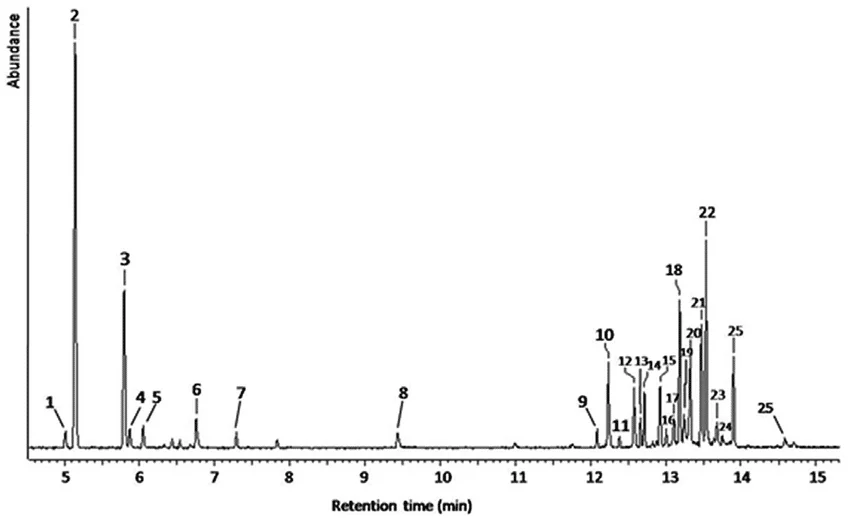
The classification of London Dry Gin remains one of the most widely misunderstood designations in the global spirits market, often erroneously associated with a specific geographic origin or a singular flavor profile. In reality, the term represents a rigorous set of production standards codified under European Union law and mirrored in various international jurisdictions. Following the implementation of Regulation (EU) 2019/787—which replaced the aging 2008 framework—and subsequent amendments such as Regulation (EU) 2021/1465, the distilling industry has had to navigate a landscape where "London Dry" is strictly a process designation. While the United Kingdom’s departure from the European Union has resulted in the adoption of the version of the act in effect at the time of Brexit, the core technical requirements remain harmonized across the English Channel, ensuring that this historic quality hallmark maintains its integrity in a rapidly diversifying market.
The Historical Evolution of Gin Standards
To understand the modern legalities of London Dry Gin, one must look to the 18th and 19th centuries, an era when gin production was largely unregulated and often dangerous. During the "Gin Craze" of the 1700s, spirits were frequently distilled from low-quality grains and adulterated with hazardous substances like turpentine or sulfuric acid to mask impurities. The invention of the continuous column still by Aeneas Coffey in the 1830s revolutionized the industry, allowing distillers to produce a clean, high-proof neutral spirit that did not require heavy sweetening or masking agents.
This technological leap birthed the "Dry" style of gin. Unlike the sweetened "Old Tom" gins that preceded it, this new iteration relied on the purity of the base spirit and the delicate balance of botanicals. The term "London" was appended not as a protected geographical indication (PGI), but as a tribute to the city where these high-quality, column-distilled spirits first gained prominence. Over the decades, what began as a regional preference evolved into a global gold standard for quality control, eventually leading to the formal legal definitions seen today.
Technical Specifications: The Anatomy of Production
The current regulatory framework, specifically Section 21.a of Regulation 2019/787, dictates that for a spirit to be labeled as "London Gin," it must first meet the criteria for "Distilled Gin." This requires a multi-stage process governed by strict chemical and volumetric parameters.
The Base Spirit and Initial Distillation
The foundation of any London Dry Gin must be ethyl alcohol of agricultural origin. This base spirit must be distilled to an initial alcoholic strength of at least 96% alcohol by volume (ABV). This high threshold ensures that the base is a truly neutral spirit, devoid of the fusel oils and congeners that characterize whiskies or brandies. In essence, the law mandates the use of a column still for the base spirit to guarantee a "blank canvas" for the infusion of botanicals.
Redistillation and Botanical Infusion
The neutral spirit is then redistilled in traditional stills in the presence of Juniperus communis L. (juniper berries) and other natural plant materials. Crucially, the legislation specifies that the flavor must be imparted exclusively through this redistillation process. The resulting distillate must leave the still at a minimum of 70% ABV. This ensures that the essential oils of the botanicals are captured at a high concentration before being diluted with water to bottling strength.
The Restriction on Post-Distillation Additives
The defining characteristic that separates London Gin from standard Distilled Gin is the prohibition of post-distillation additives. While Distilled Gin allows for the addition of flavorings or coloring after the final distillation—as seen in popular brands like Hendrick’s (which adds cucumber and rose essences) or Martin Miller’s—London Gin permits only three things after the spirit leaves the still:
- Water (to reach the desired bottling strength).
- Neutral ethyl alcohol of agricultural origin (provided it meets the same purity standards).
- A minute amount of sweetening, not exceeding 0.1 grams per liter of the final product.
The Chemistry of Quality: Methanol and Purity Standards
A critical but often overlooked aspect of the London Gin designation is the methanol limit. The regulation stipulates that the spirit must contain fewer than five grams of methanol per hectoliter of 100% vol. alcohol.
Methanol, or "wood alcohol," is a natural byproduct of fermentation but is toxic to humans. It has a lower boiling point (64.7°C) than ethanol (78.2°C), meaning a skilled distiller can remove it by discarding the "heads" or the first portion of the distillate. Historically, unscrupulous producers would leave methanol in the spirit to increase yields. By codifying a strict methanol limit, the London Gin designation serves as a legal guarantee of chemical purity and consumer safety, even though modern distillation technology makes such high levels of methanol rare in any commercially produced spirit.
The "Dry" Designation and the Tracer Molecule Exception
The requirement that London Gin be "dry" (containing no more than 0.1g/L of sugar) is frequently a point of confusion for consumers. If the goal is an unsweetened spirit, why allow any sugar at all?
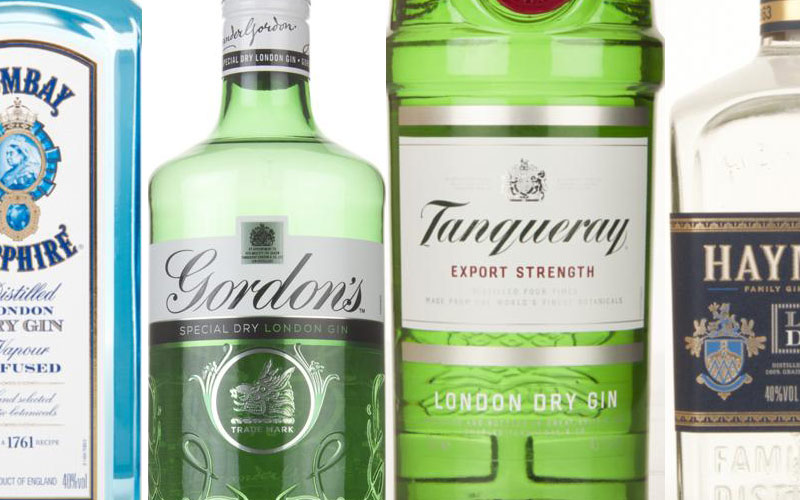
Industry experts point to the practice of "tracing" used by major global brands. Large-scale producers, such as Gordon’s, often include "sugar dyes" or specific tracer molecules in their products to combat counterfeiting. These molecules allow the parent company to verify the authenticity of a bottle in international markets. The 0.1g/L allowance is not intended to alter the flavor profile but rather to permit these technical markers without stripping the gin of its "London Dry" status.
Botanical Constraints and the "Predominant Flavor" Problem
Perhaps the most subjective and controversial element of gin legislation is the requirement that the taste be "predominantly that of juniper." This clause exists in both the 2008 and 2019 regulations, yet it remains largely unenforceable due to the lack of a legal definition for "predominant."
In recent years, the "Gin-aissance" has seen the rise of contemporary or "New Western" style gins that emphasize citrus, floral, or spice notes over the traditional piney flavor of juniper. While these spirits technically qualify as gin if they contain juniper, their status as "London Dry" is often debated within the industry.
Furthermore, the law specifies that flavor must be derived from "natural plant materials." This creates a legal hurdle for experimental distillers. For instance, "Pechuga" style gins, which involve suspending raw meat (such as poultry or ham) in the still during distillation, cannot be labeled as London Gin because the flavor is derived from animal products, not plants. Similarly, spirits flavored with fungi (mushrooms) fall outside the "plant" classification, highlighting the rigid, traditionalist nature of the London Dry category.
Global Regulatory Divergence: EU vs. USA
While the European Union and the United Kingdom maintain a strict process-based definition, the United States takes a more inclusive approach. The Alcohol and Tobacco Tax and Trade Bureau (TTB) defines gin as a spirit with a main characteristic flavor derived from juniper berries, produced either by distillation or by mixing spirits with juniper aromatics or extracts.
The U.S. regulations do not strictly protect the term "London Gin" in the same way, often allowing for "London Dry" labels on products that might not meet the 70% ABV still-strength requirement or the post-distillation additive ban found in Europe. This divergence can lead to consumer confusion when American-made gins are exported to European markets and find themselves unable to use their original labeling.
Industry Implications and the Future of GI Status
There have been periodic attempts by groups like the Gin Guild and various London-based distillers to seek Geographical Indication (GI) status for London Gin, similar to Scotch Whisky or Cognac. However, these efforts have largely stalled.
Securing GI status requires a "Technical File" that specifies a precise geographic area and a highly specific production method. Given that "London Dry" is currently produced in almost every country on earth—from Japan to South Africa—imposing a geographic restriction would disenfranchise thousands of distillers. Moreover, the diversity of methods used by even the most traditional London-based distilleries (such as Beefeater or Sipsmith) makes it difficult to agree on a singular technical file that wouldn’t exclude existing high-quality producers.
Conclusion: A Symbol of Process, Not Place
As the spirits industry continues to innovate with vacuum distillation, ultrasonic maceration, and exotic botanicals, the London Dry Gin designation remains a vital anchor to tradition. It serves as a transparent signal to the consumer that the liquid inside the bottle has been produced to the highest standards of purity, without the use of post-distillation flavorings, colorings, or significant sweeteners.
While the "juniper-predominant" rule remains a subjective challenge for regulators, the technical requirements regarding base spirit strength, still-off strength, and additive restrictions provide a clear, objective framework. For the modern connoisseur, the takeaway is clear: London Dry Gin is not a flavor you taste, nor a place you can visit on a map; it is a rigorous, time-honored methodology that ensures the spirit in the glass is as clean and honest as the column still allowed it to be nearly two centuries ago.
