

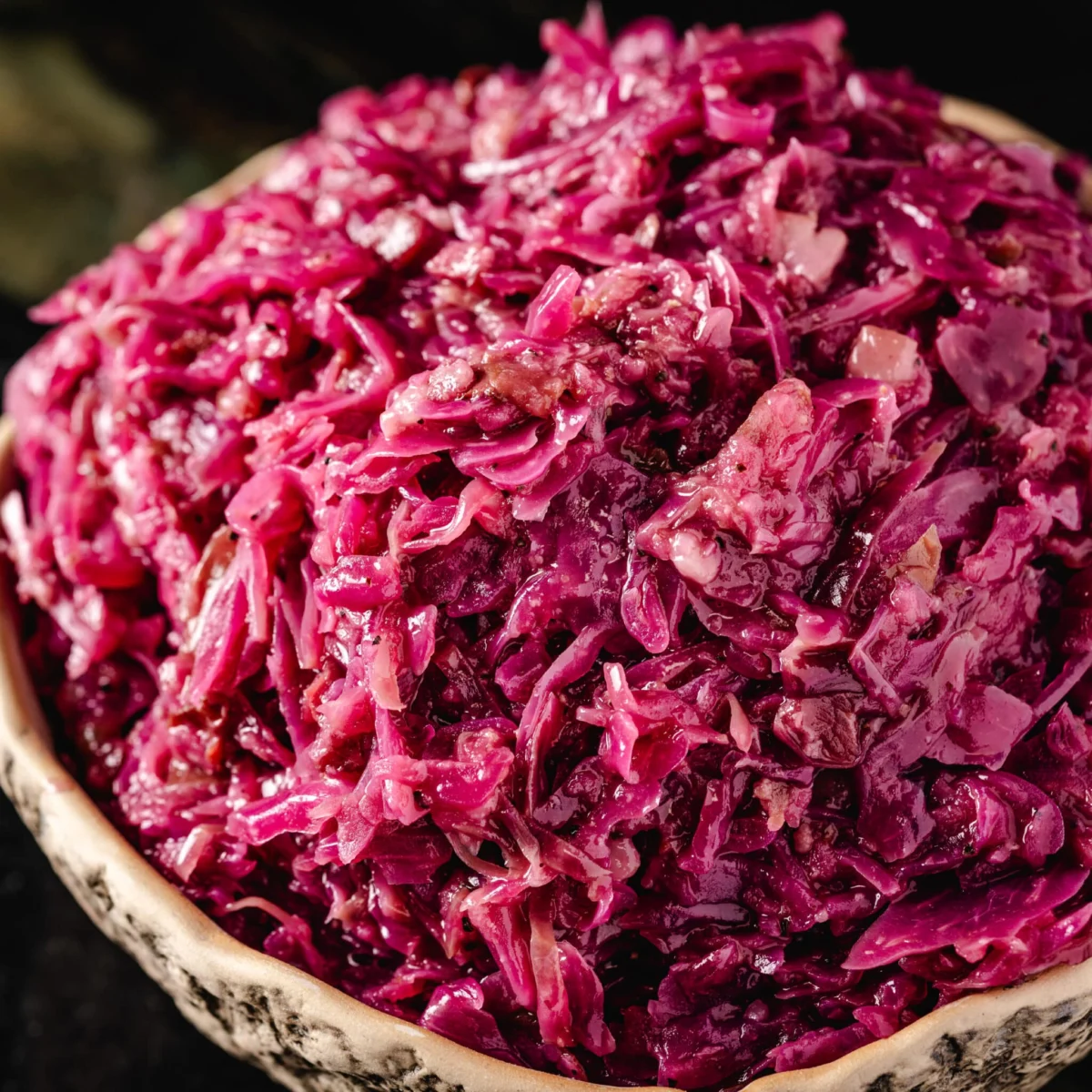
The culinary landscape of Central Europe has long been defined by its ability to balance hearty, protein-rich main courses with sophisticated, acid-driven side dishes. Among these, Rotkohl, the traditional German braised red cabbage, stands as a cornerstone of Teutonic gastronomy. Characterized by its deep violet hue and a complex flavor profile that marries sweetness, tartness, and warming spices, Rotkohl has transcended its regional origins to become a globally recognized accompaniment for heavy meats. This transition is particularly evident in the American barbecue circuit, where pitmasters have increasingly adopted the dish to provide a refreshing counterpoint to the richness of smoked pork and sausages.
The resurgence of interest in Rotkohl was highlighted recently during the sixth episode of the Food Network’s competitive series, Pitmasters. Featured by culinary experts Susie Bulloch of Hey Grill Hey and Christie Vanover of Girls Can Grill, the dish was presented as a vital component of a comprehensive barbecue spread. The appearance on national television underscored a broader trend: the integration of traditional European preservation and braising techniques into the high-stakes world of competitive American barbecue.

Historical Context and Regional Variations
To understand Rotkohl, one must examine the linguistic and chemical history of the dish. In Germany, the naming of the dish often depends on the regional dialect and the specific preparation method, which in turn affects the cabbage’s color. In Northern Germany, it is almost exclusively referred to as Rotkohl (red cabbage). However, in Southern regions like Bavaria and parts of Austria, it is frequently called Blaukraut (blue cabbage).
This nomenclature is not merely a matter of regional accent but a reflection of soil chemistry and culinary additives. Red cabbage contains anthocyanins, a class of water-soluble vacuolar pigments that act as natural pH indicators. When cooked in an alkaline environment, the cabbage turns a bluish-purple. When prepared with acidic ingredients—such as the vinegar and tart apples found in traditional Rotkohl recipes—the cabbage maintains or intensifies its vibrant red-magenta color. Historically, the addition of sugar and acid was a method of preservation, allowing cabbage harvested in the autumn to be consumed throughout the winter months.
The Chemistry of Flavor and Texture
The preparation of Rotkohl is a study in the slow degradation of plant cellulose and the emulsification of fats. Unlike a standard coleslaw, which relies on the raw crunch of the brassica family, Rotkohl requires a prolonged simmering period, typically lasting approximately two hours. During this time, the rigid cell walls of the red cabbage break down, transitioning the texture from a fibrous crispness to a soft, nearly jammy consistency.

The choice of cooking fat is critical to the dish’s final mouthfeel. While some modern iterations use butter or vegetable oil, the traditional method utilizes bacon grease. The rendered pork fat provides a smoky depth that bridges the gap between the vegetable and the accompanying meat. Furthermore, the inclusion of tart apples—typically varieties such as Granny Smith or Braeburn—introduces natural pectin, which helps thicken the simmering liquid, creating a glossy sheen that coats each strand of cabbage.
Culinary Chronology: A Step-by-Step Technical Breakdown
The production of an authentic Rotkohl follows a specific chronological order to ensure the layers of flavor are properly integrated.
- The Sauté Phase: The process begins with the rendering of bacon fat in a heavy-bottomed pot or Dutch oven. Finely diced yellow onions are introduced to the fat and sautéed until translucent. This step creates a savory foundation, utilizing the Maillard reaction to develop sweetness without bitterness.
- The Acidification Phase: Shredded red cabbage and peeled, diced apples are added to the pot. Immediately following this, red wine vinegar is introduced. This early introduction of acid is vital for "fixing" the color of the anthocyanins, ensuring the cabbage does not turn an unappealing gray or blue during the long cook time.
- The Flavor Fortification: Lingonberry jam, sugar, and whole cloves are integrated into the mixture. The lingonberry jam is a quintessential Central European ingredient, providing a unique tannic tartness that differs from more common preserves like grape or raspberry.
- The Simmering Phase: The heat is reduced to a low setting, and the pot is covered. The cabbage is left to simmer for 90 to 120 minutes. Periodic monitoring is required to ensure the liquid level remains sufficient; if the mixture becomes too dry, small amounts of water or apple cider may be added.
- The Final Adjustment: Once the cabbage has reached the desired "melt-in-the-mouth" texture, the cloves are removed. A final tasting is conducted to balance the "sweet-sour" (Süß-Sauer) ratio, often involving a final splash of vinegar or a pinch of salt to brighten the flavors.
Nutritional Profile and Health Implications
From a nutritional standpoint, Rotkohl offers significant health benefits, particularly when compared to traditional starchy barbecue sides like potato salad or mac and cheese. Red cabbage is a nutrient-dense cruciferous vegetable, exceptionally high in Vitamin C and Vitamin K.

According to nutritional analysis, a standard serving of Rotkohl (approximately one cup) contains:
- Calories: 156 kcal
- Carbohydrates: 30g (including 6g of dietary fiber)
- Protein: 3g
- Vitamin C: 86mg (over 100% of the daily recommended intake)
- Vitamin A: 1728 IU
- Minerals: Significant traces of Potassium (480mg), Calcium (81mg), and Iron (1mg).
The high concentration of anthocyanins—the same antioxidants found in blueberries—contributes to anti-inflammatory properties. While the addition of sugar and jam increases the glycemic load, the high fiber content of the cabbage helps mitigate rapid spikes in blood sugar, making it a relatively balanced option for diverse dietary needs.
Strategic Pairing in Professional BBQ
The inclusion of Rotkohl in the Pitmasters series highlights its strategic utility in professional meat service. Barbecue, by its nature, involves high concentrations of lipids and smoke-derived phenols. These can quickly lead to "palate fatigue," where the diner’s ability to distinguish flavors is dampened by the richness of the food.

Rotkohl serves as a "palate cleanser." The acetic acid in the red wine vinegar and the malic acid in the apples work to cut through the fat of German pork chops, bratwurst, or smoked brisket. This acidic intervention stimulates salivation and refreshes the taste buds, allowing for a more sustained enjoyment of the meal. Consequently, many high-end smokehouses have begun replacing traditional vinegar-based slaws with braised Rotkohl to offer a more elevated, warm side dish option during the winter months.
Economic and Agricultural Considerations
The global availability of the ingredients required for Rotkohl speaks to the robustness of international agricultural trade. Red cabbage is a hardy crop that can be grown in various climates, though it thrives in the cooler temperatures of Northern Europe and the Northern United States.
However, the "secret ingredient" in many authentic recipes—lingonberry jam—remains a specialized import. Lingonberries (Vaccinium vitis-idaea) are primarily harvested in the wild forests of Scandinavia and Eastern Europe. The commercialization of lingonberries remains limited compared to cranberries, making them a premium ingredient that adds a level of authenticity to the dish. In instances where lingonberries are unavailable, culinary analysts suggest red currant jelly as a viable substitute, though it lacks the specific astringency of the forest-grown berry.

Broader Impact on Global Cuisine
The migration of Rotkohl from German home kitchens to American television screens and international restaurants is indicative of a broader "de-regionalization" of comfort food. As consumers become more adventurous and seek out authentic "heritage" recipes, dishes like Rotkohl provide a sense of history and craftsmanship.
Culinary historians note that the preservation of such recipes is essential for maintaining cultural identity in an era of fast food. The slow-simmering process required for Rotkohl is an antithesis to modern "instant" cooking, requiring the chef to engage with the ingredients over several hours. This "slow food" approach has garnered a dedicated following among barbecue enthusiasts who view the preparation of sides with the same reverence as the smoking of a fifteen-pound brisket.
In conclusion, Rotkohl is far more than a simple cabbage dish. It is a sophisticated intersection of chemistry, history, and strategic culinary design. Whether served alongside a traditional Schnitzel in a Munich beer hall or paired with Texas-style smoked ribs in a competitive BBQ arena, its ability to provide a vibrant, acidic balance to heavy proteins ensures its continued relevance in the global culinary canon. As demonstrated by its recent spotlight on the Food Network, the "quiet star" of German cuisine is finally receiving the mainstream recognition its complex flavor profile deserves.
