

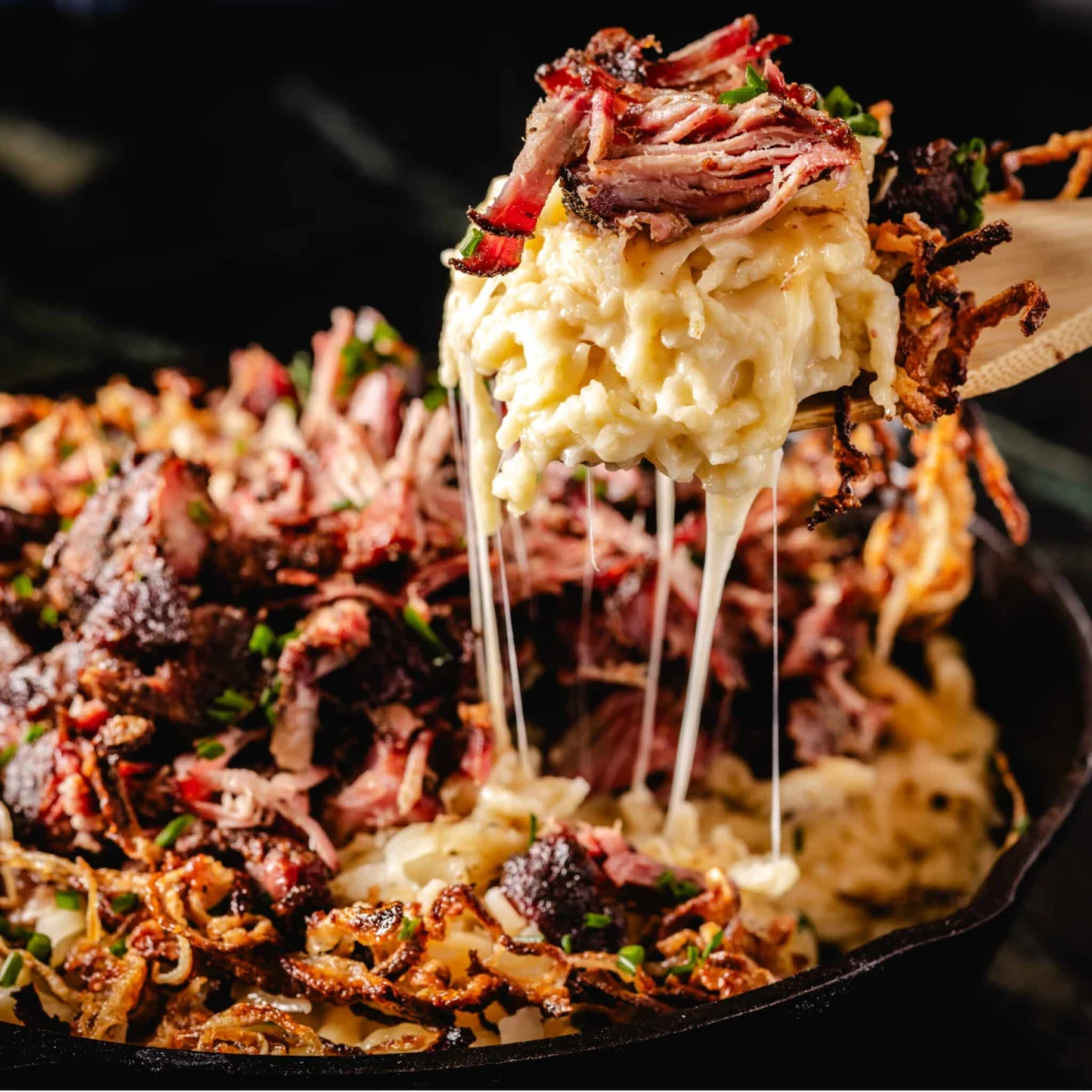
The culinary intersection of traditional European comfort food and American low-and-slow barbecue has reached a new milestone with the formal introduction of Smoked Pulled Pork Käsespätzle. This dish, which translates the rustic charm of Southern German egg noodles into the flavor profile of the American backyard, has gained significant attention following its featured appearance on the Food Network program Pitmasters. By integrating slow-smoked pork shoulder with the buttery, cheese-laden foundations of Spätzle, culinary experts are redefining the boundaries of fusion barbecue, offering a sophisticated alternative to standard side dishes like macaroni and cheese.
The Evolution of German-American Barbecue Fusion
The emergence of Smoked Pulled Pork Käsespätzle is part of a broader trend in the competitive barbecue circuit where pitmasters are increasingly looking toward international heritage to distinguish their offerings. The recipe gained national prominence through the collaboration of Susie Bulloch, founder of the barbecue resource Hey Grill Hey, and Christie Vanover of Girls Can Grill. During their tenure on Food Network’s Pitmasters, the duo executed a comprehensive German feast centered around a whole hog, which necessitated the development of side dishes that could withstand the robust flavors of smoked meat while providing a distinct textural contrast.

Historically, German cuisine has long utilized smoke as a preservation and flavoring method, particularly in regions like Westphalia and Bavaria. However, the specific pairing of Käsespätzle—a dish often referred to as the "soul food" of the Swabia region—with American-style pulled pork represents a modern adaptation. While traditional Käsespätzle relies on Emmentaler or Gruyère cheese and caramelized onions, the addition of smoked proteins and contemporary cheese blends, such as smoked gouda, bridges the gap between Alpine tradition and the American smokehouse.
Chronology of Recipe Development and Media Debut
The development of the Smoked Pulled Pork Käsespätzle followed a specific timeline rooted in both professional competition and domestic culinary exchange.
- December 2023: Initial technical training took place between Susie Bulloch and Sophie Sadler, a specialist in German cuisine and founder of Dirndl Kitchen. Sadler provided the foundational techniques for authentic Spätzle production, emphasizing the importance of dough consistency and the use of a "Spätzlehobel" (a specialized noodle grater).
- Filming of Pitmasters: Bulloch and Vanover integrated the technique into their competition strategy for the Food Network. In the high-stakes environment of the show, the team utilized pork cheek—a delicacy known for its high collagen content and rich flavor—to top the noodles.
- Post-Broadcast Demand: Following the airing of the "German Feast" episode, public interest in the specific measurements and techniques for the dish surged. This prompted the adaptation of the "competition-style" recipe into a "backyard-friendly" version.
- Recipe Optimization: To make the dish accessible for home cooks, the protein was transitioned from pork cheek to country-style pork ribs. This modification reduced the cooking time significantly while maintaining the essential fat-to-lean ratio required for high-quality pulled pork.
Technical Analysis of Components
The success of Smoked Pulled Pork Käsespätzle relies on the precise execution of three distinct culinary components: the noodle base, the smoked protein, and the aromatic garnish.

The Spätzle Base
Unlike Italian pasta, which is typically extruded or rolled from a stiff dough, Spätzle is a "drop" noodle made from a loose, egg-heavy batter. The chemical composition of the dough—consisting of all-purpose flour, large eggs, and whole milk—creates a soft, porous texture that is ideal for absorbing melted fats and cheese. In the professional preparation of this dish, the noodles are boiled briefly until they float, then immediately shocked or moved to a skillet. This process ensures the noodles retain a "toothsome" quality, preventing them from becoming mushy when combined with the heavy cheese sauce.
The Protein: Country-Style Ribs vs. Whole Shoulder
In a journalistic analysis of the recipe’s efficiency, the choice of country-style ribs is a notable departure from traditional BBQ standards. While a whole pork butt (shoulder) can require 12 to 16 hours of smoke time to reach the necessary internal temperature of 205°F (96°C) for shredding, country-style ribs—which are actually strips cut from the blade end of the loin or the shoulder—can achieve the same results in approximately six hours. This allows for a same-day preparation cycle that fits within standard restaurant or domestic kitchen schedules.
The Cheese and Aromatics
The "Käse" (cheese) element of the dish employs a dual-cheese strategy. The use of Emmentaler provides the classic, nutty Swiss profile, while the introduction of smoked gouda reinforces the barbecue theme. Unlike American macaroni and cheese, which typically utilizes a béchamel-based roux to create a smooth sauce, Käsespätzle relies on the residual heat of the noodles and a small amount of butter to melt the shredded cheese into a stretchy, rustic coating. The dish is finished with onions that have been dredged in flour and fried until crispy, providing a vital textural counterpoint to the soft noodles and tender meat.

Supporting Data and Nutritional Profile
From a nutritional and economic perspective, Smoked Pulled Pork Käsespätzle is a calorie-dense "comfort food" designed for high-satiety. According to standardized nutritional calculations for an eight-serving yield, the dish presents the following profile:
- Calories: 439 kcal per serving.
- Protein: 26g, largely derived from the pork and egg-based noodles.
- Fat Content: 28g total, with 13g of saturated fat.
- Sodium: 2053mg, reflecting the cured nature of smoked meats and the seasoning required for pasta water.
- Carbohydrates: 21g, primarily from the flour in the Spätzle.
Economically, the dish is considered highly efficient for catering and large gatherings. Pork shoulder and country-style ribs remain among the most cost-effective protein cuts per pound, and the base ingredients for Spätzle (flour, eggs, and milk) are staples with low price volatility.
Industry Reactions and Expert Statements
Culinary experts have noted that the rise of such fusion dishes reflects a changing landscape in American barbecue. "The integration of international side dishes into the BBQ menu is a response to a more globally-conscious palate," says a food industry analyst. "We are moving away from the ‘meat-plus-two’ model (usually beans and slaw) toward more integrated, complex flavor profiles."

Susie Bulloch, in her professional capacity as a recipe developer, has emphasized that the goal of the recipe was to honor the tradition taught by Sophie Sadler while making it compatible with the "low and slow" philosophy of the American pit. "The thing I love about this pulled pork version is it takes some of my family’s tradition, blends it with influence from one of my friends and cooking heroes, and adds a touch of BBQ goodness," Bulloch stated regarding the recipe’s release.
Broader Impact and Culinary Implications
The introduction of Smoked Pulled Pork Käsespätzle has broader implications for both the restaurant industry and the hobbyist barbecue community. For restaurants, the dish offers a unique "signature" item that can be marketed as an authentic fusion experience, potentially justifying a higher price point than standard sides. For the backyard hero, it provides a gateway into European techniques through the familiar medium of the smoker.
Furthermore, the success of this dish on a major platform like the Food Network suggests a growing appetite for "crossover" content that blends technical skill with cultural storytelling. As barbecue continues to evolve from a regional American craft into a global culinary language, dishes like Smoked Pulled Pork Käsespätzle serve as a template for future innovation.

In conclusion, Smoked Pulled Pork Käsespätzle is more than a simple recipe; it is a calculated blend of Swabian tradition and American smokehouse technique. By leveraging the efficiency of country-style ribs and the authentic texture of handmade egg noodles, this dish provides a comprehensive culinary experience that satisfies the modern demand for both novelty and nostalgia. As the barbecue community continues to expand its horizons, the fusion of Old World comfort and New World smoke is expected to remain a dominant theme in the years to come.
