

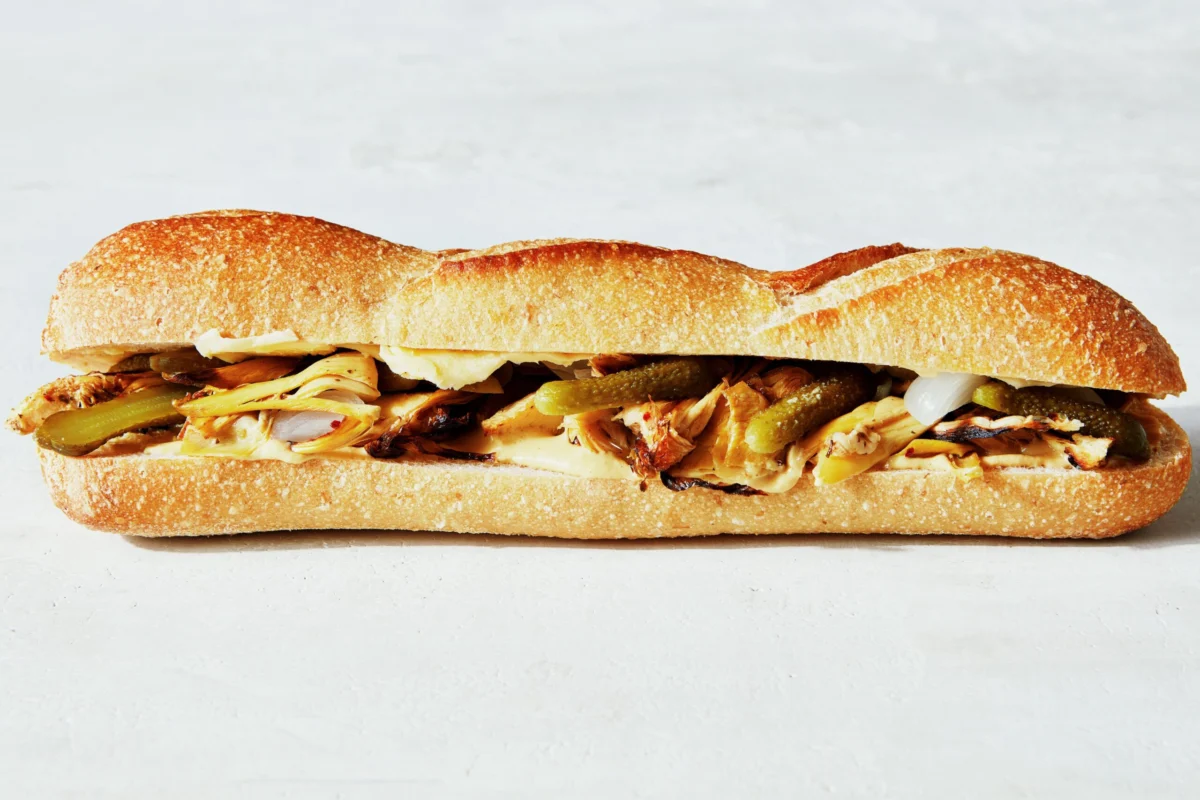
The jambon beurre sandwich, a seemingly simple construct of baguette, ham, and butter, holds an iconic status in Parisian culinary culture, embodying a blend of tradition, quality, and effortless elegance. This quintessential French staple recently served as the focal point for an exploration by Bon Appétit‘s "It’s That Simple" series, which delves into recipes celebrated for their minimalist ingredient lists, straightforward techniques, and memorable results. The article chronicled a compelling journey back to Le Petit Vendôme, a renowned Parisian bistro whose rendition of the jambon beurre has garnered significant acclaim, culminating in an innovative, vegetarian adaptation designed for the home cook.
The Cultural Cornerstone: Unpacking the Jambon Beurre
The jambon beurre is more than just a sandwich; it is a fundamental pillar of French daily life and a symbol of Parisian identity. Its origins are rooted in practicality, offering a quick, satisfying, and affordable meal. Yet, its enduring appeal lies in the meticulous selection and preparation of its few, high-quality ingredients. A true jambon beurre demands a freshly baked baguette, ideally from a local boulangerie, with a crackling crust and an airy, open crumb. The ham, traditionally jambon de Paris, is a mild, subtly seasoned cooked ham, often thinly sliced and artfully ruffled. The butter, a crucial component, is typically unsalted and applied in a generous layer, sometimes thick enough to leave "tooth marks," a concept so integral that the Danish language has a specific term, tandsmør ("tooth butter"), to describe it. While some purists stop there, variations often include a smear of Dijon mustard and a scattering of sliced cornichons, adding a piquant kick and balancing acidity.
This simplicity belies a profound culinary philosophy where the quality of each element is paramount. The baguette’s texture and flavor are critical; it must be crusty on the outside and tender within, offering resistance and a satisfying chew. The ham, often sourced from traditional charcutiers, provides a delicate saltiness and savory depth. The butter, frequently from esteemed regions like Normandy (e.g., Échiré or Isigny), contributes a rich, creamy mouthfeel and a subtle sweetness that harmonizes with the other ingredients. This commitment to ingredient excellence transforms a humble sandwich into a gastronomic experience, deeply ingrained in the fabric of French society, from hurried commuters to leisurely café patrons.
The Digital Age of Culinary Endorsement: David Lebovitz’s Influence
The modern culinary landscape is significantly shaped by digital media, where influential voices can elevate local establishments to international fame. David Lebovitz, an acclaimed cookbook author and prominent food blogger, exemplifies this phenomenon. His blog, a trusted resource for enthusiasts of French cuisine and culture, has a track record of identifying hidden gems and popularizing traditional eateries.
In a pivotal blog post from 2011, Lebovitz declared Le Petit Vendôme to serve "the best sandwich in Paris." This endorsement, coming from a figure respected for his discerning palate and deep understanding of French culinary traditions, acted as a powerful magnet. For many, including the Bon Appétit contributor, Lebovitz’s seal of approval was the definitive signal, transforming a neighborhood bistro into a must-visit destination. The impact of such digital endorsements on culinary tourism is substantial, often leading to increased foot traffic, international recognition, and a shift in the establishment’s clientele from predominantly local to a more diverse, global audience. Le Petit Vendôme, a charming, unassuming bistro, subsequently experienced a surge in visitors seeking to taste the legendary sandwich, a testament to the power of authentic, well-communicated culinary recommendations in the internet age.
Bon Appétit‘s "It’s That Simple" Series: A Philosophy of Approachable Excellence
Bon Appétit‘s "It’s That Simple" series aligns perfectly with the inherent philosophy of the jambon beurre: achieving extraordinary flavor through minimal effort and high-quality components. The series focuses on demystifying cooking, offering recipes that are easy to execute yet deliver impressive results. This approach resonates with a broad audience, from novice cooks to seasoned chefs seeking streamlined, impactful dishes. The series emphasizes accessibility, often featuring short ingredient lists and laid-back techniques, encouraging readers to experiment and find joy in the cooking process without intimidation.
The decision to feature the jambon beurre within this series underscores its fundamental appeal. Despite its perceived simplicity, crafting a truly excellent jambon beurre requires an understanding of ingredient synergy and a respect for quality. The series aims to capture this essence, guiding home cooks to replicate the foundational experience while also inspiring creative departures, as demonstrated by the vegetarian adaptation. This blend of tradition and innovation is a hallmark of contemporary food media, catering to evolving tastes and dietary preferences while honoring culinary heritage.
A Parisian Pilgrimage: The Irresistible Pull of Le Petit Vendôme
The Bon Appétit article vividly captures the magnetic draw of Le Petit Vendôme. Despite competing priorities, such as adhering to airport schedules, the allure of one final jambon beurre proved irresistible. This impulse reflects a common sentiment among travelers: the desire to savor an authentic local experience, especially when it involves an iconic food item endorsed by a trusted culinary authority. The journey to Le Petit Vendôme became a pilgrimage, driven by a profound appreciation for the sandwich’s reputation and the unique atmosphere of the Parisian bistro.
Upon arrival, the experience at Le Petit Vendôme transcends mere consumption. It embodies the "je ne sais quoi" of Paris – that ineffable quality that combines the city’s ambiance, the specific energy of a bustling bistro, and the palpable craftsmanship of a sandwich maker assembling a culinary masterpiece. Observing the skilled creation of the jambon beurre, from the slicing of the baguette to the precise layering of ham and butter, transforms the act into an "otherworldly experience." This intangible magic, the blend of taste, place, and moment, is precisely what makes certain culinary encounters unforgettable and inherently difficult to replicate outside their original context. It’s the feeling of being fully immersed in a culture, of tasting its history and daily life, that leaves a lasting impression, often recounted for decades.

The Unreplicable and the Birth of a Vegetarian Adaptation
Recognizing the inherent impossibility of fully replicating the entire Parisian bistro experience—the specific atmosphere, the "je ne sais quoi," and the precise quality of ingredients like jambon de Paris—the Bon Appétit contributor opted for an innovative approach rather than a direct imitation. The article acknowledges that while high-quality baguettes, butter, and condiments are increasingly available in American supermarkets, the spirit of a Parisian moment remains elusive. This led to a conscious decision to diverge from the original, particularly concerning the ham.
The article highlights a personal preference for plant-based options, noting that working with meat at home is infrequent. This dietary consideration, combined with the desire to capture the essence of the jambon beurre without directly copying it, led to the selection of jarred marinated artichoke hearts. The specific mention of Trader Joe’s artichokes (though the principle applies to any high-quality marinated artichokes) points to their "meaty texture" and "inherent umami," qualities amplified by a quick broil. This treatment aims to develop a savory depth and satisfying chew that, while distinct from ham, offers a comparable textural and flavor experience within the sandwich structure. The underlying philosophy articulated is one of confident self-expression in cooking: "As with people, the greatest confidence comes from being yourself, not from trying to imitate someone else." This shift from replication to inspired adaptation is central to the innovative spirit of the new recipe.
The Artichoke Beurre: A Modern Interpretation
The resulting "Artichoke Beurre Sandwich" maintains the core structural and flavor profiles of its inspiration while introducing a plant-based star. The recipe calls for the freshest available baguette, emphasizing the foundational role of quality bread. The "obscene amount of butter" is retained, highlighting its critical contribution to mouthfeel and flavor, with a clear directive not to reduce the quantity. Dijon mustard and sliced cornichons are also included, providing the characteristic spice and acidity that balance the richness of the butter and the savory artichokes. The article even playfully suggests pairing it with a glass of wine, encouraging home cooks to embrace the "vacation" mindset, underscoring the desire to recreate the feeling of Paris, even if the ingredients are adapted.
This adaptation speaks to a broader culinary trend: the increasing demand for delicious and creative vegetarian and vegan alternatives to traditional dishes. It demonstrates that iconic flavors and textures can be achieved through innovative ingredient substitutions, appealing to a growing demographic of flexitarians, vegetarians, and those simply seeking novel culinary experiences.
Supporting Data and Market Trends in Culinary Adaptation
The global culinary landscape is experiencing significant shifts, driven by evolving consumer preferences, health consciousness, and ethical considerations. Data from various market research firms indicate a consistent growth in plant-based diets. A 2023 report by the Plant Based Foods Association, for instance, showed continued sales growth in plant-based food categories, with a substantial portion of consumers identifying as flexitarian. This trend directly supports the rationale behind Bon Appétit‘s artichoke beurre adaptation, demonstrating a responsiveness to market demands.
Furthermore, culinary tourism continues to be a powerful economic driver. According to the French Ministry of Tourism, gastronomy is a primary motivator for a significant percentage of visitors, with iconic dishes like the jambon beurre playing a crucial role in shaping travel itineraries. The economic impact of such simple yet celebrated dishes is profound, supporting local bakeries, charcutiers, and bistros, and contributing to the overall allure of destinations like Paris. The ability to source high-quality European ingredients, including artisanal baguettes, Dijon mustard, and specialty butters, in major American urban centers also facilitates such culinary experimentation at home. This globalization of food supply chains enables enthusiasts to engage with international flavors, bridging the gap between an authentic Parisian experience and a domestic kitchen.
Broader Implications: Tradition, Innovation, and Authenticity
The journey from a classic Parisian jambon beurre to a broiled artichoke beurre sandwich encapsulates a compelling dialogue within the culinary world: the interplay between tradition and innovation. The article subtly explores the concept of "authenticity" – whether it lies solely in faithful replication or can also be found in respectful adaptation that captures the spirit of the original.
This case study suggests that true authenticity in food can evolve. While the original jambon beurre from Le Petit Vendôme remains an unparalleled experience, the artichoke version offers a thoughtful interpretation that respects the core elements (quality bread, generous butter, piquant condiments) while embracing modern dietary preferences and creative substitutions. This approach aligns with the dynamic nature of food culture, which continuously adapts to new ingredients, techniques, and social contexts.
The broader implication is that iconic dishes are not static entities but rather springboards for culinary creativity. They inspire not just imitation but also reinterpretation, ensuring their relevance across different cultures and generations. Bon Appétit‘s feature highlights how food media plays a crucial role in navigating this evolution, celebrating both the timeless classics and the ingenious adaptations that keep the culinary conversation vibrant and inclusive. This continuous reimagining ensures that the essence of beloved dishes, like the jambon beurre, continues to captivate and delight, whether in a bustling Parisian bistro or a home kitchen thousands of miles away.
