

The Food Network has officially expanded its culinary competition lineup with the premiere of Pitmasters, a high-stakes series that moves the traditional cooking competition out of the controlled studio environment and into the unpredictable elements of the American wilderness. The inaugural episode featured nine teams of two, including high-profile barbecue experts Susie Bulloch, founder of Hey Grill Hey, and Christie Vanover, the creator of Girls Can Grill. This new format challenges professional pitmasters to demonstrate mastery over open-fire cooking while navigating environmental hurdles such as high elevation, fluctuating temperatures, and aggressive wind conditions.
Overview of the Pitmasters Competition Format
Pitmasters distinguishes itself from previous barbecue-centric programming by emphasizing the endurance and technical adaptability required for open-fire cooking. Unlike indoor kitchen setups with precise temperature controls, the competitors on Pitmasters must manage live coals and wood-fired heat sources for seven consecutive days and nights.
The competition is structured around two distinct phases in each episode: the "Flash Burn" and the "Big Burn." The Flash Burn is designed to test speed and precision, requiring teams to produce a single, impactful bite of food within a 60-minute window. The winner of this segment receives a $2,000 cash prize, providing an immediate incentive and momentum for the longer challenge.
The primary event, known as the Big Burn, is a 10-hour marathon. Teams are required to prepare two distinct proteins and at least one side dish. This phase tests the "low and slow" fundamentals of traditional barbecue, requiring competitors to manage long-term heat consistency to achieve the desired texture and flavor profiles in tougher cuts of meat.

Profiles of the Featured Competitors and Judging Panel
The pairing of Susie Bulloch and Christie Vanover represents a significant alliance within the outdoor cooking industry. Bulloch, known for her digital platform Hey Grill Hey, has established herself as a leading authority on smoked meats, holding multiple Guinness World Records and appearing previously on various national television segments. Vanover, a veteran of the competitive barbecue circuit and the force behind Girls Can Grill, brings a technical, competition-oriented approach to the partnership.
The performances are evaluated by a four-member panel consisting of some of the most respected figures in the culinary and barbecue worlds:
- Andrew Zimmern: An Emmy-winning television personality and global culinary expert known for his deep knowledge of international flavors and techniques.
- Big Moe Cason: A navy veteran and world-renowned pitmaster who specializes in traditional wood-fired barbecue.
- Ernest Servantes: A highly decorated competition pitmaster and chef known for his innovative flavor profiles.
- Jess Pryles: A meat scientist and live-fire cook who focuses on the technical aspects of butchery and meat preparation.
Technical Breakdown of the Episode One Challenges
In the premiere episode, the Bulloch-Vanover team sought to blend their personal histories and professional specialties into a cohesive menu. For the Flash Burn challenge, they developed a fusion dish: Buffalo Chicken Lumpia. This dish combined the Filipino heritage of Vanover’s family with the American classic buffalo chicken, a staple of Bulloch’s backyard barbecue repertoire.
The execution involved searing chicken thighs on planchas over an open flame to achieve a charred exterior before shredding the meat and wrapping it in lumpia wrappers. These were then deep-fried in a Dutch oven placed directly over hot coals. The dish was served with a cool cabbage slaw and a creamy buffalo ranch dressing. During the judging phase, Andrew Zimmern expressed initial skepticism regarding the concept but ultimately praised the execution, highlighting the successful balance of flavors.
For the Big Burn, the team faced significant technical difficulties due to the high-altitude location. At higher elevations, the boiling point of water is lower, and the air is drier, which can drastically alter the "stall"—the period during a long cook where the internal temperature of the meat plateaus as moisture evaporates from the surface.

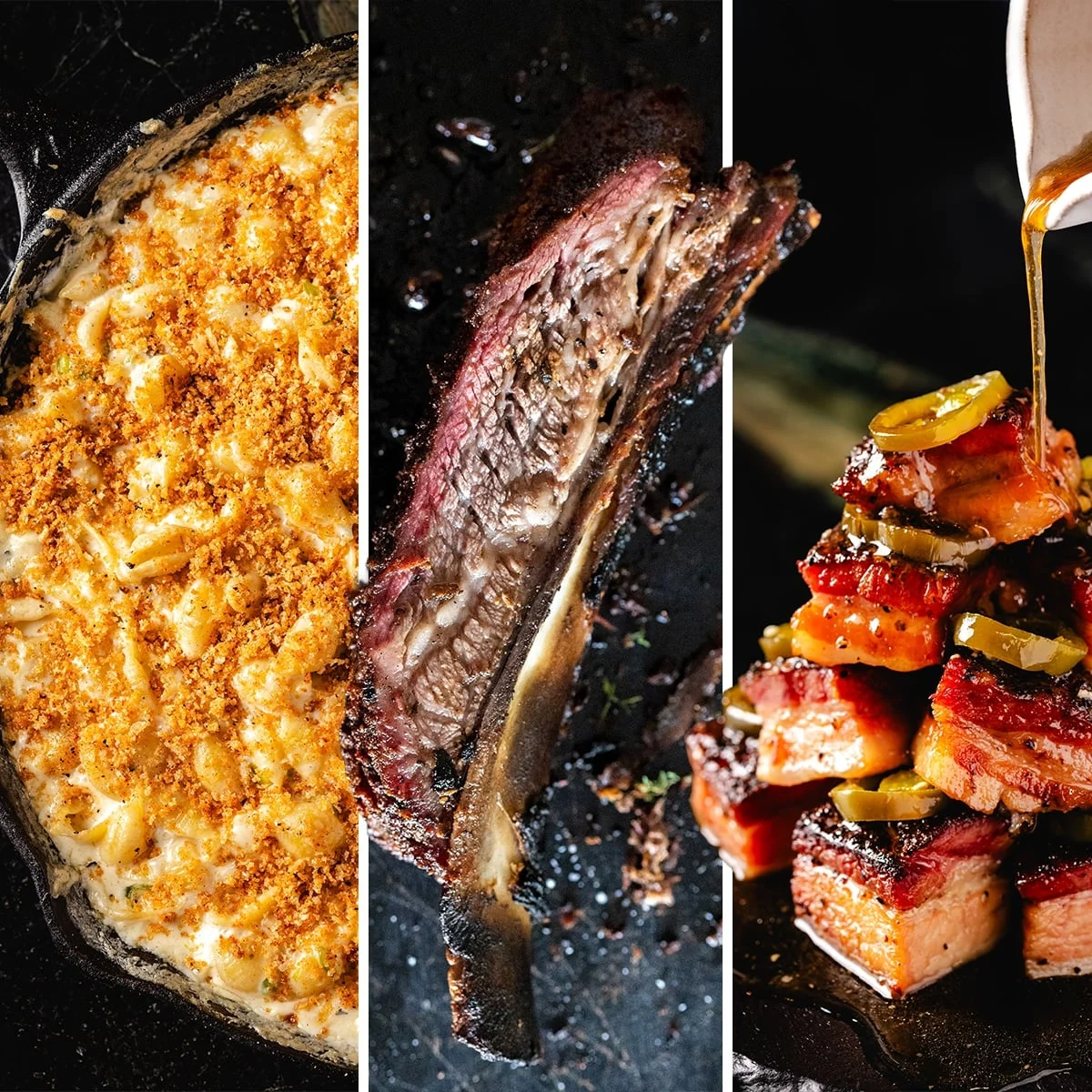
Bulloch prepared Candied Jalapeño Pork Belly Burnt Ends, a dish characterized by a sweet and spicy glaze. When the pork belly encountered a stubborn stall, the team utilized the "Texas Crutch" method, wrapping the meat in foil to trap moisture and accelerate the cooking process. This technical adjustment proved vital in ensuring the meat reached the necessary tenderness within the 10-hour limit.
Simultaneously, Vanover prepared "Dino Ribs," which are massive beef plate short ribs. These were seasoned with a specialized brisket rub and smoked until probe-tender. To complement the rich, fatty profiles of the pork and beef, the team served Smoked Poblano Shells and White Cheddar—a sophisticated take on mac and cheese—and a bright spinach salad designed to provide acidity and palate cleansing.
Environmental and Logistical Factors
One of the primary narratives of the premiere was the impact of the environment on the culinary output. Filming took place in a remote, mountainous region where temperatures dropped significantly after sunset. The "Big Burn" judging occurred late at night, forcing competitors and judges to contend with freezing conditions.
From a thermodynamic perspective, open-fire cooking in cold, high-altitude environments requires a much higher volume of fuel and more frequent fire management. The lack of oxygen at high altitudes can also affect how wood burns, potentially leading to "dirty smoke" if the fire is not properly managed. The Bulloch-Vanover team’s ability to pivot their strategy mid-cook suggests a high level of situational awareness that is often the deciding factor in outdoor competitions.
Industry Context and the Rise of Female Pitmasters
The participation of Bulloch and Vanover in Pitmasters reflects a broader trend in the barbecue industry: the increasing visibility and success of female pitmasters. Historically, professional barbecue and live-fire cooking have been male-dominated fields. However, the growth of digital media and the expansion of the competitive circuit have allowed women to showcase their expertise to a global audience.

Market data suggests that the outdoor cooking industry has seen a surge in participation over the last five years, with a notable increase in female consumers purchasing high-end smokers and grills. By featuring established experts like Bulloch and Vanover, Food Network is tapping into a demographic that values both the technical science of meat preparation and the lifestyle aspects of backyard hosting.
Broader Implications and Culinary Analysis
The debut of Pitmasters signals a shift in food television toward "survivalist" culinary formats. Viewers are increasingly drawn to programming that demonstrates how professional skills translate to primitive or difficult conditions.
The culinary strategy employed by the Hey Grill Hey and Girls Can Grill team in Episode One emphasizes the importance of "layered flavors." In competition barbecue, where judges may only take one or two bites of a dish, the flavor profile must be immediate and complex. The use of the buffalo ranch and candied jalapeños provided the necessary "high notes" to cut through the heavy smoke and fat of the proteins.
Furthermore, the decision to incorporate lumpia—a dish not traditionally associated with American barbecue—indicates the evolving nature of the genre. Modern barbecue is increasingly inclusive of international techniques, moving beyond the traditional regional styles of Texas, Kansas City, and the Carolinas to include global "fire-and-smoke" traditions.
Conclusion and Future Outlook
While the specific standings and elimination results of Episode One remain a focal point for viewers following the series, the technical execution demonstrated by the teams sets a high bar for the remainder of the season. The Bulloch-Vanover partnership highlighted the necessity of teamwork, technical adaptability, and the ability to maintain culinary integrity under extreme physical stress.

As the season progresses, the remaining teams will likely face even more stringent requirements, potentially involving whole-animal roasts or more complex "one-bite" challenges. For the barbecue community, Pitmasters serves as both entertainment and an educational resource, illustrating the complex physics of fire, the chemistry of meat science, and the art of flavor development in the great outdoors.
New episodes of Pitmasters air weekly on Food Network, with subsequent streaming availability on Discovery+. The series is expected to continue driving interest in outdoor cooking and further cement the status of its participants as leaders in the modern culinary landscape.
