

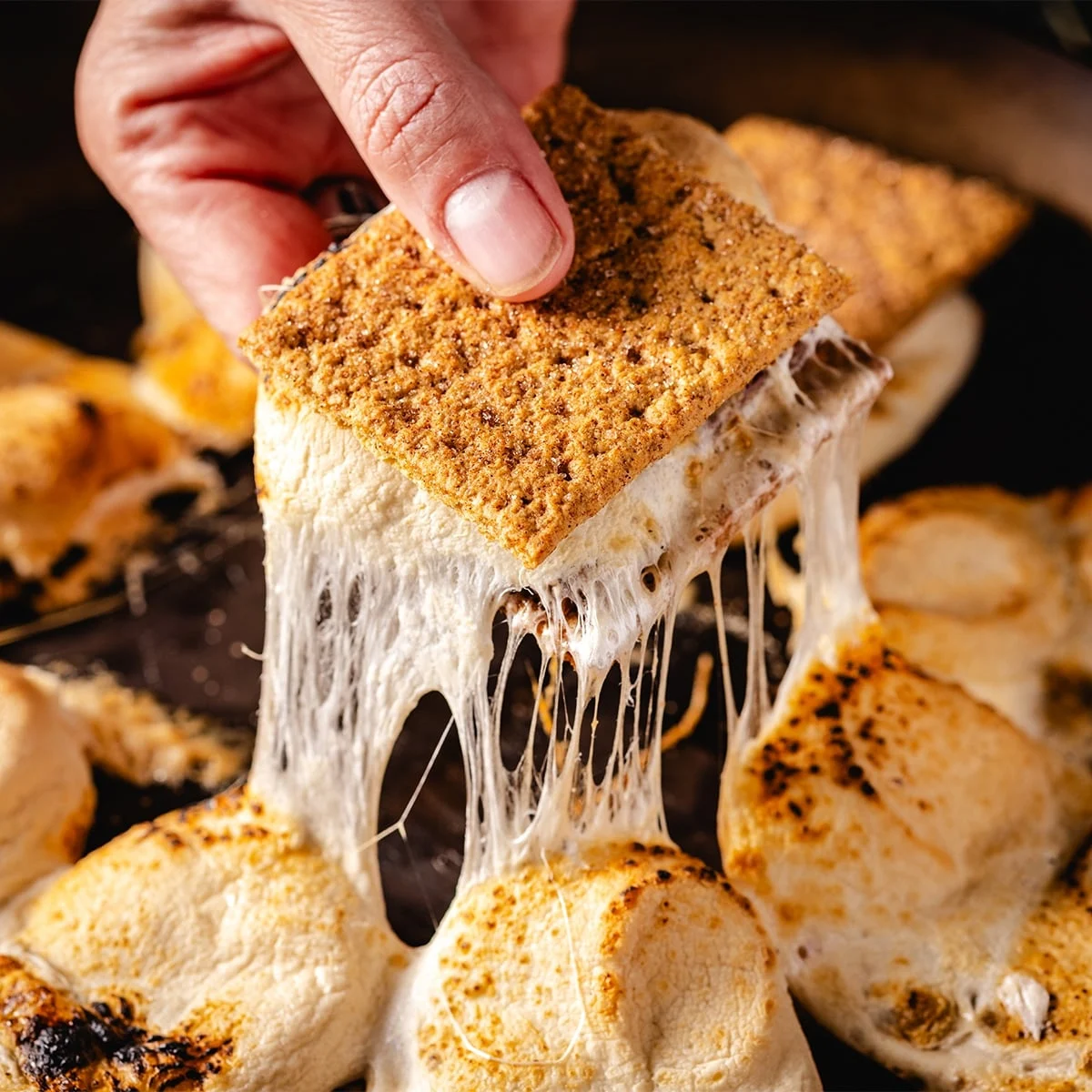
The traditional American s’more, a staple of outdoor recreation and youth scouting for nearly a century, is undergoing a significant culinary transformation as backyard enthusiasts pivot toward the use of wood-fired smokers. This shift, popularized by outdoor cooking experts such as Susie Bulloch, founder of the prominent barbecue platform Hey Grill Hey, represents a broader movement in the culinary arts to integrate complex smoky flavor profiles into traditionally sweet desserts. By utilizing a controlled environment—specifically a smoker set to 275 degrees Fahrenheit—home cooks are able to achieve a level of consistency and flavor depth that traditional open-flame roasting often lacks. This method eliminates the logistical challenges of building a wood fire while introducing a subtle infusion of wood smoke that complements the sugars in marshmallows and the richness of cocoa.
The Historical Trajectory of the S’more
To understand the significance of the smoked s’more, one must examine the origins of its predecessor. While the exact inventor of the s’more remains unknown, the first official recipe appeared in the 1927 publication "Tramping and Trailing with the Girl Scouts." Originally referred to as "Some More," the recipe described a simple combination of toasted marshmallows and a bar of chocolate sandwiched between two graham crackers.
Throughout the mid-20th century, the s’more became synonymous with American camping culture, largely due to the portability and shelf-stability of its ingredients. However, the traditional method of preparation—skewering a marshmallow over an open flame—is often criticized by culinary professionals for its lack of temperature control. Open flames frequently lead to charred exteriors and cold, unmelted centers. The transition to smoker-based preparation addresses these technical shortcomings by providing a convection-style heat that warms the ingredients uniformly.
Technical Analysis of the Smoking Process
The preparation of smoked s’mores relies on the principles of low-and-slow heat transfer. Unlike the direct radiant heat of a campfire, a smoker utilizes indirect heat and airflow. According to technical guidelines established by industry professionals, the optimal temperature for smoking s’mores is 275 degrees Fahrenheit (approximately 135 degrees Celsius).

At this temperature, the marshmallows undergo a controlled expansion. The internal moisture within the marshmallow turns to steam, causing the gelatinous structure to puff. Because the heat is indirect, the marshmallow reaches its melting point without the risk of immediate combustion. This process typically takes between 10 and 15 minutes, depending on the specific smoker model and ambient outdoor temperatures.
Furthermore, the choice of fuel plays a critical role in the final flavor profile. While hardwoods like hickory or oak are standard for proteins, fruitwoods such as apple, cherry, or maple are frequently recommended for desserts. These woods produce a lighter, sweeter smoke that enhances the sugar content of the confection without overpowering it. The smoke contains compounds like guaiacol and syringol, which provide the "charred" flavor associated with wood fires but in a more refined and distributed manner.
Ingredient Optimization and Market Trends
The modern iteration of the smoked s’more has also led to a diversification of ingredients, reflecting broader trends in the gourmet snack market. While traditional honey graham crackers remain the standard, there is an increasing preference for cinnamon-infused varieties. The addition of cinnamon and sugar on the exterior of the cracker allows for slight caramelization during the 15-minute smoking window, a chemical reaction known as the Maillard reaction, which adds a savory depth to the cracker.
In terms of marshmallows, the "extra-large" or "jumbo" segment has seen significant growth. These larger marshmallows provide a higher volume-to-surface-area ratio, ensuring a more substantial "gooey" center when smoked in a skillet. Data from the confectionery industry indicates that seasonal marshmallow sales peak during the summer months, but the rise of year-round backyard smoking has begun to flatten this seasonal curve as consumers utilize their grills during the autumn and winter months.
The chocolate component has perhaps seen the most variation. While milk chocolate bars are the traditional choice, the smoker method allows for the use of high-fat alternatives such as peanut butter cups or dark chocolate bars with sea salt. Because the chocolate is placed on the graham cracker and subjected to 275-degree heat for 10 minutes, it achieves a complete melt, resolving the common complaint of "cold chocolate" in traditional s’mores.

The Role of Cast Iron in Outdoor Baking
A critical logistical element of the smoked s’more is the use of the cast-iron skillet. The skillet serves as a thermal heat sink, providing a stable base for the graham crackers and preventing the bottom of the crackers from becoming scorched by the grill grates. Cast iron is favored in outdoor cooking for its high emissivity and heat retention properties.
When preparing s’mores for a large group, the skillet method allows for mass production, a feat difficult to achieve with individual roasting sticks. A standard 12-inch skillet can accommodate approximately 10 to 12 half-assembled s’mores. This efficiency has made the smoked s’more a popular choice for large-scale outdoor events and family gatherings, where the host can prepare dessert for a dozen people simultaneously.
Economic and Environmental Implications
The rise of smoker-based desserts also coincides with shifting environmental regulations and safety concerns. In many regions of the United States, particularly the West, seasonal "no-burn" orders and drought conditions frequently prohibit the use of open fire pits. However, enclosed pellet grills and smokers are often exempt from these restrictions or are viewed as a safer alternative due to their contained flame and spark arrestors. This has positioned the smoker as the primary tool for "campfire-style" cooking in suburban and high-risk fire zones.
From an economic perspective, the outdoor cooking industry has seen unprecedented growth over the last decade. According to reports from the Hearth, Patio & Barbecue Association (HPBA), the market for grills and smokers reached record highs in the early 2020s. As consumers invest more in high-end outdoor kitchens, the demand for versatile recipes that extend beyond meat—such as smoked desserts—has increased proportionally.
Nutritional Profile and Dietary Considerations
While s’mores are inherently a high-calorie dessert, the smoked version maintains a standard nutritional profile similar to its campfire counterpart. Based on a serving size of one large s’more, the caloric intake is approximately 303 kcal. The breakdown includes:

- Total Carbohydrates: 52g
- Sugars: 25g
- Total Fat: 9g (with 4g of saturated fat)
- Protein: 4g
- Sodium: 246mg
For health-conscious consumers, the controlled environment of the smoker allows for the integration of healthier alternatives, such as gluten-free graham crackers or high-cacao dark chocolate, which contains antioxidants. However, the primary appeal of the dish remains its status as a "comfort food" and a nostalgic indulgence.
Expert Perspectives and Culinary Impact
Culinary experts suggest that the smoked s’more is more than a fleeting trend; it represents the "democratization" of barbecue. Susie Bulloch has noted that these recipes help transition the smoker from a "meat-only" tool into a comprehensive outdoor oven. This shift encourages amateur cooks to experiment with temperature control and smoke infusion, skills that are transferable to more complex barbecue projects like brisket or ribs.
The "smoky mallow pull"—a term used to describe the visual appeal of the stretched, melted marshmallow—has also become a significant driver of engagement on social media platforms. The visual and textural elements of the dish make it highly "shareable," further cementing its place in modern food culture.
Future Outlook for Outdoor Desserts
As the technology behind pellet grills and smokers continues to advance—incorporating Wi-Fi connectivity and precision temperature probes—the ability to execute complex desserts will only improve. We can expect to see further iterations of the smoked s’more, including "deconstructed" s’more dips, smoked chocolate fondues, and wood-fired cobblers.
The smoked s’more serves as a bridge between tradition and innovation. It preserves the core components that have made the snack an American icon for 97 years while utilizing modern technology to enhance the sensory experience. By removing the unpredictability of the campfire and replacing it with the precision of the smoker, outdoor enthusiasts have ensured that the s’more will remain a centerpiece of the American culinary landscape for generations to come.

In conclusion, the smoked s’more represents a sophisticated evolution of a simple classic. It highlights the versatility of modern outdoor cooking equipment and reflects a broader cultural desire to elevate nostalgic flavors through technical mastery. Whether for a family movie night or a large-scale barbecue competition, the smoked s’more has established itself as the definitive modern outdoor dessert.
