

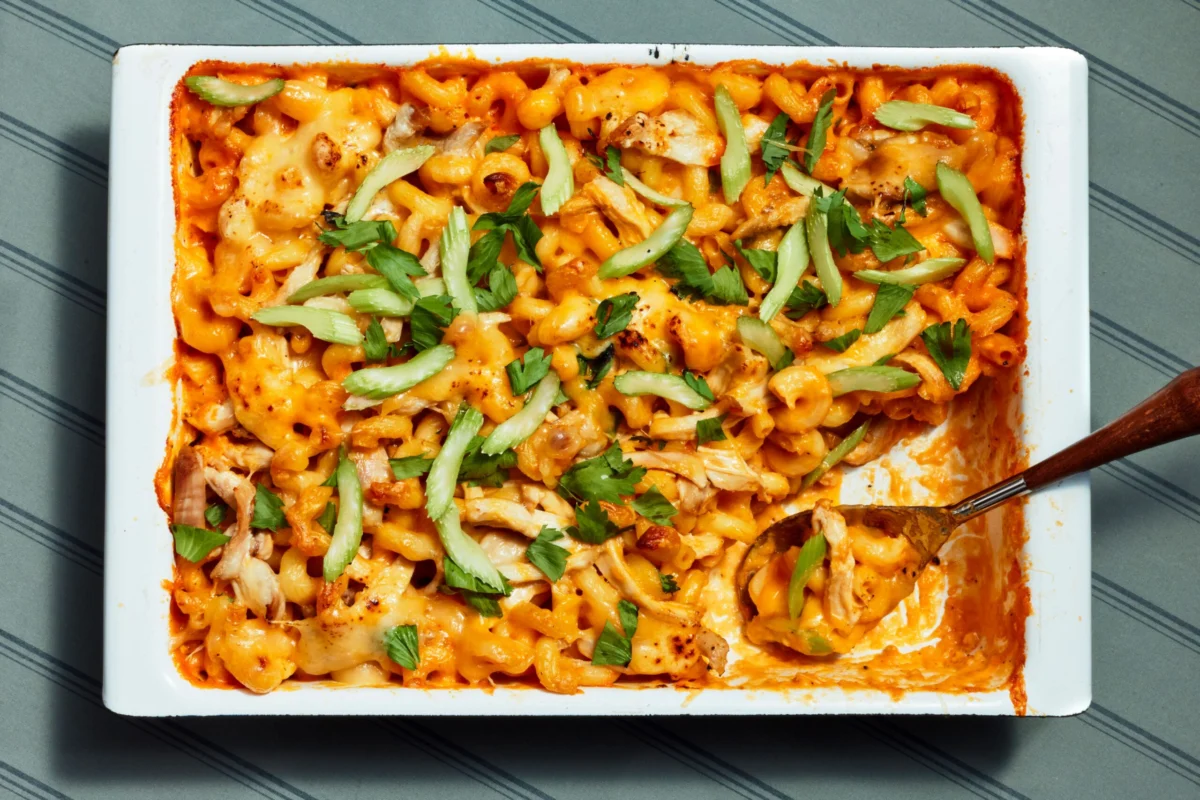
The culinary landscape continually evolves, often through the innovative blending of established favorites into novel and appealing dishes. Among these successful fusions, Buffalo Mac and Cheese has emerged as a particularly compelling example, seamlessly marrying the robust, tangy heat of Buffalo chicken dip with the creamy, satisfying comfort of classic baked macaroni and cheese. This dish is not merely a combination of ingredients but a thoughtful synthesis designed to evoke a multifaceted sensory experience, offering a rich, piquant, and utterly comforting meal that has rapidly gained traction in both home kitchens and professional culinary settings. Its foundation lies in a meticulously prepared roux-based cheese sauce, typically featuring a blend of sharp cheddar and Monterey Jack, which provides a rich and velvety base. Into this molten golden embrace, shredded chicken and authentic Buffalo sauce are folded, creating a dynamic flavor profile that is both familiar and exciting, culminating in a baked casserole crowned with a bubbly, golden crust.
The Genesis of a Flavor Fusion: A Culinary Timeline
To understand the phenomenon of Buffalo Mac and Cheese, it is essential to trace the individual legacies of its constituent parts and the broader culinary trends that facilitated their union.
-
The Enduring Legacy of Macaroni and Cheese (18th Century – Present): Macaroni and cheese, in its simplest form, has roots dating back to medieval European cookbooks, featuring pasta and cheese in baked dishes. However, its popularization in America is often attributed to Thomas Jefferson, who encountered the dish in Paris and served it at state dinners in the early 19th century. By the mid-20th century, particularly with the introduction of Kraft Dinner in 1937, macaroni and cheese became an accessible and beloved comfort food staple across American households. Its appeal lies in its simplicity, its rich, creamy texture, and its capacity to be customized, acting as a canvas for various additions and flavor profiles. The classic baked variant, with its crispy topping and gooey interior, represents the epitome of comfort dining.
-
The Iconic Buffalo Wing (1964 – Present): The origin of Buffalo wings is famously attributed to the Anchor Bar in Buffalo, New York, in 1964. Teressa Bellissimo, co-owner of the bar, is credited with improvising a late-night snack for her son and his friends by frying chicken wings and tossing them in a spicy sauce made from Frank’s RedHot hot sauce and butter. This simple, yet revolutionary, preparation method yielded a dish that was simultaneously crispy, tender, spicy, and tangy. The Buffalo wing quickly transcended its humble beginnings to become a global culinary icon, synonymous with casual dining, sports events, and vibrant flavor. The characteristic Buffalo sauce, distinct from plain hot sauce due to its butter content, offers a smoother texture and a more rounded, less aggressive heat, making it uniquely adaptable for various culinary applications.
-
The Rise of Buffalo Chicken Dip (Late 20th Century – Early 21st Century): As the popularity of Buffalo wings soared, chefs and home cooks began to deconstruct and reimagine its flavors. The Buffalo chicken dip emerged as a natural evolution, transforming the essence of the wing into a creamy, shareable appetizer. This dip typically combines shredded chicken, cream cheese, ranch or blue cheese dressing, and, crucially, Buffalo sauce, often baked until warm and bubbly. Its immense popularity demonstrated a clear consumer appetite for the Buffalo flavor profile beyond just wings, signaling a readiness for further culinary integration. It served as a vital precursor, proving the versatility of the Buffalo flavor and its successful marriage with creamy textures and chicken.
-
The Inevitable Union: Buffalo Mac and Cheese (Early 21st Century): The convergence of these distinct culinary traditions into Buffalo Mac and Cheese was, in many ways, an inevitable outcome of evolving tastes and a demand for innovative comfort food. As chefs and home cooks sought to elevate and diversify classic dishes, the idea of infusing the beloved tang and spice of Buffalo sauce and chicken into the ultimate comfort food, macaroni and cheese, became increasingly appealing. This fusion capitalizes on the deep-seated nostalgia associated with both mac and cheese and Buffalo wings, while offering a novel experience that satisfies cravings for both creamy richness and spicy zest. Its emergence reflects a broader trend in gastronomy towards hybrid dishes that offer complex flavor profiles and heightened comfort.
Anatomy of the Dish: Crafting the Perfect Blend
The success of Buffalo Mac and Cheese hinges on several critical components and preparation techniques that ensure a harmonious blend of flavors and textures.
-
The Roux-Based Cheese Sauce Foundation: The heart of any exceptional macaroni and cheese is its cheese sauce, and for the Buffalo variant, a roux-based sauce is paramount. A roux, a cooked mixture of fat (typically butter) and flour, serves as a thickening agent, creating a stable emulsion that prevents the cheese sauce from breaking or becoming oily. This foundational technique is essential for achieving the creamy, luscious consistency that defines high-quality mac and cheese. The choice of cheeses, typically sharp cheddar and Monterey Jack, is strategic. Sharp cheddar provides a robust, tangy flavor that stands up well to the Buffalo sauce, while Monterey Jack offers excellent melting properties and a milder, creamier counterpoint, contributing to the overall smooth texture. Other cheeses like Colby, Gruyère, or even a touch of smoked Gouda can be introduced for added complexity, though the classic duo provides the ideal balance.
-
The Star Ingredient: Authentic Buffalo Sauce: The distinction between plain hot sauce and prepared Buffalo sauce is a critical detail often overlooked but vital for the dish’s integrity. Prepared Buffalo sauce, unlike simple hot sauce, is formulated with butter or oil, which gives it a richer, smoother consistency and a more rounded, less acidic flavor profile. This addition of fat is crucial for creating a cohesive cheese sauce; it emulsifies seamlessly, preventing the sauce from splitting or becoming watery. Using plain hot sauce can introduce an overly sharp, vinegary note and disrupt the sauce’s texture. Culinary experts emphasize that for optimal results, a high-quality prepared Buffalo sauce is recommended. However, for those with an abundance of hot sauce, crafting a homemade Buffalo wing sauce by whisking it with melted butter provides a viable alternative, ensuring the necessary richness and emulsification. Brands like Frank’s RedHot Buffalo Wings Hot Sauce are often cited as benchmarks for their balanced flavor and consistency.
-
The Protein Element: Shredded Chicken’s Versatility: Shredded chicken is the traditional protein choice, integrating seamlessly into the creamy sauce. Its mild flavor acts as an ideal canvas for the bold Buffalo notes. The versatility of chicken preparation is a significant advantage for home cooks. Leftover chicken, whether from a roasted bird or grilled breasts, is perfectly suitable, promoting efficiency and reducing food waste. Grilled chicken offers a subtle smoky char, adding another layer of flavor. Poached chicken breast provides a tender, neutral base. Beyond traditional preparations, smoked chicken introduces a deep, savory complexity, while cooked ground chicken or turkey can also be adapted, offering a different texture. This adaptability makes Buffalo Mac and Cheese an excellent meal for utilizing various forms of cooked poultry.
-
Pasta Selection for Optimal Sauce Adhesion: The choice of pasta shape, while seemingly minor, plays a crucial role in the dish’s overall enjoyment. Cavatappi, with its distinctive corkscrew shape, is particularly effective as it boasts numerous ridges and interior spirals that adeptly capture and hold the rich, creamy sauce in every bite. This ensures a consistent flavor and texture experience. However, the dish is forgiving, and other short, sturdy pasta shapes work equally well. Elbow macaroni, the quintessential mac and cheese pasta, provides excellent sauce retention due to its curved form. Small shells, with their cup-like structure, also perform admirably. The key is to select a pasta that can withstand baking without becoming mushy and offers ample surface area or cavities for the sauce to cling to.
-
The Baking Process: Achieving the Golden Crust: The final baking phase is what transforms the assembly of ingredients into a cohesive, bubbling casserole. High temperatures in the oven allow the flavors to meld, the cheese sauce to thicken further, and the top layer to achieve a desirable golden-brown crust. This crust provides a textural contrast to the creamy interior, adding another dimension to the dish. The heat ensures the chicken is thoroughly warmed and integrated, and the pasta absorbs residual moisture, preventing a watery consistency.

The "Full Buffalo Wing Experience": Garnishes and Customization
To truly encapsulate the essence of Buffalo wings, the dish is often enhanced with specific garnishes that replicate the traditional accoutrements.
-
Completing the Flavor Profile: Thinly sliced celery offers a refreshing, crisp counterpoint to the richness of the mac and cheese, echoing the classic celery sticks served alongside wings. A drizzle of ranch dressing or blue cheese dressing adds a cool, creamy element that tames the heat and provides a savory tang, while crumbled blue cheese intensifies the pungent, creamy notes that are hallmarks of the authentic Buffalo wing experience. Utilizing all three garnishes elevates the dish, transforming it into a holistic sensory experience that pays homage to its inspiration.
-
Adjusting Heat Levels: The inherent spiciness of Buffalo Mac and Cheese is typically medium, offering a pleasant warmth without being overwhelmingly hot. However, this aspect is highly customizable. For those preferring a milder flavor profile, reducing the quantity of Buffalo sauce to half a cup or opting for a mild Buffalo sauce variant can significantly temper the heat. Conversely, spice enthusiasts can increase the Buffalo sauce content or add a few dashes of their favorite hot sauce directly to individual servings after baking for an extra kick. This flexibility ensures the dish caters to a wide spectrum of palates.
Operational Considerations for Home and Commercial Kitchens
Beyond its flavor, Buffalo Mac and Cheese offers practical advantages and considerations for preparation and storage.
-
Preparation Efficiency and Make-Ahead Benefits: One of the dish’s significant advantages, particularly for meal planning or catering, is its suitability for advance preparation. The entire mac and cheese casserole can be assembled and covered tightly before baking, then refrigerated overnight. This allows for flexibility, enabling hosts or busy individuals to prepare the dish when convenient and simply bake it fresh just before serving. When baking directly from the refrigerator, an additional 5-10 minutes may be required to ensure it reaches the desired internal temperature and achieves the golden crust. This "make-ahead" capability underscores its utility for gatherings and busy weeknights.
-
Storage and Quality Control: The Freezing Dilemma: While many casseroles lend themselves well to freezing, Buffalo Mac and Cheese presents a notable exception. Culinary experts strongly advise against freezing the dish. The primary reason lies in the behavior of cheese sauces upon freezing and thawing. The delicate emulsion of a cheese sauce can break down, leading to a grainy, unappetizing texture. The fats and solids in the cheese may separate, compromising the creamy consistency that is central to the dish’s appeal. Therefore, for optimal quality, this recipe is best enjoyed fresh from the oven or assembled a day ahead and refrigerated for later baking. This recommendation highlights the importance of understanding ingredient properties for maintaining culinary standards.
-
Ingredient Sourcing and Economic Implications: The growing popularity of dishes like Buffalo Mac and Cheese can subtly influence ingredient markets. Increased demand for specific cheese varieties, chicken, and prepared Buffalo sauces can impact supply chains and pricing. For consumers, this means readily available ingredients in most supermarkets. For restaurants, it suggests a dish with relatively stable food costs, making it an attractive menu item.
Market Reception and Culinary Impact
Buffalo Mac and Cheese has not only captivated home cooks but has also found a significant place on restaurant menus, ranging from casual pubs to comfort-food-focused eateries.
-
Broad Consumer Appeal: The dish resonates deeply with consumers due to its powerful combination of nostalgia, comfort, and bold, satisfying flavors. It offers a complete meal experience that is hearty and indulgent, tapping into a universal craving for rich, flavorful sustenance. Its visual appeal – a bubbling, cheesy, golden casserole – also makes it highly shareable on social media platforms, further fueling its popularity.
-
Restaurant Adoption and Innovation: Its presence on restaurant menus underscores its commercial viability and widespread acceptance. Chefs appreciate its ability to be prepped in advance and its broad appeal. Furthermore, it serves as a platform for culinary innovation, with establishments experimenting with different types of chicken (e.g., crispy fried chicken pieces), artisanal cheeses, gourmet hot sauces, or even incorporating vegetables like roasted cauliflower for added texture and nutrition.
-
The Future of Fusion Comfort Food: Buffalo Mac and Cheese stands as a prime example of a successful culinary fusion that honors its heritage while forging a new identity. Its continued popularity suggests a sustained consumer interest in dishes that offer innovative twists on classic comfort foods, balancing familiarity with exciting new flavor profiles. This trend is likely to continue driving creativity in the culinary world, as chefs and home cooks alike seek to reimagine beloved dishes for contemporary palates.
In conclusion, Buffalo Mac and Cheese is more than just a recipe; it represents a cultural culinary moment, a testament to the enduring appeal of comfort food and the endless possibilities of flavor fusion. By skillfully combining the zesty heat of Buffalo wings with the creamy embrace of macaroni and cheese, this dish has carved out a distinct and beloved niche, promising a satisfying and memorable dining experience for years to come.
