

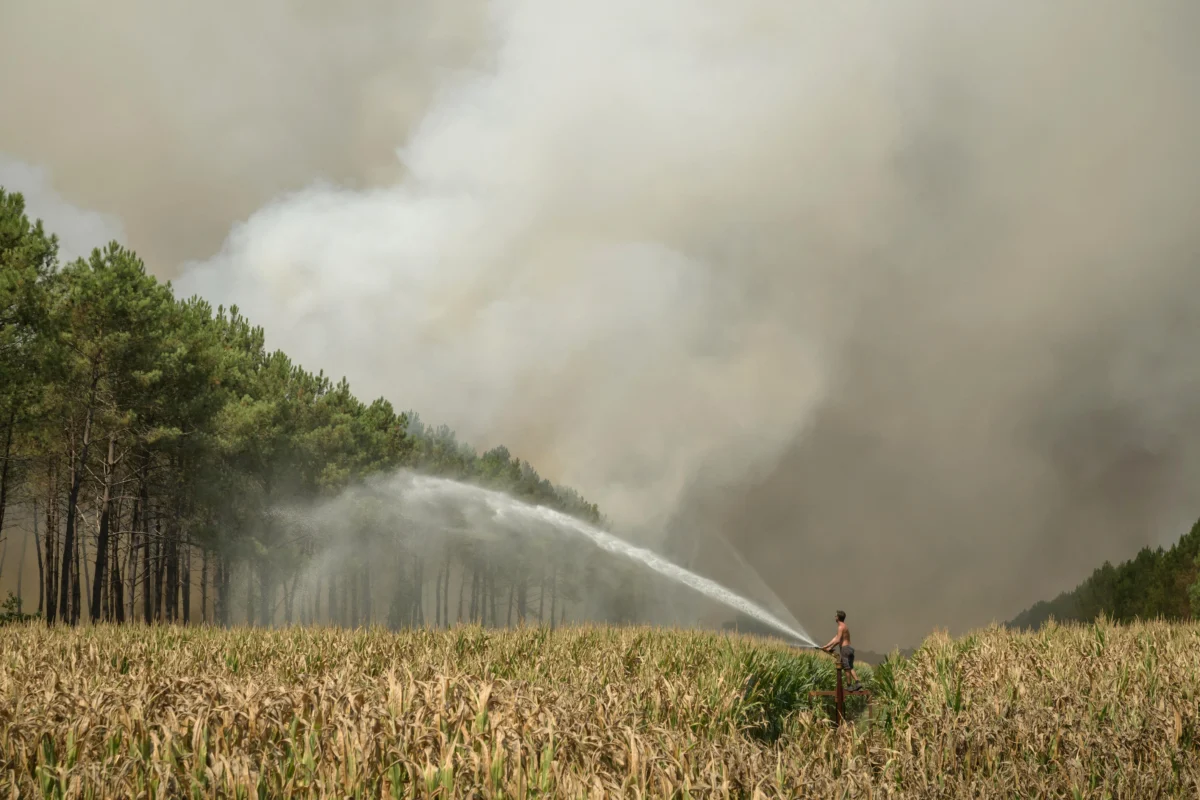
On July 22nd, reports began to surface of devastating wildfires tearing across the Atlantic coast of France, just outside the renowned wine-making region of Bordeaux. Within a mere three days, the skies above this historically significant area, famed for its centuries-old viticultural heritage, had ominously transformed into an acrid, smoke-choked orange. The inferno’s rapid and relentless advance has consumed an area equivalent to four times the size of the city of Paris, forcing the displacement of over 220,000 residents from the Western communes in what has become France’s largest-ever peacetime evacuation. As the blazes continue their destructive path, a looming fresh heatwave, with temperatures projected to exceed 104°F (40°C) and climb further, threatens to exacerbate the crisis, turning the already parched landscape into an even more volatile tinderbox and significantly complicating the heroic efforts of firefighters battling the conflagration. This unfolding catastrophe represents an ecological and environmental tragedy of immense proportions, marked by the widespread loss of land, the disruption of countless livelihoods, and the destruction of delicate ecosystems. Amidst the immediate devastation, a profound question echoes through the wine world: What will the upcoming vintages, particularly the next harvest, look like, and will there even be a harvest at all in some affected areas?
The Unfolding Crisis: A Chronology of Fire and Fury
The genesis of this unprecedented fire season traces back to a complex interplay of meteorological conditions. While spring brought sufficient moisture, the subsequent summer months have been exceptionally arid, creating a dangerously dry environment. This vulnerability has been compounded by a succession of intense heatwaves, pushing temperatures to record highs across much of Western Europe. The current fires, which began their destructive journey on July 22nd, have spread with alarming speed and intensity, making them the worst French wildfires in over 70 years. The initial outbreaks quickly escalated, fueled by strong winds and the parched conditions of the Landes de Gascogne forest, a vast pine plantation that stretches southwest of Bordeaux. By July 25th, the visual evidence of the crisis was stark: the iconic blue skies of Bordeaux had given way to an eerie, orange-tinged haze, signaling the widespread nature of the disaster.
The situation has been described by French Prime Minister Sébastien Lecornu as "unprecedented," underscoring the severity and scale of the events. Jerome Steffe, the mayor of Cestas, a town located just south of Bordeaux that has found itself on the front lines of the inferno, starkly labeled it "the fire of the century." These fires are not merely isolated incidents but represent a systemic challenge driven by a changing climate. The historical context reveals that while France has always experienced wildfires, their frequency, intensity, and geographical spread have notably increased in recent years, pushing emergency services and local communities to their limits. The current conflagration has overwhelmed resources, leading to calls for international assistance and a concerted national effort to contain the flames and protect human life and property.
A Region Under Siege: Scale and Human Cost
The sheer scale of the devastation is difficult to grasp. The total burn area, estimated at more than four times the size of Paris, encompasses hundreds of square kilometers of forest, heathland, and agricultural properties. This destruction has led to the largest peacetime evacuation in France’s history, with over 220,000 individuals from numerous western communes forced to abandon their homes and seek refuge. The psychological toll on these communities is immense, as residents face the agonizing uncertainty of whether their homes, livelihoods, and cherished landscapes will survive. Emergency shelters have been rapidly established, and local authorities, supported by national agencies, are working tirelessly to provide aid and support to the displaced.
The human cost extends beyond immediate evacuations. Farmers, particularly those whose lands border the burning forests, face immediate threats to their crops, livestock, and infrastructure. The smoke itself poses a significant health hazard, prompting air quality warnings across the region and beyond. The economic disruption to the local economy, heavily reliant on tourism and agriculture, particularly viticulture, is expected to be substantial and long-lasting. Roads have been closed, transportation networks disrupted, and daily life in the affected areas has ground to a halt. The efforts of firefighters, both professional and volunteer, have been nothing short of heroic, working around the clock in treacherous conditions, often in the face of rapidly changing wind patterns and an unrelenting heat.
Climate’s Crucible: The Environmental Context
The current circumstance is borne from a confluence of environmental problems, many of which are exacerbated by global climate change. While Bordeaux experienced a wet spring, providing a deceptive sense of security, the summer has been exceptionally dry, transforming the landscape into a vast reservoir of combustible material. This dryness, coupled with successive, record-breaking heatwaves, has created the perfect storm for large-scale wildfires. The Landes forest, a defining geographical feature southwest of Bordeaux, has historically contributed deeply to the unique terroir of the region’s wines. However, its composition, primarily consisting of densely planted maritime pines, makes it inherently vulnerable to fire. These fast-growing trees, often managed in monocultures for timber production, burn with extreme intensity, allowing fires to spread rapidly through their resinous needles and dense canopy.
In recent years, Bordeaux winemakers, acutely aware of rising temperatures, have engaged in intense efforts to plant additional trees and hedges around their vineyards. The intention behind this greening initiative was noble: to provide more shade for the vines, hypothetically lessening the impact of escalating temperatures on grape development and preserving the freshness of the fruit. During a wildfire event, however, these very factors have unfortunately contributed to the disaster. More trees, regardless of their intended purpose, inevitably mean more combustible material, effectively creating a direct pathway for the flames to spread and intensify. This paradox highlights the complex and often counterintuitive challenges posed by climate change, where well-intentioned adaptive strategies can, under extreme conditions, inadvertently amplify risks. The current fire season in France is not an isolated incident but part of a wider trend observed across Southern Europe, from Spain and Portugal to Italy and Greece, all grappling with increasingly frequent and severe wildfires linked to persistent drought and extreme heat.
The Peril to the Terroir: Bordeaux’s Wine Industry on Edge
For a region synonymous with some of the world’s most prestigious and sought-after wines, the wildfires pose an existential threat. Bordeaux’s economic and cultural identity is inextricably linked to its vineyards. The immediate concern is the physical destruction of vineyards themselves. Miraculously, as of the latest reports, no vineyards have yet burned, a testament to strategic firebreaks and the tireless efforts of firefighters. Initial testing on smoke levels in vineyards has also shown "negligible levels of damage," offering a slender thread of hope. However, this situation is fluid and highly dependent on wind direction and the ongoing spread of the fires.
The more insidious and pervasive threat to the upcoming harvest is "smoke taint." Winemakers and wine drinkers alike are anxiously contemplating the future, asking what the next vintage will look like and if it will even be viable. Nick Briggs, the winemaker at Dutcher Crossing in Sonoma, California – a region with painful firsthand experience in extreme fire situations – offers a crucial perspective. "The potential impact depends on several factors, including the proximity of the fire, the duration of smoke exposure, and the stage of grape development," Briggs explains. He emphasizes that "the compounds associated with smoke are highly volatile, so fires located closer to vineyards generally pose a greater risk than those farther away." This highlights the precarious position of vineyards in the path of shifting winds and lingering smoke plumes.
The Science of Smoke Taint: A Winemaker’s Nightmare
Smoke taint is a complex viticultural challenge that can profoundly compromise the quality and marketability of wine. The phenomenon occurs when grapes are exposed to smoke, particularly during the critical ripening phase known as veraison, which many of Bordeaux’s grapes are currently experiencing. During veraison, the grapes change color, soften, and begin to accumulate sugars and phenolic compounds. When smoke lingers over grapes in this sensitive state, volatile phenols present in the smoke – such as guaiacol, 4-methylguaiacol, and cresol – are absorbed through the grape skins. These phenols then bind with the sugars inside the grape, forming glycosides, which are non-volatile and odorless. However, during fermentation or later aging, these glycosides can break down, releasing the volatile phenols and imparting undesirable smoky, sanguine, ashy, or even medicinal flavors to the wine.
Morgan Maurèze, a Bordeaux-bred winemaker who has worked with esteemed estates like Château Haut-Brion and Château Petrus, and now runs Napa’s Seven Apart, elaborates on the wind factor. "Several factors influence this situation, including your distance from the smoke and whether you’re downwind or upwind," he notes. "Being upwind is ideal because the smoke is blown away from you. However, if you’re downwind, the risk becomes severe, potentially ruining a year’s worth of work due to smoke taint." The taste profile of a smoke-tainted wine can range from a subtle campfire note to an overwhelming flavor of "over-barbecued brisket," "ashtrays, burnt rubber, and plastics," as Maurèze vividly describes. At very high levels, the wine can become extremely bitter and completely unpalatable, rendering an entire harvest commercially worthless.
Despite the increasing frequency of fires threatening wine regions globally, there remain no clear-cut or universally effective ways to salvage a wine severely impacted by smoke taint. Winemakers have experimented with various treatments: activated carbon can absorb some of the undesirable compounds, nanofiltration can physically remove larger molecules, and the addition of untoasted oak chips or specific enzymes might help to balance the wine’s flavor profile. However, Maurèze cautions that "there are very few things you can do to effectively combat smoke-tainted wine" once the damage is severe. The underlying "base note" of smoke often persists, making it challenging to produce a wine of the quality expected from a region like Bordeaux.
Research efforts are underway globally to find solutions. Oregon State University has been exploring barrier sprays that can coat the grape and offer a protective shield against smoke absorption. The USDA is funding research into rapid detection tools, aiming to identify smoke-impacted wines early in the production process, allowing winemakers to make informed decisions before significant investment is made. Addie Dearden, assistant winemaker at Sleeping Giants in Carneros, Napa, who has unfortunately navigated major fire events in 2017 and 2020, shares a practical approach. "Every time we have these smoke events, we toss everything in a bucket, do a quick fermentation, send it to the lab and you get a good perspective of what the grapes will go through and taste like." This rapid prototyping allows for early assessment of the vintage’s potential.
If smoke issues are detected, winemakers might adapt their techniques by opting for less skin contact during fermentation or reducing the amount of new oak used for aging. These adjustments can help to minimize the extraction of smoky compounds or balance out barbecue-like flavors. However, this presents a particular challenge for Bordeaux, a region celebrated for its powerful red wines that traditionally rely heavily on extended skin maceration and significant aging in new oak barrels to develop their characteristic structure and complexity. Deviating from these established practices could fundamentally alter the stylistic identity of Bordeaux wines, potentially impacting their global reputation and market appeal.
A Community United: Local and National Response
In the face of this widespread calamity, an extraordinary spirit of solidarity has emerged across the Bordeaux region. The local community, particularly those within the agricultural and winemaking sectors, has mobilized rapidly to support firefighting efforts. Soufflet Vigne, a prominent French agricultural supply and winemaking service company, exemplifies this spirit, ferrying water tanks and pumps—equipment typically used for fermentation and production—to provide crucial water sources for firefighters battling the inferno. This ingenuity and willingness to repurpose essential winery equipment have proven invaluable on the fire lines.
Further demonstrating this collaborative spirit, Bordeaux’s Chamber of Agriculture swiftly established an online system. This platform allows local farmers and wine estates to register and offer up their vital resources: water tanks, trailers, tractors, and access points to water sources—anything that might aid firefighters in their relentless struggle against the flames. Jane Anson, one of the world’s foremost Bordeaux journalists and author of the upcoming Bordeaux Chronicle, confirms this widespread support: "There is clear solidarity from the industry. Both Smith Haut Lafitte and Rauzan-Ségla are among the many wine estates and agricultural companies that have lent equipment such as water tanks and pumps to assist the firefighters." This collective action underscores the deep interconnectedness of the Bordeaux community and their shared commitment to protecting their homeland.
Beyond local efforts, the French national government has deployed significant resources, including specialized aerial firefighting aircraft known as "Canadairs" and large contingents of firefighters from across the country. International aid, particularly from neighboring European nations, has also been mobilized, highlighting the regional impact of the crisis and the need for coordinated response efforts. The next week will be marked by intense concern, anxiety, and preparation, as an incoming heatwave and predicted shifting winds are expected to influence the trajectory of the fires. Much rides on where these unpredictable forces direct the flames next, dictating the extent of further devastation and the ultimate impact on the region.
Economic Fallout and Future Proofing
A lost or severely compromised harvest could spell financial disaster for the Bordeaux wine industry. This crisis comes at an already precarious time for the region, which has been experiencing significant headwinds in recent years. Reports indicate drastic drops in wine sales and vineyard valuations, as global drinking habits continue to evolve, with many consumers opting for less alcohol or different beverage categories. The added burden of smoke-tainted wines, which might be difficult or impossible to sell, would severely compound these existing financial pressures, potentially leading to widespread bankruptcies among smaller producers and a significant downturn for the entire regional economy. The long-term impact on Bordeaux’s prestigious image and market position could also be substantial if successive vintages are perceived as compromised.
In response to these escalating threats, Bordeaux is actively trying to rapidly adapt to a changing climate. In a significant move in 2021, the region approved the use of six new grape varieties, marking a departure from its historically rigid appellation rules. These new varieties, which include heat-resistant options such as Touriga Nacional from Portugal and Marselan, a cross between Cabernet Sauvignon and Grenache, are being introduced in an effort to expand Bordeaux’s ability to withstand increasingly extreme climate events. This forward-thinking approach aims to future-proof vineyards against rising temperatures, prolonged droughts, and other climatic challenges, ensuring the long-term viability of viticulture in the region. These adaptations are not merely about survival but also about maintaining the distinct character and quality for which Bordeaux wines are celebrated worldwide.
Bordeaux as a Bellwether: The Global Climate Challenge
The unfolding tragedy in Bordeaux serves as a stark reminder that wine regions globally are increasingly becoming bellwethers for the broader impacts of climate change. Viticulture, an agricultural practice deeply intertwined with specific microclimates and weather patterns, has become profoundly unpredictable. Extreme heat, prolonged droughts, devastating hail storms, and intensifying wildfires are rampant across the world, from California and Oregon to Australia and South Africa, and now increasingly across Europe. Fires are no longer occasional tragedies but have become a recurring and escalating threat. European producers, who until recently were largely spared the scale of wildfire events seen in other parts of the world, are now being forced to contend with new challenges. On top of the perennial worries of making great wine, they must now proactively mitigate against smoke taint, protect their grapes from unseasonal frosts, and fundamentally reconsider how to future-proof their vineyards in a rapidly changing climate.
Winemakers and agriculturalists around the world are watching the situation in Bordeaux with a mixture of empathy and apprehension, eager to offer support and share lessons learned. Addie Dearden, observing from California, encapsulates this sentiment: "We’re all just farmers trying to make sure our crop can make it to the end of its cycle." She articulates the emotional toll of such events, stating, "You spend all year making sure it’s perfect—all this time, attention, money, and energy. It’s heartbreaking. You want to make sure your neighbors are okay." The crisis in Bordeaux is a poignant illustration of a global challenge, underscoring the interconnectedness of agricultural communities and the urgent need for collective action and adaptive strategies in the face of a rapidly changing planet. The future of iconic wine regions, and indeed much of global agriculture, hinges on humanity’s ability to understand, adapt to, and ultimately mitigate the escalating impacts of climate change.
