

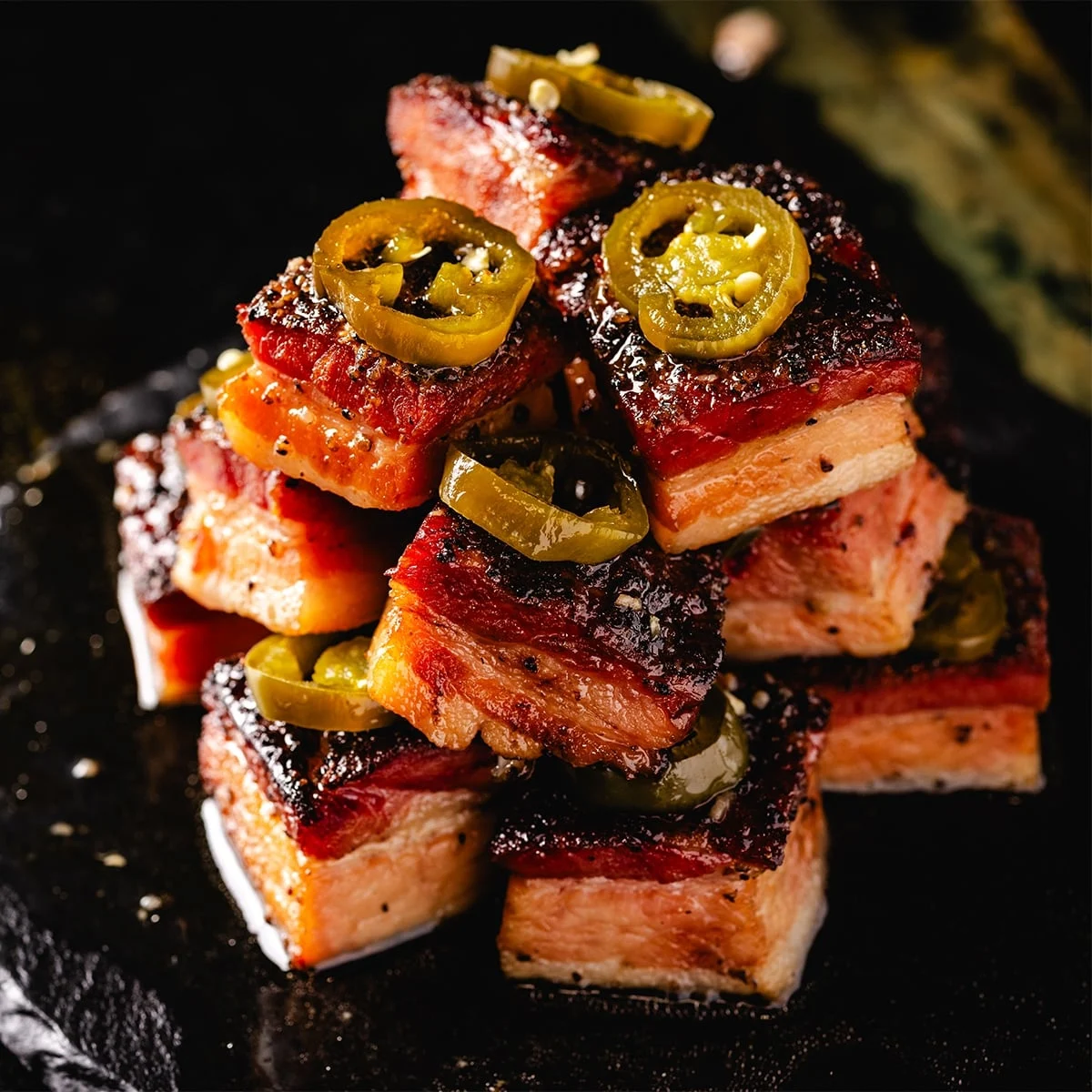
The Evolution of the Burnt End: From Brisket to Pork Belly
Historically, the term "burnt ends" referred exclusively to the flavorful, often charred pieces of meat trimmed from the "point" end of a smoked beef brisket. Popularized by the Kansas City barbecue tradition, specifically by Arthur Bryant’s in the mid-20th century, these pieces were originally considered scraps and given away to customers waiting in line. Over the last decade, however, the concept has undergone a significant transformation.
The transition to pork belly burnt ends marks a departure from the lean-and-fat balance of beef toward a more decadent, fat-forward experience. Pork belly, the same cut used for bacon, consists of thick layers of subcutaneous fat and muscle. When cubed and smoked, these pieces undergo a rendering process that breaks down the tough connective tissue and melts the fat, resulting in a tender, gelatinous interior. The culinary industry has noted a sharp rise in the popularity of pork belly burnt ends on social media platforms and at professional BBQ competitions, where they are prized for their visual appeal and intense flavor concentration.

The Preparation and Smoking Chronology
The production of candied jalapeño pork belly burnt ends requires a disciplined timeline to ensure proper fat rendering and flavor adherence. The process is divided into three distinct phases: preparation, the primary smoke, and the glazing stage.
Phase 1: Preparation and Seasoning
The process begins with a whole pork belly, typically weighing between five and eight pounds. For this recipe, the meat is cubed into uniform one-inch or 1.5-inch squares. This uniformity is critical for ensuring that each piece cooks at the same rate. The cubes are then seasoned with Beefy Sprinkles, a savory-forward rub designed to provide a "bark" or crust that contrasts with the rich fat. Unlike traditional pork rubs that lean heavily on sugar, a beef-style rub often prioritizes salt, coarse black pepper, and garlic, providing a robust foundation for the sweet glaze that follows.
Phase 2: The Primary Smoke
The seasoned cubes are arranged on a wire rack or directly on the grates of a smoker preheated to 225 degrees Fahrenheit (107 degrees Celsius). This low-temperature environment allows the smoke—typically from fruitwoods like apple or cherry, or hardwoods like hickory—to penetrate the meat before the exterior dries out. This phase usually lasts between three and four hours. During this time, the internal temperature of the pork rises, and the fat begins to render, a process known as the "stall" where moisture evaporation cools the meat and slows the cooking process.

Phase 3: The Glazing and Tacking Process
Once the pork cubes reach an internal temperature of approximately 190 to 195 degrees Fahrenheit, they are removed from the direct smoke and placed in a disposable aluminum pan. It is at this juncture that the candied jalapeño glaze is introduced. The glaze is created by reducing a mixture of sliced jalapeños, sugar, cider vinegar, and spices (including turmeric, celery seed, and garlic powder) into a thick syrup. The cubes are tossed in this syrup and returned to the smoker for an additional 30 to 60 minutes. This final step, often called "tacking up," allows the sugars in the glaze to caramelize and adhere to the meat, creating the signature sticky texture.
Technical Specifications and Food Safety Data
In professional barbecue, precision is prioritized over estimated cooking times. According to the United States Department of Agriculture (USDA), pork is technically safe for consumption at an internal temperature of 145 degrees Fahrenheit (63 degrees Celsius) with a three-minute rest. However, for pork belly burnt ends, this temperature is insufficient.
Thermal analysis shows that the collagen in pork belly does not begin to convert into gelatin efficiently until the meat reaches temperatures between 160 and 180 degrees Fahrenheit. To achieve the "melt-in-your-mouth" consistency required for burnt ends, the meat must be pushed to an internal temperature of 195 to 205 degrees Fahrenheit. At this level, the fat has fully rendered, and the muscle fibers have softened.

Nutritional Overview
Based on a standard serving size for a gathering of ten people, the nutritional profile of this dish is high in caloric density, reflecting its status as a gourmet appetizer or "indulgence" food.
- Calories: 1,033 kcal
- Total Fat: 97g (Saturated Fat: 35g)
- Cholesterol: 131mg
- Carbohydrates: 23g (primarily from the sugar in the candied jalapeño glaze)
- Protein: 17g
The Role of Hey Grill Hey in the Outdoor Cooking Market
Susie Bulloch’s Hey Grill Hey has emerged as a significant influencer in the $6 billion outdoor cooking industry. By simplifying complex smoking techniques for a backyard audience, the platform has contributed to the democratization of pitmaster-level cooking. The integration of proprietary products, such as "Beefy Sprinkles," into free recipes represents a successful "freemium" business model that has garnered millions of followers across YouTube, Instagram, and Facebook.
Market analysts suggest that the rise of such recipes is linked to the increased sales of pellet grills and electric smokers, which offer precise temperature control. Unlike traditional offset smokers that require constant manual fire management, modern appliances allow home cooks to execute multi-hour recipes like pork belly burnt ends with higher consistency and lower barriers to entry.

Broader Impact and Culinary Implications
The success of the Smoked Candied Jalapeño Pork Belly Burnt Ends recipe reflects broader shifts in American dining habits. There is a documented increase in the consumption of "fusion BBQ," where traditional Southern techniques are paired with global flavors—in this case, the sweet and spicy "Cowboy Candy" (candied jalapeños) popularized in the American West.
Furthermore, the recipe highlights the "nose-to-tail" philosophy that has regained traction in culinary circles. By elevating the pork belly—a cut that was historically cheaper than the loin or ham—to a premium status, the BBQ community is maximizing the value of the animal. This has had a secondary effect on wholesale meat prices; as demand for pork belly for burnt ends and artisanal bacon has risen, the cost of the raw product has seen a steady increase over the last five years.
Summary of Expert Recommendations
To ensure the highest quality outcome, culinary experts and pitmasters emphasize several key variables:

- Fat Trimming: While pork belly is inherently fatty, any excessively thick "hard fat" should be trimmed to ensure the seasoning can reach the meat.
- Airflow: Utilizing a wire cooling rack on top of the smoker grates allows for 360-degree smoke penetration, preventing the bottom of the meat from becoming soggy.
- The "Jiggle" Test: Beyond the thermometer, experienced cooks look for a specific "jiggle" in the meat, indicating that the internal structure has softened sufficiently.
- Glaze Consistency: The jalapeño syrup must be reduced until it coats the back of a spoon. If the glaze is too thin, it will run off the meat rather than forming a tacky coating.
As the outdoor cooking season expands and the popularity of home-smoked meats continues to grow, recipes like the Candied Jalapeño Pork Belly Burnt Ends serve as a benchmark for the modern backyard chef. They represent a transition from simple grilling to slow-form culinary art, emphasizing patience, temperature control, and the balance of contrasting flavor profiles. This recipe, documented by Hey Grill Hey, remains a cornerstone of contemporary BBQ appetizers, frequently cited by enthusiasts for its reliable results and high-impact flavor.
