

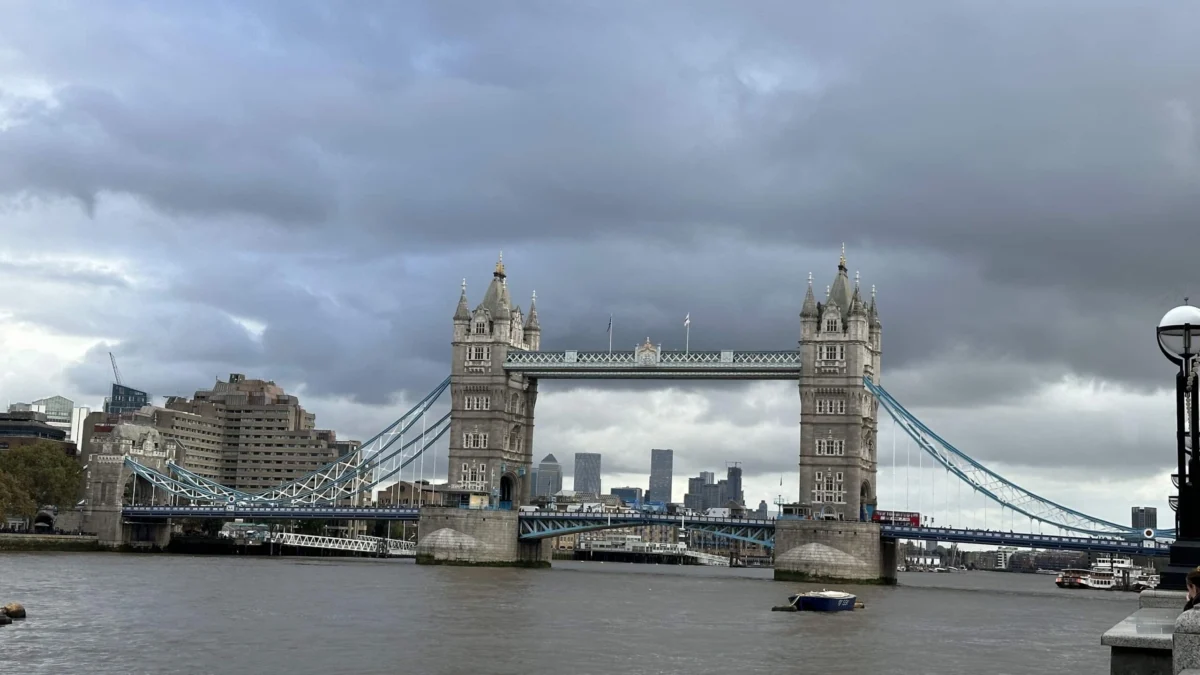
In the global spirits market, few designations carry as much weight—or as much geographic confusion—as London Dry Gin. To the casual consumer, the name suggests a product tied inextricably to the capital of the United Kingdom, much like Champagne is to France or Scotch is to Scotland. However, in the world of viticulture and distillation, London Dry Gin stands as a unique anomaly: it is not a protected geographical indication, but rather a strict legal definition of a production process. From the craft distilleries of the United States to the industrial hubs of South Africa and the highlands of Scotland, London Dry Gin can be, and is, produced anywhere in the world.
The term serves as a hallmark of quality that evolved from a dark era of public health crises and industrial innovation. Today, the designation is codified in international law, most notably within European Union and United Kingdom regulations, ensuring that any bottle bearing the name adheres to a rigorous standard of purity and traditional technique. Understanding why "London Dry" is a method rather than a map requires a journey through the history of the Industrial Revolution, the chemistry of distillation, and the evolution of consumer protection laws.
The Technical Anatomy of a London Dry Spirit
To understand the modern identity of London Dry Gin, one must first look at the legal constraints that define it. According to the standards maintained by the European Union (Regulation (EC) No 110/2008) and similar regulatory bodies globally, London Dry Gin must meet several non-negotiable criteria.
First, the base spirit must be a high-quality neutral alcohol of agricultural origin, distilled to a minimum strength of 96% alcohol by volume (ABV). This ensures that the base is free from the impurities and "off-flavors" that plagued early spirits. Second, all flavors must be introduced through the redistillation of this neutral spirit in the presence of natural botanicals. These botanicals—predominantly juniper, but often including coriander seed, angelica root, and citrus peel—must be added during the distillation process itself.
Critically, the "Dry" in the name refers to the restriction on post-distillation additives. A producer may not add more than 0.1 grams of sweetening per liter to the final product. Furthermore, no colorants or artificial flavorings may be added after the still has finished its run. The only thing that can be added to the resulting distillate is water, used to bring the spirit down to its bottling strength, which must be at least 37.5% ABV. This technical rigidity is what separates London Dry from "Distilled Gin" (which allows for post-distillation flavors) or "Old Tom Gin" (which is traditionally sweetened).
The Industrial Revolution and the Birth of Purity
The origin of the London Dry style is a story of technological triumph over a public health disaster. In the 18th century, London was gripped by the "Gin Craze," an era of mass intoxication and unregulated production. At the time, gin was often a foul, toxic concoction. Distillers used primitive pot stills that produced "low wines" full of impurities. To mask the harsh, often metallic taste of poorly distilled alcohol, producers added heavy doses of sugar and, more dangerously, adulterants like turpentine, oil of vitriol (sulfuric acid), and alum.
The turning point came in 1830, when an Irish inventor and former tax collector named Aeneas Coffey patented the "Coffey Still" or column still. Unlike the traditional pot still, the column still allowed for continuous distillation, producing a spirit of much higher purity and alcohol content. This neutral spirit was so clean that it no longer required masking agents.

For the first time, distillers could produce a "dry" gin—one where the delicate flavors of the botanicals were the star of the show, rather than a disguise for rot. Because London was the global center of the gin trade and home to many of the most prominent distilleries adopting this technology, the style of clean, unsweetened gin became synonymous with the city. By the mid-to-late 19th century, the term "London Dry" began to appear in print, not to denote where the gin was made, but to signal to the buyer that the bottle contained the new, premium, "clean" style of spirit.
A Chronology of the London Dry Designation
The evolution of the term can be traced through historical archives and international trade records:
- 1700s: The "Gin Craze" leads to the Gin Acts. Gin is largely a sweetened, often adulterated spirit known as "Old Tom."
- 1801: Advertisements for "Every Man His Own Brewer and Distiller" mention recipes for "London Gin," though these often still included ingredients like turpentine to simulate the resinous flavor of juniper.
- 1830: Aeneas Coffey perfects the column still, enabling the production of high-purity neutral spirits.
- 1860s-1880s: Major London-based distilleries like Beefeater and Tanqueray refine the dry style, removing the heavy sugars of the past.
- 1897: The term "London Dry Gin" begins appearing in international advertisements, including in Australian newspapers, as a mark of imported British quality.
- 1903: United States newspapers feature "London Dry" as a specific category of premium spirit, distinct from domestic "common" gins.
- 2008: The European Union formally codifies the "London Gin" and "London Dry Gin" designations in Regulation (EC) No 110/2008, clarifying that the term refers to the production method, not a geographic location.
The Global Reach: From London to the World
Because the London Dry designation is a process, it has allowed for a global diaspora of the style. Some of the world’s most famous "London Dry" gins are not produced within the city limits of London, and some are not even produced in England.
A primary example is Tanqueray. Founded in Bloomsbury, London, in 1830, the brand is one of the quintessential examples of the London Dry style. However, production eventually moved to the massive Cameronbridge Distillery in Fife, Scotland. Despite its Scottish origin, it remains a "London Dry Gin" because it adheres strictly to the 1830s distillation method.

The international community has embraced this standard as a way to compete on a global stage. In the United States, Astraea Meadow Gin utilizes the London Dry process to create a spirit that captures the terroir of the American Northwest while maintaining the technical purity of the English tradition. In the Netherlands—the ancestral home of gin’s predecessor, Genever—No. 3 Gin is produced to the London Dry standard for Berry Bros. & Rudd. Similar examples exist in South Africa (Belgravia Gin), Australia (Australian Distilling Co.), and Canada (Long Table Gin).
The Turpentine Era: Why Standards Mattered
The transition to the London Dry standard was not merely a matter of taste; it was a matter of survival. Historical documents, such as the 1803 edition of The Morning Chronicle, reveal the desperation of an industry trying to find its footing. Early manuals for "London Gin" were essentially guides to chemistry-based deception.
Before the Coffey Still, if a distiller’s base spirit was off, they would add turpentine—a solvent distilled from pine resin—to mimic the piney scent of juniper. While juniper berries provide a safe, aromatic oil, turpentine is toxic and can cause severe kidney damage and central nervous system failure. The "London Dry" movement was, in many ways, the first major consumer-led push for transparency in the spirits industry. By demanding a "Dry" gin, Victorian consumers were demanding a spirit that was pure enough to stand without the crutch of sugar or the mask of hazardous chemicals.
Industry Implications and the Modern Renaissance
In the modern "Gin Renaissance" of the 21st century, the London Dry designation remains the "Gold Standard" for many purists. While the rise of "New Western" or "Contemporary" gins has introduced spirits with heavy notes of cucumber, rose, or lavender—often added through post-distillation infusion—the London Dry label tells the consumer that the spirit is juniper-forward and technically "honest."

Industry analysts note that the decision not to protect "London Dry" as a geographical indication was a strategic one for the UK. By allowing it to be a process, British brands were able to export the standard of British excellence, making it the global benchmark for the entire category. Had the name been restricted to the city of London, the category might have remained a niche regional product rather than becoming the most popular gin style on the planet.
However, this lack of geographic protection does occasionally lead to calls for change. Some craft distillers within London have pushed for a "London Protected Geographical Indication" (PGI) that would specifically recognize gins actually made within the M25 motorway. While this has not yet supplanted the broader "London Dry" definition, it highlights the ongoing tension between tradition and origin.
Conclusion: A Legacy of Quality
The term London Dry Gin is a testament to how technology and regulation can transform a maligned, dangerous substance into a sophisticated global icon. It represents a specific moment in the 19th century when the world moved away from the "Gin Lane" horrors of the past toward a future of industrial precision.
Whether a bottle is produced in a small-batch distillery in Seattle or a historic facility in Scotland, the label "London Dry" serves as a promise to the consumer. It is a guarantee that the liquid inside was crafted through the fire of a still, flavored only by the essence of natural plants, and left pure of the sugars and additives that once hid the flaws of a lesser spirit. In the world of spirits, "London Dry" is not a place you go—it is a standard you meet.
