

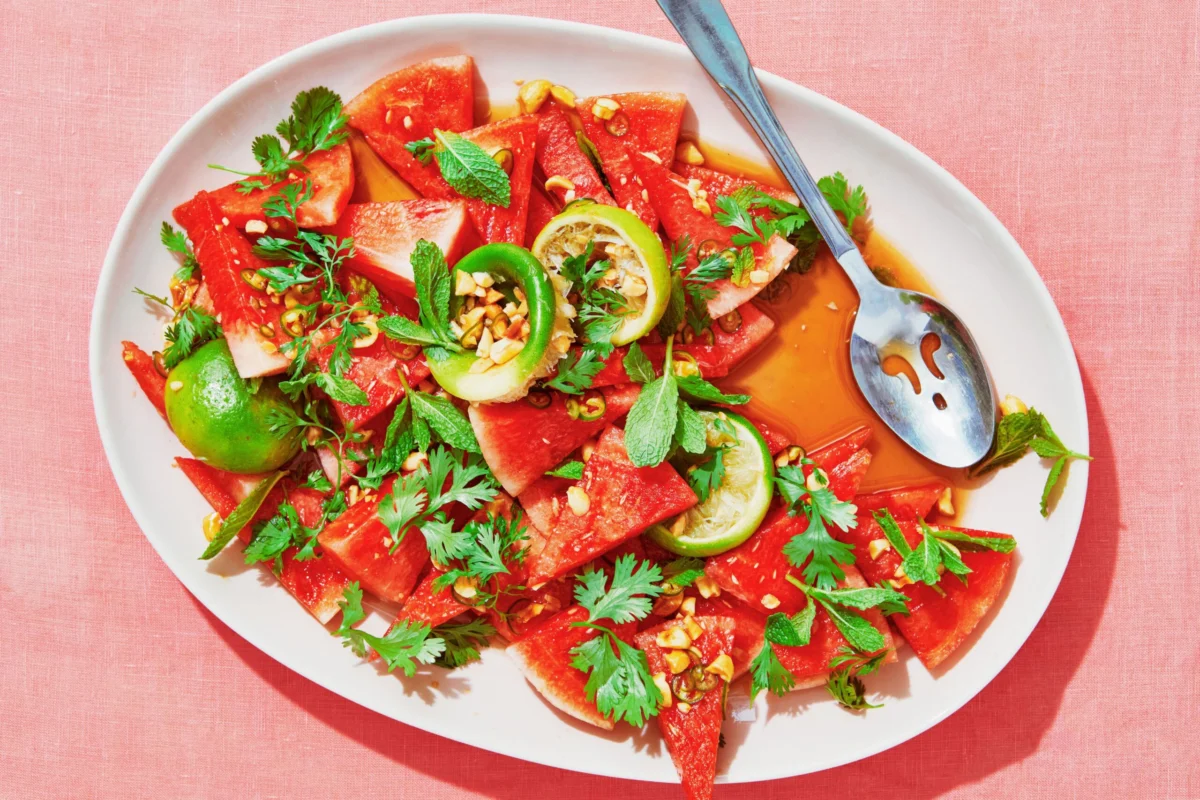
The vibrant world of Thai cuisine, celebrated for its intricate balance of flavors, is witnessing an intriguing evolution in one of its most iconic dishes: som tam. Traditionally synonymous with shredded green papaya, this quintessential Thai salad, defined by its "sour" (som) profile and "pounded" (tam) preparation method, is now being reinterpreted with an unexpected ingredient: watermelon. This innovative application sees planks of fresh, sweet watermelon undergoing the classic som tam treatment, dressed in a pungent, zesty concoction of lime juice, serrano chile, fish sauce, and crushed peanuts. The resulting salad delivers a complex sensory experience, characterized by a potent combination of hot, sweet, spicy, salty, and savory notes, culminating in a "buzzing intensity" that captivates the palate long after the first bite. This reimagined dish can stand alone as a refreshing summer side or be enhanced with additions such as poached shrimp or cold cooked chicken, showcasing both its versatility and its potential to redefine perceptions of traditional Thai fare.
The Enduring Legacy of Som Tam: A Culinary Cornerstone
To fully appreciate the significance of watermelon som tam, it is essential to understand the deep-rooted cultural and culinary importance of its traditional counterpart. Som tam, or pok pok as it is sometimes known by the sound of its preparation, originated in the Isaan region of northeastern Thailand and Laos, where it remains a daily staple. Its foundational elements are simplicity and the powerful interplay of fresh ingredients meticulously pounded together in a krok (mortar) and sak (pestle). This manual process is not merely a method of mixing; it is a critical technique that bruises and breaks down the fibers of the ingredients, releasing their essential oils and juices, allowing them to meld into a cohesive, explosive flavor profile.
The classic Som Tam Thai typically features unripe green papaya, sliced into thin shreds, combined with an array of fresh ingredients: cherry tomatoes, long beans, peanuts, dried shrimp, garlic, and an abundance of fresh bird’s eye chilies. The dressing, a harmonious blend of palm sugar, fish sauce, and fresh lime juice, provides the characteristic sweet, salty, sour, and spicy notes. Variations abound across Thailand and neighboring countries, from Som Tam Lao, which often incorporates fermented fish sauce (pla ra) for a more pungent, umami-rich flavor, to Som Tam Poo Pla, which adds salted crab and fermented fish. Regardless of the specific rendition, the core principles of sourness and the pounding technique remain constant, cementing som tam’s status as a culinary icon and a testament to the sophisticated simplicity of Southeast Asian gastronomy.
Chronology of Culinary Adaptability and Innovation
The evolution of som tam, from a regional specialty to a globally recognized dish, reflects broader trends in culinary history and innovation.
Pre-20th Century: Ancient Origins and Regional Staple
While exact dates are elusive, pounded salads have been a part of Southeast Asian culinary traditions for centuries. The use of a mortar and pestle for food preparation is ancient, and the combination of sour, spicy, and salty flavors is deeply embedded in the region’s diet, influenced by available produce and spices. Green papaya, being a ubiquitous and affordable crop, naturally became a primary ingredient.
Mid-20th Century: Globalization and Wider Recognition
Following World War II and into the latter half of the 20th century, as Thailand opened up more to tourism and international relations, Thai cuisine began its global dissemination. Som tam, with its distinctive flavors and engaging preparation, became a popular introduction to Thai food for many foreigners, solidifying its place alongside dishes like Pad Thai and Tom Yum Goong.
Late 20th – Early 21st Century: Emergence of Fusion and Experimentation
The turn of the millennium saw a significant rise in fusion cuisine and a more adventurous approach to traditional recipes by chefs worldwide. Culinary boundaries blurred, and the exploration of new ingredients and techniques became commonplace. It was during this period that the concept of "som tam" began to be understood less as a fixed recipe and more as a method or template that could be applied to various ingredients. This intellectual shift laid the groundwork for innovations like watermelon som tam.
Present Day: Focus on Seasonality, Health, and Plant-Based Cuisine
The current culinary landscape is heavily influenced by a renewed focus on local, seasonal produce, health-conscious eating, and the growing demand for plant-based alternatives. Watermelon som tam fits perfectly into this paradigm. Its refreshing qualities make it ideal for warmer climates, its natural sweetness can reduce the need for added sugars, and its vibrant color appeals to contemporary aesthetic sensibilities in food presentation. This particular innovation, utilizing a readily available and naturally sweet fruit, represents a modern interpretation that resonates with current consumer preferences.
Supporting Data and Market Dynamics
The emergence of watermelon som tam is not an isolated incident but rather a symptom of several underlying market trends and consumer behaviors.
Global Popularity of Som Tam: According to culinary analytics firms, global searches for "som tam" have shown a steady increase over the past decade, indicating a sustained and growing international interest in the dish. Thai restaurants worldwide, estimated to number in the tens of thousands, consistently feature various som tam preparations on their menus, cementing its status as a global favorite. This widespread familiarity creates a fertile ground for introducing innovative variations.
Watermelon Production and Market Value: Watermelon is a globally significant crop. The Food and Agriculture Organization of the United Nations (FAO) reports that global watermelon production exceeds 100 million metric tons annually, with China, Turkey, Iran, Brazil, and the United States being among the top producers. The fruit’s high water content (over 90%), coupled with its rich supply of vitamins A and C, and the antioxidant lycopene, makes it a popular choice for health-conscious consumers. Its seasonal abundance, particularly in summer months, also makes it an economically viable and environmentally sound ingredient for culinary innovation. The average retail price of watermelon can fluctuate, but its general affordability compared to more exotic produce makes it an accessible option for widespread culinary experimentation.
Shifting Consumer Palates: There is a discernible trend towards consumers seeking novel and complex flavor profiles. The "hot, sweet, spicy, salty, and savory" combination described in the watermelon som tam resonates strongly with this demand. Data from market research on food preferences indicates a growing appreciation for ethnic cuisines and adventurous flavor combinations, particularly among younger demographics. The cooling sweetness of watermelon provides an interesting counterpoint to the heat of the chilies, offering a balanced yet exhilarating experience that appeals to a broad spectrum of palates.
Sustainability and Seasonal Eating: The emphasis on utilizing seasonal produce aligns with global sustainability efforts. Opting for watermelon during its peak season not only ensures optimal flavor and nutritional value but also supports local farmers and reduces the carbon footprint associated with long-distance transportation of out-of-season ingredients. This commitment to seasonality is increasingly a factor in consumer choice and culinary development.
Expert Perspectives and Culinary Commentary
The introduction of watermelon som tam has garnered attention from various culinary experts and cultural commentators, highlighting its significance within the broader food landscape.
Chef Preeya Singh, Head Chef at "Spice & Stone" in London: "This dish perfectly encapsulates the dynamic spirit of Thai cuisine. It demonstrates that tradition isn’t rigid; it’s a living, breathing entity capable of incredible adaptation. The watermelon, with its delicate sweetness and firm texture, provides an excellent canvas for the classic som tam dressing. It’s a brilliant way to introduce a familiar flavor profile in an entirely new, refreshing context. We’ve seen a fantastic reception from our diners, many of whom are surprised by how well the combination works."
Dr. Alistair Finch, Food Historian and Author: "While culinary purists might initially raise an eyebrow, the history of food is replete with adaptations and innovations. Every ‘traditional’ dish was once an innovation. Watermelon som tam is a natural progression, reflecting changing agricultural landscapes, ingredient availability, and evolving human palates. It’s a testament to the enduring power of a culinary concept – the ‘som tam’ method – to transcend its original ingredients and inspire new creations. This isn’t a dilution of tradition; it’s an expansion."
Nutritionist Lena Chen, R.D.: "From a nutritional standpoint, incorporating watermelon into a salad offers several benefits. Its high water content is excellent for hydration, especially during warmer months, and it brings a significant dose of vitamins A and C, along with lycopene, a powerful antioxidant. Compared to green papaya, which is known for its digestive enzymes, watermelon offers a different but equally valuable nutritional profile. It also naturally contributes a sweetness that can reduce the need for excessive added sugars, aligning with healthier eating guidelines."
Cultural Critic and Author, Dr. Kenji Tanaka: "Innovations like watermelon som tam are fascinating examples of ‘glocalization’ in food. They take a deeply rooted local dish and adapt it using globally accessible ingredients, making it relatable to a wider audience while retaining its cultural essence. This process sparks conversations about authenticity, tradition, and progress, ultimately enriching our understanding of food as a cultural artifact that is constantly evolving in response to human creativity and environmental factors."
Broader Implications and Future Outlook
The rise of watermelon som tam carries several significant implications for the future of food and culinary arts.
Redefining Authenticity: This dish challenges rigid notions of culinary authenticity. It posits that a dish’s "soul" lies not just in its precise ingredients but in its core flavors, techniques, and the balance it achieves. This encourages a more flexible and inclusive understanding of what constitutes "authentic" cuisine, allowing for regional and seasonal variations to thrive.
Driving Culinary Innovation: Watermelon som tam serves as an inspiration for further experimentation. It highlights the potential for traditional dishes to be reinterpreted using unconventional ingredients, fostering creativity among chefs and home cooks alike. This trend is likely to lead to more unexpected and delightful culinary fusions and adaptations in the future.
Promoting Sustainable Eating Habits: By showcasing a delicious and innovative use for seasonal produce like watermelon, this dish inadvertently promotes more sustainable eating habits. It encourages consumers to embrace ingredients that are abundant and locally sourced, reducing reliance on ingredients that may need to be transported long distances or grown in energy-intensive conditions.
Expanding Palate Horizons: For many, the idea of fruit in a savory, spicy salad might be novel. Watermelon som tam acts as a gateway, broadening consumer palates and making them more receptive to complex flavor combinations and cross-cultural culinary experiences. This can lead to increased exploration of diverse cuisines and ingredients.
Economic Impact on Agriculture: A surge in popularity for dishes utilizing specific seasonal produce can have a positive economic impact on agricultural sectors. Increased demand for watermelons beyond their traditional uses (e.g., fresh consumption, juice) could encourage farmers to cultivate more, potentially leading to new markets and revenue streams.
In conclusion, the emergence of watermelon som tam is more than just a fleeting culinary trend; it is a significant marker of how traditional dishes can evolve and adapt in a globalized, innovation-driven food landscape. By reinterpreting the beloved Thai som tam with a refreshing, sweet fruit, this dish not only delivers a "buzzing intensity" of flavor but also sparks important conversations about authenticity, sustainability, and the boundless possibilities within culinary creation. Whether enjoyed by itself as a vibrant summer side or bulked out with protein, watermelon som tam stands as a testament to the dynamic and ever-evolving nature of global gastronomy.
