

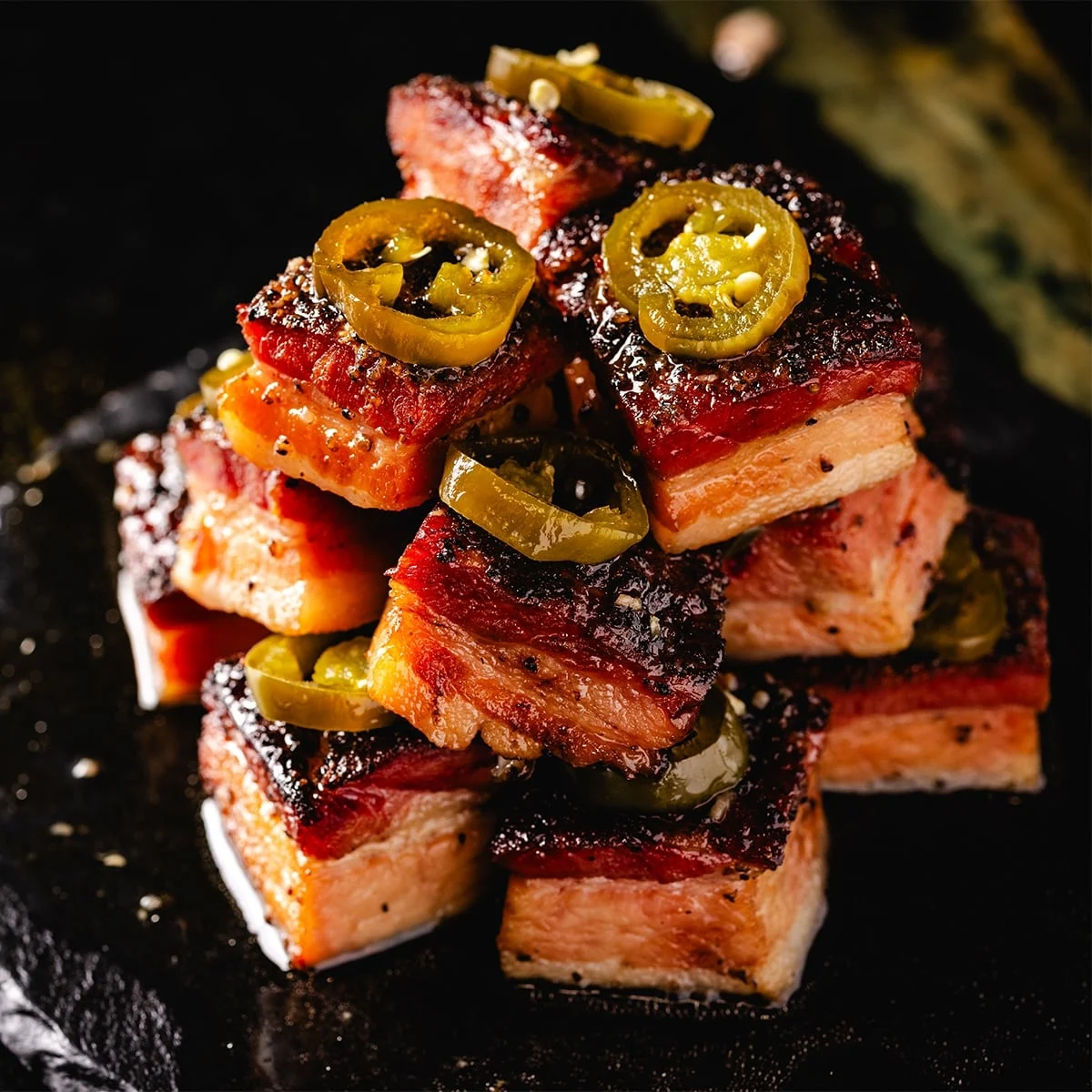
The Gastronomic Origins of the Burnt End
To understand the technical requirements of the Smoked Candied Jalapeño Pork Belly Burnt Ends Recipe, one must first examine the historical context of the "burnt end." Historically, burnt ends were a byproduct of Kansas City-style brisket preparation. Pitmasters would trim the "point" of the smoked brisket—the fattier, more muscularly complex portion—and return the bark-heavy pieces to the smoker to further render the fat and intensify the flavor.
In recent years, the BBQ industry has seen a shift toward using pork belly as the primary medium for this preparation. Unlike the brisket point, which requires a lengthy 12-to-16-hour cook time, pork belly offers a more consistent fat-to-lean ratio and a shorter preparation window. The high concentration of adipose tissue in the belly allows for a "melt-in-your-mouth" texture that has become the benchmark for quality in modern barbecue competitions.

Technical Specifications and Ingredient Composition
The preparation of these burnt ends relies on two distinct phases: the dry-rub application and the wet-glaze finish. The primary protein component is a whole pork belly, typically weighing between 8 and 10 pounds, which is cubed into uniform 1.5-inch squares. Uniformity in cutting is essential to ensure a synchronized internal temperature across all pieces.
The Dry Seasoning Phase
The initial seasoning involves a savory rub designed to provide a "bark"—the dark, flavorful crust that forms on the exterior of smoked meat. While many traditional pork recipes rely on sugar-heavy rubs, this recipe utilizes a beef-centric seasoning profile. This choice is strategic; by using a savory, salt-heavy base early in the process, the cook prevents the exterior from burning during the long exposure to smoke, as sugar has a lower combustion point than salt and spices.
The Glaze: The "Cowboy Candy" Influence
The defining characteristic of this recipe is the candied jalapeño glaze. Known colloquially in the American South as "Cowboy Candy," candied jalapeños are preserved in a syrup of cider vinegar, sugar, and spices. The syrup, when reduced further during the smoking process, achieves a high level of viscosity. This allows the glaze to adhere to the rendered fat of the pork belly, creating a lacquered finish that is both aesthetically pleasing and structurally sound.

Chronology of the Smoking Process
The production of Smoked Candied Jalapeño Pork Belly Burnt Ends follows a strict chronological timeline to ensure food safety and optimal texture.
- Preparation and Cubing (Hour 0): The raw pork belly is sliced into cubes. Pitmasters recommend chilling the meat to 34°F (1°C) before slicing to ensure clean edges. The cubes are then tossed in the savory rub until all surfaces are encapsulated.
- Initial Smoke Phase (Hours 1–3): The cubes are placed on a wire rack and introduced to a smoker preheated to 225°F (107°C). During this phase, the meat is exposed to hardwood smoke—typically fruitwoods like apple or cherry, or hardwoods like hickory—to develop the smoke ring and the initial bark.
- The Glaze Reduction (Simultaneous): While the meat smokes, the candied jalapeño syrup is prepared. The jalapeño rings are simmered in a mixture of sugar, cider vinegar, garlic powder, and celery seed. Once the jalapeños are softened, they are removed, and the liquid is reduced by 50% to create a thick basting syrup.
- The Braising Phase (Hours 3–4): Once the pork belly cubes reach an internal temperature of approximately 165°F (74°C), they are transferred to a foil pan. The reduced jalapeño glaze is poured over the cubes, and the pan is covered tightly with aluminum foil. This creates a steam-rich environment that accelerates the breakdown of collagen.
- The Setting Phase (Final 30 Minutes): The foil is removed, and the cubes are tossed to ensure even coating. The pan is returned to the smoker uncovered, allowing the sugars in the glaze to caramelize and "set" into a sticky, translucent coating.
Thermodynamic Analysis of Fat Rendering
A critical point of distinction in this recipe is the target internal temperature. While the United States Department of Agriculture (USDA) maintains that pork is safe for consumption at an internal temperature of 145°F (63°C), this temperature is insufficient for burnt ends.
At 145°F, the fat in a pork belly remains solid and "chewy." For the desired "jammy" consistency, the internal temperature must reach approximately 195°F to 205°F (90°C to 96°C). At this threshold, the connective tissues (collagen) dissolve into gelatin, and the intramuscular fat liquefies, saturating the meat fibers. Pitmasters utilize instant-read digital thermometers to confirm this transition, as the "probe-tender" feel—where the thermometer enters the meat with the resistance of warm butter—is the ultimate indicator of readiness.

Nutritional Profile and Dietary Implications
From a nutritional standpoint, Smoked Candied Jalapeño Pork Belly Burnt Ends are a high-density food product. Data indicates that a standard serving size (approximately 10 servings per recipe) contains:
- Calories: 1,033 kcal
- Total Fat: 97g (with 35g of saturated fat)
- Carbohydrates: 23g (primarily from the sugar in the glaze)
- Protein: 17g
- Sodium: 294mg
The high fat content makes this dish a significant source of energy, though it also places it in the category of occasional indulgence rather than a dietary staple. The presence of jalapeños adds a minor amount of Vitamin C (21mg) and Vitamin A (277 IU), while the pork provides essential B vitamins and potassium.
Market Trends: The Rise of "Swicy" Flavors
The popularity of this recipe aligns with broader consumer trends in the global food industry. Market research analysts have identified "swicy" (sweet and spicy) as a dominant flavor trend in the 2020s. This is driven by a consumer desire for complex sensory experiences that stimulate multiple taste receptors simultaneously.

In the BBQ sector, this has manifested as a move away from the heavy, molasses-based sauces of the mid-20th century toward brighter, acid-forward glazes that utilize peppers (habanero, jalapeño, or hot honey). The Smoked Candied Jalapeño Pork Belly Burnt Ends Recipe is a quintessential example of this trend, balancing the richness of the pork with the acidity of the vinegar and the capsaicin of the jalapeños.
Practical Applications for the Backyard Pitmaster
For individuals attempting this recipe in a residential setting, several "pro-tips" or best practices are recommended by industry experts:
- Smoke Management: Maintaining a "thin blue smoke" is vital. Thick, white smoke can deposit creosote on the meat, resulting in a bitter, medicinal taste that ruins the delicate balance of the jalapeño glaze.
- Equipment: The use of a wire cooling rack placed on top of the smoker grates allows for easier transport of the cubes and ensures that smoke can circulate around all six sides of each cube.
- Resting Period: Like all smoked meats, a brief resting period of 10 to 15 minutes after removal from the heat is recommended. This allows the internal juices to redistribute and the glaze to slightly thicken, ensuring the coating stays on the meat rather than pooling on the plate.
Broader Impact on Culinary Culture
The Smoked Candied Jalapeño Pork Belly Burnt Ends Recipe is more than just a meal; it is a representation of the democratization of pitmaster-level BBQ. Through the use of accessible cuts like pork belly and the repurposing of pantry staples like jalapeños and sugar, complex culinary techniques are now being practiced in backyards across the country.

As barbecue continues to evolve, the integration of preservation techniques (like candying peppers) with traditional fire-cooking suggests a future where regional boundaries continue to blur. Whether served as a standalone appetizer or a centerpiece at a social gathering, these burnt ends demonstrate the enduring appeal of wood-fired cooking enhanced by modern flavor profiles. Progress in thermometer technology and smoker efficiency further ensures that the high-precision requirements of rendering pork belly to 195°F are achievable for hobbyists, cementing the dish’s status as a modern classic in the American culinary canon.
