

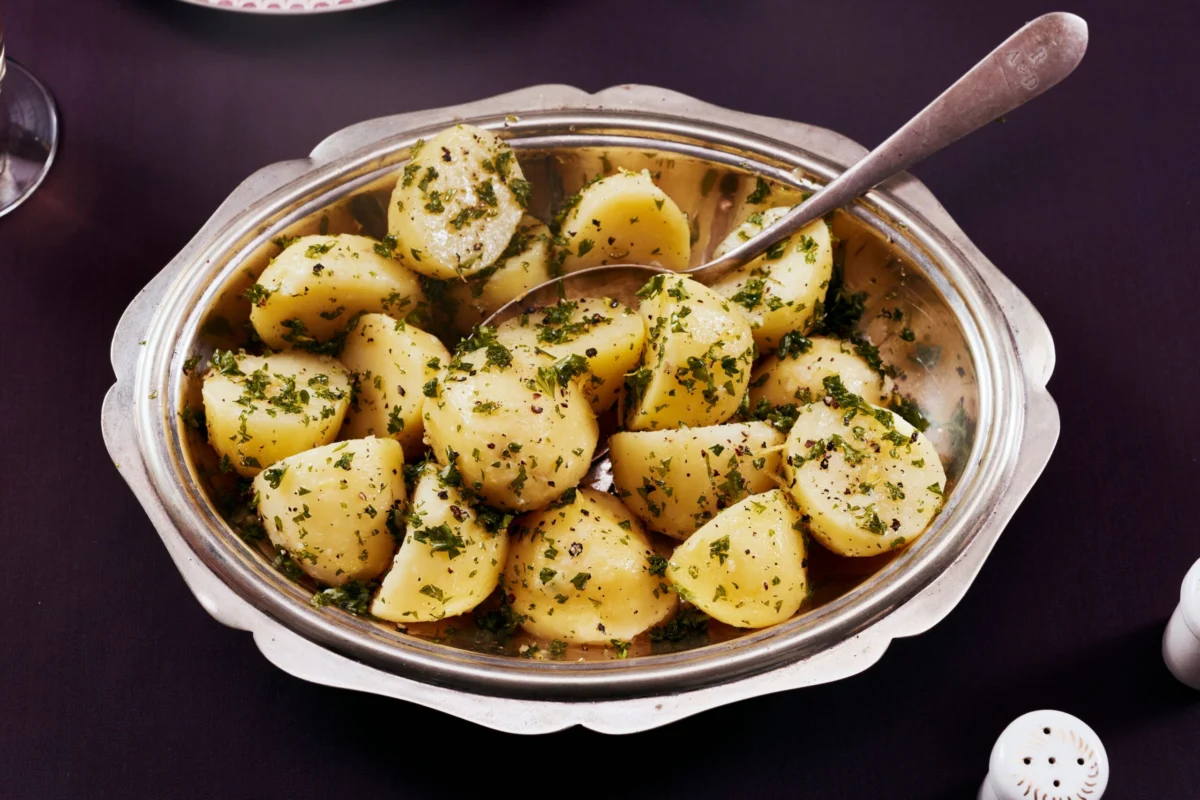
A seemingly unassuming dish of boiled potatoes, inspired by a particular scene in the critically acclaimed 2005 film adaptation of Jane Austen’s Pride and Prejudice, has transcended its cinematic origins to achieve a surprising cult following in the culinary world. This elevated interpretation, featuring a judicious blend of butter, garlic, lemon zest, and fresh parsley, has been heralded by food enthusiasts and critics alike as an exemplary vegetable preparation, prompting a re-evaluation of the potential of simple, wholesome ingredients. The recipe, recently highlighted by prominent culinary outlets, offers a sophisticated take on a classic comfort food, demonstrating how cinematic moments can profoundly influence gastronomic trends.
The Genesis of a Culinary Cult: From Screen to Plate
The inspiration for these celebrated boiled potatoes stems directly from the 2005 film adaptation of Pride and Prejudice, a cinematic rendition that, while beloved by many, took certain creative liberties with Austen’s original 1813 novel. While Jane Austen’s prose, rich with social commentary and intricate character development, seldom delves into detailed culinary descriptions beyond general meal settings, the film introduced a visual element that captured the imagination of its audience. The precise scene that sparked this particular culinary obsession is not explicitly detailed in the original source material, yet its subtle inclusion in the film resonated deeply enough to generate a distinct online discourse and, subsequently, a tangible culinary interpretation.
This divergence from the novel underscores a broader trend in media adaptation, where visual storytelling can imbue minor details with significant emotional or cultural weight. For many viewers, the portrayal of food in period dramas offers a tangible link to the past, allowing for a deeper immersion into the depicted era. In this instance, the simple act of preparing or serving boiled potatoes, perhaps as a side dish at a grand estate or a humble family meal, implicitly conveyed a sense of authenticity and domesticity that struck a chord. The subsequent development of a "cult following" around this specific detail speaks volumes about the discerning nature of modern audiences and their capacity to extract and celebrate niche elements from popular culture.
Historical Context: The Potato’s Journey Through Time
To fully appreciate the significance of these "exemplary" boiled potatoes, it is essential to understand the historical trajectory of the potato itself, particularly within a British context. Originating in the Andes Mountains of South America, the potato (Solanum tuberosum) was introduced to Europe in the late 16th century. Initially met with suspicion and often cultivated as an ornamental plant due to its relation to nightshade, it gradually gained acceptance, especially in Ireland, where it became a staple crop by the 18th century. Its high caloric yield, nutritional value, and relative ease of cultivation made it an invaluable food source, particularly for the working classes.
By the Regency era (roughly 1811-1820), the period in which Pride and Prejudice is set, potatoes had firmly established themselves in the British diet. They were a common accompaniment to meat dishes, stews, and fish, serving as a reliable and affordable source of carbohydrates. While the gentry and aristocracy would have had access to a wider variety of foods, potatoes would still have featured on their tables, though perhaps prepared with more refinement. Simple boiling was a prevalent method of preparation, often served with butter, salt, and perhaps a sprinkling of fresh herbs from the kitchen garden. The notion of "exemplary" boiled potatoes in Austen’s time would likely have hinged on their freshness, proper cooking to a tender but not mushy consistency, and minimal, high-quality seasoning.
The 2005 Film’s Culinary Impact and its Modern Interpretation
The 2005 film, directed by Joe Wright and starring Keira Knightley as Elizabeth Bennet and Matthew Macfadyen as Mr. Darcy, brought Austen’s classic to a new generation. Its visual aesthetics, sweeping landscapes, and intimate portrayals of domestic life contributed to its widespread acclaim. Within this rich tapestry, the seemingly minor detail of the boiled potatoes managed to carve out its own niche in the collective memory of viewers. The specific cinematic portrayal, whether through lighting, presentation, or the implied context of the meal, elevated the humble potato beyond its utilitarian function.
The modern interpretation of these "Pride and Prejudice" potatoes, as presented by culinary experts, takes this historical simplicity and infuses it with contemporary gastronomic sensibilities. The recipe calls for specific ingredients and techniques designed to maximize flavor and texture:
- Yukon Gold Potatoes: Chosen for their creamy texture and slightly buttery flavor, they strike a balance between waxy and starchy varieties, ensuring a tender interior without becoming waterlogged or disintegrating during boiling.
- Generous Seasoning: The inclusion of Diamond Crystal or Morton kosher salt for the boiling water is crucial, seasoning the potatoes from the inside out. Post-boiling, additional salt is applied to taste.
- Unsalted Butter: A significant quantity of unsalted butter (6 tablespoons for 1.5 lbs of potatoes) is incorporated, providing richness and a luxurious mouthfeel, a nod to the indulgence often associated with Regency-era upper-class dining, albeit in a more concentrated form.
- Finely Grated Garlic: Two cloves of finely grated garlic introduce a pungent, aromatic depth that was less common in such a direct application in Regency cookery but is a staple in modern comfort food.
- Freshly Ground Pepper: Adds a sharp, piquant counterpoint to the richness.
- Finely Chopped Parsley: A classic fresh herb, parsley adds a vibrant, herbaceous note and a touch of color, enhancing both flavor and visual appeal.
- Finely Grated Lemon Zest: A crucial modern addition, lemon zest provides a bright, acidic lift, cutting through the richness of the butter and garlic, and adding a layer of sophisticated freshness that elevates the entire dish.
This combination transforms what could be a bland side into a dish of notable complexity and satisfaction. It’s a testament to the principle that even the simplest ingredients, when treated with care and thoughtfully combined, can yield extraordinary results.
The Role of Culinary Media and Online Engagement
The emergence of a specific recipe for "Pride and Prejudice" boiled potatoes highlights the powerful influence of culinary media and online communities in shaping food culture. Publications like Bon Appétit, known for their high-quality recipes and trend-setting content, play a pivotal role in identifying and popularizing niche culinary interests. By formalizing a recipe inspired by a cultural artifact, they validate its significance and provide a pathway for enthusiasts to recreate the experience in their own kitchens.
The concept of a "cult following" for such a dish is intrinsically linked to the internet’s capacity for collective discovery and shared enthusiasm. Fan forums, social media platforms, and food blogs allow individuals to connect over specific, often minor, details from films, books, or television shows. When one person identifies a captivating element, like a particular food item, and shares their appreciation, it can quickly snowball into a broader movement. This phenomenon is not limited to Pride and Prejudice; countless other cinematic meals, from the strudel in Inglourious Basterds to the elaborate feasts in Harry Potter, have inspired real-world culinary experimentation and dedicated fanbases. The Bon Appétit article itself, by mentioning the dish’s cult following and the potential approval of a character like Mr. Collins, directly acknowledges and caters to this engaged audience.
Analytical Perspectives: Simplicity, Authenticity, and Comfort
The enduring appeal of these "exemplary" boiled potatoes can be analyzed through several lenses:
-
The Allure of Simplicity: In an age of increasingly complex gastronomic trends and highly technical cooking, there is a profound appreciation for dishes that celebrate the inherent quality of fundamental ingredients. The Pride and Prejudice potatoes remind home cooks that mastery often lies in perfecting basic techniques and enhancing natural flavors rather than resorting to elaborate presentations or exotic components. This aligns with a broader culinary movement towards "farm-to-table" and ingredient-focused cooking.
-
Authenticity (Perceived and Actual): While the film’s specific potato scene may not be historically documented in Austen’s novel, the dish evokes a sense of historical authenticity. Potatoes were indeed a staple, and simple preparations were common. The modern recipe builds upon this perceived authenticity by adding layers of flavor that, while contemporary, do not fundamentally alter the humble nature of the potato. This creates a bridge between historical inspiration and modern palatability.
-
The Power of Comfort Food: Boiled potatoes, especially when enriched with butter and fresh herbs, are quintessentially comfort food. They evoke feelings of nostalgia, warmth, and home. The association with Pride and Prejudice, a narrative often linked with romance, domesticity, and a sense of an idealized past, amplifies this comforting effect. Eating these potatoes becomes not just a meal, but an experience infused with cultural resonance.
-
Literary and Cinematic Gastronomy: This phenomenon underscores the profound interdisciplinary connections between literature, film, and gastronomy. Food in stories is rarely just sustenance; it often serves as a symbol, a plot device, or a cultural marker. When these fictional foods cross over into the real world, they offer fans a tangible way to engage with their beloved narratives, blurring the lines between fiction and reality.
Broader Implications for Food Culture and Media
The journey of these "Pride and Prejudice" boiled potatoes from a minor film detail to a celebrated recipe carries several broader implications for contemporary food culture and media. Firstly, it highlights the increasingly blurred boundaries between various forms of media. A film can inspire a culinary trend, a book can spark a fashion movement, and a television show can launch a travel destination. This interconnectedness means that content creators across different industries have an unprecedented opportunity to influence consumer behavior in unexpected ways.
Secondly, it reinforces the enduring power of storytelling in shaping our perceptions of food. Food is not merely sustenance; it is imbued with cultural meaning, emotional resonance, and historical context. When a dish is tied to a beloved narrative, it gains an additional layer of appeal, transforming it from a simple meal into a cultural artifact.
Finally, the success of such a simple yet refined recipe speaks to a growing consumer demand for quality over quantity, and for authenticity over artificiality. In an age of information overload, there is a renewed appreciation for dishes that are straightforward, honest, and executed with excellence. The "exemplary" boiled potatoes of Pride and Prejudice stand as a testament to the idea that sometimes, the most profound culinary experiences emerge from the most humble of beginnings, elevated by thoughtful preparation and a touch of cinematic magic. Indeed, one might dare to suggest that even Mr. Collins himself, known for his meticulous and often effusive praise, would declare them "excellent" – a truly high compliment for such a seemingly modest dish.
