

The global publishing industry in 2022 witnessed a significant shift toward literature that explores themes of systemic trauma, the intersection of science and sensory experience, and the preservation of marginalized cultural histories. Following a period of global upheaval, the literary output of the year reflected a collective desire for deeper understanding, ranging from the intricacies of biological health to the geopolitical complexities of colonial legacies. This report provides a comprehensive analysis of the most influential titles released in 2022, categorized by their contribution to food science, narrative fiction, and socio-psychological non-fiction.
The 2022 Publishing Landscape: Context and Industry Trends
The year 2022 was characterized by a resurgence in physical book sales and a continued expansion of the "well-being" and "narrative non-fiction" sectors. According to industry data from NPD BookScan, while overall print volumes saw a slight stabilization following the pandemic-era boom, categories such as travel, cooking, and psychology maintained strong performance. Readers increasingly gravitated toward works that offered "radical empathy"—a term frequently used by critics to describe books that bridge the gap between individual lived experience and broader societal structures.
The books highlighted in this analysis represent a cross-section of this trend, often blending personal memoir with rigorous research or utilizing historical fiction to address contemporary political anxieties.
Culinary Anthropology and the Preservation of Global Traditions
In the realm of culinary literature, 2022 saw a move away from simple recipe collections toward "culinary anthropology." These works prioritize the historical and cultural significance of ingredients and regional techniques, viewing food as a primary vessel for cultural identity.

The Science and History of Preservation
Naomi Duguid’s The Miracle of Salt: Recipes and Techniques to Preserve, Ferment, and Transform Your Food emerged as a cornerstone text in this category. Salt, historically one of the world’s most valuable commodities, is examined not merely as a seasoning but as a fundamental tool of human civilization. Duguid explores how salt-based preservation—including techniques for miso, sauerkraut, and brined meats—allowed societies to survive and trade across vast distances. The work is particularly noted for its focus on the "miracle" of transformation, where simple chemical reactions create complex flavor profiles essential to global cuisines.
Regional Spotlights: Sri Lanka and the Himalayas
The year also brought increased attention to South Asian cuisines beyond the standard Western interpretations of Indian food. Cynthia Shanmugalingam’s Rambutan: Recipes from Sri Lanka and Romy Gill’s On the Himalayan Trail: Recipes and Stories from Kashmir to Ladakh provided essential documentation of regions often overshadowed by geopolitical conflict.
Shanmugalingam’s work is significant for its vibrant photography and its role in introducing Sri Lankan "joy" to a global audience, while Gill’s exploration of the Himalayas serves as a preservation effort. Given the political instability in Kashmir and Ladakh, Gill’s documentation of local recipes and stories acts as a cultural safeguard, ensuring that the unique culinary heritage of these high-altitude regions is not lost to history.
Narrative Fiction: Intergenerational Trauma and Revisionist History
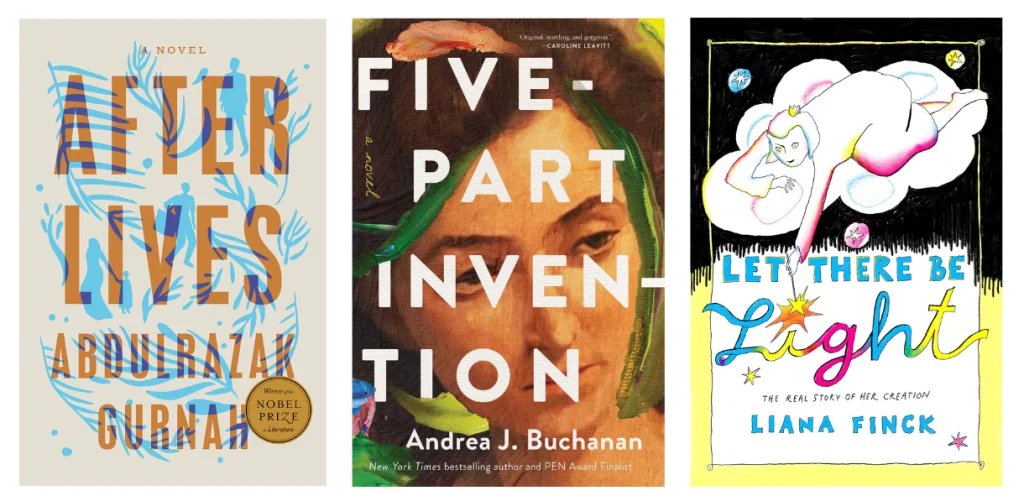
Fiction in 2022 frequently utilized the "long view" of history to explain modern domestic and social dynamics. Two notable works, Five-Part Invention by Andrea J. Buchanan and Afterlives by Abdulrazak Gurnah, exemplify this trend.
Exploring the Female Lineage
Buchanan’s Five-Part Invention is a haunting exploration of how trauma is transmitted through five generations of women. The novel aligns with contemporary psychological research into epigenetics—the study of how environmental factors and trauma can leave chemical marks on genes, which are then passed down to offspring.

Colonial Legacies in East Africa
Abdulrazak Gurnah, the 2021 Nobel Prize laureate in Literature, saw the North American paperback release of Afterlives in 2022. The novel provides a critical examination of German colonial rule in what is now Tanzania. By following the lives of four protagonists, Gurnah illustrates the devastating impact of the Schutztruppe (colonial troops) and the subsequent British administration. The book was longlisted for the Orwell Prize for Political Fiction, reflecting its status as a vital historical correction to Eurocentric accounts of East African history.
Scientific Inquiry and the Sensory World
Non-fiction in 2022 was dominated by works that challenged the human-centric view of reality, utilizing advances in biology and neuroscience to expand the reader’s perspective.
The "Umwelt" and Animal Senses
Ed Yong, a Pulitzer Prize-winning science journalist, released An Immense World: How Animal Senses Reveal the Hidden Realms Around Us. The book introduces the concept of the Umwelt—the specific part of the environment that an animal can perceive. Yong argues that humans are "blind" to the majority of the world, which is instead filled with the electrical fields sensed by sharks, the magnetic fields navigated by birds, and the complex vibrations felt by insects. This work has been lauded for its ability to translate dense biological data into a compelling narrative that encourages environmental stewardship through a newfound appreciation for biodiversity.
The Neuroscience of Music and Sound
Adriana Barton’s Wired for Music explores the "science of sound" as a tool for health and social connection. Barton’s research indicates that music is not merely an aesthetic luxury but a biological necessity that can regulate heart rate, reduce cortisol levels, and assist in the recovery from neurological trauma. The book aligns with a broader 2022 trend of investigating "alternative" therapies through a rigorous scientific lens.
Geopolitics and the Struggle for Identity
The year was also marked by significant works of investigative journalism that provided context to ongoing global power shifts, most notably in the Asia-Pacific region.

The Evolution of Hong Kong
Louisa Lim’s Indelible City: Dispossession and Defiance in Hong Kong offers a definitive account of the city’s identity crisis. Part memoir and part historical investigation, Lim dispels myths surrounding the 1997 handover and the subsequent erosion of civil liberties under the National Security Law. By focusing on the voices of local activists and "the King of Kowloon" (a famous graffiti artist), Lim provides a bottom-up history of a city caught between the legacies of British colonialism and the rising influence of mainland China.
The Evolution of Health and Wellness Literature
Perhaps the most significant literary shift in 2022 was the maturation of the "self-help" and "medical memoir" genres. Authors moved away from simplistic "positive thinking" toward "trauma-informed" perspectives that acknowledge the systemic and biological roots of suffering.
The Socio-Biological Roots of Disease
Dr. Gabor Maté’s The Myth of Normal: Trauma, Illness, and Healing in a Toxic Culture served as a landmark publication in this field. Maté argues that modern Western medicine often fails by treating symptoms in isolation from a patient’s life history. He posits that chronic illnesses—from autoimmune disorders to addiction—are frequently "trauma-related illnesses" triggered by a culture that prioritizes productivity over human attachment and emotional health.
Reimagining Chronic Illness
Meghan O’Rourke’s The Invisible Kingdom: Reimagining Chronic Illness provided a timely look at the "silent epidemic" of autoimmune diseases and "long COVID." O’Rourke, a finalist for the National Book Award, utilizes her own struggle with Ehlers-Danlos Syndrome (EDS) to critique a medical system that is often ill-equipped to handle poorly defined, multi-systemic conditions. Her work has become essential reading for medical professionals and caregivers seeking to understand the psychological toll of diagnostic uncertainty.
Broader Impact and Implications
The literary output of 2022 suggests a global audience that is increasingly literate in the languages of psychology, social justice, and environmental science. The popularity of works like David McRaney’s How Minds Change—which examines the science of belief and persuasion—indicates a public desire to bridge ideological divides in an era of extreme polarization.

Furthermore, the success of diverse memoirs, such as Alice Wong’s Year of the Tiger: An Activist’s Life, highlights a growing demand for "own voices" narratives in the disability rights movement. Wong’s collection of creative ephemera challenges the "inspirational" stereotype of disability, instead demanding institutional change and accessibility as a matter of civil rights.
In conclusion, the books of 2022 reflect a world in transition. From the preservation of salt-curing techniques in rural villages to the high-tech mapping of animal migration, these works emphasize the interconnectedness of human history, biological health, and the natural world. As readers look toward the coming years, the themes of 2022—resilience, empathy, and the pursuit of hidden truths—are likely to remain the foundation of the global intellectual discourse.
