

In the bustling environment of professional kitchens, the formidable chef’s knife traditionally holds sway, lauded for its extended length, razor sharpness, and unparalleled versatility in executing perfect cuts and intricate knife work. However, for the majority of home cooks, the demand for absolute surgical precision across every culinary task is less stringent. It is within this domestic culinary landscape that the Santoku knife emerges as a preeminent utility blade, distinguishing itself with a design philosophy tailored for everyday efficiency and ergonomic comfort.

The Rise of the Santoku: A Brief History and Etymology
Originating in Japan during the transformative post-World War II era, specifically around the 1940s or 1950s, the santoku knife represents a thoughtful evolution in kitchen cutlery. Its name, santoku, translates eloquently to "three uses" or "three virtues," a nomenclature widely interpreted to signify its proficiency across the primary food categories of meat, fish, and vegetables. Alternatively, some culinary circles suggest it refers to the fundamental cutting techniques it excels at: chopping, slicing, and dicing. This inherent versatility immediately positioned the Santoku as an indispensable tool for the Japanese home kitchen, where a single, adaptable knife was often preferred over a specialized array.

The physical attributes of a Santoku knife notably diverge from its Western counterparts and even other traditional Japanese blades. Typically shorter than a standard chef’s knife, it features a relatively flatter edge, culminating in a distinctive "sheep’s foot" point. This unique profile places it aesthetically and functionally between several classic Japanese knives: the nakiri, known for its straight edge ideal for vegetable chopping; the gyuto, Japan’s answer to the Western chef’s knife with a more curved belly; and the deba, a robust, single-edged cleaver primarily used for processing fish. The modern kitchen, with its varied demands, finds the Santoku’s compact size and ergonomic shape perfectly suited for swift, spontaneous tasks, making it an easy and intuitive choice for any preparation at hand.
The early 2000s witnessed a notable "Santoku craze" in the United States, as American consumers increasingly embraced global culinary traditions and sought out kitchen tools that offered both efficacy and aesthetic appeal. This surge in popularity was fueled by media attention, celebrity chef endorsements, and a growing appreciation for the distinct advantages of Japanese knife craftsmanship. Today, while the initial fervor may have subsided into a more steady appreciation, a well-chosen Santoku knife remains an invaluable utility addition to any kitchen. Its ability to effortlessly dice vegetables, meticulously break down poultry, finely mince herbs, and uniformly slice onions often leads to it usurping the traditional chef’s knife as the preferred daily driver. Recognizing this evolving culinary landscape, an extensive evaluation involving over 30 Santoku knives was conducted to identify the premier options across a diverse range of price points, ensuring that both discerning connoisseurs and budget-conscious cooks can find their ideal blade.

Methodology: Discerning the Superior Santoku
The comprehensive testing protocol for Santoku knives mirrored the rigorous standards applied to chef’s knives, focusing on real-world performance across a spectrum of culinary challenges. A substantial volume of produce, including tough sweet potatoes, delicate herbs, and various types of onions, was meticulously prepared to assess each knife’s ability to handle both robust and fine ingredients. Beyond raw cutting power, each knife underwent a detailed examination for its overall build quality and design integrity. Particular attention was paid to the tactile experience – how each knife felt in hand, its perceived weight, and its ergonomic comfort during prolonged use. The evaluation criteria were meticulously structured to ensure a holistic assessment:

- Ergonomics and Responsiveness: A Santoku’s fundamental appeal lies in its agility and versatility. Testers evaluated the knife’s weight, seeking a balance that allowed for nimble manipulation without sacrificing the sturdiness required for tougher tasks. Handle comfort was paramount, as a knife that causes fatigue is rarely a joy to use. The concept of "responsiveness" was also key, referring to the blade’s direct feedback to the user’s hand, which translates into enhanced control and precision during cutting.
- Finish Quality and Craftsmanship: The aesthetic and manufacturing quality of each knife was thoroughly scrutinized. This included the seamlessness of the transition between the blade and handle, the uniformity of the finishes, and the execution of any unique design elements such as hammered textures or layered steel patterns. Superior craftsmanship often correlates with durability and a more refined user experience.
- Edge Performance and Longevity: The initial sharpness of the blade out of the box was assessed, followed by its sustained performance through various cutting tasks. The ideal Santoku needed to demonstrate effortless cutting through fibrous sweet potatoes, produce consistently thin and even onion slices, and yield finely chopped, rather than bruised, herbs. This criterion directly addressed the "three virtues" of the Santoku, ensuring its capability across different ingredient types and cutting styles.
Leading the Edge: Our Top Santoku Knife Selections
Following exhaustive testing, several Santoku knives distinguished themselves, offering exceptional performance, value, and design.

1. Best Overall Santoku Knife: Kazan Ginsan Nashiji Santoku
Weight: 4.5 oz. | Blade length: 6.7" | Handle length: 5"
The Kazan Ginsan Nashiji Santoku captivated testers with its traditional Japanese wa-style handle, which, with its octagonal or D-shaped profile, is renowned for its light weight and adaptability to various grip styles. Handcrafted in Japan, this knife exhibits exquisite details that would typically command a significantly higher price. It emerged from the box exceptionally sharp, effortlessly slicing through paper and demonstrating a remarkable balance of nimbleness and robust cleaver-like power. This allowed it to glide through delicate tasks and power through dense ingredients like sweet potatoes with equal ease. The aesthetic appeal was undeniable, with beautiful pear-skin style hammer marks along the spine, which not only prevent food from sticking but also add a layer of visual sophistication. The subtle wavy patterns visible in the steel speak to the meticulous tempering process. This knife quickly became a go-to for myriad daily tasks, from slicing cheese and cubing potatoes to preparing sandwiches. The wa-style handle strategically shifts the knife’s weight slightly towards the blade, offering a broad spectrum of grip options, from a choke-up for leverage during heavy chopping to a delicate pinch for precision dicing. Its status as the lightest knife tested further amplified its versatile agility, all while maintaining a sturdy spine.
The primary consideration for this masterpiece is its price point. While undeniably expensive, its handmade quality and exceptional performance suggest it offers value comparable to knives twice its cost. Another aspect to note is its construction from Ginsan stainless steel, a high-carbon stainless steel known for superior edge retention. However, this material requires diligent care, as it can develop discoloration from water spots if not thoroughly dried immediately after use. For cooks who prefer minimal maintenance, alternative options might be more suitable.

2. Best Western-Style Handle Santoku Knife: MAC Professional Series Santoku
Weight: 6.1 oz. | Blade length: 6.5" | Handle length: 5"
A true testament to durability and consistent performance, the MAC Professional Series Santoku is built to be a daily workhorse. MAC knives are celebrated for their unbeatable combination of performance and value. This professional series represents a worthwhile upgrade over MAC’s Superior Series, offering enhanced fit and finish, an integrated bolster for superior weight balance, and hollow ground divots (Granton edge) designed to minimize food sticking. It arrives exceptionally sharp, effortlessly tackling tough sweet potatoes and onions. Its comfortable handle, paired with "sub-zero tempered steel," appeared to maintain its edge significantly better than many other knives tested. Given that a Santoku often becomes an integral part of a daily cooking routine and can last for a decade or more, the investment in the Professional Series MAC is strongly justified for its long-term benefits.
While the Western-style handle is comfortable, it can feel somewhat less adaptable compared to the traditional Japanese wa-style handles. The direct transition of the blade into the bolster restricts the freedom to adjust grip styles as readily. Nevertheless, once a comfortable grip is established, the knife integrates seamlessly, feeling like a natural extension of the hand.

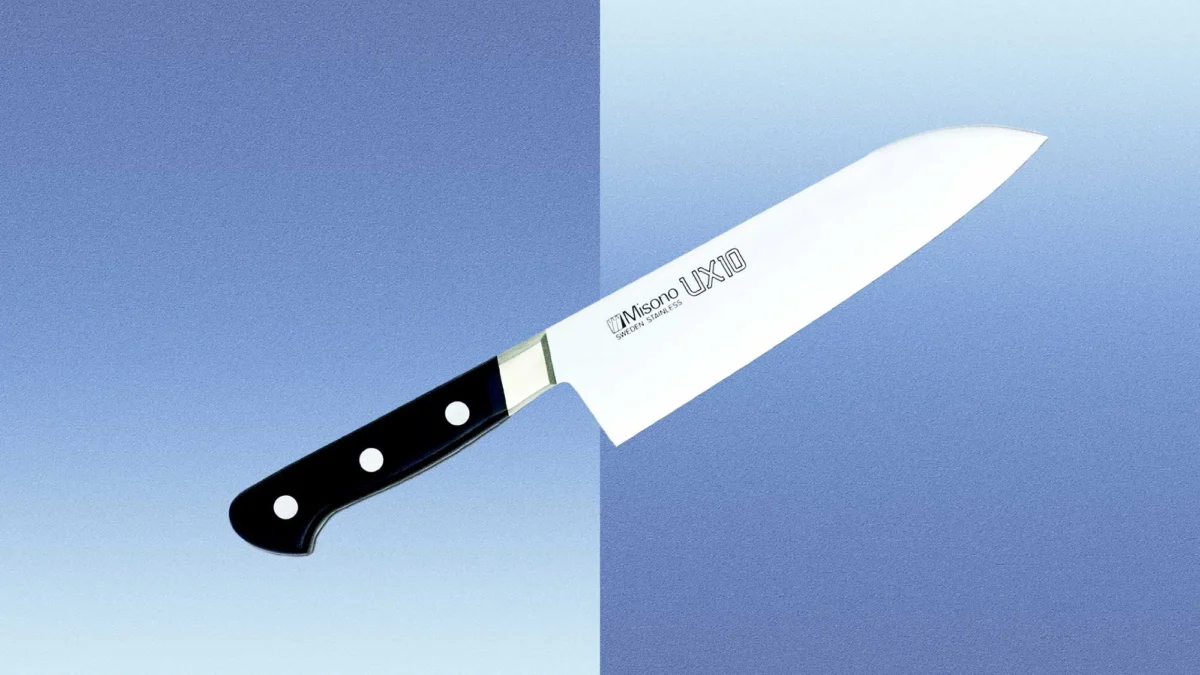
3. A Santoku Knife Upgrade: Misono UX10 Santoku
Weight: 5.6 oz. | Blade length: 7" | Blade height: 5"
For those with a serious appreciation for Santokus and seeking a high-quality upgrade, the Misono UX10 stands out. This family-run Japanese brand is lauded across the board for its knives’ superior agility, precision, and remarkable edge retention. The UX10 Santoku features an ultra-thin blade that not only boasts an incredibly sharp edge out of the box but also sustains that sharpness through extensive use. Crafted from stain-resistant Swedish steel, it is less prone to the discoloration issues seen with some high-carbon steel blades. The handle, tapering gracefully towards the blade, provides an exceptionally comfortable grip, preventing hand fatigue during prolonged preparation.
The primary drawbacks are its premium price and its distinctive 70/30 asymmetrical bevel. While this bevel contributes to its incredible slicing ability, it presents a challenge for home sharpening, often requiring specialized techniques or professional services. Furthermore, left-handed users may need to adjust the bevel orientation after purchase to optimize its performance.

4. The Ultimate Santoku Splurge: Kazan Arare by Shibata Santoku
Weight: 5.5 oz. | Blade length: 6.5" | Handle length: 5.5"
For the connoisseur desiring an impossibly sharp, exceptionally nimble, and aesthetically stunning Santoku, the Kazan Arare by Shibata Santoku fulfills every aspiration. This knife belongs to the same revered line as the brand’s acclaimed gyuto. Its hand-hammered spine is not merely a visual flourish; it strategically reduces weight and enhances food release. The blade boasts a near-perfect Santoku silhouette, featuring a predominantly straight edge, a tall heel for ample knuckle clearance, and a pronounced sheep’s foot tip for precision work. Its sharpness rivals that of the Misono UX10, gliding effortlessly through paper and slicing onion layers with virtually no resistance. The exceptionally thin edge geometry allows it to cut through dense sweet potatoes with minimal effort. A significant advantage for home users is its easy-to-maintain 50/50 bevel. The elegant ebony handle, accented with a decorative ring, offers an exquisite tactile experience.
The most considerable barrier to entry is its price, making it the most expensive top pick. However, experts agree that a knife of this caliber would typically be priced significantly higher, positioning it as an excellent value within the ultra-premium segment. It is crafted from SG2 steel, known for its outstanding edge retention, but similar to Ginsan steel, it can show water spots if not dried promptly after use.

5. The Best Budget Santoku Knife: Mac Knife Superior Santoku Knife
Weight: 5.5 oz. | Blade length: 6.5" | Handle length: 5"
A classic in its own right, the Mac Knife Superior Santoku has been a staple since the 1940s and stands as one of the earliest examples of the Santoku’s design. At its accessible price point, it offers an exceptional balance of performance and affordability. Razor-sharp out of the box, it features a lightweight and well-balanced feel, making it highly maneuverable. Its high-carbon-steel blade proved equally adept at slicing through resilient sweet potatoes and delicate herbs during testing. For long-term users, it consistently holds up as a reliable daily knife, and its blade is easily restored to peak sharpness with a whetstone or a quality electric sharpener.
While the handle is comfortable, the Professional Series MAC slightly surpasses it in terms of overall comfort and durability. However, for those new to Santoku knives or seeking a high-performing yet economical option that might not be a daily driver, this knife presents an ideal entry point.

6. Another Affordable Santoku Knife: Misono Molybdenum Stainless Steel Santoku
Weight: 5.2 oz. | Blade length: 7" | Handle length: 4.75"
Misono’s Molybdenum Stainless Steel Santoku offers much of the renowned sharpness of its higher-end UX10 counterpart but at a more palatable price. It delivers a remarkably sharp and versatile edge, almost clinching a top spot for its outstanding performance-to-value ratio. Its tall heel provides generous knuckle clearance, while its pronounced tip facilitates precise cuts for tasks like dicing onions. The blade’s geometry allows for a variety of pinch grips, enhancing control.
Similar to the UX10, this knife features a 70/30 edge bevel, which, while contributing to its cutting prowess, complicates home sharpening for the uninitiated. Additionally, its Molybdenum stainless steel, while good, is not as hard as the Swedish steel of the UX10, meaning it will not retain its edge for quite as long, requiring more frequent sharpening.

Other Commendable Santokus and Considerations
Several other Santoku knives were evaluated, demonstrating varying degrees of merit. The Sakai Takayuki Santoku, with its striking Damascus pattern and comfortable handle, was a beautiful performer, though its blade shape was slightly less preferred than the top picks. The Shun Classic 7" Santoku Knife and Shun Hollow Ground 7" Classic Santoku were lauded for their exceptional out-of-box sharpness and exquisite Damascus steel, but their overall size and handle bulk made them less agile for a daily utility knife. The Wüsthof Classic 7" Hollow Edge Santoku impressed with its German engineering, sharp high-carbon steel blade, and full-tang construction, offering good stain resistance and a slightly softer steel less prone to chipping. The Global Classic 7" Santoku provided a balanced, lightweight feel and seamless design, appealing to existing Global fans, but its price point was a slight detractor compared to the top performers. Miyabi’s offerings, including the Birchwood SG2 Santoku, Artisan Santoku Knife, and Kaizen II Santoku Knife, consistently delivered sharp, visually stunning blades with elaborate handles. However, their premium price points often outweighed their functional advantages when compared to the value offered by the Kazan and Misono selections. The Victorinox Swiss Classic Santoku Knife remains a viable ultra-budget option, remarkably sharp and lightweight, though its plastic handle can feel less substantial.

Understanding Key Knife Terminology
- Wa-Style Handle: A traditional Japanese handle, often octagonal or D-shaped, typically made of wood. It’s known for being lighter, shifting the balance point towards the blade, and offering various grip options.
- Western-Style Handle: A handle, often full-tang and riveted, common in European and American knives. It tends to be heavier, providing a more blade-neutral balance.
- Ginsan Stainless Steel (Silver #3): A Japanese high-carbon stainless steel known for excellent edge retention and ease of sharpening, but susceptible to water spots and requiring careful drying.
- SG2 Steel (Super Gold 2): A high-performance powder metallurgy stainless steel, offering exceptional hardness, edge retention, and corrosion resistance, but also prone to showing water spots.
- Molybdenum Stainless Steel: A common stainless steel alloy used in knives, offering good sharpness and corrosion resistance at a more affordable price point.
- 70/30 Asymmetrical Bevel: The blade is sharpened at different angles on each side (e.g., 70% on one side, 30% on the other). This creates an extremely sharp edge but can be challenging to sharpen at home and may need adjustment for left-handed users.
- 50/50 Bevel: The blade is sharpened equally on both sides, making it easier to sharpen at home.
- Hollow Ground Divots (Granton Edge): Indentations along the blade designed to create air pockets between the blade and food, preventing sticking and reducing friction during slicing.
The Santoku vs. The Chef’s Knife: A Functional Divide

The fundamental distinction between a Santoku knife and a chef’s knife lies in their intended cutting mechanics and design philosophy. While both are general-purpose kitchen tools, a Santoku is characterized by its often shorter, straighter edge and pronounced "sheep’s foot" tip, maintaining a similar height to a chef’s knife. Chef’s knives are typically designed for a "rock chopping" motion and pull-through slicing, utilizing their curved belly. In contrast, Santoku knives excel at "push cuts" and precision point work, facilitated by their flatter profile. This design makes them particularly effective for cooks who prefer a more up-and-down or forward-and-back cutting motion.
The Indispensable Nature of a Great Santoku

A truly great Santoku knife encapsulates the finest attributes of several specialized blades: the precise straight edge of a nakiri, the general utility of a gyuto, and the delicate maneuverability of a petty knife. It is inherently designed as a versatile, middle-of-the-road utility knife capable of robust chopping, precise slicing, and nimble fine tasks. An exemplary Santoku is lightweight and well-balanced, yet possesses a sufficiently broad and tall blade to confidently tackle the full spectrum of daily cutting demands. Its ability to perform multiple roles with proficiency is its core strength.
Do You Need a Santoku Knife in Your Arsenal?

For any home cook, regardless of skill level, a Santoku knife can serve as an exceptional all-around utility tool. In economically minded kitchens, a single, high-quality Santoku can even suffice as the primary cutting instrument, effectively handling most culinary preparations. However, if your existing knife block already features a comprehensive collection—including a chef’s knife, paring knife, and general utility knife—adding a Santoku might feel redundant. The decision ultimately hinges on your preferred cutting style and whether you seek a versatile primary knife or a specialized addition to an already well-equipped collection. Its unique design offers a distinct cutting experience that many find superior for certain tasks, potentially transforming your approach to daily meal preparation.
