

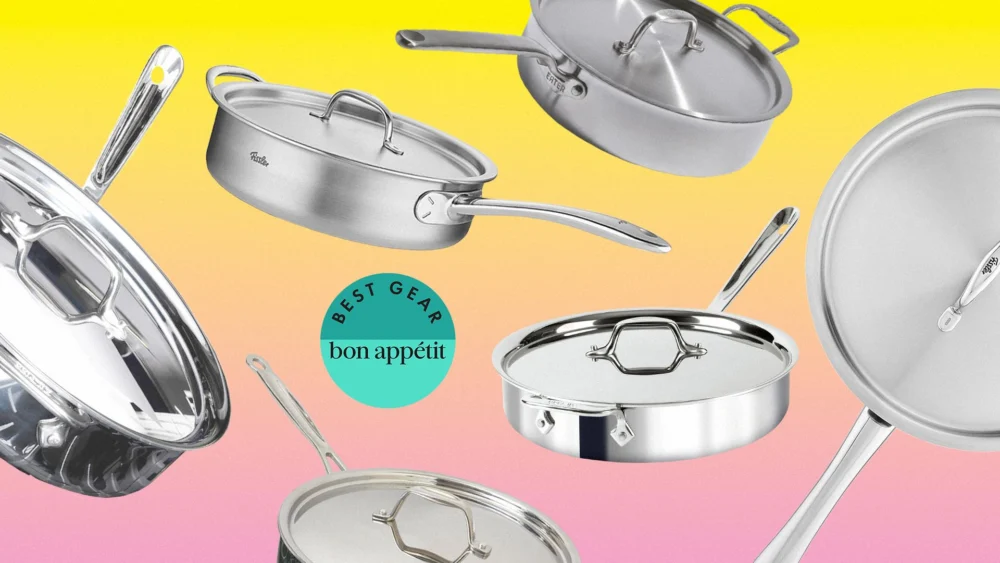
In an era dominated by multi-functional kitchen gadgets and "all-in-one" pans heavily marketed across social media platforms, the venerable sauté pan steadfastly maintains its position as an indispensable culinary workhorse. Far from a fleeting trend, this kitchen staple, bridging the gap between a traditional frying pan and a deeper saucepan, offers a remarkable degree of versatility, often capably standing in for specialized equipment like skillets, stockpots, and even Dutch ovens. Its design—fundamentally a skillet with taller, straight sides—is meticulously engineered to manage dishes requiring significant liquid, making it ideal for everything from intricate braises and simmering pasta sauces to hearty brothy beans and elegant one-pot rice preparations. This comprehensive review aims to dissect the performance of leading stainless-steel sauté pans, providing a definitive guide for both seasoned chefs expanding their extensive cookware collections and minimalist home cooks seeking a singular, high-performing essential.
The Evolution of Cookware: A Brief History of Clad Stainless Steel
The journey of cookware has seen significant advancements, moving from rudimentary clay pots and single-metal pans of copper or cast iron to the sophisticated multi-clad stainless steel designs prevalent today. Early cooking vessels, while effective for their time, often suffered from uneven heating, reactivity with certain foods, and considerable weight. The introduction of stainless steel in the early 20th century marked a pivotal shift, offering durability, non-reactivity, and ease of cleaning. However, stainless steel alone is a poor conductor of heat. The true revolution arrived with "clad" cookware, pioneered in the mid-20th century, which fused layers of different metals to harness their individual strengths. This innovation, typically involving a core of highly conductive aluminum or copper sandwiched between robust stainless steel layers, created pans that heat rapidly and distribute warmth with remarkable uniformity. This engineering marvel addresses the core challenge of cookware: achieving a balance between quick responsiveness to temperature changes and consistent heat across the entire cooking surface, thereby minimizing hot spots and preventing scorching.
Rigorous Testing Methodology: Unveiling Performance Through Precision

To identify the crème de la crème of sauté pans, a stringent testing protocol was implemented, subjecting thirteen different models to a series of both quantitative and qualitative assessments. This updated evaluation included new contenders from Heritage Steel and the All-Clad D5 line, re-evaluated alongside established favorites. The methodology was designed to simulate diverse cooking scenarios and objectively measure critical performance metrics.
-
Thermal Conductivity Test: This quantitative assessment was paramount to understanding how each pan managed heat. Pans were placed over an identical burner at a consistent heat level for two minutes. Immediately upon removal, and then at one-minute intervals for four minutes thereafter, simultaneous temperature readings were taken from the center and edge of the cooking surface using dual Thermoworks surface thermometers. The rate at which the temperature difference between the center and edge converged to zero indicated the pan’s efficiency in distributing heat evenly. A pan that achieves rapid thermal equilibrium is easier to control and yields more consistent cooking results. For instance, while the All-Clad D5 showed the smallest initial temperature variance, both the Heritage Steel x Eater and the All-Clad D3 demonstrated a notably faster equalization, signifying superior heat diffusion post-heat source removal.
-
Searing Performance: Skin-on chicken thighs were seared in oil to provide a real-world measure of heat distribution and browning capability. Observations focused on the speed and evenness of browning and any tendency for food to stick, indicating hot spots or uneven heating.
-
Onion Browning and Scorching Test: Sliced onions were sweated and then browned in oil, with heat gradually increased. Onions are highly susceptible to scorching, making this an excellent test for a pan’s responsiveness to heat adjustments and its ability to prevent localized burning.
-
Flour Distribution Test: A light dusting of flour was spread across the pan’s surface and heated undisturbed until browning or burning occurred. This visual test provided a clear map of heat distribution patterns and identified any prominent hot spots.

-
Lid and Pouring Efficiency: Water was boiled with the lid on to assess moisture retention and seal integrity. Subsequently, water was poured from each pan to evaluate handle ergonomics, balance, and the effectiveness of the pan’s lip in preventing dribbling.
-
Durability and Cleaning Assessment: Post-cooking, each pan was cleaned with soap and water. While dishwasher safety claims were noted, the emphasis was on manual cleaning, as abrasive dishwasher detergents can prematurely corrode stainless steel, diminishing its lifespan.
The Pillars of Performance: Our Top Sauté Pan Selections
Following rigorous analysis, a select group of sauté pans emerged as clear leaders, each excelling in distinct aspects, catering to varying needs and budgets.
1. A New Favorite: Heritage Steel x Eater 4-qt. Sauté Pan
The Heritage Steel x Eater pan has redefined expectations, asserting itself as a formidable contender against long-standing champions. This 5-ply pan, while typically associated with slower heating, defied convention by heating up faster than the 3-ply All-Clad D3 at both medium and medium-high settings, all while matching its heat distribution prowess. Its performance, consistently observed in both long-term use by Senior Shopping Editor Olivia Tarantino and quantitative surface temperature tests, secured its position as a new top pick.

Measuring 3.1 inches high with an 11-inch top diameter and a 9.5-inch cooking surface, this 4-quart pan weighs a manageable 3 pounds. Its design provides an extra quart of capacity compared to the All-Clad D3, without increasing the overall stovetop footprint. Tarantino highlights the practical benefits of its deeper profile: "I can simmer big batches of sauce without worrying about boilover, and the high sides protect against oil splatter when I’m searing proteins. The narrow, deep design gives me more volume without taking up extra stovetop space." The handle, featuring a flat topside and a rounded underside, proved comfortable to hold and remained cool during cooking. Although Heritage Steel is a newer brand, its evident quality and lifetime warranty suggest a commitment to longevity, rivaling more established names. The only minor consideration is its brushed stainless-steel exterior, which can be prone to discoloration at high temperatures, though easily remedied with a product like Bar Keepers Friend.
2. The Enduring Standard: All-Clad D3 3-qt. Sauté Pan
All-Clad’s reputation for quality and reliability is well-earned, and the D3 3-quart stainless-steel sauté pan consistently validates this. Its tri-ply construction—two layers of stainless steel encasing an aluminum core—exemplifies perfected design. The aluminum ensures rapid heat absorption, while the stainless steel provides excellent heat retention and even distribution. This pan consistently delivered in every test, achieving perfect sears on chicken thighs and browning onions without a hint of scorching.
In the crucial surface temperature test, the D3 demonstrated exceptional efficiency in diffusing heat uniformly, offering cooks precise control even under high heat. Its lightweight nature (3 lb. 5 oz.) makes it effortlessly maneuverable between stovetop and oven. With a 10-inch cooking surface diameter and a height of 2.5 inches, it boasts the largest cooking surface relative to its 3-quart volume among tested pans, facilitating maximum searing area and quicker liquid evaporation for sauces and reductions. The primary critique of the D3 remains its relatively shallow sides. While All-Clad offers larger volumes, these typically increase diameter rather than height, a ratio adjustment that would further enhance its utility for braising larger cuts of meat.
3. The Value Champion: Goldilocks 3.5-qt. Sauté Pan
For those seeking high performance without the premium price tag, the Goldilocks 3.5-quart sauté pan stands out as an exceptional budget-friendly option, priced under $100. True to its name, its dimensions strike an admirable balance, offering a slightly greater height (2.75 inches) than the All-Clad D3, while maintaining a 10.75-inch top diameter and a 10-inch cooking surface diameter. Its lightweight construction (3 lb. 4 oz.) and a generously sized helper handle ensure easy handling.
As a tri-ply pan, it exhibited commendable heat distribution. While its thinner metal cladding meant a slightly higher propensity for scorching at medium to high temperatures compared to its more expensive counterparts, this is a common trade-off in budget-friendly options and can be managed with attentive cooking. The handle, though functional, was noted as less comfortable to grip for extended periods. Despite these minor points, the Goldilocks pan is remarkably well-designed for its price, offering substantial value and solid performance.

4. The High-Heat Specialist: Fissler M5 Pro-Ply 5-qt. Sauté Pan
For the discerning chef willing to invest in an unparalleled cooking experience, the Fissler M5 Pro-Ply 5-quart sauté pan represents the pinnacle of high-heat performance. This pan demonstrated a tangible difference in cooking dynamics, maintaining a remarkably gradual and dispersed heat even when the burner was cranked to high. It proved exceptionally resistant to scorching, requiring deliberate effort to burn food. Instead, it consistently imparted a beautiful golden crust on chicken thighs and efficiently sweated onions faster than other models.
This superior performance is attributed to its thick 5-ply construction, which effectively generates significant indirect heat from its sides in addition to direct heat from the cooking surface. Indirect heat, transferred through the air, is less intense and less likely to burn, allowing food to cook more evenly and rapidly. While other thick 5-ply pans offer similar benefits, the Fissler M5 Pro-Ply achieves this with impressive efficiency and without excessive bulk, despite being slower to warm up than lighter high-end pans. Weighing 4 lb. 15 oz. with a 12-inch top diameter and an 11-inch cooking surface, its robust heat capacity allows for smooth temperature transitions, particularly on powerful gas burners. Beyond its technical prowess, the Fissler boasts elegant flourishes such as a rivet-free interior for easier cleaning, volumetric measurements, and an ergonomically designed handle for comfort. However, its slower heating time may be a drawback for those with weaker electric ranges, and its price point ($330) is significantly higher than other top picks. For those with powerful stoves and a desire for multifunctional, high-performance cookware, the Fissler M5 Pro-Ply is an exceptional investment.
The Science Behind the Sauté: Why Material and Design Matter
The fundamental principle governing a sauté pan’s performance lies in its ability to manage heat effectively. This is where the choice of material and construction, particularly in stainless-steel clad cookware, becomes critical.
-
Thermal Conductivity and Distribution: The core of a clad pan, typically aluminum or copper, possesses high thermal conductivity, meaning it rapidly absorbs and transfers heat. The outer layers of stainless steel provide durability, corrosion resistance, and excellent heat retention. The synergy between these layers ensures that heat is not only generated quickly but also distributed uniformly across the cooking surface, preventing "hot spots" where food might burn prematurely. The thickness and ratio of these layers are crucial; an optimal balance ensures quick responsiveness without sacrificing even heating.

-
Thermal Capacity and Indirect Heat: A thicker pan, generally achieved through more layers of cladding, possesses greater thermal capacity. This allows it to store more heat, which can then radiate as indirect heat from the pan’s sides. This indirect heat, transferred through the air, complements direct contact heat, cooking food more evenly and gently. This phenomenon is particularly beneficial for tasks like caramelizing vegetables or cooking delicate proteins, as it reduces the risk of scorching even at higher temperatures. However, an overly thick or poorly designed 5-ply pan can become too heavy and sluggish, resembling a cast-iron Dutch oven in its slow response to temperature changes, which is undesirable for the responsiveness required of a sauté pan.
-
Why Stainless Steel Over Nonstick: This review exclusively focused on stainless-steel pans. While nonstick cookware (especially ceramic nonstick) is popular for delicate items like eggs, it performs poorly at searing meats and developing fond, crucial for rich pan sauces. Furthermore, concerns regarding "forever chemicals" (PFAS) in traditional Teflon coatings lead to a recommendation against their use. Stainless steel, carbon steel, or cast iron offer superior searing capabilities and are more durable and versatile for the broad range of tasks a sauté pan is expected to perform.
Key Design Considerations: What to Look for Beyond Performance
Beyond the intrinsic heat management properties, several design elements significantly impact a sauté pan’s usability and overall value.
-
Dimensions (Volume vs. Diameter vs. Height): Sauté pans are uniquely sold by volume (quarts) rather than diameter. This means a 3-quart pan from one brand might have vastly different dimensions than another. For general use, an ideal sauté pan typically measures 10-11 inches in diameter and 2.5-3 inches in height, translating to a 3-3.5 quart volume. For larger capacities, it’s preferable for the extra volume to be added to height rather than diameter. Pans exceeding 12 inches in diameter often struggle to receive even heat from a standard four-burner stovetop, leading to inefficient cooking.

-
Weight and Ergonomics: Sauté pans are frequently moved from stovetop to oven, and often require one-handed maneuvering. A pan’s weight, alongside the design of its main and helper handles, is therefore crucial. Comfortable, heat-resistant handles that offer a secure grip enhance safety and ease of use. A well-designed helper handle is essential for larger or heavier pans, facilitating safe transport.
-
Lid Design: While personal preference varies, solid stainless-steel lids are generally favored over glass lids. Stainless steel lids retain heat more effectively, contribute to more even cooking, and are typically more durable and easier to clean than their glass counterparts, which can also be prone to shattering.
Other Commendable Contenders and Their Nuances
Several other pans underwent testing, demonstrating solid performance but falling slightly short of the top tier for specific reasons.
-
Heritage Steel Titanium Series 4-qt. Sauté Pan: This pan, incorporating titanium alloys for enhanced corrosion resistance, offered good performance. However, its heat control was more volatile, heating and cooling quickly but not as evenly as the top winners. While undeniably durable, its thermal properties were somewhat akin to the Goldilocks pan, making its higher price a point of consideration for many consumers.

-
All-Clad D5 3-qt. Sauté Pan: The D5 line from All-Clad, a 5-ply construction, is undeniably superb cookware. However, in direct comparison to the D3, it proved heavier, more expensive, and marginally slower to heat. While it consistently outperformed the majority of pans tested, the incremental benefits over the D3 did not justify the increased cost and weight for many users. It remains an excellent pan, particularly if found at a discount, but the D3 offers a better balance of performance and value for new purchases.
-
Misen 5-Ply Stainless Steel 3-Quart Sauté Pan: Misen delivered strong performance across all tests, showcasing excellent heat distribution and control, attributed to its 5-ply construction. It seared chicken and browned onions effectively without scorching. Its thicker, hollow handle was lauded by many staff members for staying cool and providing comfort. However, as the second heaviest pan tested, its maneuverability was a concern for some, and it didn’t significantly outperform lighter, easier-to-handle alternatives.
-
Made In Stainless Clad 3.5-qt. Sauté Pan: Made In’s sauté pan was a strong performer, lightweight at 3 pounds 2 ounces, and handled well. While searing chicken was successful, it showed greater susceptibility to scorching at higher heat compared to the All-Clad, requiring a more watchful eye. Despite this, it remains a commendable option.
Pans to Approach with Caution: Design Flaws and Performance Deficiencies
Not all sauté pans are created equal, and some models exhibited notable deficiencies that led to their exclusion from our recommended list.

-
Tramontina 3-qt. Sauté Pan: Despite its popularity as a budget brand, this pan was prone to scorching, demanding constant vigilance during cooking. Its lack of a flared lip also resulted in messy pouring, and its cooking surface felt cramped relative to its stated volume.
-
Calphalon 3.5-qt. Sauté Pan: While showing few hot spots and decent browning, this pan’s performance was overshadowed by a crucial flaw: its thin construction (2 lb. 14 oz.) led to noticeable warping at the base during testing. Additionally, its glass lid, while allowing visibility, compromises heat retention and durability.
-
Cuisinart 3-qt. Sauté Pan: The Cuisinart pan suffered from odd dimensions, featuring a small diameter coupled with unusually high sides, pushing it closer to a saucier. It exhibited scorching, though manageable, and its thin, pointy handle was widely deemed uncomfortable.
-
Caraway 4.5-qt. Sauté Pan: This pan, while aesthetically pleasing with its soft curves, sacrificed utility for design. Its significant weight (almost 3 pounds for the lid alone) made it cumbersome, and its lack of a pouring lip led to messy spills. Despite claims of beautiful cooking, its practical drawbacks significantly hindered usability.
Market Implications and Consumer Choices

The findings of this extensive review underscore the enduring value of investing in high-quality, multi-clad stainless-steel sauté pans. In a market flooded with trendy, often underperforming, "do-it-all" solutions, a well-chosen sauté pan offers genuine versatility and superior cooking performance that stands the test of time. For consumers, the implications are clear: prioritize proven heat management, thoughtful design, and durable construction over marketing hype. While premium brands like All-Clad and Fissler offer exceptional performance and longevity, the emergence of strong contenders like Heritage Steel and value champions like Goldilocks demonstrates that high-quality options exist across various price points. Ultimately, the ideal sauté pan is one that aligns with a cook’s specific needs, stove type, and budget, providing a reliable foundation for countless culinary endeavors.