

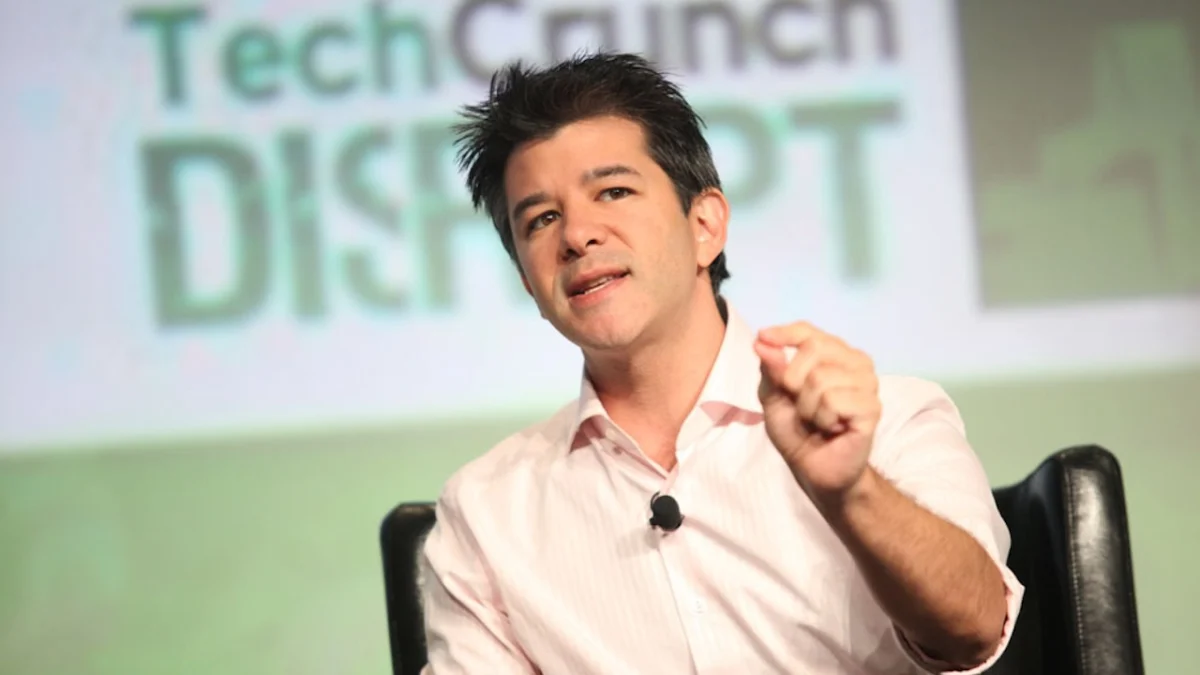
Travis Kalanick, the co-founder and former CEO of Uber, has re-entered the public arena with a significant venture poised to reshape the food technology landscape. His new holding company, "Atoms," will serve as an umbrella for a suite of ambitious projects, including the established virtual restaurant operator CloudKitchens, the operating system Otter, the office lunch delivery service Picnic, and the automated bowl-building technology Lab37, alongside new, as-yet-undisclosed initiatives. This strategic rebranding, emerging from years of operating under the guise of "City Storage Systems," signals Kalanick’s renewed focus on optimizing food delivery and production, drawing parallels to the disruptive impact Uber had on personal transportation.
Kalanick, who has largely operated out of the public eye since his departure from Uber in 2017, described his recent period as one of "hiding" in a recent interview with the Technology Business Programming Network podcast. He explained that City Storage Systems, the previous identity of Atoms, was conceived with a singular, audacious question: "Can you get a meal delivered to you so efficiently that it starts to approach the cost of going to the grocery store? Because if you do, you do to the kitchen what Uber did to the car." This ambition, pursued since 2018, has now been formalized under the Atoms banner, with a stated mission of building "infrastructure for better food."
The Genesis of Atoms: From Stealth to System
The evolution of Atoms can be traced back to 2018 when Kalanick began investing in and developing various food-tech and logistics companies. City Storage Systems acted as a discreet vehicle for these investments, operating in over 30 countries. The core philosophy driving these disparate entities was the pursuit of radical efficiency in the food supply chain, aiming to disrupt traditional models of food production and consumption.
The rebranding to Atoms signifies a consolidation of these efforts and a clearer articulation of Kalanick’s vision. While the primary focus remains on food, Atoms’ scope extends to other critical sectors such as mining and transportation. This broader integration is intended to create a synergistic ecosystem that can fully support the future of autonomous food delivery and the transformation of real estate. A prime example of this integrated approach is ProFood Properties, a new entity under the Atoms umbrella. This company positions itself as a "leading developer in food production industrial real estate," with a specific emphasis on enhancing supply chain logistics. By controlling the physical infrastructure, Atoms aims to create a closed-loop system that optimizes every stage from sourcing to delivery.
A Legacy of Disruption and Controversy
Travis Kalanick’s return to the forefront of innovation is inextricably linked to his past achievements and the controversies that marked his tenure at Uber. Uber’s meteoric rise, which redefined urban mobility and spurred the growth of the gig economy, was also accompanied by significant legal battles, labor disputes, and allegations of a toxic corporate culture. This legacy of disruption and controversy continues to shadow his new ventures.
Atoms and its constituent companies, particularly CloudKitchens, have faced numerous legal challenges. In 2024, a former CloudKitchens employee filed a lawsuit alleging discrimination and sexual harassment, citing a "hostile work environment" and wrongful termination related to pregnancy. This case highlights ongoing concerns regarding workplace conditions within Kalanick’s organizations.
Further complicating the operational landscape, Picnic, CloudKitchens’ office lunch business, was sued in June 2025 by the salad chain Mixt. Mixt accused the company of selling its food without authorization, pointing to potential issues with intellectual property and business practices. These legal entanglements underscore the complex regulatory and competitive environment in which Atoms operates.
Adding to these challenges, CloudKitchens reportedly underwent multiple rounds of layoffs in 2023 and 2024, with reports from the Financial Times suggesting the company began shutting down delivery kitchen locations. These operational adjustments raise questions about the scalability and financial stability of certain aspects of the CloudKitchens model, despite the ambitious overarching vision of Atoms.
The Future According to Atoms: Automation and Efficiency
Despite these headwinds, Kalanick remains optimistic about the future of his endeavors under the Atoms umbrella. His vision for the future, articulated on the Atoms website, paints a picture of highly automated operations populated by "gainfully employed robots." These specialized machines are envisioned to perform specific tasks with unprecedented efficiency, such as producing "1,000 pancakes an hour" or autonomously transporting deliveries to their destinations.
This vision aligns with broader trends in the food service industry, where automation and artificial intelligence are increasingly being explored to address labor shortages, improve consistency, and reduce costs. The integration of robotics and advanced AI into the food production and delivery pipeline is central to Atoms’ strategy for achieving its ambitious efficiency targets.
The potential implications of Atoms’ success are far-reaching. If Kalanick can indeed deliver on his promise of making meal delivery cost-competitive with grocery shopping, it could fundamentally alter consumer behavior, further diminishing the need for traditional grocery stores and home cooking for a significant portion of the population. This would necessitate a dramatic reimagining of urban planning, commercial real estate, and the labor market.
The focus on "infrastructure for better food" also suggests a potential impact on food security and access. By optimizing the supply chain and delivery mechanisms, Atoms could theoretically make nutritious food more accessible and affordable, particularly in underserved areas. However, the company’s historical controversies necessitate careful scrutiny of its ethical and social impact as it scales.
The strategic acquisition and development of industrial real estate for food production, as spearheaded by ProFood Properties, is a critical component of this vision. By controlling the physical spaces where food is prepared and processed, Atoms can implement its automation technologies and streamline logistics more effectively than competitors who rely on third-party facilities. This vertical integration strategy mirrors Kalanick’s approach at Uber, where the company sought to control not just the platform but also aspects of the driver experience and vehicle maintenance.
The success of Atoms will likely depend on its ability to navigate the complex web of regulatory hurdles, public perception, and operational challenges inherent in transforming such a foundational industry. The food sector, unlike ride-sharing, is subject to stringent health and safety regulations, and consumer trust is paramount. Kalanick’s past experiences have provided him with invaluable lessons in managing these complexities, but the scale of Atoms’ ambitions presents a new set of formidable tests.
As Atoms rolls out its various initiatives, industry observers will be closely watching its progress. The company’s ability to attract top talent, secure further investment, and demonstrate tangible improvements in efficiency and cost-effectiveness will be critical indicators of its long-term viability. The promise of a future where efficient, affordable, and high-quality meal delivery is the norm is tantalizing, but the path to achieving it is fraught with the same kind of challenges that defined Kalanick’s previous disruptive journey.
Representatives for Atoms did not respond to requests for comment by the time of publication, leaving the full scope of their immediate plans and detailed operational strategies open to speculation. However, the re-emergence of Travis Kalanick with a clearly defined, albeit ambitious, vision for the future of food infrastructure signals a significant development in the technology and logistics sectors, one that could reshape how millions of people consume food in the years to come. The question remains whether this new iteration will be able to build on its disruptive potential while mitigating the controversies that have historically accompanied Kalanick’s ventures.