

In a significant re-evaluation of conventional entertaining wisdom, cookbook author Anna Hezel, through her recent work Party Tricks: Easy, Elegant Recipes for Snacking and Hosting, posits the humble potato chip not as a last-resort convenience but as a sophisticated, versatile, and essential component of modern hospitality. This perspective directly challenges the long-held culinary tenets of figures like James Beard, whose 1940 opus Hors D’Oeuvre and Canapés famously declared that "The cocktail party no longer means a bottle of gin, a can of sardines, and a package of potato chips from the corner grocery." Hezel’s contemporary stance reflects a broader shift in gastronomic philosophy, where accessibility, clever presentation, and the inherent qualities of ostensibly simple ingredients are increasingly celebrated over elaborate, labor-intensive preparations.
A Historical Perspective: The Cocktail Party’s Early Standards
To fully appreciate Hezel’s advocacy for the potato chip, it is crucial to understand the culinary landscape Beard was addressing in the mid-20th century. The cocktail party, as it emerged in the early 1900s and gained prominence post-Prohibition, was a social institution designed to showcase refinement and a host’s meticulous attention to detail. Food served at these gatherings was typically expected to be handcrafted, intricate, and demonstrative of culinary skill. Canapés, vol-au-vents, and various small, artfully arranged bites were the norm, often requiring significant preparation time and specialized ingredients.
Beard’s 1940 quote was not merely a dismissive remark about specific items but a reflection of a prevailing ethos that associated quality entertaining with bespoke efforts rather than pre-packaged goods. In that era, relying on store-bought staples like potato chips was often perceived as a shortcut, indicative of a lack of effort or culinary ambition. The ideal host prepared everything from scratch, demonstrating a mastery of the kitchen arts that distinguished their gathering from a more casual affair. The trio of gin, sardines, and potato chips represented, to Beard, the absolute antithesis of the sophisticated culinary experience he sought to define and elevate for his readers. This historical context underscores the radical nature of Hezel’s modern embrace of the very items Beard once deemed insufficient.
The 21st-Century Redefinition of Elegance
Fast forward to the 21st century, and the culinary world has undergone a profound transformation. The rigid boundaries between "high cuisine" and "low cuisine" have blurred, giving way to a more inclusive and experimental approach to food. Chefs and home cooks alike now champion creativity, flavor, and experience, often finding elegance in unexpected places. This shift is driven by several factors, including a greater appreciation for global flavors, a desire for efficiency in busy lives, and a growing movement towards sustainable and less wasteful cooking.
Hezel’s argument for the potato chip perfectly encapsulates this modern sensibility. She contends that, for less than five dollars, potato chips offer a "zero vats of hot oil" solution for "expertly fried hors d’oeuvres." This highlights a core appeal: the immediate gratification of perfectly crispy, seasoned potatoes without the significant effort, equipment, or mess typically associated with deep-frying. In an era where time is a premium, and the demands of entertaining can be daunting, a simple bag of chips provides a valuable culinary shortcut, allowing hosts to allocate their energy to other aspects of the party, such as crafting complex cocktails or preparing more time-consuming dishes like savory puff pastry tarts. The potato chip, far from being a sign of neglect, becomes a strategic tool for sophisticated hosts who understand how to leverage its inherent qualities.
Versatile Applications: Elevating the Everyday Chip
Hezel’s Party Tricks goes beyond merely advocating for chips; it provides actionable strategies for transforming them into genuinely chic offerings. These methods demonstrate a nuanced understanding of texture, flavor, and presentation, proving that the potato chip’s potential extends far beyond its bag.
One primary suggestion involves pairing chips with a two-ingredient dip. While classic French onion dip remains a beloved option, Hezel champions minimalism. Her favored combination of salt-and-vinegar potato chips with crème fraîche topped with trout roe exemplifies this. This pairing is a masterclass in textural contrast—the crisp, acidic chip meeting the creamy, rich dip and the delicate pop of roe. It also offers an ingenious way to present a luxurious ingredient like caviar without the laborious assembly of individual canapés. The crème fraîche can be substituted with sour cream or even a simple two-ingredient dressing, and trout roe can be swapped for other fish eggs, allowing for customization while maintaining the core concept of accessible luxury. This approach underscores a key modern entertaining principle: focus on quality ingredients and thoughtful combinations, rather than sheer quantity or complexity of components.
Another innovative concept is to invent your own dream chip flavor. Beyond the standard offerings, the culinary landscape has seen a proliferation of unique chip flavors, from all-dressed to green curry. However, Hezel encourages hosts to personalize this experience. The example of making homemade Old Bay chips when they are not locally available, or creating "onion dip potato chips" by seasoning store-bought chips with onion powder, garlic powder, and fresh dill, speaks to a desire for bespoke culinary experiences. This trend aligns with the broader movement towards customization and artisanal food products, allowing hosts to offer a unique flavor profile that reflects their creativity or a specific regional influence. It turns a simple snack into a conversation starter and a memorable element of the party.

The concept of chip dust further showcases the potato chip’s versatility as a textural and flavor enhancer. Pulverized chips, particularly salt and vinegar varieties, provide a convenient shortcut to adding crunch, richness, and acidity to various dishes without introducing liquid. This "dust" can be used as a garnish for dips, such as a creamy giardiniera number, where it provides a delightful textural counterpoint. It can also function as a unique breading for fried items like chicken cutlets, imparting a distinct flavor and crispness. Furthermore, chip dust can serve as an unexpected and flavorful topping for casseroles, replacing traditional breadcrumbs with a more dynamic, seasoned crunch. This technique highlights the chip’s fundamental components—salt, fat, and crunch—as valuable culinary building blocks.
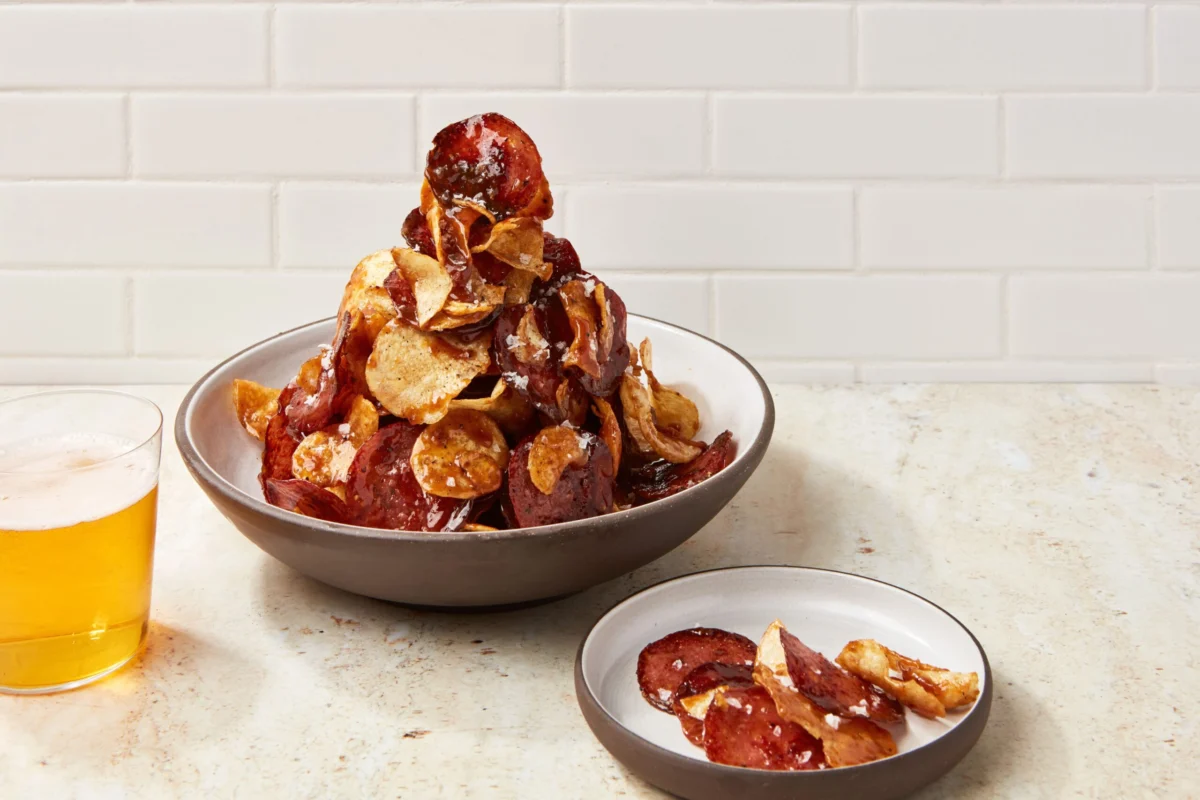
Perhaps the most visually striking application is to tower chips high. This trend, notably popularized by establishments like Ernesto’s, a Basque restaurant in New York City, which serves alternating layers of house-made potato chips and Ibérico ham, has permeated both professional kitchens and home entertaining. The "chip tower" transforms a flat snack into a dramatic, multi-dimensional centerpiece. The principle is simple: layer chips in a shallow bowl, alternating them with various complementary ingredients. Examples include charcuterie, tinned mussels, or finely grated cheese. Jessie YuChen’s recipe for a honey-butter potato chip tower studded with crispy salami further illustrates the creative potential. This concept taps into the aesthetic demands of modern entertaining, particularly the influence of social media where visually appealing food often goes viral, making the chip tower both a delicious and an "Instagrammable" party trick.
Finally, Hezel suggests a clever way to repurpose leftover or semi-stale chips: make a shortcut Spanish tortilla. Drawing inspiration from chef Ferran Adrià’s 2011 book The Family Meal, this technique involves cooking chips directly into eggs to create a quick and satisfying frittata or tortilla. Kendra Vaculin’s spin, which utilizes sour cream and onion potato chips, demonstrates how flavored chips can infuse a dish with savory seasoning, eliminating the need for additional spices. This practice aligns with contemporary culinary trends focusing on minimizing food waste and maximizing the utility of ingredients, transforming potential discards into a comforting and flavorful meal.
Broader Culinary and Economic Implications
The potato chip’s ascendancy in sophisticated entertaining carries several broader implications for the culinary world and consumer behavior. Economically, the cost-effectiveness of chips makes upscale entertaining more accessible. Compared to the often-high price point of artisanal cheeses, imported olives, or exotic seafood, a bag of quality potato chips remains remarkably affordable, democratizing access to elegant party food. This resonates with a consumer base that values both quality and value.
Culturally, the embrace of the potato chip signals a further erosion of food snobbery. It reinforces the idea that excellent food doesn’t necessarily have to be expensive or overly complicated. Instead, it can be about thoughtful curation, unexpected pairings, and celebrating the simple pleasures. This aligns with a growing movement towards "comfort food revival" in fine dining, where chefs reinterpret nostalgic dishes and humble ingredients with refined techniques and high-quality components.
The rise of the "gourmet snack" market is another direct outcome. Manufacturers are responding to consumer demand for premium and adventurous chip flavors, moving beyond classic salt and vinegar to offerings infused with truffle, exotic spices, or artisanal cheese. This innovation within the snack industry reflects a recognition that chips are no longer confined to casual consumption but are increasingly viewed as a legitimate culinary ingredient capable of carrying complex flavors.
Furthermore, the influence of social media, particularly platforms like Instagram, cannot be overstated. Visually appealing presentations, such as the elaborate chip towers, gain traction quickly, inspiring home cooks to experiment and share their creations. This social validation fuels the trend, making formerly unconventional food presentations mainstream. The potato chip, with its inherent textural appeal and adaptability, is perfectly suited for this visual medium.
Conclusion: A Testament to Culinary Ingenuity
Anna Hezel’s proposition to elevate the potato chip from a simple snack to a sophisticated party trick is more than just a culinary suggestion; it is a commentary on the evolving nature of gastronomy itself. Her work, juxtaposed against James Beard’s historical admonition, highlights a profound shift from an era defined by strict culinary hierarchy to one that champions ingenuity, accessibility, and the artful transformation of the familiar.
The potato chip, in its various elevated forms—whether paired with luxurious roe, custom-flavored, pulverized into a savory dust, or architecturally stacked—becomes a symbol of modern entertaining. It represents a pragmatic yet elegant approach to hospitality, where ease does not compromise sophistication, and creativity is prized above conventional labor. In a world constantly seeking novel yet comforting culinary experiences, the potato chip, once dismissed as pedestrian, has rightfully earned its place as a chic and indispensable component of contemporary celebrations. It is a testament to the idea that true culinary elegance lies not in complexity, but in the intelligent appreciation and innovative application of ingredients, no matter how humble their origins.