

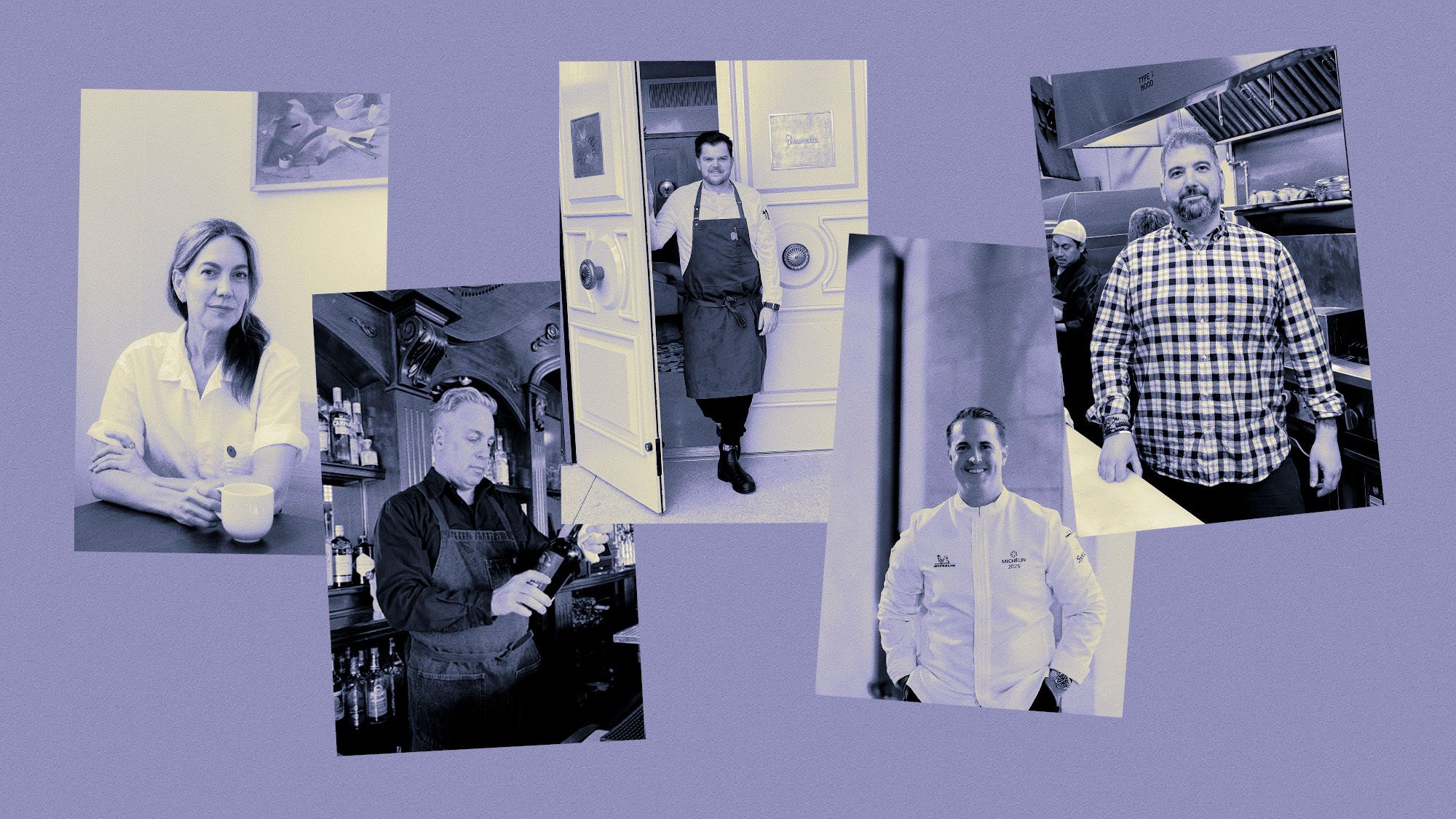
A seismic shift is reshaping America’s culinary landscape, as an increasing number of acclaimed chefs, once stalwarts of major metropolitan dining scenes, are embarking on a deliberate exodus to smaller towns and suburban enclaves. This "boomerang chef" phenomenon, a term coined by food writer Adam Reiner in Bloomberg to describe the revitalization of dining in places like Buffalo, New York, signifies a fundamental re-evaluation of professional success and personal well-being within the notoriously demanding restaurant industry. The allure of lower operating costs, a more manageable lifestyle, and the opportunity for deep community integration is proving a powerful counter-narrative to the high-stakes, high-stress environment of cities like New York, Chicago, and Philadelphia.
Randall Restiano, a veteran beverage director who departed Gramercy Tavern, a flagship establishment of the Union Square Hospitality Group, embodies this trend. When he contemplated opening his own venture last year, his initial inclination was Manhattan. However, the stark realities of urban economics quickly intervened. "The expense, return on investment, and volume of investors needed to make it a reality did not make sense," Restiano reflects. This financial calculus prompted a radical reconsideration: "I thought, Maybe it’s time to do something new." This realization led him to Bronxville, a picturesque Westchester suburb, where he partnered with fellow Union Square Hospitality Group alum, chef John Poiarkoff, to open La Chitarra, a pasta bar and wine studio. Restiano admits the decision was an "emotional battle," fraught with questions about relinquishing his city ties. Yet, the promise of reduced overhead and a calmer pace ultimately prevailed.
The Economic Imperative: A Retreat from Urban Financial Pressures

The primary catalyst driving this migration is unequivocally economic. Operating a restaurant in a major city has become an increasingly untenable proposition for independent restaurateurs. Commercial rents in prime Manhattan locations can easily exceed $100 per square foot annually, often coupled with substantial property taxes and escalating labor costs. A 2023 report by the National Restaurant Association indicated that rising operational costs, including food, labor, and occupancy expenses, were among the top challenges facing restaurateurs nationwide, with urban centers experiencing these pressures most acutely.
In contrast, the financial landscape of smaller towns offers a lifeline. Restiano highlights this stark difference: "The amount of money you need to run a restaurant in Brooklyn or Manhattan at this point is so crazy. If you fail, the loss is massive." In Bronxville, he and Poiarkoff were able to execute a "major renovation," curate a "100-bottle wine list," and source premium ingredients while maintaining "a decent price point" for their patrons, all thanks to significantly lower overhead. This ability to invest in quality while keeping prices accessible is a competitive advantage virtually impossible to achieve in a major metropolis.
Mani Dawes, formerly of New York City’s acclaimed Tia Pol’s, echoed this sentiment upon her return to New Orleans to open Cafe Malou. She states plainly, "There is no way to do an independent mom-and-pop restaurant like we did at Tia. The math does not work." Her observation underscores a broader industry truth: the traditional model for independent, chef-driven restaurants is buckling under the weight of urban economic realities. Even a successful New York City restaurant, with its constant demand for innovation and high-profile clientele, often operates on razor-thin margins, making it highly vulnerable to economic fluctuations or unexpected challenges.
A Quest for Quality of Life and Family Fulfillment

Beyond the financial calculus, a profound desire for an improved quality of life and greater family integration is a powerful draw for these chefs. The relentless pace, extended hours, and intense pressure cooker environment of big city kitchens are notorious for contributing to high rates of burnout. This lifestyle often leaves little room for personal well-being or family time.
Chef Joe Cash, whose impressive resume includes stints at culinary titans like Per Se, Noma, and The Pool, made the conscious decision to return to his hometown of Greenville, South Carolina. There, he opened the Michelin-starred Scoundrel in 2022 and is set to launch Dootsie’s, an Italian restaurant named for his grandmother, in the spring. Cash articulates the industry’s breaking point: "I think that people are getting real about all the hard work this business takes. There is no profit and so much blood sweat and tears, and people are reaching a breaking point." He credits Gavin Kaysen, who famously left New York City in 2014 to open Spoon and Stable in Minneapolis, as a visionary who "understood the future was not in Manhattan."
For Cash, a father of two young children, Greenville provides invaluable "space and peace of mind." He relishes the simple joys of suburban living: "I love having a backyard and space. I don’t have to fight for a train to get home. I can be home in 10 minutes." This accessibility and reduced commute time translate directly into more moments with family, a luxury often unattainable for chefs working demanding schedules in sprawling urban centers.
Similarly, Jon Nodler and Samantha Kincaid, the husband-and-wife team behind Philadelphia’s acclaimed Cadence, relocated to New Glarus, Wisconsin, a small town near Madison, to open Canter Inn in October 2025. Their decision was deeply personal, catalyzed by the global pandemic. "COVID made us realize that it was a crucial time to be near our families in the Midwest," Nodler explains. "We had to make a choice, and ultimately landed on moving back with the goal of making time for family in a familiar landscape in the Madison area." Canter Inn reflects this shift, offering an approachable menu with dishes like sweet-and-sour pork short ribs and even a dedicated kids’ menu—a concept Nodler never entertained at Cadence, underscoring a move towards broader appeal and family-friendliness.

Travis Swikard, formerly Daniel Boulud’s culinary director in Manhattan, was drawn back to his beachside childhood home of San Diego for similar reasons. With a growing family, he sought to replicate the upbringing he cherished. "We had a couple of kids; my family was there and that was a big part of it," he states. "I wanted my kids to have the life I had growing up under the sun." Cruz Goler, who honed his craft under New York City luminaries like Jean-Georges Vongerichten and Mark Ladner, also "boomeranged" home to Bristol, Rhode Island, after getting married and planning a family. "Being a dad in New York would have been impossible," he admits. "I have a two-year-old. I have a new respect for chef-owners who are new dads." These narratives paint a clear picture: for many chefs, the pursuit of culinary excellence is now inextricably linked with the ability to nurture a fulfilling personal and family life.
The Appeal of Streamlined Operations and Local Support
Beyond cost savings and lifestyle improvements, the regulatory and community environments in smaller towns often present a refreshing contrast to the bureaucratic hurdles of major cities. Harris Mayer, the chef behind Creamline in Chelsea, experienced this firsthand when opening his hyper-local Italian restaurant, Cornerstone, in Pawling, New York. He recounts a strikingly different experience: "We reached out to apply for a Certificate of Occupancy, and our health inspector offered to take a look at our drawings to make sure we had everything before we started building." This proactive, supportive approach is a far cry from the often adversarial relationship businesses encounter in larger municipalities. Mayer laments, "That would never happen in New York. They would rather have you build first and fine you after. They make it impossible with insane regulations, taxes, and laws."
This sentiment is echoed by many who find local governments in smaller communities more eager to assist new businesses, recognizing their potential for economic development and community enrichment. The simplified regulatory framework translates into less red tape, quicker approvals, and a more collaborative process, allowing chefs to focus their energy on their craft rather than navigating complex administrative mazes.
copy.jpg)
Redefining Culinary Creativity and Community Engagement
While the move to smaller markets offers numerous advantages, it also necessitates adaptations, particularly regarding culinary style and staffing. Joe Cash, for instance, initially conceived a "high-end and cheffy" concept for Scoundrel, reflecting his Michelin-star background. However, he quickly recognized the need to adjust to local tastes and expectations. "I would dream up dishes on a big whiteboard, but I wasn’t sure if folks down here would buy it," he explains. He revised the menu towards a more accessible bistro format, featuring elegantly prepared but relatively simpler plates like beef tartare, Caesar salad, steak frites, and dry-aged duck. This evolution demonstrates a pragmatic approach to maintaining culinary integrity while resonating with a broader local clientele.
Staffing, too, presents unique challenges in less densely populated areas. Jon Nodler acknowledges that a "lack of density means challenges that bigger cities don’t have," specifically citing "fewer potential diners and a smaller skilled labor pool." However, chefs are finding innovative ways to overcome this. Travis Swikard, upon opening his second San Diego restaurant, Fleurette in La Jolla, embraced a philosophy of mentorship. "I knew the talent level was going to be different so I decided to hire anyone with a good attitude and train them," he says. This approach has proven rewarding, with his first hired dishwasher eventually ascending to chef de cuisine, showcasing the potential for nurturing local talent.
Perhaps one of the most unexpected and fulfilling aspects of this shift is the profound sense of community. Cruz Goler highlights this as a major reward: "Everyone is really excited about it. A local coppersmith made the check presenters for me, a boat maker is helping me fabricate an old ferry boat for the interior." Such grassroots support and collaboration are rare in the impersonal, highly competitive environment of big cities. For smaller markets, a new restaurant is not merely "another flash in the pan," as La Chitarra’s chef Poiarkoff observes, in contrast to the transient nature of fame in New York City. These establishments become integral parts of the local fabric, deeply valued and supported by residents eager for elevated dining experiences.

Lane Regan, who ran the Michelin-starred Elizabeth in Chicago, sought a complete immersion in nature and a return to essential cooking principles. In 2019, they moved to Michigan’s Upper Peninsula to open The Milkweed Inn, a venture focused on foraging, fermenting, and preserving. "After experimenting with expansion and seeing firsthand that ‘bigger’ wasn’t the answer for me, I realized I needed to distill my work down to its most essential parts," Regan explains. Milkweed hosts just 12 guests a weekend with minimal staff, allowing Regan to dedicate time to the creative aspects of cooking and even writing. This model exemplifies a radical reimagining of success, prioritizing artistic fulfillment and connection to the land over volume and metropolitan prestige.
Broader Implications and the Future of American Dining
The "boomerang chef" phenomenon represents more than just individual career shifts; it signals a significant recalibration of the American dining landscape.
- Decentralization of Culinary Excellence: This trend is leading to a decentralization of high-quality dining, bringing sophisticated culinary experiences to regions historically underserved by innovative cuisine. This enriches local communities, creates new jobs, and fosters local food economies.
- Economic Revitalization of Smaller Towns: New restaurants, particularly those helmed by acclaimed chefs, can act as powerful economic engines for smaller towns, attracting tourism, increasing property values, and stimulating other local businesses.
- Shifting Industry Paradigms: The movement challenges long-held notions that true culinary success can only be achieved in major urban centers. It redefines prestige, emphasizing sustainability, community impact, and work-life balance alongside critical acclaim.
- Increased Diversity in Dining Experiences: As chefs adapt their menus to local palates and available ingredients, the culinary offerings across the country become more diverse and regionally distinctive, moving away from a homogenized "fine dining" standard.
Industry analysts suggest that this trend is likely to continue, especially as the cost of living and operating businesses in major cities shows no signs of abating. The COVID-19 pandemic, with its forced slowdowns and remote work revolution, prompted many to reconsider their priorities, accelerating moves that might have otherwise taken years. As more chefs find profound success and personal satisfaction outside the urban grind, their stories serve as powerful endorsements for a different path. The hard shell cultivated in high-pressure kitchens, as Travis Swikard describes, is being shed for a more adaptable, community-oriented approach. This transformation suggests a healthier, more sustainable future for both chefs and the vibrant culinary culture they create, proving that exceptional dining can thrive far beyond the bright lights of the big city.