

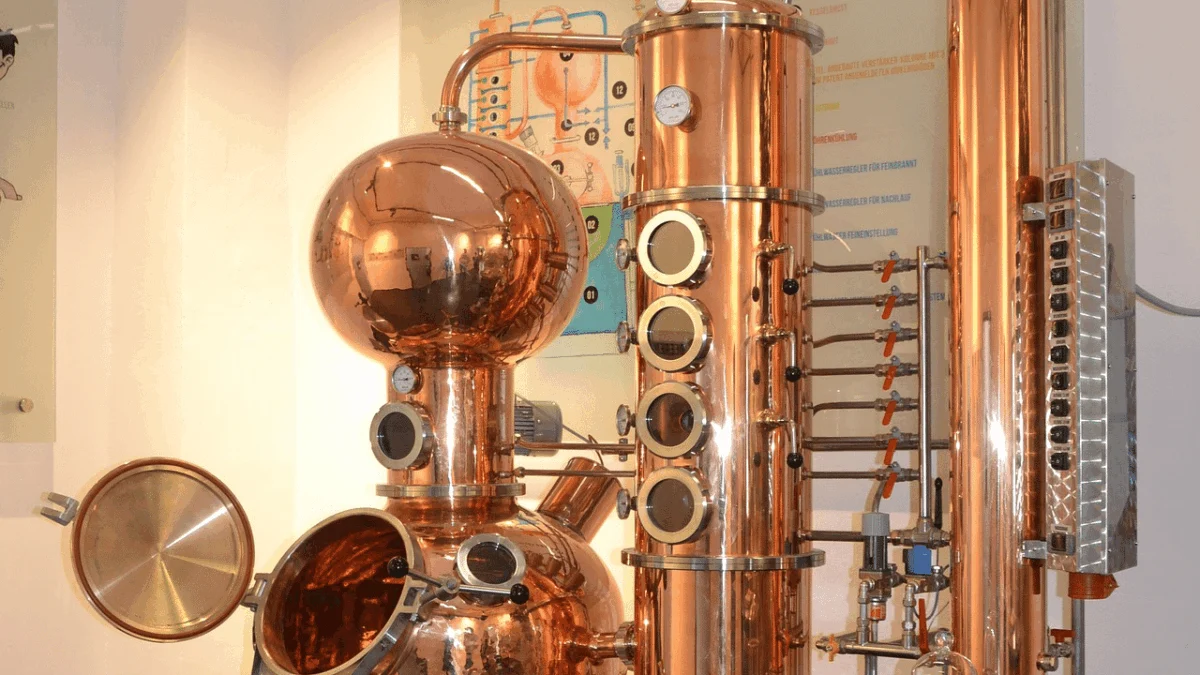
The global gin market, valued at approximately $15.3 billion in 2023 and projected to reach over $20 billion by 2030, owes its exponential growth not merely to the selection of exotic botanicals, but to the rigorous technical decisions made by distillers during the production process. While marketing campaigns often emphasize rare roots and hand-picked berries, the true character of a gin is forged through a series of complex chemical and mechanical choices made after the recipe is finalized. From the selection of the base spirit to the precise timing of the "cut," the distillation process is a sophisticated blend of organic chemistry and sensory artistry that determines whether a spirit will become a world-class London Dry or a localized craft specialty.
The Foundation of Neutral Grain Spirit and the Blank Canvas of Distillation
The production of gin almost universally begins with Neutral Grain Spirit (NGS), a high-proof ethanol typically distilled to 95% or 96% Alcohol by Volume (ABV). This substrate is essentially a high-grade, flavorless vodka, purified to ensure that no residual esters or congeners from the original fermentation interfere with the botanical profile. While some boutique distillers experiment with base spirits derived from grapes, apples, or honey, the industry standard remains grain-based ethanol due to its clean, predictable behavior during the secondary distillation process.
The reliance on NGS provides the distiller with a "blank canvas." By starting with a chemically pure base, the master distiller can control the exact concentration of essential oils and aromatic compounds extracted from the botanicals. This stage is critical because the interaction between ethanol and water acts as a solvent, pulling flavors from organic matter through a process of thermal extraction.
Botanical Ratios and the Precision of the Formula
The defining characteristic of gin, as mandated by both European Union and United States regulations, is the predominant flavor of juniper. Beyond this legal requirement, the composition of the botanical bill is a matter of intense mathematical precision. An industry benchmark for quality gin often falls between 20 and 35 grams of total botanicals per liter of spirit.
In a standard professional formulation, juniper typically accounts for approximately 60% of the total botanical weight. The remaining 40% is where the distiller’s signature is etched. Professional distillers often utilize a "rule of tenths" to balance the profile. For instance, if a recipe calls for 20 grams of juniper, the secondary botanical—frequently coriander seed—is often set at 10 grams. Tertiary "fixative" botanicals, such as angelica root, orris root, or cassia bark, may be scaled down to one-tenth of the juniper weight (2 grams). Highly potent ingredients, such as cloves or dried citrus peels, may be measured in hundredths of the juniper weight to prevent them from overwhelming the delicate pine notes of the spirit.
Maceration Versus Vapor Infusion: The Mechanics of Flavor Extraction
One of the most significant technical divides in the gin industry is the method of extraction: maceration versus vapor infusion. Each method alters the molecular structure and mouthfeel of the final product.
The Maceration Process
Maceration involves "steeping" the botanicals directly in the spirit. In a professional setting, this often occurs within the pot still itself. Brands like Beefeater are famous for their 24-hour maceration period, where botanicals are soaked in the NGS at room temperature or slightly elevated temperatures before the heat is applied for distillation. This "long soak" allows the ethanol to penetrate the cellular walls of the botanicals, leading to a robust, "heavy" spirit with significant mid-palate presence. Some distillers choose to leave the botanicals in the still during the boil (distilling "on the grain"), while others filter them out to avoid scorched notes.
Vapor Infusion Techniques
Conversely, vapor infusion—pioneered and popularized by brands like Bombay Sapphire—involves suspending the botanicals in a "Carter-Head" basket or similar apparatus above the boiling liquid. As the ethanol evaporates, the rising steam passes through the botanicals, volatilizing the aromatic compounds without boiling the organic matter itself. This results in a lighter, more ethereal spirit, often described as having "brighter" top notes. The placement of the basket is a variable of extreme importance; a basket placed lower in the still column encounters hotter vapors, resulting in a different extraction profile than one placed higher up, where temperatures have begun to drop.
The Chronology of a Distillation Run: The Art of the Cut
Distillation is a time-dependent process where the flavor profile of the output changes minute by minute. The master distiller must make "cuts"—decisions on when to keep the liquid and when to discard it—based on the boiling points of different chemical compounds.
- The Foreshots and Heads: These are the first liquids to emerge from the condenser. They contain high concentrations of methanol and acetate, which possess a harsh, solvent-like aroma. In gin production, the heads often contain the brightest citrus notes, but they must be carefully managed to avoid chemical harshness.
- The Heart: This is the "sweet spot" of the distillation. The heart contains the most desirable ethanol and the balanced core of the botanical oils. The distiller’s goal is to maximize the volume of the heart while ensuring it remains free of the impurities found in the surrounding fractions.
- The Tails: As the distillation nears its end, the temperature in the still rises, and heavier, more bitter compounds begin to emerge. In gin, the tails often carry "feints"—earthy, spicy, or even burnt aromas. While some of the early tails may be kept to provide "bass notes" and depth to the gin, the majority are cut to prevent the spirit from becoming cloudy or unpleasantly bitter.
This process is often compared to a culinary reduction. Just as a chef must decide when a sauce has reached its peak flavor before it begins to burn, a distiller must use sensory analysis and hydrometers to pinpoint the exact moment the heart transitions into the tails.
Production Scaling: Single-Shot vs. Multi-Shot Methodologies
A critical operational decision for any distillery is the choice between "single-shot" and "multi-shot" distillation. This decision impacts not only the flavor profile but also the economic efficiency of the facility.
In a single-shot process, the ratio of botanicals to spirit is calibrated so that the resulting distillate, once diluted with water to bottling strength, is the final product. This is often viewed as the "purist" method, favored by many premium craft brands.
The multi-shot method involves distilling a highly concentrated "botanical essence" by using a much higher ratio of botanicals to spirit. This concentrate is then blended with additional Neutral Grain Spirit and water before bottling. While some critics argue that multi-shot gins lack the integrated mouthfeel of single-shot versions, many of the world’s largest and most respected gin brands utilize this method. It is highly efficient, allowing a distillery to produce significantly more volume from a single still run, thereby reducing the carbon footprint and energy costs associated with multiple distillations.
Regulatory Frameworks and Official Standards
The technical decisions of a distiller are often constrained by legal definitions. The most prestigious designation, "London Dry Gin," does not refer to a geographic location but to a strict production standard. According to EU Regulation 2019/787, London Dry Gin must:
- Be produced using a traditional still.
- Have all botanicals introduced during the distillation process (no flavors added after).
- Contain a maximum of 0.1 grams of sugar per liter.
- Reach a minimum of 70% ABV after distillation before being diluted.
These regulations ensure a level of technical transparency, preventing manufacturers from masking poor distillation techniques with artificial sweeteners or post-distillation additives.
Industry Perspectives and the Future of Gin Innovation
Master distillers across the globe are increasingly vocal about the need for technical transparency. "The consumer is becoming more educated," says a representative from the Global Spirits Council. "They no longer just want to know what’s in the gin; they want to know how it was made. The move toward vacuum distillation and ‘cold’ distillation is the next frontier, allowing us to capture the flavor of fresh botanicals that would otherwise be destroyed by the heat of a traditional pot still."
The rise of "New Western" or "Contemporary" gins has also pushed the boundaries of the traditional 60% juniper rule. By de-emphasizing juniper in favor of regional botanicals—such as Japanese Yuzu or Australian Lemon Myrtle—distillers are redefining the category. However, even in these innovative spirits, the underlying technical principles of ratios, cuts, and dilution remain the bedrock of quality.
Broader Impact and Market Implications
The technical evolution of gin distillation has profound implications for the global spirits market. As craft distilleries proliferate, the emphasis on "process-driven" quality has forced established legacy brands to innovate. The focus on technical precision has also led to a resurgence in the "Super Premium" gin category, where bottles retailing for over $50 are becoming commonplace.
Furthermore, the environmental impact of distillation is coming under scrutiny. The industry is seeing a shift toward more energy-efficient stills and water-reclamation systems. The technical choice between maceration and vapor infusion is now being weighed against the energy requirements of each method, as distilleries strive for carbon neutrality.
Ultimately, the flavor of a gin is the result of a thousand small decisions. It is a testament to the fact that in the world of spirits, the "how" is just as important as the "what." As the industry continues to evolve, the intersection of traditional craftsmanship and modern chemical engineering will remain the driving force behind every bottle of gin poured at bars and homes worldwide.
