

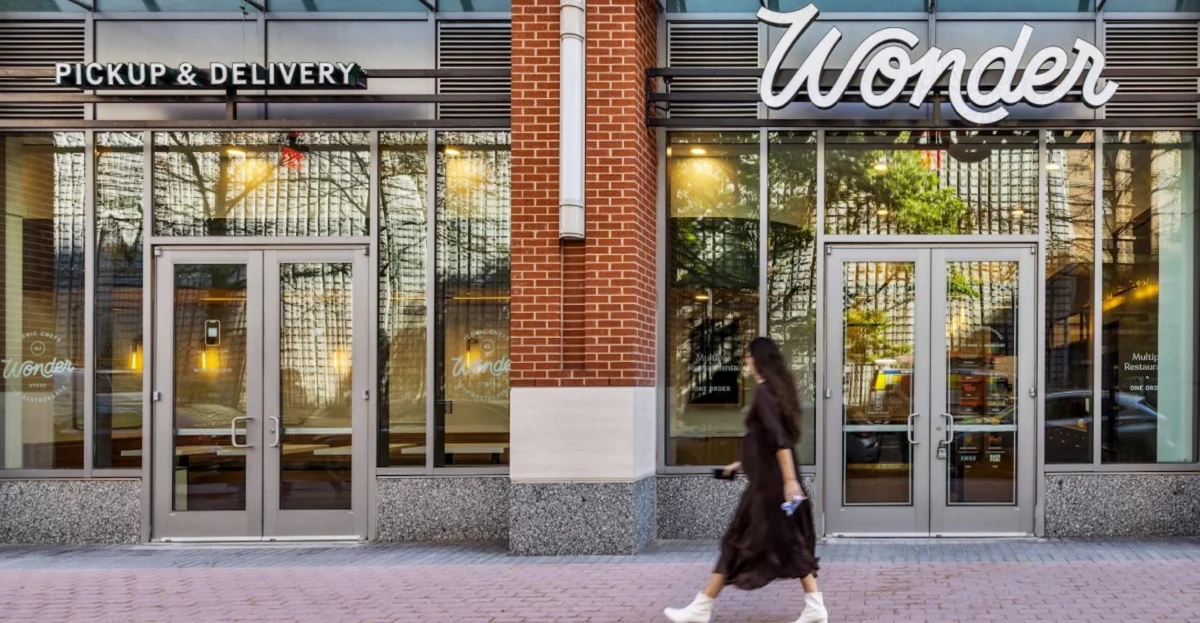
The restaurant technology sector experienced a robust August, marked by significant acquisitions, strategic partnerships, and substantial funding rounds, underscoring the industry’s continued evolution and its embrace of innovation. Amidst what is typically a slower summer period, the landscape saw dynamic shifts, including the expansion of Wonder’s culinary empire, a pivotal pivot for autonomous delivery service Serve Robotics, and notable C-suite appointments and financial injections for companies focused on AI and back-office efficiency.
Wonder Continues Its Acquisition Spree with Salt Hank’s
Wonder, the ambitious food hall and delivery platform, further solidified its presence in the competitive New York City market by acquiring Salt Hank’s, a critically acclaimed single-unit restaurant renowned for its signature French dip sandwiches. This latest acquisition marks Wonder’s ongoing strategy to integrate popular, high-demand culinary concepts into its expansive network, which boasts over 140 outlets. The acquisition of Salt Hank’s, which opened just last year to widespread acclaim and consistent sell-outs, signals Wonder’s intent to leverage proven customer favorites to drive growth and reach a broader audience.
Salt Hank’s, co-founded by food influencer Henry Laporte (also known as Salt Hank), Ian Henderson-Charnow, and chef Daniel Rubenfeld, quickly garnered a cult following in the West Village. Its distinctive French dip sandwiches, characterized by their quality ingredients and expert preparation, led to significant wait times and a strong demand that often outstripped supply. By bringing Salt Hank’s into its fold, Wonder aims to replicate this success on a larger scale. The company has announced plans to introduce Salt Hank’s offerings at its Upper East Side location this fall, with the original Bleecker Street establishment set to remain operational.
This strategic move follows Wonder’s recent acquisitions of other well-regarded New York City eateries, including Blue Ribbon Fried Chicken and Mighty Quinn’s BBQ. These acquisitions are indicative of Wonder’s broader vision: to create a diversified portfolio of acclaimed food brands accessible through its integrated platform, catering to both dine-in and delivery preferences. The integration of these culinary powerhouses allows Wonder to tap into established brand loyalty and operational expertise, accelerating its expansion and market penetration.
The operational transition will see chef Daniel Rubenfeld joining the Wonder team to oversee the scaled production of Salt Hank’s menu. Henry Laporte will maintain a close advisory role, collaborating with Wonder as the brand expands. Ian Henderson-Charnow will also continue to contribute as an advisor, ensuring continuity and leveraging the original team’s deep understanding of the brand’s success factors. This collaborative approach suggests a commitment to preserving the authenticity and quality that made Salt Hank’s a sensation, while leveraging Wonder’s technological and logistical infrastructure for wider distribution.
Serve Robotics Navigates a New Course with Grubhub Partnership
In a significant development for the autonomous food delivery sector, Serve Robotics announced a new strategic partnership with Grubhub, a move that comes shortly after the dissolution of its relationship with Uber. This pivot highlights the dynamic and sometimes volatile nature of collaborations in the rapidly evolving food delivery ecosystem.
Uber, which had taken a stake in Serve Robotics in 2021, officially divested from the autonomous delivery company in early August. During an earnings call on August 6, Serve CEO Ali Kashani articulated that the divergence stemmed from differing strategic visions for their collaboration. Kashani indicated that Serve did not anticipate renewing its partnership with Uber, which was slated to expire in early 2027. This announcement signaled a period of strategic recalibration for Serve Robotics, prompting a search for new distribution channels to deploy its sidewalk-based robotic delivery fleet.
The subsequent announcement of a partnership with Grubhub marks a critical step in Serve’s strategy to expand its operational footprint. This collaboration will enable Grubhub customers to access robot delivery services in key metropolitan areas, including Chicago, Los Angeles, and Alexandria, Virginia. Serve Robotics is known for its distinctive, googly-eyed sidewalk robots designed for efficient and eco-friendly food delivery. The company also maintains an existing partnership with DoorDash, further diversifying its market reach. The integration with Grubhub is expected to significantly increase the volume and geographic availability of Serve’s autonomous delivery services, positioning the company for continued growth in the competitive last-mile delivery market.
The implications of this partnership extend beyond Serve Robotics. For Grubhub, it represents an opportunity to enhance its delivery capabilities by incorporating a novel, potentially more cost-effective, and environmentally friendly delivery method. As the demand for faster and more sustainable delivery options grows, Serve’s technology offers a compelling solution. The success of this collaboration could set a precedent for further integration of autonomous delivery robots into major food delivery platforms, potentially reshaping the future of urban logistics.
Qu Secures Industry Veteran Paul Rubin for Key Leadership Role
Qu, a point-of-sale (POS) system provider specializing in quick-service restaurants (QSRs), has bolstered its executive team with the appointment of Paul Rubin as its Chief Product and Technology Officer. Rubin’s extensive experience in restaurant technology, particularly his pioneering role in cloud-based POS systems, is expected to drive Qu’s innovation agenda.
Rubin is widely recognized as a significant figure in the evolution of restaurant technology. He is the founder of Brink POS, an early adopter and innovator in cloud-based POS solutions that revolutionized how restaurants manage operations. Brink POS was acquired by Par Technology in 2014, after which Rubin spent over a decade at Par, holding various leadership positions, including Chief Strategy Officer since 2016. His deep understanding of the industry’s technological needs and his track record in developing scalable solutions make him a valuable asset to Qu.
At Qu, Rubin is tasked with guiding the company’s product development and technological advancements, with a particular focus on helping restaurants navigate the complexities of emerging technologies like artificial intelligence (AI) and edge computing. This appointment follows Qu’s recent launch of its AI-powered Intelligent Commerce Platform, signaling the company’s commitment to leveraging AI to enhance restaurant operations, improve customer experiences, and drive efficiency. Rubin’s expertise will be instrumental in realizing the full potential of these new platforms and integrating them seamlessly into the restaurant workflow.
The hiring of Rubin underscores Qu’s strategic focus on innovation and its ambition to remain at the forefront of POS technology. As restaurants increasingly seek sophisticated technological solutions to manage rising costs, labor shortages, and evolving consumer expectations, Qu aims to provide tools that streamline operations, optimize customer engagement, and unlock new revenue streams through intelligent commerce.
Palana AI Garners $20 Million to Expand Its Multimodal AI Platform
Palana AI, a company that initially focused on AI-powered voice systems for restaurants, has announced a significant expansion of its offerings and secured $20 million in Series A funding. The company is broadening its scope to become a "multimodal AI operating layer" applicable to a wide range of businesses, not just the restaurant industry.
While Palana AI continues to provide AI solutions for answering phones and taking orders, its evolutionary trajectory includes developing AI capabilities to identify and capitalize on missed revenue opportunities. Furthermore, the company has ventured into AI vision, employing camera technology to monitor restaurant operations, pinpoint areas for improvement, and enhance overall efficiency. This expansion reflects a growing trend in AI adoption, moving beyond single-function applications to comprehensive operational intelligence.
The $20 million funding round, which included contributions from prominent investors such as Ardenwood Ventures, CrimsonOx, UpHonest, Turbo, Llama Ventures, Neo, Fusion Fund, Defy, and Maynard Webb, will fuel Palana AI’s research and development efforts, market expansion, and talent acquisition. This investment underscores the market’s confidence in Palana AI’s vision to provide an integrated AI infrastructure that can drive significant business value across diverse sectors. The company’s ability to adapt and expand its AI capabilities positions it to address a broader spectrum of business challenges, from operational efficiency to customer engagement and revenue optimization.
MarginEdge Secures $80 Million to Enhance Back-Office Automation with AI
MarginEdge, a provider of back-office automation solutions for restaurants, has successfully raised $80 million in a Series D funding round, bringing its total funding to $162 million. The company’s technology focuses on digitizing and streamlining essential back-office functions such as inventory management and invoicing. This latest capital infusion will be primarily directed towards integrating more advanced AI capabilities into its platform.
The company is pioneering AI-driven tools designed to assist restaurants in managing their complex operational data. Notable innovations include an AI assistant named "Tom the Tomato," which aids in inventory-related tasks, and a Model Context Protocol (MCP). The MCP allows restaurants to securely interact with their data through AI chatbots like ChatGPT and Claude, enabling more intuitive and efficient data analysis and operational decision-making. This strategic integration of AI aims to reduce manual labor, minimize errors, and provide deeper insights into restaurant performance.
The Series D round was led by Schooner Capital and Ten Coves Capital, with participation from existing investors Osage Venture Partners, Derive Ventures, and Western Alliance Bank. This significant funding underscores the growing demand for sophisticated technological solutions that address the often-overlooked back-office complexities of the restaurant industry. By leveraging AI, MarginEdge is poised to empower restaurants with greater financial control, improved operational efficiency, and enhanced data-driven insights, ultimately contributing to their profitability and sustainability. The substantial increase in total funding signifies a strong market appetite for solutions that promise to automate and optimize critical business processes.
OpenTable Unveils a Suite of New AI-Powered Features
OpenTable, a leading restaurant reservation platform, has announced the launch of over 20 new features for its restaurant partners, a significant portion of which are powered by artificial intelligence. This represents the largest product update in the company’s history, signaling a strategic shift towards leveraging AI to enhance the dining reservation experience and operational efficiency for its clients.
While specific details of all 20+ features have not been fully disclosed, the emphasis on AI suggests a focus on areas such as personalized recommendations, optimized table management, predictive demand forecasting, and improved customer communication. For restaurants, these advancements could translate into more efficient seating arrangements, reduced no-shows through intelligent reminders, and enhanced guest satisfaction through tailored service. For diners, the new features may offer more intuitive booking processes and personalized dining suggestions. The breadth of these updates indicates OpenTable’s commitment to evolving its platform to meet the dynamic needs of the restaurant industry and its patrons in the digital age.
Rain Acquires Ansa, Expanding Digital Wallet Capabilities
Rain, a company specializing in stablecoin-based cards and digital wallets, has acquired Ansa, a platform that provides digital wallets and payment solutions for small restaurants, akin to the model used by Starbucks. This acquisition is expected to enhance Rain’s ability to offer versatile digital payment solutions across a broader range of businesses.
According to Rain, the integration of Ansa’s technology will enable customers to utilize digital wallets across multiple businesses, rather than being restricted to a single merchant. This expansion is facilitated by Rain’s existing partnerships with major payment networks like Mastercard and Visa. The acquisition aims to create a more unified and accessible digital payment ecosystem for both consumers and businesses.
Sophia Goldberg, the founder of Ansa, will join Rain as the Head of Payments, bringing her expertise in developing and scaling payment solutions for the restaurant sector. While the financial terms of the acquisition have not been disclosed, the strategic intent is clear: to leverage Ansa’s established presence in the small business and restaurant market to broaden Rain’s reach and offer more integrated financial tools. This move signifies a growing trend of consolidation and strategic partnerships within the fintech and restaurant technology sectors, as companies seek to offer comprehensive digital solutions.
