

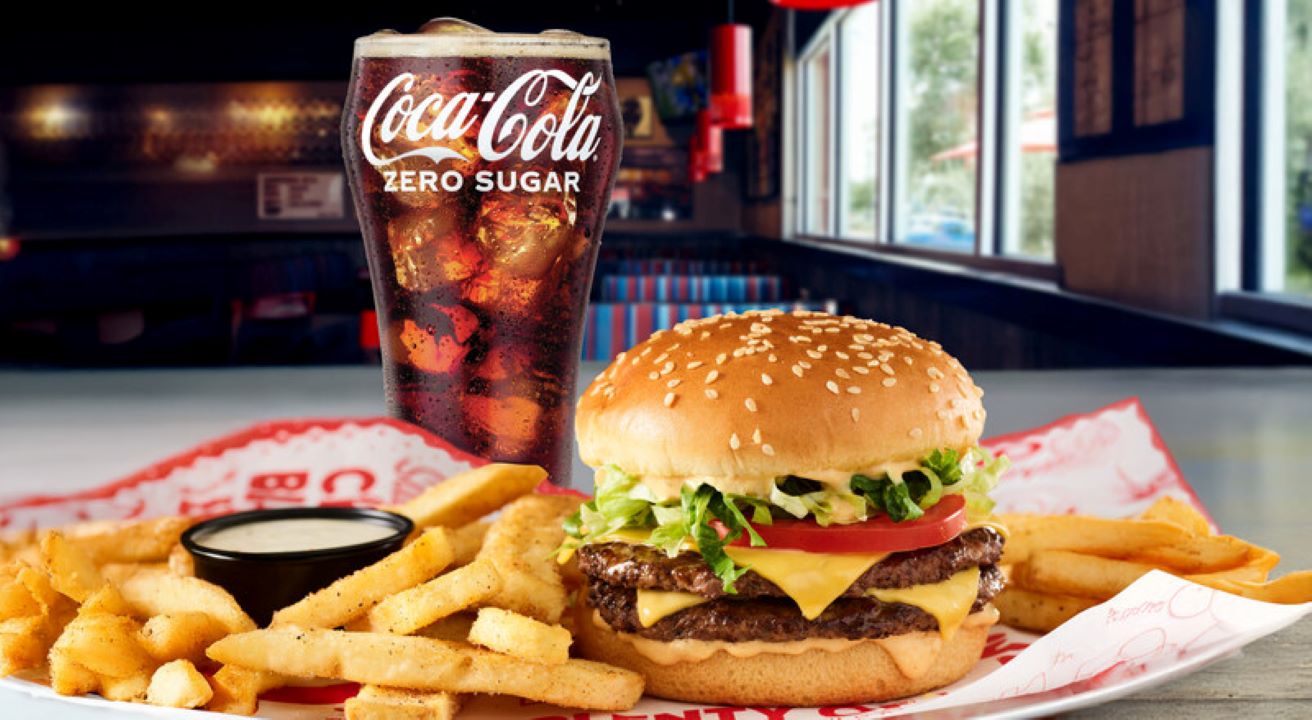
Red Robin’s ambitious "First Choice" strategy, unveiled in July 2025, is demonstrating significant traction, with a primary focus on improving customer traffic showing promising early results. Chief Executive Officer Dave Pace attributed much of the company’s recent momentum to the successful introduction and enhanced marketing of its "Big Yummm" burger and a suite of value-oriented meal options. This strategic pivot, aimed at re-establishing Red Robin as a top-of-mind dining destination, appears to be resonating with consumers seeking both affordability and the full Red Robin experience.
The Big Yummm Deal: A Catalyst for Customer Engagement
The cornerstone of this revitalization effort, the $9.99 "Big Yummm" burger deal, initially launched in July 2025, quickly became a significant draw. During the fourth quarter of fiscal year 2025, this promotion alone accounted for an impressive 10% of the restaurant’s guest mix. Recognizing its widespread appeal and impact, Red Robin expanded this successful initiative in January 2026 by introducing a comprehensive six-item menu. This expanded offering provides customers with a wider array of choices, with meal prices ranging from an accessible $9.99 to a more premium $16.99, catering to diverse budgets and preferences.
"Each meal includes our signature bottomless sides and beverages, reinforcing value while preserving the full Red Robin experience," stated CEO Dave Pace during a recent investor call. He further elaborated on the strategic intent behind this menu evolution: "The new menu also broadens our premium offerings, creating a deliberate barbell approach that balances compelling value with higher-priced indulgent options to expand guest choice across dayparts and occasions." This "barbell strategy" is designed to attract a broader customer base by offering both budget-friendly options and more upscale choices, ensuring that Red Robin can meet the needs of various dining occasions, from a quick lunch to a more elaborate dinner.
The impact of this expanded value menu extends beyond simply attracting more diners. Early data indicates that the initiative has not only boosted customer traffic but has also contributed to an increase in average check sizes. This dual effect is crucial for Red Robin’s profitability, suggesting that customers are not only visiting more frequently but are also spending more per visit, a testament to the perceived value and quality of the offerings.
A Shift Towards Targeted Marketing and Operational Efficiency
Beyond menu innovation, Red Robin has undergone a significant transformation in its marketing approach. The company has moved away from broad, general campaigns towards a more personalized and targeted strategy. This shift was informed by an in-depth analysis of its diverse market landscape, enabling the development of locally relevant messaging for each of its operating regions. According to Pace, this granular approach has demonstrably improved the return on marketing investment.
"It’s a holistic shift in the way we’re approaching marketing," Pace explained. "Not only is it a change in the absolute spend, but it’s been a change in the efficiency of it. We are probably two-thirds of the way through the implementation of this. Clustering, identifying competitive groups, understanding trade area dynamics, and then allocating messaging priorities to each of those – we’ve got those in place. We’re putting them in action and trying to understand what’s the response. As we see these responses, we’ll continue to reallocate among those clusters."
This data-driven marketing strategy allows Red Robin to allocate its resources more effectively, ensuring that advertising dollars are spent on initiatives that are most likely to resonate with local customer segments. By understanding the unique competitive pressures and consumer behaviors in different markets, the company can tailor its promotions and communications to maximize impact and drive traffic more efficiently.
In parallel with its revenue-generating initiatives, Red Robin has also been diligently focused on identifying and implementing cost-saving efficiencies across the business. These efforts have already resulted in a significant reduction of over $4 million in general and administrative expenses, a figure that the company plans to further decrease throughout the current fiscal year. This commitment to operational excellence underscores a broader financial strategy that includes the refranchising of select company-owned locations. The proceeds generated from these refranchising efforts are earmarked for debt reduction, strengthening Red Robin’s financial foundation.
Modernizing the Dining Experience: Restaurant Refreshes and Technology Upgrades
Red Robin’s commitment to enhancing the overall customer experience is also evident in its physical restaurant upgrades and technological advancements. The company completed 20 restaurant refreshes in fiscal year 2025, with plans for further modernization expected in the current year. These renovations are designed to create a more inviting and contemporary atmosphere for diners.
On the technology front, Red Robin is actively investing in solutions aimed at improving both the customer and employee experience. The company has begun replacing older handheld tablets used by servers with newer, more advanced devices. Additionally, upgrades to in-table ordering systems are being implemented to streamline the ordering process, reduce errors, and enhance service speed. These technological enhancements are critical in a competitive landscape where efficiency and a seamless digital experience are increasingly important differentiators.
Embracing Artificial Intelligence for Enhanced Operations
In a forward-looking move, Red Robin is exploring the potential of artificial intelligence to gain a competitive edge and further optimize its operations. CEO Dave Pace highlighted the company’s launch of an enterprise-wide ChatGPT platform, which is being introduced to managing partners across the organization. This AI tool is designed to assist in critical areas such as labor cost optimization, management of cost of goods sold, and the enhancement of customer service tasks.
"We’re in the very early stages of this, but we’ve introduced the AI tool, and our ops team has run with it, and created some custom GPTs they’ve introduced at the restaurant level that give our managing partners the ability to understand labor spend on a daily basis, forecasting more effectively," Pace noted. The implementation of AI is expected to unlock new opportunities for cost savings, particularly within labor management, by providing more accurate forecasting and analytical insights. This proactive embrace of emerging technologies signals Red Robin’s dedication to innovation and its commitment to staying ahead in a rapidly evolving industry.
Financial Performance and Future Outlook
The strategic initiatives undertaken by Red Robin are beginning to translate into improved financial performance. While the fourth quarter of fiscal year 2025 saw a 3.3% decrease in same-store sales, this was primarily driven by a 3.6% decline in traffic, which was partially offset by a 0.3% increase in average check. For the full fiscal year 2025, same-store sales experienced a modest decline of 0.3%, with a 3.8% decrease in traffic being counterbalanced by a 3.5% increase in average check.
Despite the traffic challenges, profitability has seen notable improvement. Pace emphasized that net pricing contributed only 1.6% to these results, underscoring that the company’s performance enhancement is increasingly reliant on a stronger consumer proposition and enhanced operating efficiency, rather than solely on price increases. This focus on operational improvements and value-driven offerings is a key takeaway from Red Robin’s recent financial reporting.
A significant indicator of financial health is the substantial growth in EBITDA (earnings before interest, taxes, depreciation, and amortization), which increased by 53% to $69.7 million in fiscal year 2025. Furthermore, restaurant-level margins saw a healthy increase of 190 basis points, reaching 12.7%. These metrics demonstrate that Red Robin’s strategic adjustments are leading to improved profitability and operational effectiveness at the restaurant level.
Looking ahead, Red Robin has projected a positive outlook for fiscal year 2026. The company anticipates same-store sales to range between 0.5% and 1.5%, signaling a return to modest growth. This forecast reflects the continued expected impact of the "First Choice" strategy, the ongoing marketing refinements, and the sustained focus on operational efficiencies.
The trajectory of Red Robin under Dave Pace’s leadership illustrates a company actively adapting to market dynamics. By leveraging value-driven menu items, implementing precise marketing strategies, investing in technology, and prioritizing operational efficiency, Red Robin is positioning itself to regain its footing and emerge as a more competitive and preferred dining option in the casual dining sector. The ongoing success of the "Big Yummm" deal and the broader "First Choice" strategy will be closely watched as indicators of the company’s sustained recovery and future growth.
Alicia Kelso, Executive Editor, Nation’s Restaurant News
February 26, 2026
3 Min Read