

Brinker International’s second-quarter earnings report, ending December 24, placed a spotlight squarely on its flagship casual-dining establishment, Chili’s Grill & Bar. Following an unprecedented streak of 18 consecutive quarters of same-store sales growth, a period that cemented its status as a foodservice powerhouse, the brand faced a significant comparative hurdle. The previous year’s second quarter had boasted an exceptional plus-31% in comparable sales, leading many to anticipate a plateau, or even a decline, for Chili’s. However, the brand defied these predictions, delivering a remarkable 8.6% same-store sales increase. This performance further solidified its impressive two-year growth stack of 43%, propelling Chili’s from a seemingly stagnant casual chain with approximately $3 billion in annual sales to a rapidly expanding enterprise nearing the $5 billion mark within a three-year timeframe.
This dramatic transformation is not an accident but the result of a meticulously designed, three-year turnaround plan orchestrated by Kevin Hochman, who was appointed CEO of Brinker International in 2022. Hochman, a seasoned executive with a proven track record in revitalizing brands, previously served as CMO and then President of KFC U.S. At KFC, he was instrumental in guiding the chicken chain through a period of sustained growth and conceptualized its iconic advertising campaigns featuring a rotating cast of celebrities portraying Colonel Sanders, beginning in 2015.
Hochman’s strategy for Chili’s was multifaceted, focusing on comprehensive investment across all operational facets and a revitalized marketing approach, spearheaded by his hand-picked Chief Marketing Officer, George Felix. This integrated plan has not only met but exceeded expectations, with a viral moment involving a mozzarella stick cheese pull becoming an unexpected, yet potent, catalyst. In an industry where "turnaround plans" are frequently discussed, Chili’s trajectory now serves as a potential blueprint, worthy of academic study.
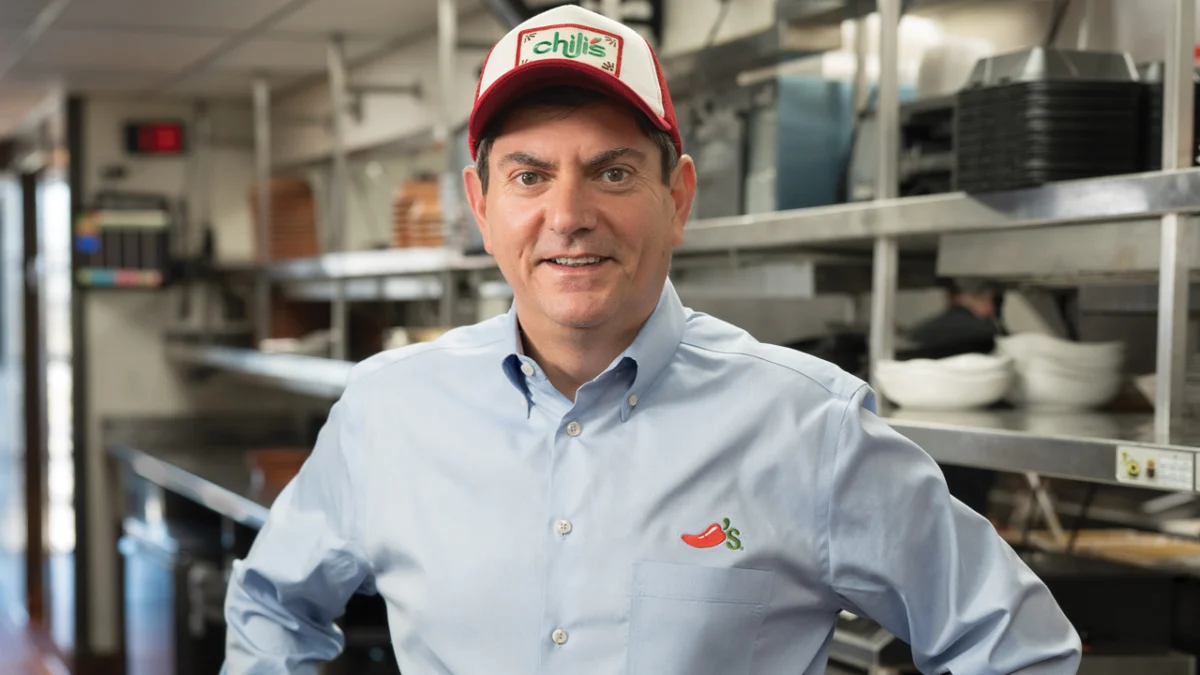
Following the announcement of these stellar second-quarter results, Hochman sat down with NRN’s editor-in-chief at a Dallas Chili’s location to provide an in-depth look at the strategic blueprint that has fueled this resurgence. He also reflected on how his prior experiences at Procter & Gamble and Yum! Brands provided the foundational knowledge and leadership principles necessary for this ambitious undertaking.
Early Career Foundations: Lessons in Growth and Communication
Hochman’s leadership philosophy is deeply rooted in the early years of his career at Procter & Gamble. There, he encountered exceptional managers who instilled in him the critical importance of self-assessment and continuous improvement. "They taught me the importance of, what do you need to work on? What are you good at? What do you appreciate about yourself? And then, what are the things that would make you even more effective? And then we really dedicated time and energy and focus on doing that," Hochman recalled. He extended this principle beyond individual development, asserting, "I believe that’s true not just with people and skills; I believe that’s true about businesses, too."
This perspective proved invaluable upon his arrival at Chili’s. He recognized the brand’s inherent strengths while also identifying significant opportunities for enhancement. "When I came [to Chili’s, there were] tons of great strengths about this business… but also lots of things that we could do to make it more effective," he stated. Hochman’s core belief is that "You’re never a finished product. Regardless of how much success that you’ve had, there’s always something that you can work on to be even better. And I think if you have that kind attitude toward yourself as a person and your teams, you’re going to be pretty successful."
Another pivotal lesson from his formative years in corporate America was the necessity of clear and accessible communication. In his early twenties, fresh out of college, Hochman found himself struggling to decipher corporate jargon. This experience led him to a profound realization: "I remember thinking to myself that if I ever got to a position of power in one of these companies, I would speak like a regular person. It’s really frustrating not understanding stuff." He later understood that if he found something unclear, it was likely a common issue for many others. "So I learned very early on that if you don’t know how to communicate clearly and succinctly what you’re trying to accomplish, it’s going to be really difficult to actually execute with excellence."
Yum! Brands: A Crucible for Strategic Acumen
Hochman’s tenure at Yum! Brands, following his time at Procter & Gamble, provided a rich training ground for strategic leadership and brand revitalization. He credits the leaders at Yum! with imparting invaluable lessons. "I learned so many great lessons from Yum leaders. I mean, what a great training ground," he remarked.
He cited former KFC CEO Micky Pant, who emphasized the importance of "doing the right thing." Hochman recalled presenting an initial turnaround plan for KFC’s advertising, to which Pant responded, "This is brilliant. This is exactly what the brand’s about. Just stay focused on that and it will work." This guidance, coupled with a focus on core product strengths like "Original Recipe fried chicken" and ethical practices, contributed to eight consecutive years of growth at KFC.
Former Yum! CEO David Novak taught Hochman the principle that "the answers are always in the room." This philosophy underscores the importance of active listening and asking the right questions, not with the intention of pushing a pre-determined agenda, but with a genuine desire to understand and improve. "And if you’re open-minded to the things that are going to be inconvenient to hear and then get after it with those folks, those plans will always be better," Hochman explained.
This approach directly addresses a common paradox in the restaurant industry: the apparent gap between knowing what needs to be done and actually doing it. Hochman noted, "I think everybody kind of knows what the right thing to do is. I don’t think there’s an argument that you need to have clean restaurants and the food needs to be hot and fresh, and the service needs to be kind, and the restaurant needs to not be falling apart." The challenge, he contends, lies in the execution, which often requires significant investment and is "hard. It’s not convenient to invest a ton of money in labor."
Hochman illustrated this with a stark example: the state of Chili’s physical infrastructure upon his arrival. "Almost 40% of [Chili’s] restaurants had leaky roofs when I started. You’ve got to fix that. It’s tens of millions of dollars, but do you want to work in a restaurant or eat in a restaurant with that issue?" He emphasized the company’s shift away from debating the necessity of such repairs. "We no longer debate whether we should do these things… We talk ourselves out of, ‘Well, the leak is in the heart of house and not in the dining room, is it really that important?’ Yeah, of course it’s important. We want to attract great employees. You’ve got to have a great environment that they work in. So we don’t debate this. We just talk about how we do it."
Embracing the Challenge: A Turnaround Architect
When asked if he is drawn to challenging situations, Hochman offered a candid, albeit somewhat self-deprecating, response. "It’s a really awful answer I’m going to give you, but it’s true: I hate disappointing people. I hate it." He acknowledged that this aversion can be both a strength and a weakness but is a fundamental motivator.
Hochman finds turnarounds particularly appealing not only for the inherent challenge but also because they often operate with "no expectations." This allows for a freedom to execute necessary actions without the pressure of pre-existing benchmarks. "There’s only upside when you have the freedom to just do what needs to get done and there’s very little risk and nobody has any expectations," he stated.
The opportunity to lead Brinker International and spearhead the revitalization of Chili’s was met with a clear understanding of the task ahead. "I understood what the challenges were. And I believed that if we could fix those challenges… I believed we could turn the business around. That was my hypothesis coming in," Hochman explained.
His initial approach involved extensive fieldwork. "I spent several months doing way more market visits. I still do at least one a month, but I was doing two to three a month and doing these listening sessions with all levels of the company to understand what everybody thought needed to get done, and I heard a lot of the issues." This direct engagement with frontline employees provided him with a ground-level perspective on the challenges, rather than relying solely on investor calls or external analyses.
A recurring theme from these visits was the pervasive issue of "learned helplessness." Hochman described encountering managers who had grown accustomed to reporting problems like leaky roofs, only to have their pleas for repair go unanswered. "I can’t blame them, you know? I’m asking for something to get done and it’s not getting done. At some point I’m just going to stop asking."
Hochman’s strategy to combat this involved a firm commitment to addressing these issues. "I was very much prepared to get these things fixed… I’d say, ‘Hey, we’re fixing things now, so I need you to put that in [to the company system], and if it’s not fixed within a couple of weeks, here’s my phone number and my email. I’ll make sure it gets fixed.’ This is not going to be tolerated anymore." This demonstrated commitment to resolving long-standing problems was crucial in rebuilding trust and momentum.
The Three-Year Turnaround Blueprint: A Phased Approach
Upon joining Brinker, Hochman presented a clear, phased vision to the board, framing the turnaround using an NFL analogy. "I told my board we were setting our three-year targets. I was probably three months into the job. I think historically they’ve set a big bull target. And I was like, we’re like an NFL team and we’re rebuilding. So, year one, I hope to go 6-10 and build some good behaviors that you guys feel excited about. And we start seeing some internal metrics improving in year two; I think maybe we can make a wild card. And in year three, you should expect we’ll make a deep run in the playoffs."
This strategic roadmap acknowledged that significant change takes time. Hochman cautioned against the allure of "silver bullets" in turnaround situations. "The reality is, it took a long time to get to the place that you’re in; it’s going to take some time to get out of the place that you’re in."
The Chili’s turnaround has not only met but accelerated this timeline. "We shaved 6-12 months off that timing in terms of making a deep run in the playoffs. I think by the end of year two we went deep in the playoffs with some big numbers, right?" Hochman indicated, showcasing the rapid progress achieved.
Cultivating a Winning Culture: The Bill Walsh Philosophy
Hochman draws inspiration from the coaching philosophy of the late Bill Walsh, legendary coach of the San Francisco 49ers, particularly from Walsh’s book, "The Score Takes Care of Itself." This approach emphasizes that focusing on the right behaviors and fostering a strong culture will naturally lead to positive outcomes, rather than solely managing to specific metrics.
"It’s all about the behaviors. It’s like, I don’t care about the score. I don’t care about yards after the catch or whatever. He’s like, I will focus on the things that are important, which means it starts with culture and great people – people want to be here, and they have the right discipline," Hochman explained. This philosophy translates to ensuring the team has the necessary discipline and is practicing the right things to achieve success. "If we do the right things, the scoreboard will take care of itself."
This contrasts with a common pitfall where companies become overly focused on metrics, losing sight of the underlying behavioral changes. "A lot of times you see companies manage for the metric and then they lose sight of the intent of the behavior change," Hochman observed. While acknowledging the necessity of metrics for performance evaluation – "We certainly have a ton of metrics in our business that we look at to understand [performance]" – Chili’s leadership now prioritizes project status and progress. "We focus on the status of the project, the status of X and Y simplification, the status of this equipment project, and is this progressing the way we want it to progress. We have confidence that we’re making the right decisions, and that if we do these things well, the metrics will follow."
Marketing as a Supercharger: From Operations to Virality
While operational improvements formed the bedrock of the turnaround, a revitalized marketing strategy has been instrumental in amplifying its impact. Hochman attributes the brand’s viral moments, such as the now-famous mozzarella stick cheese pull, to a combination of preparation and opportunity, echoing the sentiment of legendary football coach Lou Holtz: "Luck is where preparation meets opportunity."
"Certainly the cheese-pull example is No. 1: We had been doing a lot to the operation well before that cheese pull ever happened, hundreds of millions of dollars investment in the buildings and labor, simplifying the menu," Hochman stated. The marketing team had been strategically briefing influencers about the Triple Dipper, recognizing its appeal to younger demographics due to its customizable assortment. Their strategy involved engaging a broad range of influencers, encouraging organic sharing of their genuine experiences. "It was like, ‘Here’s why people love the Triple Dipper. This is what our guests say. Feel free to use it and use it the way you want to use it and share why you like it and do it in an organic way, not the way that the company wants you to do it.’"
This strategic groundwork provided the "preparation." The "opportunity" arrived when an influencer’s post of the cheese pull resonated widely. Crucially, Chili’s was equipped to handle the surge in interest. "We have amazing social media managers that listen to all this stuff. And very early on, we started to figure out how to put fuel on the fire and create innovation around the cheese pull that we’ve done several times now to continue to build the business."
Hochman underscored the critical interdependence of operations and marketing. "It’s critically important to understand that you’ve got to be doing the fundamentals well before you have an opportunity." He noted that many brands have gone viral, but without a solid operational foundation, such moments can backfire. "If we hadn’t improved the operation and we’d gone viral in the cheese pull and people came in and the thing doesn’t pull or it takes 25 minutes to get the cheese or it’s cold, guess what they’re filming about? ‘This is a bunch of bogus. It’s the same old Chili’s, don’t believe the hype.’"
However, the reality at Chili’s was different. Customers who came in seeking the viral sensation often found an elevated dining experience. "People came in, they had the experience in there of, ‘Oh my God, you’ve got to see this thing.’ And that’s when it built on top of each other."
Hochman reiterates his belief in the power of consistent, ethical action. "I do think I just have a lot of confidence that if you do the right things, good things happen." He observes that while this principle is often taught in childhood, many businesses fail to adhere to it due to convenience or cost. "That’s why most businesses don’t do the right thing, because it’s inconvenient or it’s expensive. You have to trust that if you do the right thing, fortune will start coming your way."
The Championship Aspiration: Defining Success Beyond the Playoffs
Having achieved a "deep run in the playoffs," Hochman articulates the ultimate goal for Chili’s and Brinker International: "to be a top-tier restaurant company with growth that delivers top-tier shareholder returns." He identifies Texas Roadhouse as a benchmark in the casual dining sector, citing its consistent growth in top-line revenue, profitability, and customer traffic, alongside exceptional shareholder returns. "We’ve said from day one, that’s what we want. And I think we’re there now. Now it’s about maintaining that high level."
The next phase of this ambitious plan involves expanding the brand’s physical footprint. "What’s next for us is we’ve got to start building like some of the big guys do, just expanding our footprint in areas where there’s not Chili’s," Hochman stated. This strategic real estate growth, projected at 2-3% annually, combined with industry-leading same-store sales, would create a "dynasty." He draws a parallel to the sustained success of Tom Brady and Bill Belichick with the New England Patriots.
"That’s what we want now. So it’s like, how do we not be complacent with what we’ve done, and how do we continue to improve the fundamentals, and how do we win multiple championships year after year?" Hochman concluded, underscoring a commitment to sustained excellence and a future of continued growth and market leadership for Chili’s.