

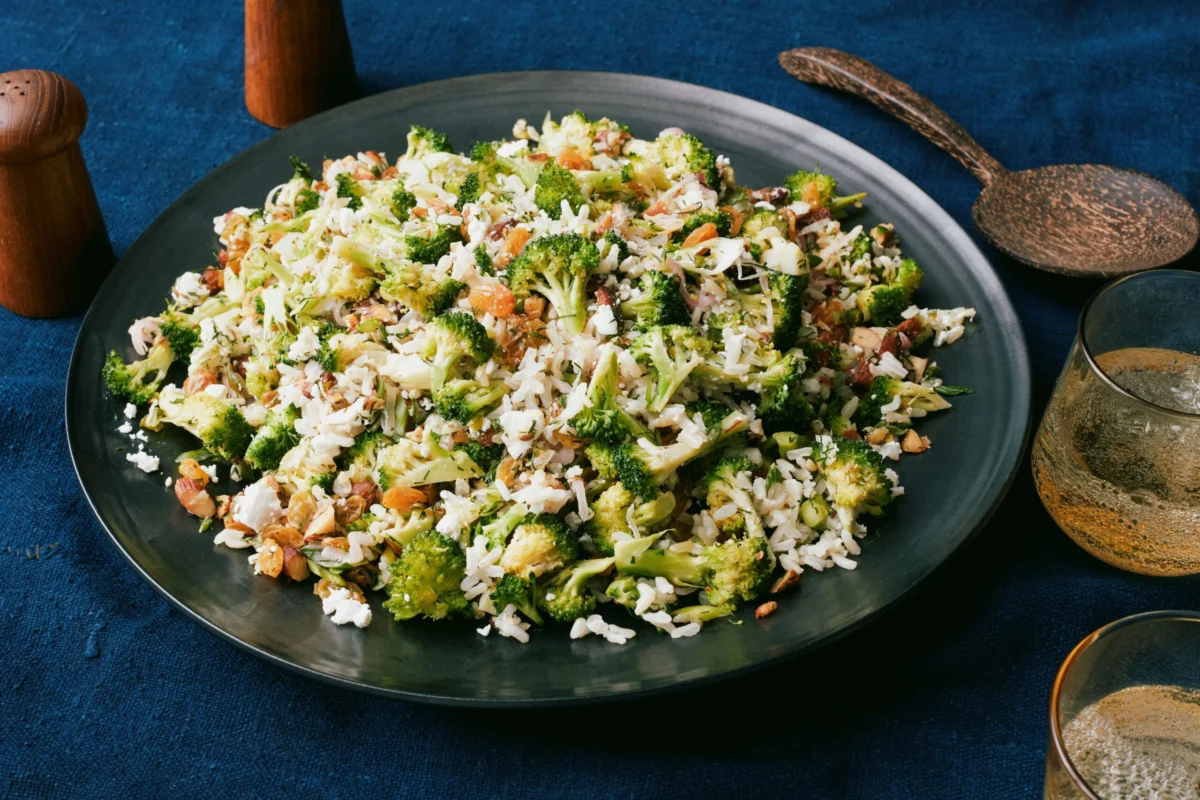
Broccoli, the unassuming yet indomitable green florets that grace supermarket aisles and home refrigerators worldwide, stands as a testament to culinary reliability and nutritional fortitude. Often the default choice when seeking to fulfill the daily quota of "eating the rainbow," this cruciferous vegetable consistently delivers, offering a silent, sturdy presence ready for integration into an expansive array of dishes—from warming soups and crisp salads to inventive sandwiches and dozens of other culinary creations. Its versatility is perhaps best exemplified by innovative preparations such as a "confetti rice," a dish that deftly navigates the space between a refreshing salad, a substantial side, and a fulfilling vegetarian main course. This particular rendition, notably rich with more than a full pound of broccoli, masterfully balances its core ingredient with just enough rice to provide structure, creating a textural symphony of crunchy almonds, sweet chewy golden raisins, creamy feta, and the sharp bite of fresh jalapeño. The secret to unlocking broccoli’s best flavor in such preparations, avoiding the common pitfall of sulfurous notes, lies in a precise and minimal cooking approach: just enough heat to coax out its vibrant green hue, allowing residual heat and the acidity from lemon juice or vinegar to complete the delicate cooking process. This careful technique ensures the broccoli remains tender-crisp, preserving its inherent freshness and nutritional integrity. The resulting dish offers remarkable flexibility, equally delightful when served immediately and barely warm, at room temperature after a short rest, or as a highly practical make-ahead component for weekly meal preparation. For those incorporating animal proteins into their diet, it serves as an excellent accompaniment, pairing harmoniously, for instance, with a pan-seared chicken.
The Horticultural Journey and Nutritional Prowess of Broccoli
The lineage of broccoli (scientific name: Brassica oleracea Italica group) traces back to ancient Mediterranean civilizations, particularly the Roman Empire, where it was cultivated for its tender shoots and distinct flavor. Evolving from wild cabbage, its name is derived from the Italian word "broccolo," meaning "the flowering crest of a cabbage," a nod to its characteristic appearance. It arrived in North America in the 18th century but only gained significant popularity in the 20th century, becoming a supermarket staple due to improved cultivation techniques, refrigeration, and a growing awareness of its health benefits. Today, it is a globally consumed vegetable, cultivated extensively in regions with temperate climates, with major producers including China, India, and the United States.
Broccoli’s widespread appeal is not merely a matter of culinary convenience; it is underpinned by an impressive nutritional profile that positions it as a cornerstone of healthy eating. A rich source of essential vitamins and minerals, it contributes significantly to overall well-being. A single cup of chopped broccoli provides more than 100% of the daily recommended intake of Vitamin C, a powerful antioxidant crucial for immune function, skin health, and collagen synthesis. It is also an excellent source of Vitamin K, vital for blood clotting and bone metabolism, and a good source of folate, important for cell growth and function. Beyond these, broccoli contains appreciable amounts of potassium, which supports blood pressure regulation, and iron, essential for oxygen transport in the blood.
However, broccoli’s nutritional star power truly shines in its abundance of phytochemicals, particularly glucosinolates, which are converted into biologically active compounds like sulforaphane and indole-3-carbinol during chewing and digestion. These compounds have been extensively studied for their potential anti-cancer properties, including their ability to detoxify carcinogens, reduce oxidative stress, and inhibit tumor growth. Furthermore, broccoli is a significant source of dietary fiber, promoting digestive health, aiding in blood sugar control, and contributing to satiety, which can be beneficial for weight management. Its low caloric density, coupled with its high nutrient content, makes it an ideal food for diverse dietary regimens, aligning perfectly with public health recommendations for increased vegetable consumption, often encapsulated by phrases like "eating the rainbow" to ensure a broad spectrum of nutrients.
The "Confetti Rice" Dish: A Microcosm of Culinary Innovation
The "confetti rice" recipe serves as an exemplary illustration of how a common vegetable can be elevated through thoughtful preparation and combination. Far from being a mere afterthought, broccoli is the undeniable protagonist, with a generous portion exceeding one pound per serving ensuring its flavor and texture dominate. This emphasis on the vegetable aligns with contemporary dietary trends that advocate for plant-forward eating, where vegetables are not just sides but central components of a meal.
The textural interplay within the dish is meticulously crafted. The barely cooked broccoli, retaining its crispness, contrasts beautifully with the soft, comforting rice. This foundation is then enhanced by the addition of crunchy almonds, providing a nutty counterpoint; sweet, chewy golden raisins, which introduce a burst of natural sugars; creamy, salty feta cheese, offering a tangy richness; and finely diced jalapeño, delivering a refreshing, snappy heat without overwhelming the palate. This symphony of textures and flavors transforms what could be a simple side dish into a complex and satisfying culinary experience.
Crucially, the preparation method for the broccoli in this dish highlights a sophisticated understanding of its chemical properties. Overcooking broccoli breaks down its cellular structure, leading to the release of sulfur compounds that impart an unpleasant aroma and mushy texture. By merely blanching or steaming it briefly until it achieves a vibrant green, and then relying on residual heat and the acidity from lemon juice or vinegar, the integrity of the vegetable is preserved. The acid further brightens the flavor, preventing any dullness and ensuring the broccoli remains palatable and appealing, even after cooling. This technique is not just about taste; it also helps to retain more of the heat-sensitive nutrients, such as Vitamin C, which can be diminished by prolonged cooking.
The Evolution of Meal Preparation and Plant-Forward Eating
The concept of the "confetti rice" dish, particularly its suitability as a make-ahead meal prep item, resonates strongly with broader shifts in contemporary dietary practices and lifestyle management. The late 20th and early 21st centuries have witnessed a significant evolution in how individuals approach food consumption. Historically, home cooking was a daily ritual, but the rise of convenience foods, processed meals, and a faster-paced lifestyle gradually eroded this tradition for many. However, a counter-movement has emerged in recent years, driven by increased health consciousness, a desire for greater control over ingredients, and the strategic planning facilitated by social media and online culinary communities.
Meal preparation, or "meal prep," has transitioned from a niche practice among fitness enthusiasts to a mainstream lifestyle choice. Its growth is supported by data indicating a steady increase in consumer spending on meal kits and prepared healthy foods. Reports from market research firms often highlight that busy professionals and health-conscious individuals are increasingly seeking convenient yet nutritious options that can be prepared in advance. Dishes like the "confetti rice," which maintain their quality and flavor over several days, are perfectly aligned with this demand, offering a practical solution for maintaining a balanced diet throughout the week without daily cooking commitments.
Parallel to the rise of meal prep is the surging interest in plant-forward and vegetarian/vegan diets. Driven by concerns ranging from personal health and animal welfare to environmental sustainability, a significant portion of the global population is actively reducing meat consumption or adopting entirely plant-based diets. Statistics from various food industry analyses consistently show an upward trend in the sales of plant-based foods and a growing number of consumers identifying as flexitarian, vegetarian, or vegan. Broccoli, with its robust nutritional profile and remarkable versatility, naturally fits into this paradigm, serving as a foundational ingredient for countless plant-based recipes. The "confetti rice" recipe, being a substantial vegetarian main, directly caters to this demographic, demonstrating how vegetables can be the star of a meal rather than just a supporting act.
Broader Impact and Economic Significance
Broccoli’s prominence extends beyond individual dietary choices, influencing agricultural economies, food industry trends, and public health initiatives. As a globally significant crop, its cultivation provides livelihoods for farmers and supports complex supply chains that bring fresh produce to markets worldwide. Major agricultural regions invest heavily in research and development to improve broccoli yields, disease resistance, and post-harvest longevity, ensuring a stable supply. The economic value of broccoli production is substantial, contributing billions to the global agricultural sector annually. Challenges such as climate change, pest management, and water scarcity constantly push for more sustainable and resilient farming practices, underscoring its importance as a staple food source.
Within the food industry, broccoli’s consistent demand has spurred innovation. Food manufacturers are continually developing new ready-to-eat products, frozen vegetable blends, and even snack items featuring broccoli. Restaurants, from fine dining establishments to casual eateries, incorporate broccoli into diverse menu offerings, reflecting its broad appeal and adaptability. Recipes disseminated through culinary websites and magazines, much like the "confetti rice" example, play a vital role in inspiring home cooks, thereby driving demand for fresh produce and related ingredients. This symbiotic relationship between recipe innovation and consumer purchasing habits reinforces broccoli’s market position. Furthermore, the emphasis on utilizing whole vegetables in dishes contributes to efforts aimed at reducing food waste, a critical environmental and economic concern.
From a public health perspective, the accessibility and versatility of vegetables like broccoli are instrumental in addressing the persistent challenge of inadequate vegetable consumption. Despite widespread nutritional guidance, many populations still fall short of recommended daily vegetable intake. By promoting delicious and convenient ways to incorporate broccoli into meals, such as the "confetti rice, public health campaigns and nutritional educators can make significant strides in encouraging healthier eating habits. Its nutrient density provides a powerful argument for its inclusion in school lunch programs, hospital menus, and community health initiatives, acting as a readily available source of essential vitamins, minerals, and disease-fighting compounds.
Expert Perspectives and Future Outlook
Nutritionists consistently laud broccoli as a "superfood" due to its comprehensive array of health benefits. Dr. Anya Sharma, a prominent dietitian, states, "Broccoli is one of those rare vegetables that delivers on all fronts: high in fiber, packed with vitamins C and K, and rich in phytonutrients like sulforaphane that are truly protective. Incorporating it into daily meals, especially in creative ways like a confetti rice, is an excellent strategy for boosting overall health." Culinary experts also emphasize its unique attributes. Chef Julian Thorne remarks, "The beauty of broccoli lies in its ability to transform. From a simple steamed side to the star of a complex dish like confetti rice, its mild yet distinctive flavor and satisfying texture make it incredibly versatile. The key is understanding how to cook it minimally to preserve its integrity and vibrant color." Agricultural scientists, like Dr. Lena Petrov, highlight its sustainable potential: "As we face increasing global food demands and climate pressures, crops like broccoli, which can be grown efficiently and offer significant nutritional returns, become even more critical. Ongoing research into drought-resistant varieties and organic cultivation methods will ensure its continued role in global food security."
Looking ahead, broccoli is poised to maintain its status as a fundamental component of healthy diets and culinary innovation. As consumer preferences continue to lean towards plant-based options, convenient meal solutions, and nutrient-dense foods, broccoli’s inherent qualities will ensure its sustained relevance. The ongoing exploration of new recipes, cooking techniques, and pairing possibilities will only further cement its position in kitchens worldwide. Educational initiatives that highlight its health benefits and provide practical, appealing ways to prepare it, such as the aforementioned confetti rice, will be crucial in fostering greater vegetable consumption. The future of food will undoubtedly continue to feature this faithful green mainstay, adapting to new trends while steadfastly providing essential nutrition and culinary delight.
In conclusion, broccoli’s journey from ancient cultivation to modern culinary icon underscores its exceptional adaptability and profound nutritional value. Dishes like the "confetti rice" exemplify how this humble vegetable can be transformed into a vibrant, satisfying meal that caters to contemporary dietary needs and preferences. As a reliable source of essential nutrients, a versatile ingredient in diverse cuisines, and a significant contributor to agricultural economies and public health, broccoli’s enduring appeal is not merely a matter of culinary tradition but a reflection of its intrinsic importance in a health-conscious and ever-evolving food landscape.