

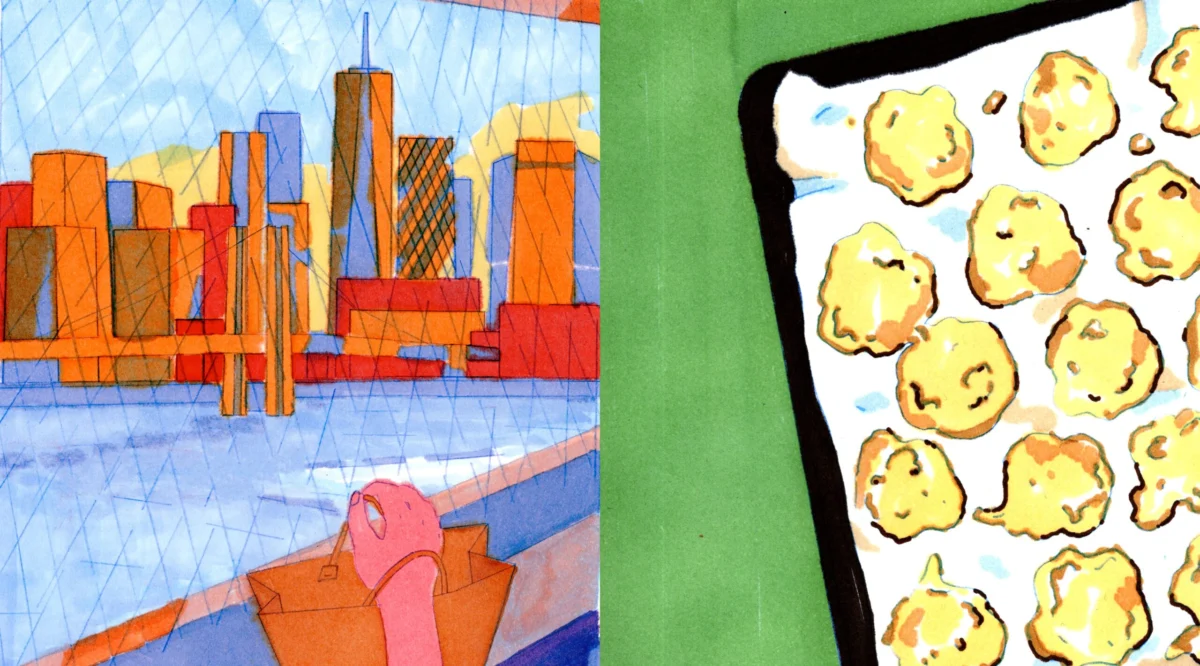
Tanya Bush, a prominent figure in the contemporary baking landscape, recently undertook an extensive walking and ferry journey from New York City to Jersey City, New Jersey, in pursuit of a singular, often overlooked, traditional Italian cookie: the brutti ma buoni. This expedition, detailed in a forthcoming column exploring long walks to food destinations, underscores a broader conversation within the culinary world regarding authenticity, the demands of visual culture, and the enduring value of artisanal craftsmanship. Bush, known for her multifaceted roles as co-founder of Cake Zine, pastry chef at Brooklyn’s Little Egg, and author of the narrative cookbook Will This Make You Happy, was accompanied by esteemed pastry chef Brooks Headley of Superiority Burger, a connoisseur of unique culinary experiences. Their destination was Bread and Salt Bakery, a celebrated establishment in Jersey City, where co-owner Rick shared insights into the evolving challenges faced by traditional bakeries in a rapidly changing market.
The Genesis of a Culinary Odyssey
The motivation for this arduous journey stemmed from Bush’s commitment to a new column format, requiring her to physically "earn" her food destinations through significant pedestrian travel. The chosen objective, Bread and Salt Bakery, had long been on her radar, admired for its dedication to artisanal baking. The specific quarry, however, remained an open question until their arrival. The plan, meticulously arranged with Headley, a pastry chef renowned for his innovative desserts and keen appreciation for understated culinary gems, involved an early start on a day Bush was ostensibly off duty.
The day began pre-dawn, with Bush’s alarm sounding at 4:30 a.m. This early awakening, typically reserved for professional obligations, initiated a rigorous preparation. Recognizing the imperative of appropriate attire for an urban trek, Bush selected hiking shorts and a tank top, anticipating the day’s scorching temperatures. Her preparation also included applying sunscreen and securing her Salomons, high-performance hiking shoes, essential for the extensive mileage ahead. Her initial route estimation, derived from a maps application, indicated a two-hour and seven-minute walk to the East Village meeting point. However, drawing on past experiences with mapping software underestimating her pace, Bush strategically deducted 17 minutes from the projected time, setting off with a determined stride.
Navigating the Urban Labyrinth: Manhattan to the Hudson
Bush’s initial leg of the journey involved traversing the Manhattan Bridge. This segment, though visually striking, was punctuated by the relentless sounds of the subway, creating an auditory backdrop she reportedly found grating. By the time she reached the designated meeting point in the East Village at 7:15 a.m., she had already consumed a matcha beverage and a red bean bun from Daronghua Bakery, a testament to the early start and the demands of the physical exertion. Her initial fatigue and reported "bad attitude" quickly dissipated upon encountering Brooks Headley, who greeted her with a smile. The exchange of a hibiscus iced tea marked the official commencement of their shared expedition.
Headley, whose culinary works and desserts at Superiority Burger, including griddled malt cakes, sticky sponge with macerated strawberries, and his signature date shake, are widely acclaimed, brought a unique perspective to the journey. His familiarity with the route, having undertaken similar walks to Jersey City on multiple occasions, provided valuable guidance. Their shared interest in food, coupled with Bush’s desire for a day spent outdoors, cemented the purpose of their joint venture.
The pair’s progression down Essex Street towards the lower tip of Manhattan revealed Headley’s distinct approach to urban exploration. Unlike Bush, who initially pressed forward with a focus on reaching the destination, Headley demonstrated a penchant for deliberate pauses and observations. He notably directed Bush’s attention to an under-bridge skate park, which he described as "the most beautiful skate park in the world," prompting a moment of quiet contemplation amidst the urban din. Further along, he highlighted a tiled sign humorously emblazoned with "DON’T BE A DICK" and an "interesting expo situation" at an 80s apartment complex diner, where the counter attendant regarded them with caution. These stops illustrated Headley’s capacity to find novelty and beauty in familiar surroundings, a stark contrast to Bush’s self-described professional inurement to routine.
Repetition, Revelation, and the Ferry Crossing
Headley’s extended tenure in professional kitchens, spanning over 15 years, became a point of reflection for Bush. She mused on the nature of culinary repetition – the daily mixing of brioche dough, the nuanced understanding of proofing in varying humidity, the dimpling of dough as it rises. For Bush, such repetition in her own work had, paradoxically, led to a sense of detachment, dulling the perceived marvel of processes like browning butter or crafting choux pastry. The seasonal arrival of new produce, such as blackberries, felt less like a miracle and more like an "inevitability." Witnessing Headley’s unflagging enthusiasm, as he pointed out the slant of light over the World Trade Center, prompted Bush to consider his ability to derive fresh insights from repeated experiences, suggesting that "the more times he walked the route the more he saw." This observation highlighted a philosophical divergence in their professional approaches – one finding renewed wonder in the familiar, the other seeking constant novelty.
Upon reaching the ferry terminal, Bush and Headley boarded their vessel. The Tuesday 11 a.m. crossing was remarkably quiet, with the two pastry chefs being the sole passengers. As the ferry sliced through the waters of the Hudson River, Bush observed the gradual diminishing of the Manhattan skyline, a visual representation of the distance covered and the vastness of the city yet to be explored. A solitary seagull accompanied their passage, its squawks a natural soundtrack to their journey towards the shores of New Jersey.
Arrival in Hoboken and the Anticipation of Bread and Salt
Disembarking in Hoboken, New Jersey, the historical depth of the area immediately became apparent. Headley drew attention to some of the oldest restaurant signs Bush had ever encountered, including the "Clam Broth House," established in 1900. By this point, the physical toll of the journey was evident, with Bush reporting aching calves. A strategic stop at the original Carlo’s Bakery, a landmark institution, was deemed necessary for "hydration." They procured water and, recognizing the graciousness of Rick, the co-owner of Bread and Salt, who was receiving them on a day the bakery was closed, they also purchased some pastries to present as a gesture of appreciation. Both gravitated towards a "dot cake"—a vanilla cake with buttercream, entirely enveloped in a vibrant, psychedelic layer of rainbow sprinkles—an online phenomenon neither had previously sampled. This choice inadvertently set the stage for a later comparison of modern, visually-driven treats with traditional, unadorned confections.
Bread and Salt: A Sanctuary of Artisanal Baking
By midday, Bush and Headley finally reached Bread and Salt Bakery in Jersey City. The journey had left Bush feeling "like an ice cream left out to melt," a vivid metaphor for her exhaustion. Rick, the bakery’s co-owner, characterized by Headley as "the character in the movie you always want to hang out with," greeted them in the kitchen. He was engaged in the quiet tasks of preparing domed cakes for an event and packaging white wine cookies. Almost immediately upon their arrival, Rick offered a candid assessment of the bakery’s predicament, stating, "The world’s changed, and I haven’t." He admitted to a prolonged resistance to modern conveniences, noting, "It took me six and a half years to accept Apple Pay." Rick highlighted a paradox in the current market: while pastry sales had increased overall, individual customers were now typically only purchasing "one little sweet." This observation resonated with Bush, who reflected on the "treat industrial complex," a phenomenon she acknowledged actively participating in, characterized by a constant pursuit of novelty, exemplified by "a bakery opening with lines down the block, a Dubai chocolate cheesecake brownie served on top of froyo."
Amidst discussions about niche baking ingredients like baker’s ammonia and a recounted mafia encounter in Napoli, Rick retrieved a tray of cookies from the oven. He proclaimed, "Cookies are our best thing, but no one buys them." The reason, Bush observed, was immediately apparent: the cookies were "misshapen brown mounds, hardened lumps fused together, not much to look at." Despite their unassuming appearance, a "toasty smell" wafted from the tray. Rick offered Bush one.
The Revelation of the Brutti Ma Buoni
The consumption of the cookie, a moment described by Bush as "one of the most delicious bites I’ve ever experienced," was profoundly influenced by the confluence of physical exertion and hunger. She noted the "roasted hazelnuts almost meaty in their decadence, swathed in a toasty sweet meringue that stuck to my teeth, so crisp it almost felt engineered." When questioned about their identity, Rick revealed them to be brutti ma buoni, a traditional Italian cookie whose name directly translates to "ugly but good."
Rick expressed a "spiritual kinship" with these cookies, lamenting their lack of popularity. Bush, half-jokingly, suggested that perhaps rolling them in multicolored sprinkles might enhance their appeal. Rick’s reaction, described as if Bush "had spit on his mother’s grave," underscored the profound respect he held for the cookie’s authentic, unadorned nature. To further illustrate the contrast, Bush presented the dot cake from Carlo’s Bakery. Its "garish" appearance stood in stark relief to the humble brutti ma buoni, and suddenly, neither Bush, Headley, nor Rick seemed particularly inclined to try it. Bush instinctively reached for another brutti.
Reflections on Authenticity and Visual Culture
The journey back to the PATH train allowed Bush and Headley to reflect on the day’s achievement, with Bush recording an impressive 40,000 steps. They parted ways at the PATH station, Headley returning to his restaurant and Bush heading home to Brooklyn. As Bush descended into the underground, her thoughts lingered on the brutti ma buoni and, somewhat "humiliatingly," on how to photograph them, how to make them "more beautiful."
This internal conflict highlights a central tension in contemporary baking: the imperative for visual appeal in an age dominated by social media. As a baker, Bush acknowledged that much of her work requires a visually compelling presentation to convert an Instagram scroller into a paying customer. The constant pressure to conceive of "next week’s special" and the next viral post is driven by the desire for customer engagement, but also by the "dopamine hit" of online validation. The yearning "to be a part of the conversation" and the pursuit of novelty, even admitting that the dot cake likely "doesn’t taste that good," reveal the pervasive influence of digital aesthetics on culinary creation.
Bush’s continued contemplation of her brutti ma buoni photos in the Oculus, as she transferred trains, reinforced their unappetizing visual quality—something she would typically "scroll past." She concluded that had she visited Bread and Salt on a regular operating day, her choices would likely have gravitated towards the visually appealing focaccias seen online or the "banging" bombolini, bypassing the seemingly unremarkable cookies like everyone else. This introspection underscores the profound impact of visual marketing on consumer behavior and the inherent challenge for traditional, unpretentious baked goods to compete in a visually saturated market.
Broader Implications: The Future of Artisanal Baking
The journey undertaken by Tanya Bush and Brooks Headley, culminating in the discovery and appreciation of the brutti ma buoni, serves as a poignant microcosm of broader trends and challenges within the artisanal food industry. Rick’s lament about the changing world and his bakery’s struggle to adapt speaks to the economic pressures faced by small, independent establishments. The rise of the "treat industrial complex," fueled by social media’s visual demands, often prioritizes novelty and aesthetic over substance and tradition. Consumers, increasingly exposed to a constant stream of new and visually spectacular confections, may overlook simpler, more authentic offerings.
The brutti ma buoni, by virtue of its name and humble appearance, stands as a symbol of resilience for traditional baking. Its inherent deliciousness, when experienced under conditions of true appreciation (such as after a long walk), transcends its lack of visual grandeur. The episode prompts a re-evaluation of what constitutes value in food: is it the fleeting thrill of a visually viral sensation, or the enduring satisfaction of a deeply flavorful, authentically crafted item, regardless of its Instagram appeal?
Tanya Bush’s experience, moving from initial reluctance and a focus on speed to a profound appreciation for a seemingly "ugly" cookie, represents a personal and professional journey towards a deeper understanding of culinary authenticity. It suggests that while the digital age continues to shape consumer desires and production methods, there remains a vital space for the quiet beauty and exquisite taste of artisanal products that defy fleeting trends and speak to a timeless culinary heritage. The challenge for bakers like Rick, and indeed for the industry at large, is to find ways to communicate the inherent worth of these treasures in a world increasingly swayed by the superficial. The quest for the brutti ma buoni ultimately became a journey into the soul of baking itself.
