

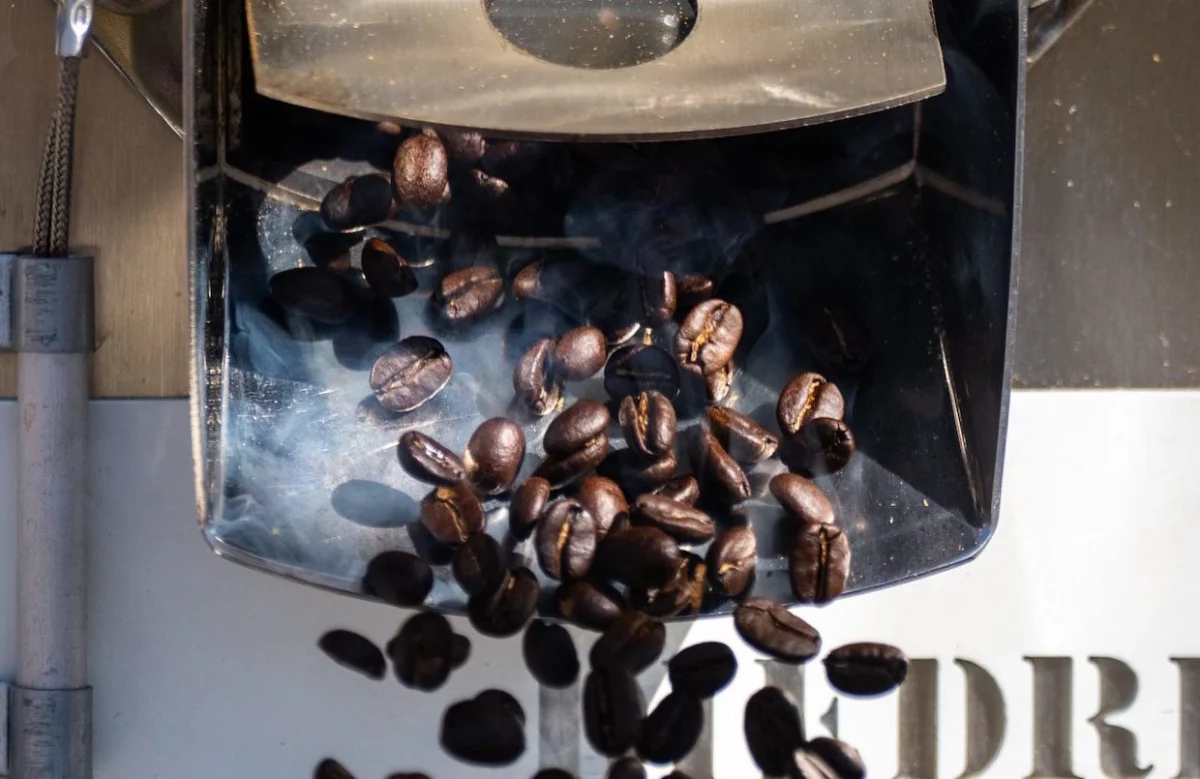
A groundbreaking initiative spearheaded by Sandia National Laboratories in New Mexico is poised to revolutionize the commercial coffee roasting industry by introducing a novel method of utilizing stored solar energy to heat roasting drums. This state-funded experiment, conducted in collaboration with the established Albuquerque-based roaster Michael Thomas Coffee, demonstrates the feasibility of retrofitting existing drum roasters to harness solar power, a development that could significantly reduce the sector’s reliance on natural gas and offer a more sustainable pathway for coffee production. The project represents a significant leap forward in applying renewable energy technologies to specialized industrial heating processes.
The core of this innovative system lies in its sophisticated approach to energy storage and delivery. Photovoltaic panels generate electricity, which is then converted into thermal energy and stored within a carefully engineered rock-bed system. This stored heat can be precisely released into the roasting drum as needed, allowing for a controlled and consistent roasting environment. Initial tests have proven successful, with the system capable of achieving temperatures up to 600 degrees Celsius, enabling the roasting of coffee beans to a full spectrum of profiles, from light to dark roasts.
Michael Sweeney, owner of Michael Thomas Coffee, expressed enthusiasm for the project’s potential to integrate seamlessly with existing infrastructure. "It’s not learning a new roasting machine. It’s working with your current roaster that you know extremely well and just adapting to a different energy source," Sweeney stated in a Sandia National Laboratories news release. He further elaborated on the transformative impact on his craft, saying, "This is going to let me look at roasting literally in a different light and look at my craft from a different viewpoint." This perspective highlights the system’s practical advantage: roasters do not need to invest in entirely new equipment, but rather can adapt their current, well-understood machinery.
The genesis of this solar-powered coffee roasting system can be traced back to earlier research conducted by Sandia National Laboratories. In 2022, the lab successfully applied similar indirect solar heating principles to the roasting of green chiles, a staple agricultural product in New Mexico. That experiment yielded impressive results, with concentrated sunlight effectively cutting green chile roasting times by half and producing roasts that were more uniform than those achieved with traditional gas-fired methods. This prior success provided a robust foundation and validated the underlying technology for its application to coffee roasting.
The Science Behind Solar Roasting
Systems engineer Ken Armijo at Sandia National Laboratories described the underlying principle as "indirect solar heating." The process begins with the capture of solar energy through photovoltaic panels. This captured solar electricity is then transformed into heat, which is stored in a radial packed-bed system comprised of specially selected rocks. This rock bed acts as a thermal battery, retaining heat for extended periods. When the roasting process requires heat, the stored thermal energy is efficiently released and channeled directly into the roasting drum.
The efficiency of this system was evident in the recent coffee roasting tests. According to Sandia, the solar system managed to reduce roasting time by several minutes for dark roasts. Furthermore, the ability to preheat and cool the roaster more rapidly between batches was noted by Sweeney as a significant operational advantage. This increased throughput could translate into higher daily production capacity for roasters, a crucial factor in commercial operations.
A key characteristic of the rock-bed storage system is its capacity for long-duration heat retention. This technology is capable of holding thermal energy for potentially days, ensuring that coffee roasting operations can continue uninterrupted even during periods of low sunlight or at night. Albuquerque, with its abundant sunshine – averaging approximately 300 sunny days per year – presents an ideal geographical location for the implementation and widespread adoption of such solar-powered technologies. This meteorological advantage further enhances the viability and economic attractiveness of the system for businesses in the region.
From Lab Concept to Commercial Retrofit
The ultimate goal of the Sandia National Laboratories project is to develop a commercially viable, bolt-on solution for existing natural gas-fueled coffee roasting machines. This "retrofit" approach is designed to allow roasters to seamlessly integrate stored solar thermal energy into their operations without the prohibitive cost of replacing their entire roasting infrastructure. This focus on adaptability and cost-effectiveness is central to facilitating widespread adoption within the industry.
Funding for this pioneering work is being provided through New Mexico’s Technology Readiness Gross Receipts Initiative, or TRGR. This state program is dedicated to supporting New Mexico businesses in their efforts to transition laboratory-developed technologies into practical commercial applications. The collaboration with Michael Thomas Coffee is also structured under a Cooperative Research and Development Agreement (CRADA). CRADAs are formal mechanisms that enable national laboratories like Sandia to partner with private companies, fostering innovation and accelerating the commercialization of new technologies.
The specific solar thermal storage technology employed in this coffee roasting experiment is covered by U.S. Patent No. 11,549,761, underscoring the novel and proprietary nature of the development. Sandia’s commitment to bringing this innovation to market is evident in their strategic approach.
Bob Sleeper, a licensing and business development specialist at Sandia, articulated the project’s overarching objective: "My goal is to get this industrial heat and energy storage system into the hands of someone who can commercialize it." This statement signifies Sandia’s intention to not only prove the technology’s efficacy but also to facilitate its transition into the commercial marketplace, potentially through licensing agreements with manufacturers or direct sales to the coffee industry.
Broader Implications for the Coffee Industry and Beyond
The implications of this solar-powered roasting technology extend far beyond a single coffee company in New Mexico. For the global coffee industry, which is increasingly conscious of its environmental footprint, this innovation offers a tangible pathway toward decarbonization. Traditional coffee roasting is an energy-intensive process, often relying heavily on fossil fuels. The successful implementation of solar thermal retrofits could lead to substantial reductions in greenhouse gas emissions, aligning the industry with global sustainability goals and appealing to environmentally conscious consumers.
The economic benefits for coffee roasters could also be significant. While the initial investment in retrofitting might be a consideration, the long-term savings on energy costs, particularly in regions with high natural gas prices or fluctuating energy markets, could be substantial. Furthermore, the potential for increased operational efficiency, as noted by Michael Sweeney with faster preheating and cooling cycles, can lead to greater productivity and profitability.
Beyond the coffee sector, the underlying technology developed by Sandia National Laboratories holds promise for a wide range of industrial applications that require high-temperature heat. Sectors such as food processing, manufacturing, and even certain chemical processes could potentially benefit from this indirect solar heating and thermal storage system. This adaptability positions the technology as a versatile solution for industrial decarbonization across multiple industries.
The success of this experiment also highlights the critical role of government-industry partnerships in driving technological innovation. Initiatives like New Mexico’s TRGR and the CRADA framework facilitate the transfer of cutting-edge research from national laboratories into practical, market-ready solutions. This collaborative model is essential for addressing complex societal challenges, such as climate change, by leveraging scientific expertise and commercial enterprise.
As the technology moves towards commercialization, further research and development will likely focus on optimizing the rock-bed system’s efficiency, exploring different storage materials, and scaling the retrofit solution for a diverse range of roaster sizes and types. The potential for solar energy to play a more significant role in industrial processes is immense, and this New Mexico-based experiment is a compelling demonstration of that future. The journey from a laboratory concept to a practical application in a beloved industry like coffee roasting marks a significant milestone in the ongoing quest for sustainable energy solutions.
