

In the evolving landscape of dietary trends and specialized eating plans, the pursuit of delicious yet compliant breakfast options continues to be a significant focus for many consumers. Among these, the Paleo diet, which emphasizes foods presumed to be available to early humans, has gained considerable traction. A key challenge for individuals adhering to this lifestyle is finding breakfast staples that are both satisfying and align with its strict guidelines. This article delves into the creation and benefits of a specific Paleo pancake recipe, highlighting its unique composition, preparation, and adaptability.
The development of recipes that cater to specific dietary needs, such as the Paleo diet, often involves careful consideration of ingredient substitutions and their impact on taste and texture. Traditional pancakes, typically made with wheat flour, eggs, and dairy, are incompatible with Paleo principles. Wheat flour is a grain, eggs are sometimes debated, and dairy is generally excluded. This has spurred innovation in creating alternatives that mimic the familiar comfort of pancakes without compromising dietary integrity.
The Science Behind the Perfect Paleo Pancake
At the heart of this particular Paleo pancake recipe is the innovative use of almond flour and tapioca starch. Almond flour, derived from ground almonds, offers a naturally high protein content, a significant advantage for a filling breakfast that aims to sustain energy levels throughout the morning. Its inherent richness contributes to a moist and tender texture, a characteristic often sought after in baked goods. However, relying solely on almond flour can sometimes lead to a distinct nutty flavor or a slightly coarse texture.

To counteract these potential drawbacks and achieve a more "real" pancake taste and texture, tapioca starch plays a crucial role. Tapioca starch, extracted from the cassava root, is a highly refined carbohydrate that acts as a binder and provides a subtle sweetness. Its inclusion helps to balance the richness of the almond flour, creating a batter that is both pliable and results in a smooth, tender pancake. This precise combination is fundamental to the recipe’s success, providing structure and preventing the pancakes from being overly dense or crumbly. The strategic use of these ingredients addresses the common pitfalls of almond flour-based baking, ensuring a palatable and enjoyable outcome.
Nutritional Profile and Sustaining Energy
Beyond taste and texture, the nutritional benefits of these Paleo pancakes are a significant draw. The high protein content derived from almond flour is particularly noteworthy. Protein is essential for satiety, meaning it helps individuals feel fuller for longer periods. This can be instrumental in managing appetite and preventing mid-morning snacking, which often involves less healthy choices. For individuals active in fitness or those seeking sustained energy release, a protein-rich breakfast is a cornerstone of their dietary strategy.
Furthermore, the recipe’s reliance on natural sweeteners, such as honey, aligns with the Paleo emphasis on whole, unprocessed foods. Unlike refined sugars, natural sweeteners are often perceived as having a lower glycemic impact and offer a range of micronutrients, although moderation is still advised. The overall composition of these pancakes positions them as a nutritious and filling breakfast option, designed to provide sustained energy release and promote a sense of fullness, thereby supporting healthy eating habits throughout the day.
The Art of Preparation: A Step-by-Step Guide
Crafting these Paleo pancakes involves a straightforward process, emphasizing precision and attention to detail to achieve optimal results. The initial step involves combining the dry ingredients: almond flour, tapioca starch, baking powder, and salt. Thorough whisking is critical at this stage to ensure an even distribution of ingredients. This is particularly important for leavening agents like baking powder and to prevent any pockets of concentrated flavor or texture. The inherent fat content in almond flour can lead to clumping, making it imperative to break up any such formations for a homogenous dry mix.

The subsequent addition of wet ingredients—milk, melted coconut oil, eggs, and honey—transforms the dry mixture into a smooth batter. The consistency of the batter is designed to be similar to heavy cream. A crucial step that follows is allowing the batter to rest for approximately ten minutes. This resting period is not arbitrary; it allows the flours to fully absorb the moisture from the liquid ingredients. This absorption process leads to a slightly thickened batter, which is essential for creating pancakes with the desired thickness and preventing them from spreading too thinly during cooking.
Mastering the Cook: Temperature and Technique
The cooking phase requires careful temperature management, especially when working with almond flour. Due to its high fat content, almond flour has a tendency to burn more readily than traditional wheat flour. Therefore, preheating the griddle or skillet to a moderate temperature, typically between 325°F and 350°F (160°C to 175°C) for an electric griddle, is recommended. For stovetop pans, medium heat is generally appropriate. Even with a reliable non-stick surface, a light greasing of the cooking surface is advised to promote even browning, particularly around the edges of the pancakes.
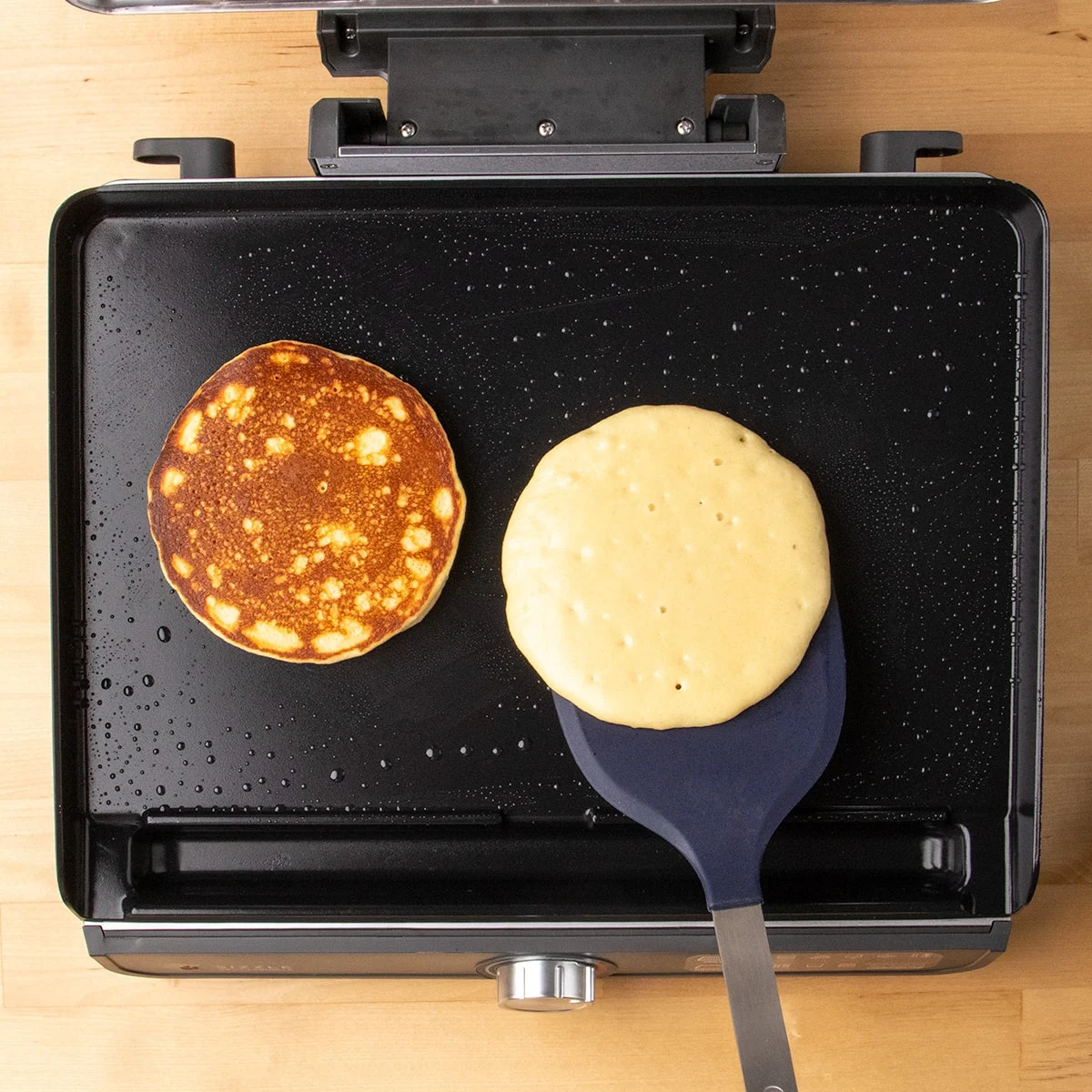
Portioning the batter is typically done using a ladle or measuring cup, creating pools of approximately 1/4 cup each. The cooking time on the first side is critical: pancakes should be allowed to cook until large bubbles appear on the surface and the edges appear set and opaque, rather than shiny. This usually takes about 1.5 minutes. The flip should be executed with a wide, non-stick spatula, and the second side cooked for an additional 30 seconds to a minute, until both sides are golden brown and cooked through. The recipe suggests re-greasing the pan between batches and keeping cooked pancakes warm in a low oven (around 200°F or 95°C) to maintain their temperature and texture.
Expert Insights for Culinary Success
Several expert tips can further elevate the success of this Paleo pancake recipe. Preparing the dry mix in advance is a convenient option. However, due to the high fat content of almond flour, which can lead to rancidity, it is advisable to store the dry mix in the freezer or refrigerator. It’s important to allow the mix to return to room temperature before proceeding with the recipe, as cold almond flour can form stubborn clumps.

Precision in measurement is paramount in baking, and this applies equally to Paleo pancakes. The recommendation to measure dry ingredients by weight using a digital kitchen scale is a valuable tip. This method ensures accuracy, preventing variations that can arise from inconsistent packing of flour when using volume measurements.
The quality of the almond flour itself is also a critical factor. Using finely ground and sifted almond flour is crucial for achieving a smooth batter and a pleasant texture in the finished pancakes. Coarsely ground almond meal, which still contains the almond skins, can lead to a gritty texture and may not integrate well with the other ingredients, resulting in less cohesive pancakes.
Adaptability and Ingredient Substitutions
A significant aspect of recipe development is its adaptability to various dietary needs and preferences. This Paleo pancake recipe offers several potential substitutions. For those seeking a nut-free option, coconut flour pancakes are suggested as an alternative. While not strictly a direct substitute in this recipe, they offer a viable nut-free Paleo breakfast. If experimenting with other nut or seed flours, such as hazelnut or sunflower seed flour, it’s important to be aware of potential interactions, like the color change that can occur with sunflower seed flour due to a reaction with baking soda.
For individuals requiring an egg-free version, the recipe proposes using "chia eggs" or a specific mixture of tapioca starch, baking powder, and milk as an egg replacer. Coconut oil can be substituted with shortening or butter if dairy is permissible. Replacing tapioca starch is more challenging due to its unique properties, but arrowroot starch or superfine sweet white rice flour are mentioned as potential, though not strictly Paleo, alternatives. These options highlight the recipe’s flexibility, allowing individuals to tailor it to their specific dietary restrictions or available ingredients.

Storage and Future Enjoyment
The practicality of this recipe extends to its storage capabilities. Leftover pancakes can be cooled completely, wrapped individually in airtight, freezer-safe materials, and stored in the freezer. To reheat, frozen pancakes can be placed in a toaster oven at approximately 300°F (150°C) for 1 to 2 minutes, offering a convenient way to enjoy homemade Paleo pancakes on busy mornings. This forward-thinking approach to food preparation caters to modern lifestyles where time efficiency is often a priority.
Making Your Own Paleo Baking Powder
A noteworthy aspect of the recipe is the inclusion of instructions for making Paleo-compliant baking powder. Conventional baking powder often contains cornstarch, which, while typically gluten-free, may not align with strict Paleo interpretations. The homemade alternative combines baking soda, cream of tartar, and arrowroot or tapioca starch. This detail underscores the recipe’s commitment to adhering to Paleo principles by offering a fully compliant leavening agent, allowing for fluffy and well-risen pancakes without compromising the dietary framework.
Nutritional Approximation and Serving Suggestions
The provided nutritional information offers an approximation for a single pancake, indicating calories, macronutrients, and certain micronutrients. While these figures are automatically calculated and serve as a guideline, they provide consumers with valuable data for dietary planning. The recipe is designed to yield approximately eight pancakes, making it suitable for a family breakfast or for meal prepping. Serving suggestions typically include traditional pancake accompaniments like maple syrup, which is considered Paleo-compliant, or fresh fruit.
Addressing Common Queries
Several frequently asked questions highlight common concerns and curiosities surrounding Paleo pancakes. The legality of maple syrup on a Paleo diet is confirmed, positioning it as a suitable sweetener. The distinction between almond meal and almond flour is clarified, emphasizing why almond meal is not recommended for this recipe due to textural and binding issues. The preference for an electric griddle over a pan is explained by its superior temperature control and ease of flipping larger batches, which is beneficial given almond flour’s tendency to burn. Finally, advice on preventing burning and addressing flat pancakes centers on temperature control, proper batter consistency, and accurate ingredient measurement, reinforcing the foundational principles for successful Paleo pancake preparation.
