


In an era witnessing a resurgence of home baking, marked by an ever-growing appetite for artisanal and homemade treats, acclaimed cookbook author and baking authority Sally McKenney has released a definitive guide to the essential tools she employs for consistently perfect cookies. McKenney, whose extensive experience includes developing over 300 cookie recipes, authoring a dedicated cookie cookbook, and orchestrating the annual "Sally’s Cookie Palooza" holiday baking series since 2013, underscores the critical role of quality equipment in elevating the home baking experience. Her recommendations, meticulously curated from years of practical application, aim to demystify the professional kitchen for enthusiasts, beginners, and those seeking to equip a new culinary space or gift a passionate baker. This comprehensive list, devoid of commercial sponsorship, represents the culmination of McKenney’s practical expertise, offering an invaluable resource for achieving professional-grade results in any home kitchen.
The Foundation of Flawless Baking: Understanding McKenney’s Methodology
McKenney’s approach to baking tools is rooted in efficiency, durability, and performance. She asserts that while passion and skill are paramount, the right equipment can significantly reduce common baking frustrations, such as uneven browning, dough sticking, or inconsistent batch quality. Her insights come at a time when the global kitchenware market is experiencing robust growth, driven by increased consumer interest in cooking and baking at home, a trend amplified by recent global events and the pervasive influence of food media. Industry reports indicate a steady rise in sales of specialized baking tools, suggesting that home bakers are increasingly willing to invest in equipment that promises superior outcomes. McKenney’s guide thus serves not merely as a shopping list but as an educational primer on the functional attributes that distinguish reliable baking tools from their less effective counterparts.
The Essential Ten: A Deep Dive into Key Baking Instruments
The following tools, endorsed by McKenney, represent the foundational elements of a well-equipped cookie baker’s arsenal, each selected for its specific contribution to the baking process:
1. Half Sheet Pan: The Unsung Hero of Even Baking
McKenney unequivocally positions the half sheet pan as the single most crucial investment. Her rationale highlights the critical impact of pan quality on cookie consistency. Inferior, thin pans are prone to warping under high oven temperatures, leading to hot spots and uneven baking. Conversely, dark-colored pans absorb more heat, often causing cookie bottoms to over-brown or burn before the centers are adequately cooked. McKenney specifically recommends sturdy, light-colored aluminum pans, citing brands like Nordic Ware and USA Pan for their proven ability to distribute heat uniformly and withstand years of rigorous use. These pans are not just for cookies; their versatility extends to roasting vegetables, baking sheet cakes, and crafting confections like homemade toffee. The recommendation for owning at least two half sheet pans is strategic, ensuring a cool pan is always available for subsequent batches, a vital practice to prevent premature spreading of dough.

2. Silicone Baking Mats or Parchment Sheets: The Non-Stick Imperative
Lining baking sheets is a non-negotiable step in McKenney’s methodology. She strongly advocates for silicone baking mats or pre-cut parchment sheets over nonstick sprays or butter. Nonstick sprays can leave a greasy residue that not only affects cookie texture but can also encourage excessive spreading. Silicone mats, such as those from Silpat, provide a superior non-stick surface with just enough grip to help cookies maintain their shape during baking, promoting even heat transfer and easy release. Parchment paper, particularly pre-cut sheets sized for standard half sheet pans (11×16 inches), offers a convenient and equally effective alternative, simplifying both baking and cleanup. This choice reflects a broader industry trend towards sustainable and reusable kitchen tools, as silicone mats offer an eco-friendlier option compared to single-use parchment.
3. Cookie Scoops: Precision for Uniformity
Achieving uniform cookie size is critical for even baking, preventing the common frustration of some cookies being underbaked while others are overdone. Cookie scoops, often referred to as disher scoops, are McKenney’s solution for precise portioning. She emphasizes their utility beyond cookies, noting their effectiveness for muffin and cupcake batters, pancakes, meatballs, and even mashed potatoes. The medium-sized scoop, typically holding 1.5 tablespoons of dough, is her go-to for most cookie recipes. This tool embodies the principle of standardization, a cornerstone of professional baking, ensuring predictable and consistent results across an entire batch.
4. Cooling Rack: Preventing Soggy Bottoms and Promoting Airflow
The transition from oven to cooling rack is a crucial, often underestimated, step in cookie perfection. McKenney highlights that most recipes require cookies to cool on the baking sheet for a few minutes before being transferred. This initial resting period allows the cookies to set slightly. The subsequent transfer to a wire cooling rack is essential for allowing air to circulate around the cookies, preventing condensation and the dreaded "soggy bottom." Cooling racks, inexpensive and durable, are recommended in multiples to accommodate larger batches, underscoring the importance of proper cooling for optimal texture.
5. Stand Mixer: The Workhorse for High-Volume Baking
While acknowledging the utility of a quality hand mixer for occasional bakers, McKenney firmly endorses the stand mixer as an indispensable investment for frequent bakers. Its robust motor and hands-free operation make it ideal for tackling thick cookie doughs, which can strain handheld devices. The 5-quart capacity is cited as optimal for most standard baking recipes, balancing power with practical size. Beyond cookies, the stand mixer’s versatility extends to various applications, including cake and muffin batters, bread doughs, whipped creams, meringues, and buttercreams, solidifying its status as a central pillar in a well-equipped kitchen. This recommendation aligns with market data showing stand mixers as a perennial favorite in wedding registries and gift guides, reflecting their perceived value and multi-functional appeal.
6. Measuring Cups & Digital Food Scale: The Quest for Accuracy
Accuracy in ingredient measurement is paramount in baking, a discipline that often functions more like chemistry than art. McKenney stresses the importance of quality measuring cups but elevates the digital kitchen scale as the ultimate tool for consistent results. She explains that a gram consistently weighs a gram, eliminating the variability inherent in volume measurements, which can fluctuate based on ingredient density and packing method. This emphasis on weight measurement reflects best practices in professional bakeries worldwide and is increasingly adopted by home bakers seeking to replicate complex recipes with precision. McKenney’s website, mirroring this philosophy, provides both weight and volume measurements for her recipes, empowering bakers to choose their preferred method while advocating for the superior accuracy of scales.
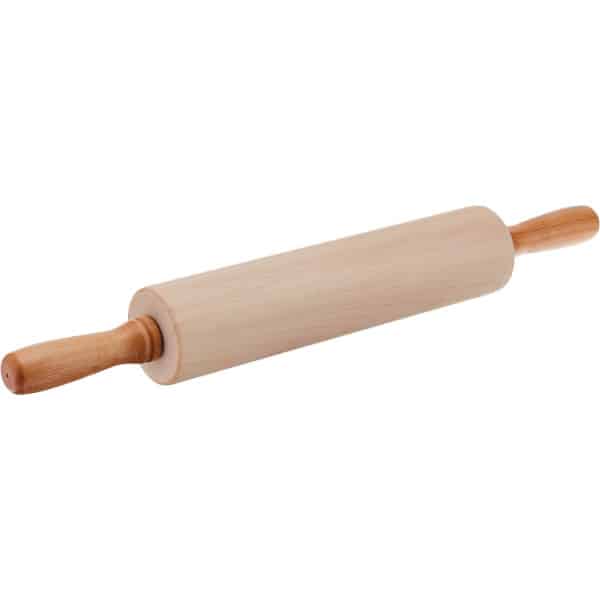
7. Rolling Pin: For Uniform Dough Thickness
A quality rolling pin is crucial for any recipe requiring evenly flattened dough, from sugar cookies and pie crusts to homemade crackers and cinnamon rolls. McKenney favors a simple, sturdy wooden rolling pin, praising its balanced feel and durability over 15 years of frequent use. The key characteristic is its ability to create a consistently even thickness, which is vital for uniform baking and aesthetic appeal. Flimsy or poorly balanced rolling pins can lead to uneven dough, resulting in cookies that bake inconsistently.
8. Cookie Cutters: Form and Function in Design
For decorative cookies, the quality of cookie cutters directly impacts the final product’s appearance. McKenney advises against thin, flimsy cutters that bend easily and leave ragged edges. Instead, she recommends sturdy metal cutters with sharp edges, which create clean, crisp cuts in the dough. Brands like Ann Clark are highlighted for their wide variety of shapes and robust construction. For specialized holiday baking, the OXO cookie press is specifically recommended for spritz cookies, demonstrating an understanding of niche tools that cater to specific baking traditions. This category speaks to the artistic side of baking, where precision tools facilitate creative expression.
9. Silicone Spatulas: Versatility and Thoroughness
McKenney identifies silicone spatulas as one of the most frequently used tools in her kitchen, underscoring their exceptional versatility. Their combination of sturdiness and flexibility makes them ideal for a multitude of tasks: scraping every last bit of dough from a bowl, gently folding delicate ingredients, stirring, cooking, mixing, and even frosting. Owning several sizes is advised to handle various bowl dimensions and ingredient volumes. The material science of silicone, which is heat-resistant, non-reactive, and easy to clean, makes these spatulas superior to traditional rubber alternatives, contributing to both efficiency and hygiene in the kitchen.
10. Dessert Carrier: Preserving Presentation and Portability
The final, often overlooked, aspect of sharing homemade cookies is their presentation and safe transport. McKenney emphasizes that "homemade cookies deserve to arrive looking as good as they tasted." A sturdy dessert carrier protects delicate baked goods during transit, preventing damage and maintaining their aesthetic appeal. Her ingenious tip of using a cupcake carrier with the tray inverted to hold stacks of cookies demonstrates practical problem-solving. Other recommendations include half sheet pan lids or 9×13-inch pans with fitted lids for larger batches, highlighting the importance of thoughtful presentation and logistical planning in the overall baking experience.
Broader Implications and the Future of Home Baking
McKenney’s curated list of essential cookie baking tools transcends a mere product recommendation. It represents a broader philosophy that quality equipment empowers home bakers to achieve results comparable to professional patisseries. This perspective aligns with a growing consumer trend towards mindful consumption and investment in durable, high-performance tools that stand the test of time.
The rise of influential food bloggers and cookbook authors like Sally McKenney has democratized baking knowledge, making complex techniques and expert advice accessible to a global audience. Her "Sally’s Cookie Palooza," an annual tradition since 2013, exemplifies how dedicated content creators foster communities and inspire millions of bakers during peak seasons. This consistent engagement, coupled with practical, well-tested advice, solidifies her authority and drives interest in the tools she champions.
The implications for the kitchenware industry are significant. As home bakers become more discerning, the demand for high-quality, specialized tools increases, shifting market focus from generic, inexpensive options to durable, performance-driven products. Manufacturers are responding by innovating materials, ergonomic designs, and multi-functional tools that cater to the evolving needs of the modern home chef.
Ultimately, McKenney’s guide serves as a testament to the belief that with the right knowledge and the proper tools, anyone can unlock their full baking potential, transforming simple ingredients into delectable creations that bring joy and satisfaction. It underscores that baking success is not solely about innate talent but a harmonious blend of technique, ingredient quality, and the strategic deployment of reliable equipment.
