

The designation of London Dry Gin remains one of the most misunderstood classifications in the global spirits industry, frequently confused by consumers as a reference to geographic origin or a specific flavor profile. In reality, the term represents a rigorous set of production standards and process requirements codified under international law. While the European Union updated its spirit drink regulations in 2019 to provide further clarity, the fundamental principles governing London Dry Gin have remained remarkably consistent, prioritizing chemical purity and traditional distillation methods over subjective aromatic qualities.
Under current legislation, specifically EU Regulation 2019/787 and its subsequent amendments, London Dry Gin is defined as a process designation rather than a protected geographical indication (GI). This distinction allows distillers anywhere in the world—from Tokyo to New York—to utilize the "London Dry" label, provided their production methods adhere to the stringent criteria set forth by regulatory bodies. Despite these rigorous technical standards, the legal definition of gin’s flavor remains famously vague, relying on the subjective requirement that the taste be "predominantly of juniper."
A Chronological Evolution of Purity Standards
The origins of the London Dry designation are rooted in the pursuit of spirit purity during the 18th and 19th centuries. Historically, gin production was a volatile and often dangerous enterprise. During the "Gin Craze" of the 1700s, spirits were frequently distilled from low-quality grains and adulterated with hazardous substances such as turpentine or sulfuric acid to mask the harshness of the base alcohol. Sweetening agents, primarily sugar or honey, were added to make these "Old Tom" style gins palatable.
The technological turning point occurred in the 1830s with the invention of the continuous column still by Aeneas Coffey. This innovation allowed distillers to produce a highly rectified, neutral spirit with an alcoholic strength of up to 96% ABV. This "clean" base spirit eliminated the need for heavy sweetening or masking agents, leading to the birth of the "dry" style. By the late 19th century, London became the epicenter for this high-quality distillation, and the term "London Dry" emerged as a hallmark of quality control, signaling to consumers that the spirit was free of impurities and excessive sugar.
In the modern era, these historical preferences were codified into law. The European Union first established comprehensive spirit definitions in 2008, which were later refined in the 2019/787 legislation. Following the United Kingdom’s departure from the EU, the UK government retained the 2019 standards as "retained EU law," ensuring that the definition remains synchronized across the primary markets for the spirit.
The Technical Requirements of Distillation
To bear the name London Gin (and by extension, London Dry Gin), a spirit must meet a hierarchy of requirements starting with the definition of "Distilled Gin." According to Section 21.a of Regulation 2019/787, the process must begin with a base spirit of agricultural origin. This base must be distilled to an initial alcoholic strength of at least 96% ABV, effectively requiring the use of a column still to achieve a truly neutral profile.
The subsequent production steps are what separate London Dry from other distilled gins:
- Redistillation with Botanicals: The neutral spirit must be redistilled in traditional stills in the presence of Juniperus communis L. (juniper berries) and other natural botanicals.
- The 70% Threshold: The resulting distillate after this secondary distillation must leave the still at a minimum alcoholic strength of 70% ABV. This ensures that the essential oils and flavors are concentrated and not overly diluted during the primary flavoring stage.
- Methanol Constraints: A critical quality marker is the methanol content. London Gin must contain no more than 5 grams of methanol per hectoliter of 100% vol. alcohol. While modern distillation techniques make meeting this standard common, the regulation serves as a legal guarantee against the toxic "wood alcohols" that plagued historical production.
- Exclusivity of Flavoring: Perhaps the most restrictive rule is that all flavoring must be imparted exclusively through the distillation process. No flavoring substances or preparations can be added after the final distillation.
This last point creates a clear divide in the market. Popular brands such as Hendrick’s Gin or Martin Miller’s, which infuse flavors like cucumber or rose petals after distillation, are legally classified as "Distilled Gins" but are prohibited from using the "London Dry" designation.
The Definition of "Dry" and the Sugar Tracing Exception
In the context of gin, the term "dry" is a specific regulatory limit on sugar content. A distilled gin may be labeled as "dry" if it contains no more than 0.1 grams of sweetening products per liter of the final product, expressed as invert sugar. While London Gin is not required to use the word "dry" on its label, the 2019 regulations dictate that all London Gins must, by default, meet this low-sugar threshold.
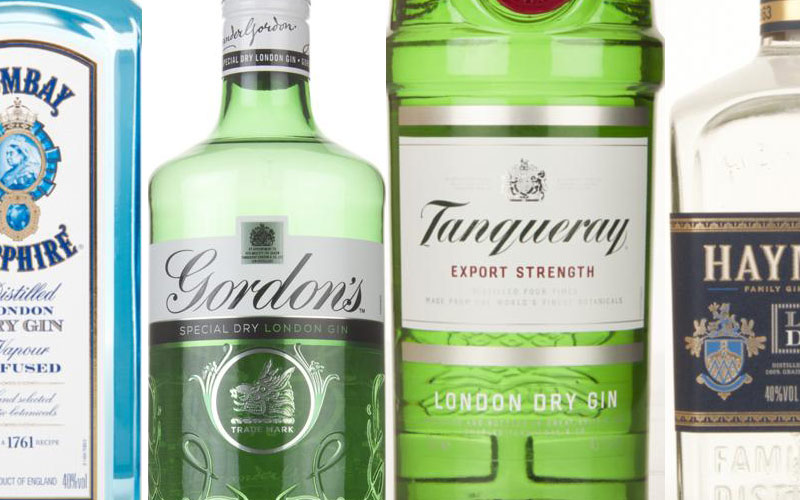
An interesting nuance in the law allows for a microscopic amount of sweetening, which often surprises purists. This allowance is largely maintained for industrial "tracing" purposes rather than flavor. Large-scale producers, such as Gordon’s, utilize "sugar dyes" or tracer molecules that help identify counterfeit products. Without the 0.1g per liter allowance, these anti-counterfeiting measures would render the spirit legally "sweetened" and thus ineligible for the London Dry category.
The Subjectivity of Botanical Standards
While the chemical and process standards for London Dry Gin are precise, the botanical standards remain a point of contention and debate within the industry. The law states that the taste of the finished product must be "predominantly that of juniper." However, "predominance" is not defined by any numerical or chemical metric.
In recent years, the rise of "Contemporary" or "New Western" style gins has pushed the boundaries of this definition. These gins often emphasize citrus, floral, or spice notes, sometimes pushing the piney, resinous flavor of juniper into the background. Because there is no legal threshold for the concentration of alpha-pinene (the primary flavor compound in juniper), enforcement of the "predominant" clause is nearly impossible.
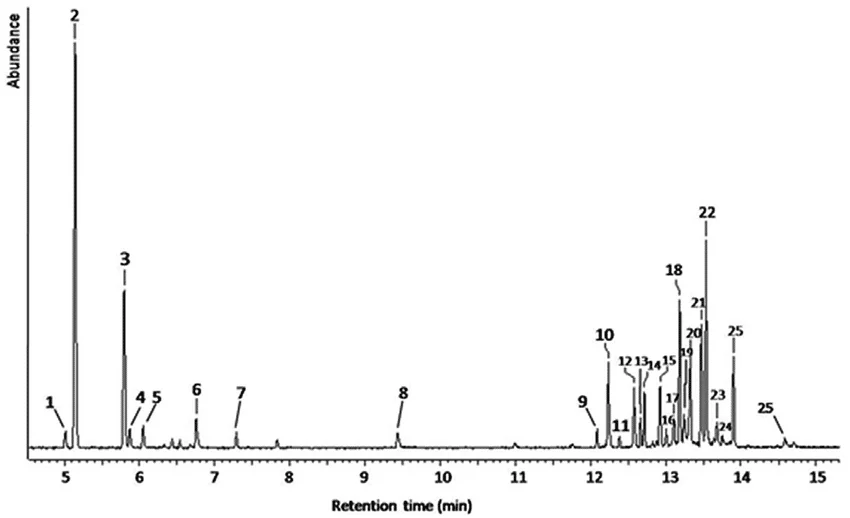
Some high-capacity distilleries, such as Bombay Sapphire’s home at Laverstoke Mill, utilize Gas Chromatography-Mass Spectrometry (GC-MS) to ensure batch consistency. By analyzing the volatile compounds in a sample, they can create a "fingerprint" of their gin to ensure it matches their established standard. However, regulatory agencies lack the resources to apply such rigorous scientific testing to every craft distillery, leaving the "predominant juniper" rule as a largely symbolic guideline.
Furthermore, the 2019 legislation specifies that flavor must be derived from "natural plant materials." This phrasing creates interesting legal hurdles for innovative distillers. For instance, a spirit flavored with mushrooms (which are fungi, not plants) or one that uses animal products in the still—such as the "Pechuga" style gins that suspend raw meat in the vapor path—technically falls outside the legal definition of London Dry Gin, regardless of how "dry" or "juniper-forward" the final product may be.
Global Regulatory Variations
While the EU and UK standards are the most influential, other jurisdictions maintain their own definitions. In the United States, the Alcohol and Tobacco Tax and Trade Bureau (TTB) provides a broader definition. The TTB classifies gin as a spirit with a main characteristic flavor derived from juniper berries, produced by distillation or by the mixing of spirits with aromatics or extracts.
Notably, the U.S. regulations do not strictly codify the "London" prefix in the same way European law does. However, because the U.S. is a major importer of European spirits, most "London Dry" gins sold in America adhere to the stricter European process standards to maintain global labeling consistency.
Broader Impact and Industry Implications
The refusal of the European Union to grant London Dry Gin "Geographical Indication" (GI) status remains a significant decision for the industry. Unlike Scotch Whisky or Champagne, which must be produced in specific regions to bear those names, London Dry Gin remains a "style."
Industry analysts suggest that seeking GI status would have been counterproductive. To qualify for a GI, a technical file must be submitted that specifies the exact geographic area and often a very narrow range of traditional ingredients. Given that the term "London Dry" is already used by thousands of distillers globally, attempting to restrict it to the city of London would have caused a massive legal upheaval and stripped the "London Dry" label from some of the world’s most iconic brands.
The current regulatory environment provides a "de facto" protection of quality without the geographic restrictions. It ensures that any bottle labeled London Dry Gin meets a baseline of high-proof distillation, zero additives, and minimal sweetening.
As of 2024, the gin market continues to diversify. While the "London Dry" designation remains the gold standard for classic martinis and G&Ts, the rise of "Distilled Gins" allows for greater creative freedom with post-distillation infusions. The future of gin regulation may eventually move toward numerical measures of flavor compounds to address the "juniper predominance" issue, but for now, London Dry Gin stands as a testament to 19th-century industrial standards surviving in a modern, globalized market. The label serves not as a map of where the gin was made, but as a blueprint of how it was crafted.
